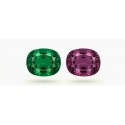
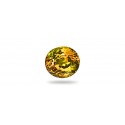
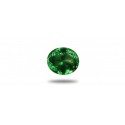
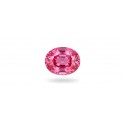
Buy Natural Apatite Cat’s Eye Gemstones
Apatite cat's eye is a variety of natural apatite that displays chatoyancy, the optical phenomenon where a bright band of reflected light moves smoothly across the domed surface of a cabochon as the stone or light source changes position. Named for its visual resemblance to the vertical slit pupil of a cat responding to bright light, the cat's eye effect in apatite is produced by densely packed parallel needle-like inclusions within the crystal that concentrate reflected light into a single luminous band. This optical effect transforms apatite from a simple colored gemstone into a dynamic, living object whose character changes continuously with movement.
Apatite cat's eye occurs in honey, yellow, green, and teal blue-green colors. Yellow is the most commonly available and is often found in larger sizes that allow the cat's eye effect to display prominently across a meaningful cabochon face. Green apatite cat's eye, including deeper forest green tones, is also commercially available in larger sizes. Teal and blue-green cat's eye apatite is less common and offers a more distinctive color for collectors seeking unusual chatoyant gems.
What Causes the Cat's Eye Effect in Apatite
The cat's eye effect in apatite, as in all chatoyant gems, requires two conditions: a dense array of parallel reflecting elements within the crystal, and a curved cabochon surface that focuses their individual reflections into a single convergent band. In apatite, the reflecting elements are parallel needle-like inclusions, often described as rutile-like in their habit, that run parallel to the crystal's c-axis. These needles reflect incident light in a concentrated beam; when they are densely and uniformly packed, this beam narrows into the bright sharp line that defines fine cat's eye quality.
The quality of the cat's eye depends on the density and alignment uniformity of these needles. When needles are sparse, the reflected band is broad and diffuse. When moderately dense, a visible but soft eye forms. When densely and uniformly packed, the eye sharpens into the crisp, bright band that resembles the finest chrysoberyl cat's eye in its precision, though apatite cat's eye generally does not achieve quite the razor sharpness of fine chrysoberyl.
All apatite cat's eye must be cut as cabochons. Faceting destroys the chatoyant effect by breaking the focused reflected band into multiple separate reflections from different facet surfaces. The dome of the cabochon acts as a focusing lens that concentrates the needle reflections into the single band. Proper dome height and correct cutting orientation relative to the needle direction are critical for producing a well-centered, sharp, high-contrast eye.
Browse our main apatite collection with guide at Apatite Gemstone Guide. For the full chatoyancy gemology guide read our Apatite Cat's Eye Gemopedia Guide. See related chatoyant gemstones including tourmaline cat's eye with guide at Tourmaline Cat's Eye Guide. Browse our rare gemstone collection.
Colors and Varieties
Yellow apatite cat's eye is the most commonly available variety and is found in the widest range of sizes. The warm golden-yellow body color combined with the moving bright eye creates a visual warmth that pairs beautifully with yellow gold settings. Yellow apatite cat's eye is available in sizes from under 1 carat through well above 10 carats in good quality, giving buyers flexibility in selecting stone size to match jewelry designs.
Honey apatite cat's eye displays a deeper, warmer golden-amber tone with strong chatoyancy. The honey color combined with the bright silver or golden eye band creates an especially warm and attractive visual combination. Honey material is generally available in good sizes and represents some of the most commercially appealing apatite cat's eye for yellow gold jewelry.
Green apatite cat's eye, including medium to deep green tones, is available in larger sizes and offers a color that distinguishes it clearly from the more common yellow and honey varieties. Forest green cat's eye apatite with a strong sharp eye is particularly attractive for collector pieces and statement jewelry.
Teal and blue-green apatite cat's eye is less commonly available and represents the most collector-oriented variety within the apatite cat's eye category. The blue-green body color with chatoyancy is a visually distinctive combination that appeals strongly to buyers who have seen and appreciated the Paraiba-colored faceted apatite and want the same color family in a chatoyant form.
Paraiba cat's eye apatite, where the vivid neon blue-green color typical of treated Paraiba apatite occurs alongside chatoyancy, is extremely rare and not commonly available in the commercial market.
Sources
Africa is the primary source of commercially available apatite cat's eye, producing material in yellow, honey, green, and teal colors from various East and West African deposits. African material is the most widely available in the commercial market and provides the majority of supply for GemPiece's cat's eye apatite collection.
Sri Lanka has historically produced apatite cat's eye alongside other chatoyant gems from its alluvial deposits, though production is smaller than from African sources. Sri Lankan material can show excellent eye quality and attractive colors including honey and greenish tones.
Myanmar, Tanzania, and Kenya also contribute apatite cat's eye material. Rare Paraiba-hued cat's eye apatite from specific Madagascar localities exists but is extremely uncommon in the commercial market.
Properties
Species: Apatite (fluorapatite dominant)
Chemical Formula: Ca₅(PO₄)₃(F,Cl,OH)
Hardness: 5 Mohs
Refractive Index: 1.628 to 1.649
Specific Gravity: 3.17 to 3.23
Cleavage: Imperfect
Cut Required: Cabochon only; dome height critical for eye centering
Optical Phenomenon: Chatoyancy (cat's eye effect)
Inclusion Type: Parallel rutile-like needle inclusions along c-axis
Colors Available: Honey, yellow, green, teal blue-green
Treatment: Natural; untreated (chatoyancy is a structural natural property)
Sources: Africa (primary), Sri Lanka, Myanmar, Tanzania, Kenya
Durability and Jewelry Use
At 5 Mohs hardness, apatite cat's eye shares the durability limitations of the parent species. It is best suited for pendants, earrings, brooches, and occasional-wear ring settings where impact and abrasion risk are minimized. The cabochon cut form, with its smooth rounded surface rather than sharp facet edges, is actually somewhat more forgiving of gentle contact than a faceted stone would be. Bezel settings that protect the stone's perimeter are the most practical choice for wearable apatite cat's eye jewelry.
Clean with mild soap and warm water using a soft cloth. Avoid ultrasonic cleaners, steam, harsh chemicals, and storage alongside harder gemstones that could scratch the surface.
Value and Pricing
Apatite cat's eye is generally more affordable than chrysoberyl cat's eye, tourmaline cat's eye, or other precious species cat's eye varieties, offering the chatoyant phenomenon at accessible prices. Standard quality apatite cat's eye with visible but not sharp eye: $15 to $50 per carat. Good quality with sharp well-centered eye in attractive color: $30 to $150 per carat. Fine quality with strong sharp eye, vivid body color, and good size: $50 to $200 per carat. Teal or green cat's eye apatite in fine quality commands the upper end of the range. Browse our apatite cat's eye collection and our main apatite collection, or explore our rare gemstone collection.
Frequently Asked Questions
What is apatite cat's eye?
Apatite cat's eye is a variety of natural apatite displaying chatoyancy, a bright band of reflected light that moves across the cabochon surface when the stone is rotated under a light source. The effect is produced by densely packed parallel needle-like inclusions within the crystal that concentrate reflected light into a single luminous band resembling a cat's pupil. All apatite cat's eye is cut as cabochons to display this effect.
What causes the cat's eye effect in apatite?
Parallel rutile-like needle inclusions running along the crystal's c-axis reflect incident light in a concentrated beam. When these needles are densely and uniformly packed, their reflections converge into a single bright band perpendicular to the needle direction. The curved dome of the cabochon focuses these reflections into the moving eye visible on the stone surface. Dense uniform needle packing produces a sharp bright eye; sparse or irregular needles produce a weak diffuse effect.
Which apatite cat's eye color is most common?
Yellow apatite cat's eye is the most commonly available variety and is often found in the widest range of sizes. Green apatite cat's eye is also available in good sizes. Honey and teal varieties are less common. Paraiba-hued cat's eye apatite is extremely rare and not commonly found commercially.
Where is apatite cat's eye found?
Africa is the primary source of commercial apatite cat's eye, producing material in yellow, honey, green, and teal colors. Sri Lanka also produces apatite cat's eye from alluvial deposits. Myanmar, Tanzania, and Kenya contribute additional material.
Is apatite cat's eye treated?
No. Apatite cat's eye is entirely natural and untreated. The chatoyancy is a structural property of the inclusion arrangement within the crystal and requires no enhancement. The body color of apatite cat's eye is also natural in most commercial material.
How do I evaluate apatite cat's eye quality?
Evaluate under a single directional point light source. The eye should appear as a clean, bright, narrow band that moves smoothly across the full width of the dome as you rotate the stone. A well-centered eye stays at the apex of the dome throughout the rotation. Assess body color separately under diffuse light. Strong sharp centered eye plus attractive vivid body color equals finest quality.