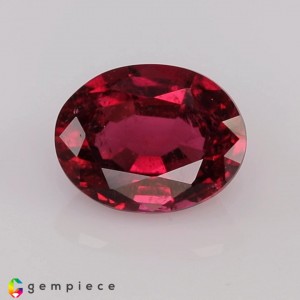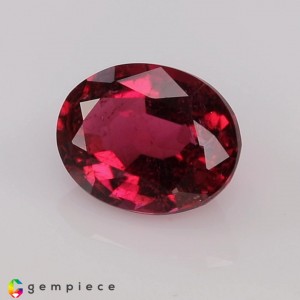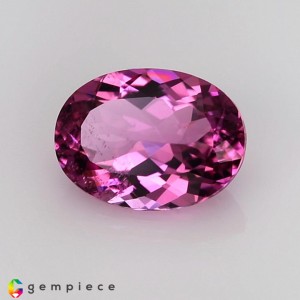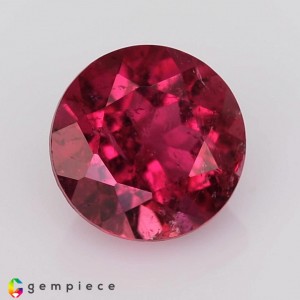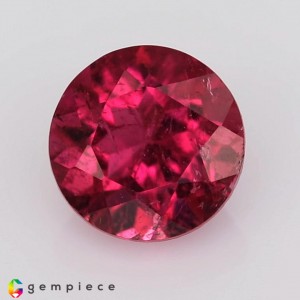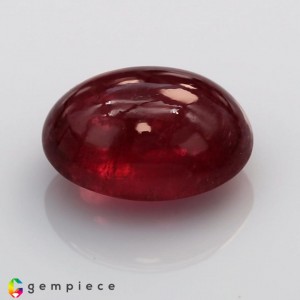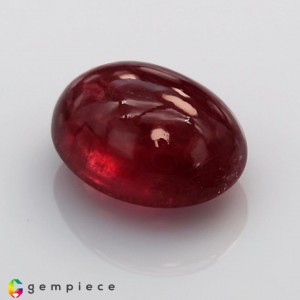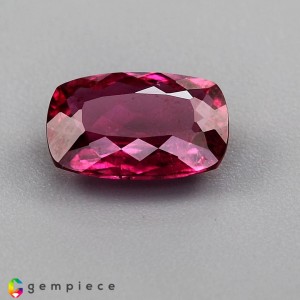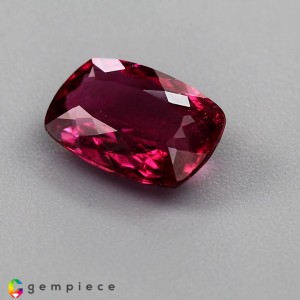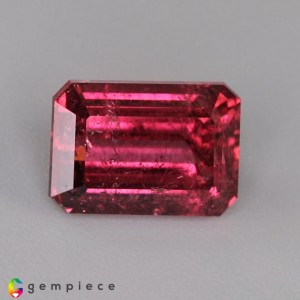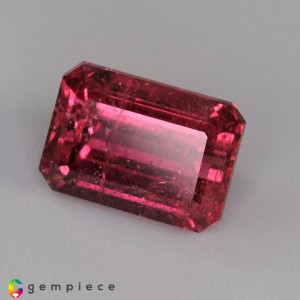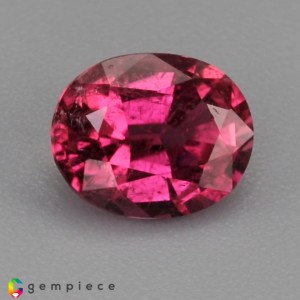
Buy Natural Rubellite Tourmaline Gemstones Online
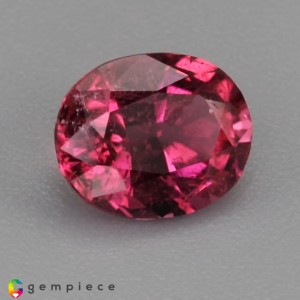
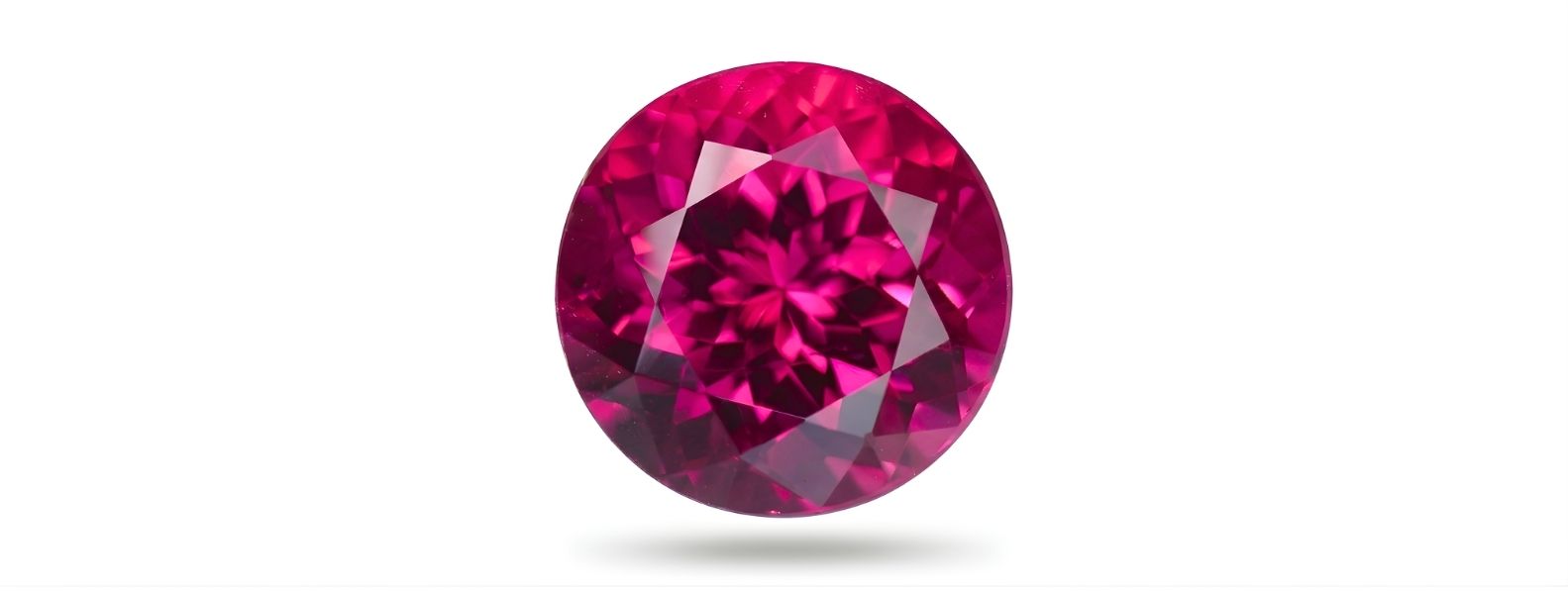
Rubellite is the most sought-after and commercially significant variety in the entire tourmaline family. Its name comes from the Latin "rubellus" meaning reddish, and it describes elbaite tourmaline that achieves a saturated red to purplish-pink color with a critical qualification: the color must hold its character under both daylight and incandescent light without shifting to brownish, orangey, or washed-out tones. Only approximately 3% of all tourmalines mined globally meet this standard, which places rubellite in a genuine rarity category that drives its premium market position year after year.
At GemPiece, we source rubellite directly from Brazil, Mozambique, and Nigeria, the three most important commercial sources today. Each stone is cut in-house in our Bangkok workshop with careful attention to pleochroism orientation, ensuring the finished gem shows its best color in face-up position. Treatment status is fully disclosed on every stone. Browse our natural rubellite collection or read our detailed Rubellite Gemstone Guide.
What Makes True Rubellite Different from Pink Tourmaline
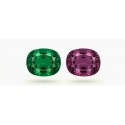
Not every red or pink tourmaline qualifies as rubellite, and this distinction is commercially critical. The trade definition requires that rubellite maintain its vivid red or purplish-red color under both cool daylight and warm incandescent light. Tourmalines that appear intensely pink or red under daylight but shift to brownish-pink or orangey-pink under incandescent light are classified as pink tourmaline, not rubellite, regardless of how attractive their daylight color appears.
The science behind this distinction lies in the manganese chemistry of the stone. Rubellite requires sufficient Mn³⁺ (trivalent manganese) content to produce an absorption band that is stable across different light source spectra. Stones dominated by Mn²⁺ (divalent manganese) show the telltale warm-light shift that disqualifies them. The practical test is simple: view the stone under a warm incandescent bulb and compare it to its daylight appearance. If the vivid red-pink holds, you have rubellite. If it drifts toward brown or orange, you have pink tourmaline.
This test is one of the most important tools any rubellite buyer should use. At GemPiece, we apply this standard to every stone we classify as rubellite, and we document both daylight and incandescent appearance for every stone in our collection.
For full gemological detail read our Rubellite Gemstone Guide. Browse related tourmaline varieties including pink tourmaline, Paraiba tourmaline, and all tourmaline varieties, with guides at Pink Tourmaline Guide, Paraiba Tourmaline Guide, and Tourmaline Gemstone Guide.
Rubellite Color: Market Preferences by Region
Rubellite color preferences divide clearly along regional market lines, and understanding this matters for buyers seeking the right stone.
The European and American market strongly favors vivid purplish-pink and neon purplish-pink rubellite, colors that display an almost electric intensity and look unlike anything else in the colored gemstone market. These tones are considered the pinnacle of rubellite quality in the Western collector community and command the highest international auction prices.
The Asian market, particularly buyers in China, Japan, and Southeast Asia, tends to favor reddish rubellite with tones closer to ruby red. This preference reflects a long cultural appreciation for deep red gemstones and the visual association with ruby, which rubellite rivals in color impact at a fraction of the price.
Both color directions represent genuine market demand and genuine collector value. The most important criterion in either direction is color stability under both light sources, vividness without brownish modifiers, and transparency that allows the color to read clearly through the stone.
Clarity: Type III and What to Expect
Rubellite is classified as a Type III clarity gemstone by the GIA, meaning inclusions are a natural and expected characteristic of the species. This is the same clarity classification applied to emerald, and the same trade acceptance applies: rubellite with inclusions is the market norm, and eye-clean rubellite is genuinely exceptional and commands significant premiums.
Common rubellite inclusions include needle-like structures, feathers, liquid inclusions, and reflective gas-filled fractures. These are accepted globally by the professional gem trade. A rubellite with visible inclusions that do not significantly affect its transparency or face-up color appeal is still a commercially desirable and valuable stone. The key evaluation question is not whether inclusions are present but whether they interfere with the stone's primary visual quality, its color transparency and face-up appearance.
Eye-clean rubellite, particularly in sizes above 3 carats with vivid purplish-pink or red color, is genuinely rare and commands a meaningful premium over included material of equivalent color quality.
Treatment Awareness: Irradiation and Fracture Filling
Buyers should understand two treatments encountered in the rubellite market.
The first is irradiation. Pale pink tourmaline can be transformed into vivid reddish-pink material through irradiation treatment. This process is currently undetectable by any gemological laboratory method, meaning no certificate can confirm with certainty that a stone has not been irradiated. The color produced by irradiation is stable and does not fade under normal conditions. Buyers should be aware of this reality, particularly for stones with unusually vivid color at lower price points. At GemPiece, we disclose known treatment status on every stone.
The second treatment is fracture filling, used on heavily included rubellites to improve apparent clarity, directly comparable to the oiling applied to commercial emerald. Unlike irradiation, fracture filling can be detected using FTIR spectroscopy at a qualified laboratory. Fracture-filled rubellite should be priced accordingly and requires the same care considerations as oiled emerald, including avoidance of ultrasonic cleaning and heat.
Origins and Source Characteristics
Brazil has long been the world's most historically celebrated rubellite source. Minas Gerais state produces material with deeply saturated red and purplish-red tones that set the benchmark for rubellite color quality globally. The Jonas Mine in Conselheiro Pena, Minas Gerais, produced the most legendary rubellite crystals ever documented, including a famous 200-kilogram crystal discovered in 1978 that became one of the most significant tourmaline finds in history. The Cruzeiro Mine continues active production, yielding approximately 8 tonnes of tourmaline per year of which 20% is rubellite. The Ouro Fino mine is now exhausted but produced material with exceptional reputation, including emerald-like jardin inclusions considered beautiful by experienced collectors.
Mozambique has emerged as a critically important modern source, producing vivid purplish-pink rubellite in impressively large sizes. Mozambique material brought fine large rubellite within market reach for buyers who previously found Brazilian material too small or too expensive. Mozambique rubellite in good vivid purplish-pink with acceptable clarity represents some of the best value available in the premium rubellite market today.
Nigeria produces highly transparent rubellite from deposits near Obomosho in Oyo State. Nigerian material is known for its brightness and strong color saturation and now represents the largest total output among African sources. Afghanistan produces rubellite with exceptional transparency. Madagascar offers rubellite with relatively lower iron content and higher clarity than many other sources. Russia's Transbaikal region has historically produced fine rubellite known as siberite.
Rubellite Price Per Carat and Value
Rubellite pricing has strengthened consistently in recent years. Prices surged more than 15% year-on-year in 2025 driven by recognition of the 3% qualifying rate, growing collector demand for vivid clean stones, and the increasing role of rubellite as investment-grade material.
Current pricing: commercial quality rubellite with visible inclusions and good color from $50 to $200 per carat. Fine vivid pink to purplish-pink in eye-visible but not dominating inclusions: $200 to $800 per carat. Eye-clean rubellite with vivid color: $500 to $3,000 per carat. Exceptional vivid red or neon purplish-pink eye-clean material above 5 carats: $2,000 to $5,000 per carat. Fine Jonas Mine or Ouro Fino Brazilian rubellite with provenance documentation commands additional premiums above these ranges. Browse our complete rubellite collection and explore our rare gemstone collection.
Rubellite Properties
Species: Elbaite tourmaline
Primary Chromophore: Manganese (Mn²⁺ and Mn³⁺)
Hardness: 7 to 7.5 Mohs
Refractive Index: 1.624 to 1.644
Specific Gravity: 3.02 to 3.20
Cleavage: None
Pleochroism: Strong; varies between deeper red and lighter pink depending on viewing direction
Clarity Type: Type III (GIA); inclusions expected and accepted
Treatment: Some irradiated (undetectable); some fracture filled (detectable by FTIR); disclosed at GemPiece
Birthstone: October (tourmaline family)
Frequently Asked Questions
What is rubellite?
Rubellite is the red to purplish-pink variety of elbaite tourmaline. It is defined by maintaining its vivid red or purplish-red color under both daylight and incandescent light without shifting to brownish or orangey tones. Only approximately 3% of tourmalines mined globally qualify as true rubellite, making it one of the rarest varieties in the tourmaline family. The name derives from the Latin "rubellus" meaning reddish.
What is the difference between rubellite and pink tourmaline?
True rubellite maintains vivid red or purplish-red color under both daylight and incandescent light. Pink tourmaline that shifts to brownish or orangey-pink under warm incandescent light does not qualify. The distinction is based on color stability caused by sufficient Mn³⁺ content. Only about 3% of tourmalines qualify as rubellite. The price difference between rubellite and standard pink tourmaline of similar daylight appearance can be substantial.
Is rubellite treated?
Some rubellites in the market are irradiated to enhance pale pink tourmaline to vivid reddish-pink. This treatment is currently undetectable by any laboratory method. Fracture filling is also used on some stones and is detectable by FTIR. At GemPiece, all known treatment status is clearly disclosed on every stone we sell.
Which is the best rubellite origin?
Brazil (Minas Gerais, particularly the Jonas Mine and Cruzeiro Mine) is historically the most celebrated source for deeply saturated rubellite. Mozambique produces vivid purplish-pink material in larger sizes and represents excellent current value. Nigeria produces highly transparent rubellite with strong color. Madagascar offers higher clarity material. All major origins are available at GemPiece with full documentation.
Is rubellite more valuable than pink tourmaline?
Yes, significantly. Fine vivid rubellite that passes the incandescent light test commands $200 to $3,000 per carat and above. Standard pink tourmaline of similar daylight appearance but failing the incandescent test typically sells for $30 to $300 per carat. The premium reflects rubellite's genuine rarity at only 3% of tourmaline production.
Does rubellite cat's eye exist?
Yes, though it is exceptionally rare. When parallel needle inclusions are present in sufficient density and alignment in rubellite, the stone can display chatoyancy when cut as a cabochon. Cat's eye rubellite combines two individually rare qualities and commands significant collector premiums.
Is rubellite similar to ruby?
Rubellite is often compared to ruby for its rich red to purplish-red color. However, rubellite is a tourmaline (boron silicate), not corundum. Rubellite is significantly more affordable than ruby of comparable visual quality and is available in larger sizes. Many buyers seeking red gemstones for jewelry find rubellite offers a compelling alternative to ruby at a fraction of the cost.
Where can I buy certified natural rubellite?
At GemPiece, all rubellite is natural and individually sourced from Brazil, Mozambique, Nigeria, and other trusted origins. Certification from AIGS, GIT, GIA, and GRS is available on request. Every stone is individually documented with treatment disclosure and origin information.
Clear ✖