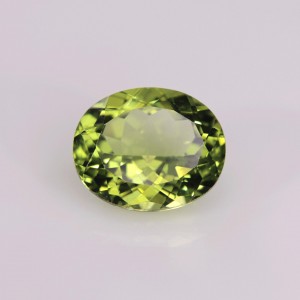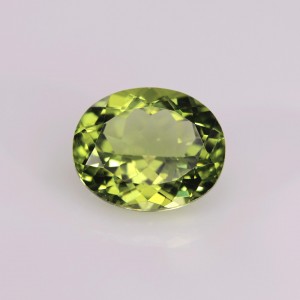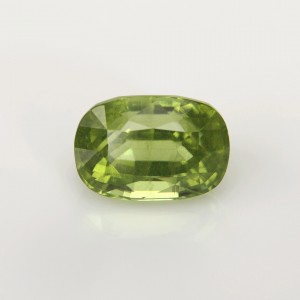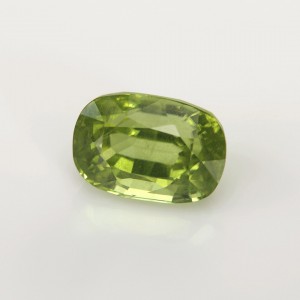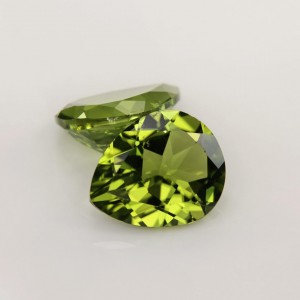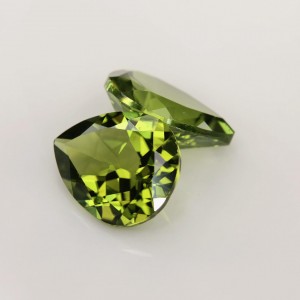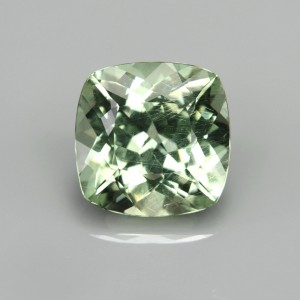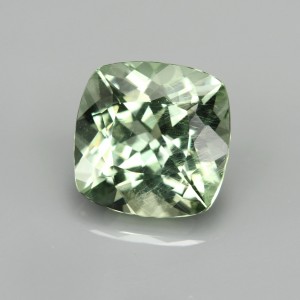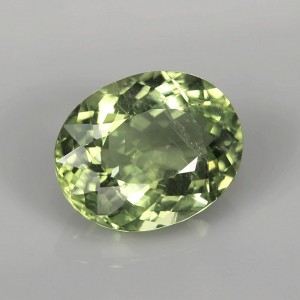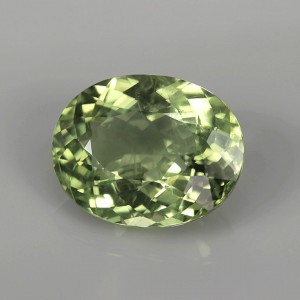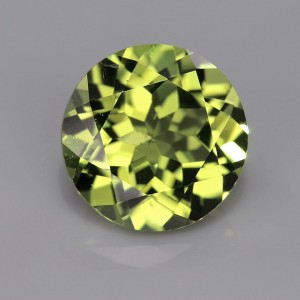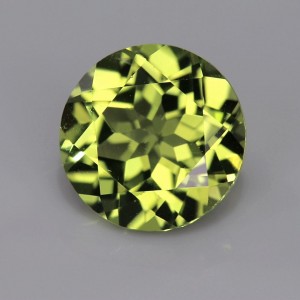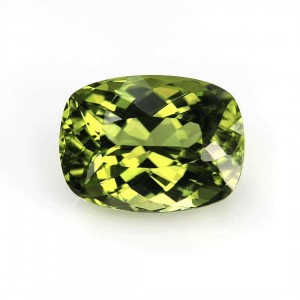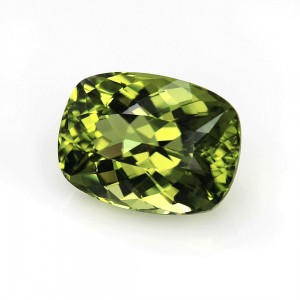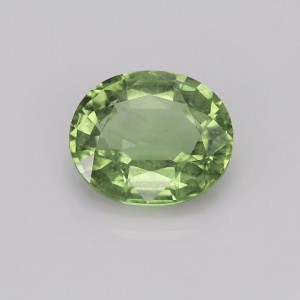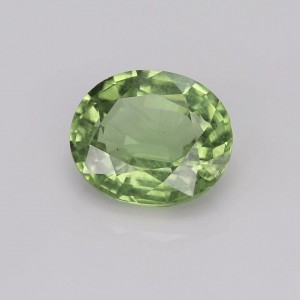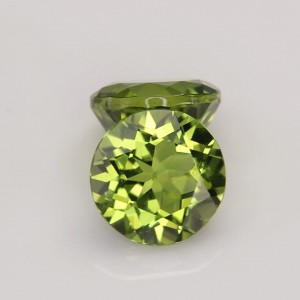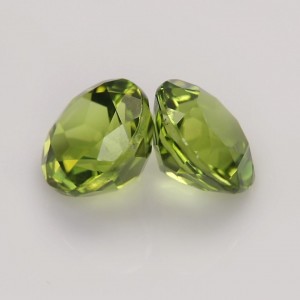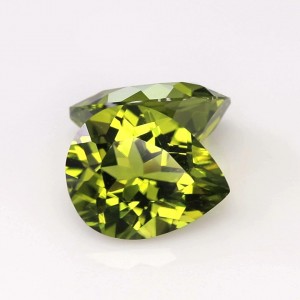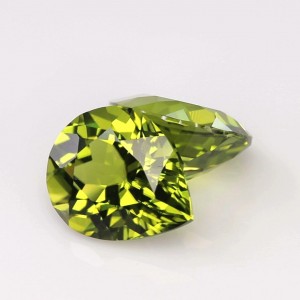
Buy natural peridot gemstones online from Burma, Pakistan, and China.
Peridot is the August birthstone and one of the most distinctive green gemstones available in the natural gem world today. Unlike emerald, tsavorite, or chrome tourmaline, which derive their green from trace element impurities, peridot is idiochromatic: its vivid lime to olive green color comes from iron that is structurally essential to the mineral itself. This means that every natural peridot, regardless of origin or size, is always green. There is no other color option. And in that single-color identity lies one of peridot's greatest commercial strengths: it is immediately recognizable, consistently beautiful, and genuinely untreated in the vast majority of stones reaching the market today.
At GemPiece, we source natural peridot rough directly from Burma, Pakistan, and China, the three most important quality sources in the world today. Each stone is cut in-house in our Bangkok workshop, where we control cutting orientation, proportioning, and final quality. The result is natural certified loose peridot gemstones that deliver maximum brilliance, open color, and strong light performance across every size and shape in our collection.
Why Buy Natural Peridot from GemPiece
Buying natural peridot online requires confidence in two things: the authenticity of the gemstone and the quality of the cut. At GemPiece, every loose peridot gemstone in our collection is 100% natural, individually photographed with macro detail, and accompanied by full origin and treatment disclosure. We cut all stones in-house, which means we do not rely on pre-cut commercial parcels from unknown sources. Each piece of rough is assessed, oriented, and cut by our team to maximize its specific color potential.
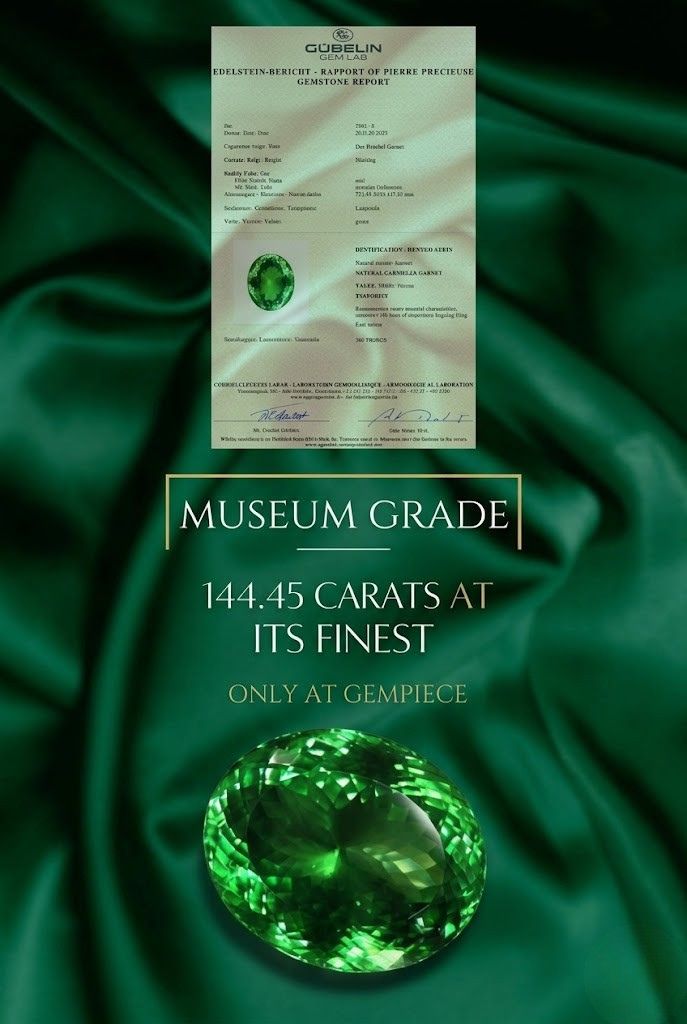
Certification from Bangkok laboratories AIGS and GIT and from international laboratories including GIA is available on request for any stone. For collectors and jewelry designers seeking natural untreated peridot with verified origin documentation, GemPiece provides the direct-from-rough transparency that the market increasingly demands.
For full gemological detail on peridot's mineral chemistry, mantle formation, pallasitic meteorite origin, and global sources, read our Peridot Gemstone Guide. Browse related green gemstones including emerald, green tourmaline, tsavorite garnet, and chrome tourmaline, with guides at Emerald Guide, Green Tourmaline Guide, Tsavorite Guide, and Chrome Tourmaline Guide.
Peridot Color: What Makes a Fine Stone
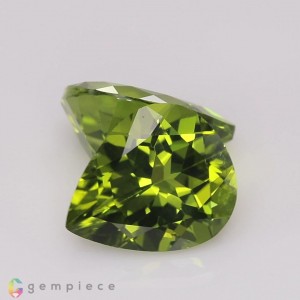
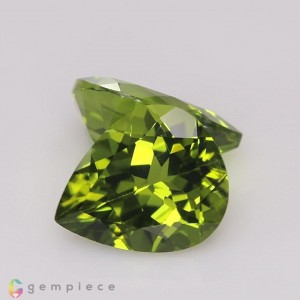
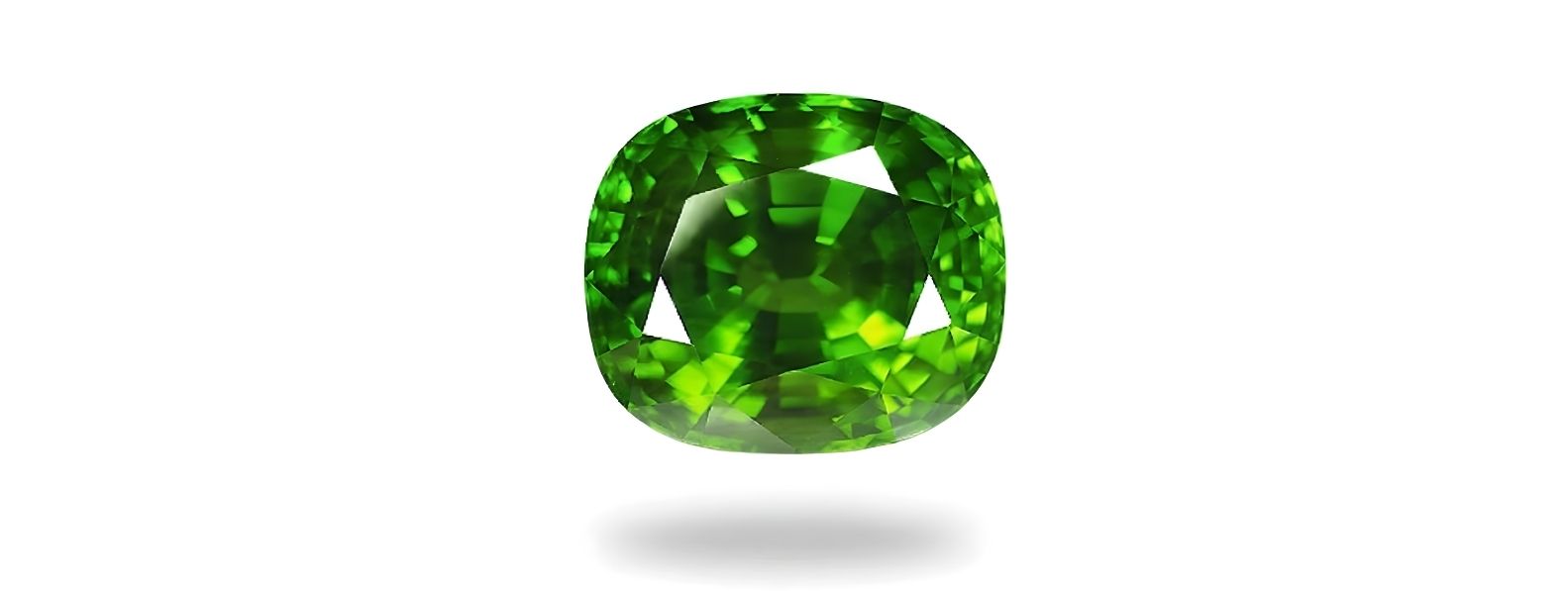
The most important factor when buying peridot is color. A fine peridot displays a vivid, open, bright green without yellowish, brownish, or olive-dark undertones that reduce its visual appeal. The ideal peridot color is often described as pure lime green to vivid grass green, saturated enough to have real presence but bright enough to remain lively under different lighting conditions.
Iron content controls the specific shade. Lower iron produces pale yellowish-lime or mint tones. Moderate iron produces the bright, vivid green most prized by buyers and jewelry designers. Higher iron content produces deeper olive and brownish-green tones that are considered less desirable in the commercial market. Burmese peridot is known for its rich, deep green with a characteristic internal warmth. Pakistani peridot is celebrated for its bright, clean, vivid green with strong light performance. Chinese peridot typically shows a slightly yellowish-green tone with excellent transparency.
When evaluating peridot color, always assess the stone under natural daylight or a daylight-equivalent light source. Peridot is sometimes called the Evening Emerald because it maintains its vivid green appearance under incandescent or artificial light, unlike true emerald which can appear darker and more subdued under warm lighting. This lighting stability makes peridot especially attractive for jewelry that will be worn in evening settings.
Burmese Peridot: The Collector Standard
Myanmar produces what many gemologists and collectors regard as the world's finest and most prestigious peridot. Burmese peridot from the Mogok Valley and Kyaukpon mountain region displays a rich, deep green with excellent saturation and a characteristic soft silky internal texture that gives the stone a distinctive warmth and depth. Eye-clean Burmese peridot exists but is less common than material showing the fine silky inclusions that collectors consider beautiful and characteristic. Fine Burmese peridot in larger clean sizes is genuinely scarce and commands collector premiums.
Some historians believe that at least part of Cleopatra's famous emerald collection was actually Burmese and Egyptian peridot, as the two stones were frequently confused in antiquity. Ancient Egyptians called peridot the gem of the sun and mined it on Zabargad Island in the Red Sea for over 3,500 years before the deposit was exhausted.
Pakistan Peridot: Bright Green, Large Sizes
Pakistani peridot from the Kohistan region in Khyber Pakhtunkhwa is the most important source for fine commercial quality peridot today. Pakistani stones are known for their exceptional brightness and transparency, with a vivid open green that performs beautifully in all jewelry settings. Pakistan consistently produces clean stones in attractive sizes, making it the preferred source for calibrated sets, matching pairs, and fine jewelry pieces requiring larger stones. Kohistan peridot is the benchmark for commercial fine quality worldwide.
Chinese Peridot: Clean and Bright
Chinese peridot was once widely available in the commercial market at accessible prices. It is known for its clean crystal structure, excellent transparency, and a characteristic slightly yellowish-green tone that differentiates it visually from Burmese and Pakistani material. As Chinese production has declined significantly in recent years, fine quality Chinese peridot attracts stronger collector interest. Well-cut Chinese peridot with its natural brightness remains a valued option for jewelry applications where a lighter, more yellow-green aesthetic is preferred.
Natural and Untreated Status
One of peridot's strongest commercial attributes is its reliably natural and untreated status. Peridot does not respond favorably to heat treatment, which is the most common enhancement applied to colored gemstones. Because the iron that creates peridot's color is structurally integral to the mineral rather than a trace impurity, thermal modification cannot improve or alter the color. The vast majority of natural peridot reaching the market is completely untreated. This makes peridot particularly attractive for buyers who want natural stone integrity without the complexity of treatment disclosure that applies to heated sapphire, treated emerald, or heated tourmaline.
Peridot for Jewelry: Rings, Pendants, and Earrings
Natural peridot is well suited for all jewelry types. Its hardness of 6.5 to 7 Mohs with only imperfect cleavage makes it practical for rings, pendants, earrings, and bracelets. For daily-wear peridot rings, protective settings such as bezels or halos are recommended to minimize surface abrasion over time. For peridot pendants and earrings, standard prong or bezel settings work perfectly. The stone's vivid green color performs beautifully in yellow gold, white gold, and silver settings.
Peridot is the official August birthstone and the traditional gift for the 16th wedding anniversary, making natural loose peridot an excellent choice for custom jewelry commissions. Fine large peridot above 5 carats in vivid color with good clarity makes a dramatic center stone for pendants and cocktail rings. Smaller calibrated peridot in standard oval, cushion, and round cuts is widely used for earring pairs and multi-stone jewelry designs.
Peridot vs Emerald: Why Peridot Wins on Value
Peridot and emerald are frequently compared by buyers seeking a vivid green gemstone for jewelry. The comparison strongly favors peridot on practical grounds. Commercial emerald is almost universally treated with oil or resin filling to mask natural fractures and improve apparent clarity. Most commercial emerald carries significant inclusion content. Peridot is typically untreated, often cleaner, and requires no maintenance to preserve its appearance. Fine vivid peridot in good clarity sells at $80 to $400 per carat depending on origin and size, while comparable visual quality in emerald commands $500 to $5,000 per carat or more. For buyers who evaluate gemstones on color quality and natural integrity rather than name recognition alone, peridot represents exceptional value.
Peridot Price Per Carat
Natural peridot price per carat varies with color quality, clarity, origin, size, and cut. Standard commercial peridot in small sizes with good color: $30 to $80 per carat. Fine vivid green with good clarity in medium sizes: $80 to $200 per carat. Pakistani fine quality in larger sizes above 3 carats: $100 to $400 per carat. Burmese peridot with rich color and characteristic silky texture: $200 to $700 per carat in fine quality. Large eye-clean stones above 5 carats in vivid green: $400 to $1,000 per carat. As fine peridot rough becomes increasingly difficult to source globally, particularly from Burma and China, collector-quality stones continue to attract stronger long-term market interest.
Browse our complete natural peridot gemstone collection featuring loose certified stones from Burma, Pakistan, and China. Explore our rare gemstone collection for exceptional collector-grade pieces. See also our related green gemstone collections: emerald, green tourmaline, and tsavorite garnet.
Peridot Properties
Chemical Formula: (Mg,Fe)₂SiO₄, magnesium iron silicate
Mineral Species: Olivine (forsterite-fayalite series)
Crystal System: Orthorhombic
Hardness: 6.5 to 7 Mohs
Refractive Index: 1.650 to 1.690
Birefringence: 0.036
Specific Gravity: 3.32 to 3.37
Color Cause: Iron (Fe²⁺) as structural element, idiochromatic
Clarity Type: Type II (GIA); some inclusions normal
Treatment: None; naturally untreated
Birthstone: August
Frequently Asked Questions
What is peridot gemstone?
Peridot is the gem-quality variety of olivine, a magnesium iron silicate mineral. It is the August birthstone and one of the few gemstones that occurs exclusively in one color family, green, because its color is produced by iron that is chemically essential to the mineral's structure rather than a trace impurity. Natural peridot is almost always untreated, making it one of the most natural and authentic gemstones available for jewelry and collecting.
Is natural peridot treated?
No. The vast majority of natural peridot on the market is completely untreated. Peridot does not respond to heat treatment because its green color comes from structural iron, not from a trace chromophore that can be modified thermally. At GemPiece, all peridot is natural and untreated unless specifically disclosed otherwise.
Which origin produces the best peridot for buying?
Burmese peridot from Myanmar is the most prestigious for collectors, known for rich color and characteristic silky texture. Pakistani peridot from Kohistan is the commercial standard for brightness, clarity, and larger sizes. Chinese peridot offers excellent transparency with a slightly yellowish-green tone. All three origins are represented in the GemPiece collection with full origin documentation.
What is the peridot price per carat?
Natural peridot ranges from $30 per carat for standard commercial quality up to $1,000 per carat for large fine Burmese material. Pakistani fine quality typically ranges from $100 to $400 per carat. Burmese fine quality ranges from $200 to $700 per carat. Price depends on color intensity, origin, clarity, size, and cut quality.
Is peridot good for engagement rings?
Yes, with appropriate settings. At 6.5 to 7 Mohs hardness with no cleavage, peridot is suitable for engagement rings with protective settings such as bezels or halos. The stone should be protected from harsh impact and daily abrasion. For maximum durability in daily wear, bezel settings are recommended. For occasional-wear engagement rings, prong settings with side stone protection work well.
Can peridot be certified?
Yes. Certification is available from Bangkok laboratories AIGS and GIT, and from international laboratories GIA and GRS, upon request at GemPiece. Certification confirms natural origin, species identification (olivine), and treatment status.
Is peridot the same as emerald?
No. Peridot and emerald are completely different minerals. Emerald is a variety of beryl (aluminum silicate) colored by chromium or vanadium. Peridot is olivine (magnesium iron silicate) colored by structural iron. Both are green but with different optical properties, different geological origins, and very different price points. Peridot is generally more affordable and more reliably untreated than commercial emerald.
Clear ✖