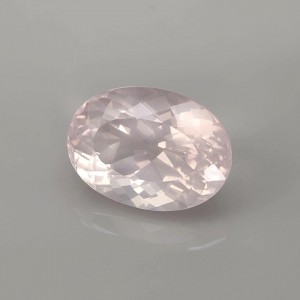
Buy Natural Rose Quartz – Cabochons, Faceted and Star Variety
Rose quartz is the iconic pink variety of macrocrystalline quartz — one of the world's most recognized, beloved, and commercially significant gemstone materials, prized across cultures and centuries for its soft, romantic, blush-pink to medium-rose color, its gentle translucent glow, and its extraordinary availability in large sizes at accessible prices. Few gemstones combine rose quartz's breadth of aesthetic appeal — from collector-quality star rose quartz cabochons to large sculptural carvings, from delicate carved beads to bold statement pendants — with its remarkable physical durability: Mohs hardness 7, no cleavage, and a toughness that makes it one of the most practical pink gemstones for everyday jewelry use. Rose quartz is universally associated with love, warmth, compassion, and emotional harmony — earning it the enduring designation as the "love stone" — and it has been worked into jewelry, amulets, and decorative objects by ancient Egyptians, Romans, Greeks, and virtually every subsequent civilization that encountered it. At GemPiece, all rose quartz is natural and untreated, with full disclosure on every stone.
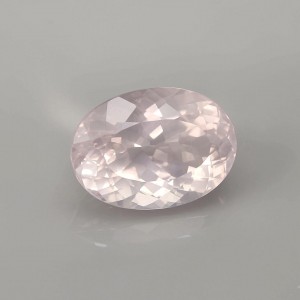
Rose quartz derives its characteristic soft pink color from microscopic inclusions of dumortierite or a closely related borosilicate fiber mineral distributed through the quartz crystal. These fine inclusions are responsible both for the pink color and for the characteristic translucency of rose quartz — they prevent the full transparency seen in amethyst, citrine, and other quartz varieties, giving rose quartz its soft, diffused, inner-glowing aesthetic that is entirely distinct from transparent faceted gems. This optical character makes rose quartz ideally suited to cabochon cutting and carving, where the stone's translucent glow and even pink color distribution can be showcased. Truly transparent faceted rose quartz — where the inclusions are fine enough not to impede transparency — is a collector rarity of considerable interest.
Read our complete rose quartz gemstone guide covering color origin, optical phenomena (star rose quartz, Tyndall scattering), geological sources, value factors, and care — or return to the complete quartz gemstone guide (view all quartz). Explore related quartz varieties: lavender quartz collection (lavender quartz guide), lemon quartz collection (lemon quartz guide), amethyst collection (amethyst guide), and prasiolite collection (prasiolite guide).
Color, Appearance, and Optical Character
Rose quartz ranges in color from the palest, barely-there blush pink through soft peach-pink, clean medium rose, and deeper pink-rose tones. The most valued material for cabochon and jewelry use displays a clean, even, medium-rose pink with no grey, brown, or purple modifiers — a pure, warm, feminine pink that is the defining color signature of this beloved gem. The color is most appealing and most vivid in larger sizes; small rose quartz stones often appear pale or near-colorless, while larger cabochons of the same material develop a richer, more saturated pink. This size-dependent color concentration is an important consideration when selecting rose quartz for jewelry use.
The optical character of rose quartz is defined by its translucency — the diffused, inner-glowing light transmission produced by the distributed microscopic mineral fiber inclusions that also cause the pink color. Light enters the stone, scatters through the fibrous inclusion network, and exits with a soft, even glow rather than the sharp brilliance of transparent faceted gems. This quality makes rose quartz one of the most photographically appealing gemstones in the world — its gentle translucent pink glow reproduces beautifully across all photography conditions.
Star Rose Quartz: Asterism and Optical Phenomena
Star rose quartz is one of the most prized and collectible varieties within the rose quartz family — material that displays asterism, the star effect, when cut as a cabochon and viewed under a direct light source. The star in rose quartz is produced by aligned rutile needle inclusions oriented in the three crystallographic directions of the trigonal quartz structure, producing a six-rayed star that moves across the surface of the stone as the light source moves. In the finest star rose quartz material, the star is sharp, centered, and silver-white against the pink body color — a striking optical phenomenon that makes each stone a unique natural gem. Four-rayed stars also occur in rose quartz. Star rose quartz must be cut with the cabochon dome oriented precisely perpendicular to the crystallographic c-axis to center and sharpen the star effect.
The finest star rose quartz comes from Madagascar, where material with ideal rutile inclusion density and alignment combined with good body color is produced. Brazilian star rose quartz is also commercially available. Star rose quartz is always worked as cabochons — never faceted — and is prized as both a collector gem and a statement jewelry stone.
Sources: Where Does Rose Quartz Come From?
Rose quartz is one of the most globally widespread quartz varieties, found on every continent with major commercial production concentrated in a small number of world-class localities. Madagascar — particularly the Sahatany Valley in central Madagascar — is the world's most important source for high-quality rose quartz, producing material with the finest, most saturated pink color and the cleanest, most even color distribution available commercially. Madagascan rose quartz is the benchmark for quality assessment in the variety and represents the majority of fine-quality cabochon material in the international market. Brazil — particularly Minas Gerais state — is the world's largest producer of rose quartz by volume, contributing the majority of commercial-grade material for beads, carvings, tumbled stones, and mid-range cabochons. Additional sources include Namibia, Mozambique, India, and the United States (South Dakota).
Rose Quartz Cuts and Forms
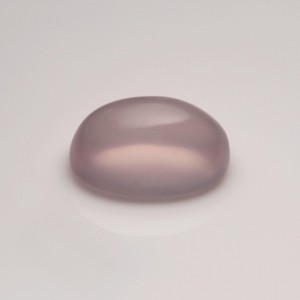
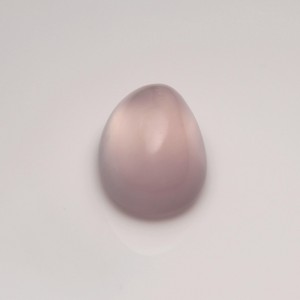
Rose quartz is most commonly worked as cabochons — smooth, dome-topped, polished stones that showcase the translucent pink glow and, where present, the star effect. Cabochon shapes include oval (the most common), round, cushion, pear, freeform, and rectangular. Rose quartz is also extensively used in carved forms — spheres, hearts, figurines, beads, and decorative objects — where its soft pink translucency and workability make it ideal for sculptural purposes. Faceted rose quartz — cut with flat, angled facets — is less common because the translucency that gives rose quartz its distinctive glow reduces the brilliance that faceting is designed to maximize. However, truly transparent rose quartz faceted into standard gemstone cuts — where found — is a collector rarity of considerable beauty and premium value.
Rose Quartz and the "Love Stone" — Cultural and Historical Significance
Rose quartz has one of the longest and richest histories of any gemstone in human culture. Ancient Egyptians believed rose quartz prevented aging and used it in facial masks and talismans. Roman and Greek mythology connected rose quartz to Aphrodite (Venus) — the goddess of love — with the pink stone said to have been created when Aphrodite and Adonis were scratched by thorns while embracing, their blood dyeing the white quartz pink. This mythological association with love and romance has persisted across millennia, making rose quartz the enduring global symbol of love, compassion, and emotional healing. It is given as a Valentine's Day gift, a romantic anniversary stone, a self-love and wellbeing talisman, and an alternative engagement stone. Rose quartz is also recognized as the alternative birthstone for January and as an anniversary gem for the 2nd and 5th wedding anniversaries.
Treatment Disclosure
Natural rose quartz requires no treatment. Its color is entirely natural — the product of microscopic dumortierite or related borosilicate fiber inclusions distributed through the crystal during geological formation — and is stable under normal conditions without any artificial enhancement. This distinguishes rose quartz from several other commercially prominent pink gems, including some pink topaz (often irradiated), pink sapphire (sometimes heat-treated), and synthetic pink stones. All rose quartz at GemPiece is natural and untreated. For a full treatment disclosure overview across the quartz family, see our quartz gemstone guide.
Frequently Asked Questions — Rose Quartz
What is rose quartz?
Rose quartz is the pink variety of macrocrystalline quartz (SiO₂). Its soft pink color is produced by microscopic inclusions of dumortierite or a closely related borosilicate fiber mineral distributed through the crystal, which also give it its characteristic translucent optical character. Rose quartz is one of the world's most recognized gemstones, used in cabochons, carvings, beads, and jewelry, and is globally associated with love and emotional harmony.
Why is rose quartz translucent rather than transparent?
The microscopic mineral fiber inclusions that cause rose quartz's pink color also scatter light passing through the crystal, preventing the full transparency seen in amethyst or citrine. This produces the characteristic diffused, inner-glowing translucency of rose quartz. Truly transparent faceted rose quartz — where the inclusions are too fine to significantly impede light — is rare and valued by collectors.
What is star rose quartz?
Star rose quartz is material containing aligned rutile needle inclusions that produce a six-rayed asterism (star effect) visible on the surface of a well-oriented cabochon under direct light. The finest star rose quartz — with a sharp, centered, silver-white star against a clean pink body — comes primarily from Madagascar. Star rose quartz is a prized collector variety.
Where does the best rose quartz come from?
Madagascar — particularly the Sahatany Valley — is the world's benchmark source for high-quality rose quartz with the finest, most saturated pink color and most even color distribution. Brazil is the largest producer by volume, contributing the majority of commercial-grade material. Star rose quartz of finest quality also comes primarily from Madagascar.
Is rose quartz treated?
No. Natural rose quartz requires no treatment of any kind. Its pink color is entirely natural and stable, produced by microscopic mineral fiber inclusions during geological formation. All rose quartz at GemPiece is natural and untreated.
Is rose quartz durable enough for everyday jewelry?
Yes. Rose quartz has Mohs hardness 7 and no cleavage, making it one of the most durable pink gemstones available for everyday jewelry use — significantly tougher than softer pink gems like kunzite (6.5–7), morganite (7.5–8 hardness but more valuable), or rhodochrosite (3.5–4).
What does rose quartz mean and symbolize?
Rose quartz is globally recognized as the stone of love, compassion, and emotional healing. It is associated with Aphrodite and Venus in ancient mythology, used as a romantic gift for Valentine's Day and anniversaries, and considered a symbol of self-love and emotional wellbeing in crystal healing traditions worldwide.
How do I care for rose quartz jewelry?
Clean rose quartz with warm water, mild soap, and a soft brush. Ultrasonic cleaning is safe for natural rose quartz. Avoid sustained heat exposure. Store separately from harder stones such as diamonds, rubies, and sapphires to prevent scratching.