Buy Natural Boulder Opal Stones Online – Unique Ironstone Opal Collection
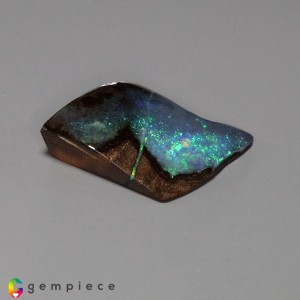
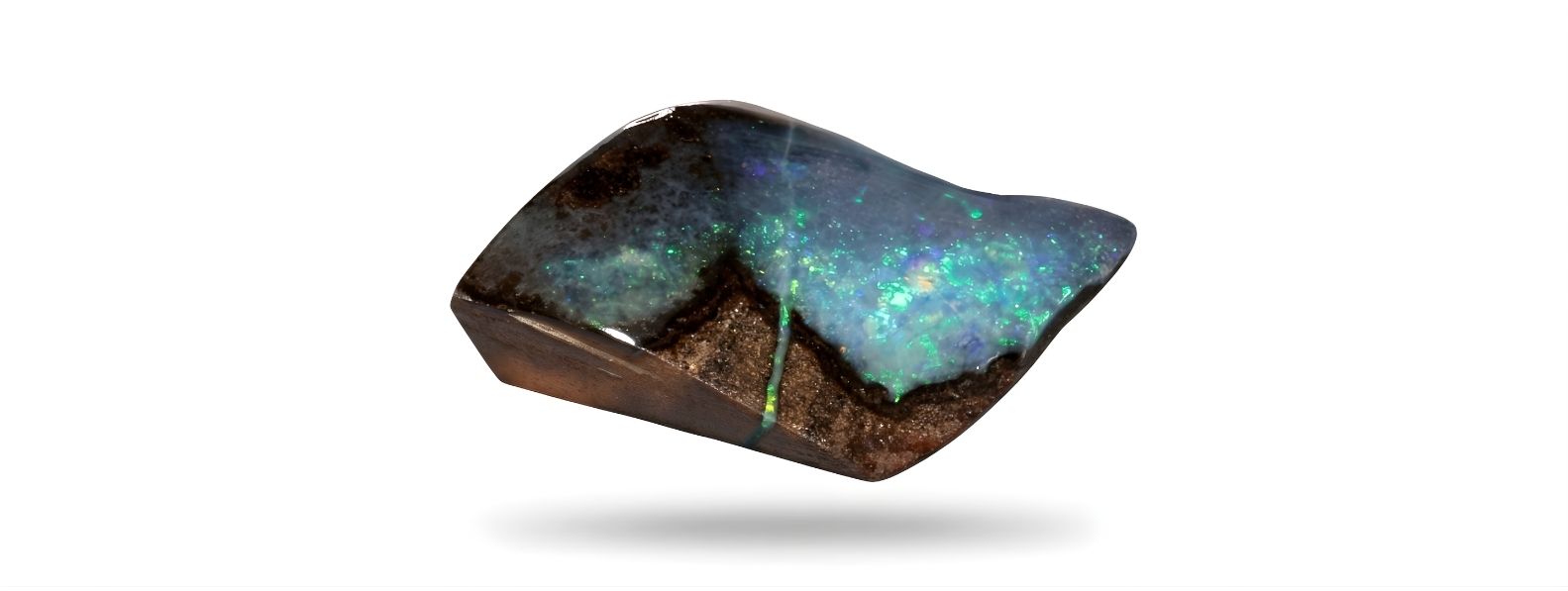
Boulder opal is Queensland's gift to the gemstone world — a natural treasure unlike any other opal variety on earth. While black opal from Lightning Ridge and white opal from Coober Pedy command wide recognition, boulder opal occupies a category entirely its own: precious opal that grows directly fused to its ironstone host rock, remaining permanently bonded to the ironstone as both a geological and aesthetic statement. The dark ironstone backing creates the same dark body tone that makes black opal so prized — the vivid play of color flashes against the deep ironstone background with extraordinary brilliance — while the structural support of the host rock makes boulder opal more durable than most opal types.
Every boulder opal is a geological artwork in the truest sense. The precious opal seams run through the ironstone in paths determined by ancient cracks and cavities, creating patterns that follow natural geology rather than a cutter's template. Because cutters work around the color bar rather than imposing a standard shape on it, boulder opals are almost never round or oval — they are freeform, organic, and entirely individual. No two are alike in shape, pattern, size, or color distribution. This is not a marketing claim. It is the direct consequence of how the stone forms.
What Makes Boulder Opal Different
The distinction between boulder opal and other opal types is geological, not commercial. Black opal from Lightning Ridge grows as a seam in sandstone and is separated entirely from its host rock during cutting — the finished stone is 100% opal. Crystal opal from Coober Pedy forms in clay beds and is similarly cut as pure opal. Boulder opal does something neither of those does: it grows fused to ironstone host rock in Queensland, and the ironstone stays permanently attached. That natural backing is not a treatment, not a manufacturing process, and not an assembly. It is exactly how the opal formed over millions of years.
The result of this geological intimacy is a stone that is structurally solid, naturally dark-backed, and geologically unlike any other opal on earth. The color sits in a thin seam running through the ironstone. In the finest specimens — particularly from Winton — the opal covers the entire face of the stone with no visible ironstone, creating a solid-color presentation that rivals the finest black opal. In other equally beautiful stones, the opal and ironstone intermingle across the face in patterns that resemble landscapes, cosmic nebulae, and abstract paintings.
For comprehensive gemological information, read our Boulder Opal Gemopedia Guide. Browse related opal varieties including fire opal, rainbow opal, and water opal, with guides at Fire Opal Guide, Rainbow Opal Guide, and Water Opal Guide. See the complete Opal Gemstone Guide and browse our full natural opal collection.
Boulder Opal Varieties and Named Subtypes
Not all boulder opal looks the same. Within the broader boulder opal category, several named subtypes reflect specific geological formations or regional characteristics that collectors and designers seek by name.
Yowah Nuts are one of the most distinctive and collectible formations in the entire opal world. These are rounded ironstone concretions ranging from peanut size to lemon size, with precious opal formed as the kernel of the concretion — the stone must be split open to reveal whether the center contains precious opal or potch. A Yowah nut with a vivid, full-color kernel is among the most sought-after natural opal formations. They are found exclusively in and around the town of Yowah in southwestern Queensland.
Koroit boulder opal from the Koroit field near Eulo in Queensland is known for its intricate matrix patterns, where precious opal is distributed throughout the dark ironstone in complex, swirling designs that create what collectors describe as picture stones or cosmic opals. Rather than a simple color seam, Koroit material often shows opal dispersed across the entire stone surface in organic patterns that resemble galaxies, ancient landscapes, and topographic maps.
Crystal boulder opal is a particularly prized subtype where the opal layer attached to the ironstone is transparent to translucent rather than opaque, allowing light to pass through the opal from the front and reflect off the dark ironstone backing. The result is exceptional brightness — the crystal clarity of the opal combined with the dark background of the ironstone produces the highest-performing color display in the boulder opal category.
Boulder blacks are boulder opals where the matrix is sufficiently dark that the stone presents visually as black opal. These are among the most commercially valuable boulder opals and are sold at premiums reflecting their black-opal-like appearance.
Boulder Opal Properties
Composition: Precious opal (SiO₂·nH₂O) bonded to ironstone
(hematite and goethite iron oxides)
Hardness: 5.5 to 6.5 Mohs (opal component); ironstone provides additional
structural strength
Refractive Index: approximately 1.44 to 1.46
Specific Gravity: Higher than solid opal due to dense ironstone matrix
Body Tone: N1 to N5 effective (dark, due to ironstone backing)
Transparency: Opaque to translucent depending on opal layer type
Treatment: None — entirely natural and untreated as a solid stone
Queensland Mining Fields
Boulder opal occurs exclusively in Queensland, Australia, within the deeply weathered Cretaceous sedimentary rocks of the Winton Formation — a geological unit extending approximately 1,000 kilometers in a northwest direction across the western Queensland outback, from the New South Wales border through Cunnamulla, Quilpie, and Longreach toward Winton and Kynuna. The major commercial mining fields within this belt include:
Quilpie on the bank of the Bulloo River is the largest boulder opal producing region in Queensland and the primary commercial source. The Quilpie district has been the backbone of the boulder opal industry for decades and continues to supply the majority of commercial production.
Winton in central-western Queensland is associated with the discovery of boulder opal by George Cragg in 1888, who established the first documented boulder opal mine in the Winton district. Winton material is known for producing full-face color coverage of exceptional quality.
Yowah in southwestern Queensland, halfway between Cunnamulla and Thargomindah, is the source of the famous Yowah Nuts and ironstone matrix opal found nowhere else.
Koroit, located approximately 77 kilometers north-northeast of Eulo in the Cunnamulla Mineral District, is the source of the matrix-pattern boulder opal that has attracted a devoted collector following globally.
Boulder Opal Value and Price
Boulder opal pricing is more complex than most gemstone categories because the stone is inseparable from its ironstone host. Traditional per-carat pricing applies but must be understood in context: the ironstone component adds significant weight without adding opal value, meaning that visual quality per stone is a more reliable value assessment than price per carat alone.
Low-grade boulder opal with thin, patchy opal seams and dull color ranges from approximately $20 to $100 per carat. Mid-grade material with solid color coverage across most of the face ranges from $100 to $500 per carat. High-grade boulder opal with vivid, bright full-face color and striking patterns commands $500 to $3,000 per carat. Exceptional specimens — particularly Winton full-face material with rare red play of color or Koroit cosmic-pattern pieces — reach $3,000 to AUD $3,500 per carat at the premium end of the market. Significant pieces are often sold by the stone rather than per carat, with exceptional boulders transacting for thousands to tens of thousands of dollars as individual collector pieces.
Boulder opal is the second most valuable opal type overall, after Lightning Ridge black opal. All boulder opal is entirely natural and untreated — unlike doublets or triplets, the ironstone backing is part of the original geological stone, not an assembled or artificial addition. Browse our complete boulder opal collection or explore the full natural opal gemstone range.
Boulder Opal in Jewelry
Boulder opal's natural ironstone backing makes it more suitable for rings and daily-wear jewelry than thin solid opal slabs, which are more vulnerable to fracture. The ironstone provides structural support that eliminates the fragility concerns common with other precious opal types. Protective settings — bezels, halos, and gallery settings that support the stone's perimeter — are still recommended, particularly for ring applications, given opal's 5.5 to 6.5 Mohs hardness.
The freeform shapes that characterize boulder opal make it particularly suited to statement pendants, where the organic form and individually unique appearance create pieces that cannot be replicated. Each boulder opal pendant is, by definition, a one-of-a-kind design because no two boulder opals share the same shape.
Frequently Asked Questions
What is boulder opal?
Boulder opal is precious opal that forms as veins or patches within natural ironstone host rock in Queensland, Australia. Unlike black and white opal, which are separated from their host during cutting, boulder opal retains its natural ironstone backing. This gives it a naturally dark body tone, enhances durability, and makes every stone completely unique in shape and pattern.
Is boulder opal the same as a doublet?
No. A doublet is an assembled product where a thin slice of opal is cemented to a dark backing material. Boulder opal's ironstone backing is part of the original geological stone — it is not cemented, not assembled, and not manufactured. The two are completely different products, and boulder opal is significantly more valuable than an opal doublet of similar appearance.
Where does boulder opal come from?
Boulder opal comes exclusively from Queensland, Australia. The primary mining fields are Quilpie, Winton, Yowah, and Koroit, all within the deeply weathered Cretaceous Winton Formation of western Queensland. No commercially significant boulder opal exists outside Queensland.
What are Yowah Nuts?
Yowah Nuts are rounded ironstone concretions found near Yowah in southwestern Queensland, ranging from peanut to lemon size, with precious opal formed as the kernel inside. The stone must be split to reveal whether the center contains precious opal or potch. A vivid full-color Yowah Nut kernel is among the most collectible opal formations in the world.
Is boulder opal treated?
No. Boulder opal is entirely natural and untreated. The ironstone backing is a natural geological feature of how the opal formed, not a treatment or enhancement. This natural integrity makes boulder opal particularly appealing to collectors who prioritize authentic untreated stones.
Why is boulder opal more durable than other opals?
The natural ironstone matrix provides structural support to the precious opal layer, distributing impact forces and reducing the risk of fracture. Solid opal without a backing is more vulnerable to surface fractures. This makes boulder opal the most practical precious opal for ring and daily-wear jewelry applications.
What determines boulder opal value?
Color intensity and play of color are the primary drivers, with red and violet being the rarest and most valuable colors. Full-face color coverage with minimal visible ironstone on the face commands the highest premiums. Pattern quality, size, origin (Koroit cosmic patterns and Winton full-face material command niche premiums), and provenance from sustainable mining operations are additional value factors.
Clear ✖