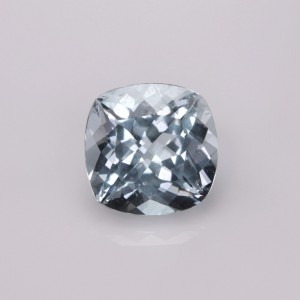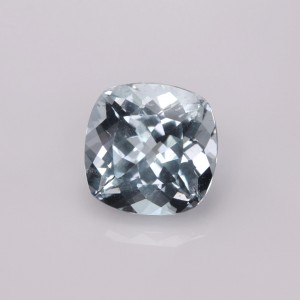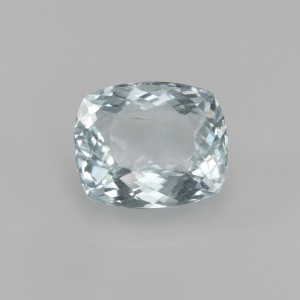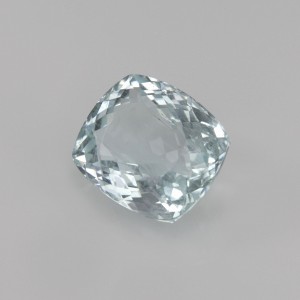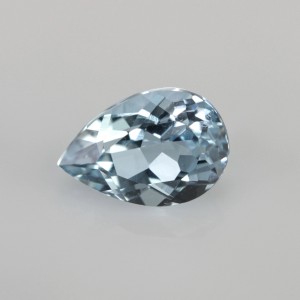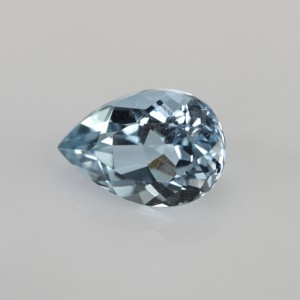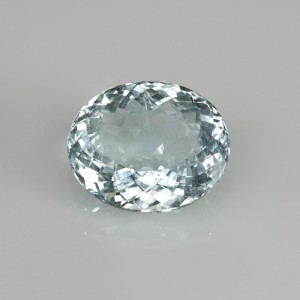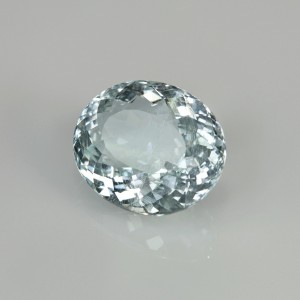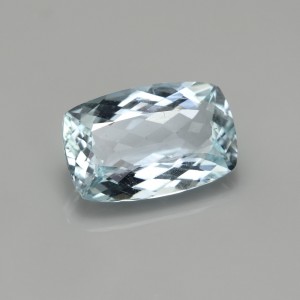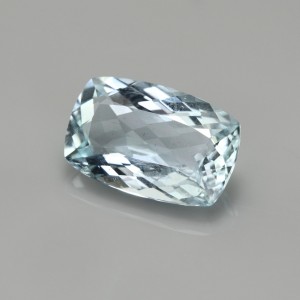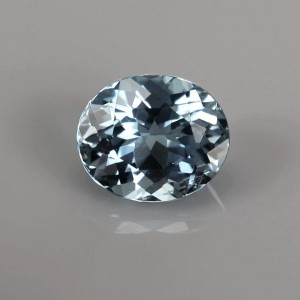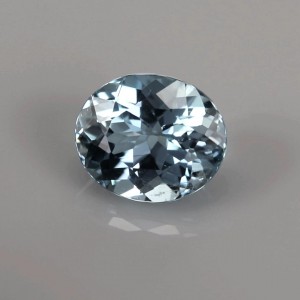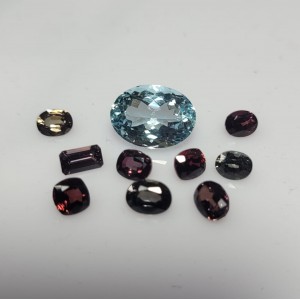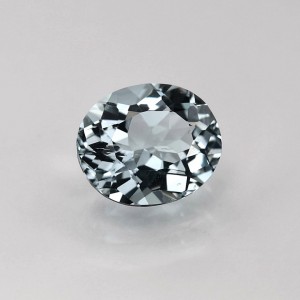

Buy Natural Aquamarine – Santa Maria Blue Beryl Online
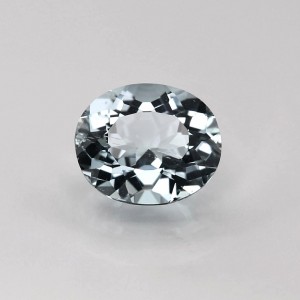
There are very few gemstones whose name is also a color — a fact that tells you everything about aquamarine's most important characteristic. Aqua marina: water of the sea. The Romans named it and the name has survived unchanged for two thousand years because no better description exists. The finest aquamarine captures exactly the luminous, transparent, slightly blue-green of tropical ocean water viewed from above — a color that is simultaneously calming and brilliant, oceanic and precise. Ancient Greek and Roman sailors carried aquamarine as a talisman of safe passage, carved with the image of Poseidon, believing the gem to be a treasure of the sea deities that could calm storms and protect those who sailed. Today, aquamarine is the birthstone for March, the traditional anniversary gift for 16th and 19th years of marriage, and one of the most enduringly commercial members of the beryl family — prized equally by fine jewelry designers for its wearability and clarity, by collectors for fine Santa Maria material, and by buyers seeking a major gem with impeccable transparency at accessible prices relative to sapphire.
Aquamarine's commercial position is built on a foundation of genuine gemological advantages. It is the most transparent fine beryl — a Type I gemstone where eye-clean clarity is the expected norm rather than the exceptional achievement. It grows in some of the largest gem-quality crystals of any species — the Dom Pedro aquamarine, the largest single aquamarine gem ever fashioned, weighs 10,363 carats and was cut from a single Brazilian crystal. Large, clean aquamarine in fine blue is commercially accessible at prices that no competing blue gemstone matches at equivalent visual quality and size. It has a hardness of 7.5 to 8 and no significant cleavage concerns that limit jewelry use. And at the collector premium end, fine Santa Maria deep blue aquamarine — the gold standard of the variety from the Santa Maria de Itabira mine in Brazil — represents a genuine collector asset that has appreciated significantly in value as original production from the name mine has declined. At GemPiece, aquamarine is sourced from Brazil, Pakistan, Afghanistan, and Mozambique with full treatment disclosure on every stone.
Read our complete aquamarine gemstone guide covering the iron color mechanism, Santa Maria quality standard, optical phenomena, global sources, and value factors — or browse our natural aquamarine collection with full treatment disclosure. Explore related beryl varieties: emerald (emerald guide), morganite (morganite guide), heliodor (heliodor guide), and the full beryl family.
Color: The Full Aquamarine Spectrum
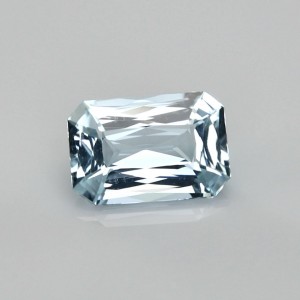
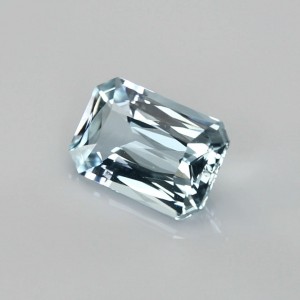
Aquamarine's color ranges from the palest barely-there sky blue through clean medium blue to the collector-benchmark vivid deep blue of the finest Santa Maria material. Understanding this range is essential to aquamarine buying because the price difference between the pale commercial end and the vivid Santa Maria collector end is substantial — and the color difference is dramatic.
Pale to light blue aquamarine — the most commercially available and widely used tier — provides the clean, transparent blue that drives aquamarine's use in mainstream jewelry. It is beautiful in its delicate way and practical for large settings where the size itself creates visual presence even at moderate color saturation. Medium blue aquamarine — clean, even, without significant green or grey modifier — represents the mainstream quality standard for fine jewelry use and the entry point for collector-grade material. Santa Maria deep blue — vivid, deeply saturated, without green or grey modifier, with enough color to maintain saturation even in direct daylight — is the premium tier and the collector benchmark. A fine Santa Maria aquamarine in vivid deep blue above 10 carats with excellent clarity is among the most impressive blue gemstones available at any price level.
Most commercial aquamarine shows a blue-green component in unheated form — the result of iron in two oxidation states within the crystal. Heat treatment at low temperatures removes the greenish component, producing the pure blue that the market prefers. The treatment is stable, permanent, and universally accepted.
Santa Maria Aquamarine: The Collector Benchmark
Santa Maria is the most important quality designation in the aquamarine market — a name that originally referred to material from the Santa Maria de Itabira mine in Minas Gerais, Brazil, but has since become a quality descriptor applied to any aquamarine meeting the specific color standard associated with that mine's finest output. The Santa Maria color standard requires a vivid, highly saturated deep blue without green or grey modifier and with strong color depth maintained across lighting conditions. Only approximately three shades within the Munsell Color System's approximately 1,500 blue gradations qualify as true Santa Maria blue — making it a genuinely narrow, genuinely demanding standard.
As production from the original Santa Maria de Itabira mine declined toward exhaustion, comparable-quality material began appearing from Mozambique's Zambezia Province — marketed as "Santa Maria Africana." When the color meets the standard, this material is accepted as equivalent by the international trade. Fine Pakistani aquamarine from Gilgit-Baltistan occasionally approaches Santa Maria color standards in the finest specimens. Regardless of origin, the quality criterion is identical: vivid deep blue without modifying colors.
Aquamarine and the March Birthstone
Aquamarine is the birthstone for March and the traditional anniversary gift for 16th and 19th years of marriage — associations that have sustained consistent commercial demand for the variety across cultures and generations. For birthstone buyers, aquamarine offers something that most birthstone gems cannot: a genuinely beautiful, genuinely durable, genuinely natural gemstone available in meaningful sizes at accessible prices. A fine aquamarine birthstone gift — well cut, clean, in good blue — is a genuinely impressive piece of natural material that will be worn, appreciated, and potentially collected as quality is understood.
Optical Phenomena in Aquamarine
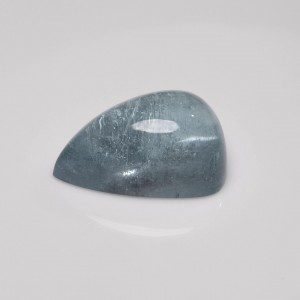
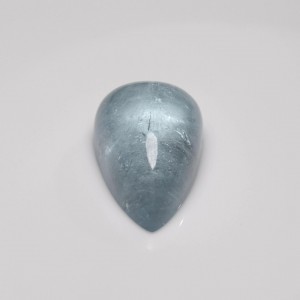
Standard faceted aquamarine does not display optical phenomena — it is evaluated purely on color, transparency, brilliance, and cut. However, rare aquamarine specimens do display chatoyancy (cat's eye aquamarine) from parallel tube-like inclusions oriented along the crystal c-axis, or asterism (star aquamarine) from two or more intersecting sets of parallel inclusions. Both phenomena require cabochon cutting to display effectively and are collector rarities within the species. Cat's eye aquamarine is more common than star aquamarine; both represent exceptional finds.
Origins and Sources
Brazil dominates world aquamarine production by both volume and quality benchmark. Minas Gerais state — particularly the Marambaia and Golconda areas associated with Santa Maria material — is the world's reference source. Pakistan's Gilgit-Baltistan region produces fine, deeply colored aquamarine from high-altitude pegmatites in some of the world's most challenging mining terrain. Afghanistan's Nuristan and Kunar provinces contribute quality material to the market. Mozambique's Zambezia Province has become a commercially significant source of fine deep blue material. Nigeria, Madagascar, Namibia, and Russia round out the global supply picture.
Treatment Disclosure
Most commercial aquamarine is heat treated to convert the blue-green of natural rough to pure blue. The treatment is performed at relatively low temperatures (371–426°C), selectively converting ferric iron (Fe³⁺) to ferrous iron (Fe²⁺), removing the greenish component. The result is permanent, stable, and universally accepted in the trade when disclosed. Natural unheated aquamarine with strong pure blue color commands collector premiums and should be confirmed with laboratory documentation of untreated status. GemPiece provides full treatment disclosure on every aquamarine stone, clearly identifying heat-treated and natural untreated material.
Aquamarine vs. Blue Topaz: The Comparison Buyers Ask
Aquamarine and blue topaz are the two most frequently compared blue gemstones in the accessible fine jewelry market, and the comparison significantly favors aquamarine for buyers who understand the distinction. Blue topaz is almost universally irradiated — the colorless topaz that forms naturally is treated with gamma or neutron irradiation to produce the London blue, Swiss blue, or sky blue colors sold commercially. Natural blue topaz in commercial quantities essentially does not exist. Aquamarine, by contrast, is natural blue beryl — occurring in nature in the colors sold, with heat treatment used only to improve an already-blue natural color, not to create blue from nothing. Additionally, topaz has perfect basal cleavage that makes it more vulnerable to chipping in ring settings than aquamarine, which has no significant cleavage. For buyers who value natural gemstones, the distinction is fundamental.
Frequently Asked Questions — Aquamarine
What is aquamarine?
Aquamarine is the blue to blue-green variety of beryl (Be₃Al₂Si₆O₁₈) — the same mineral family as emerald and morganite. Colored by ferrous iron (Fe²⁺) within the crystal lattice, it is the March birthstone and is admired worldwide for its oceanic blue color, exceptional natural clarity, strong brilliance, and practical durability. Mohs hardness 7.5 to 8.
What is Santa Maria aquamarine?
Santa Maria describes the finest, most vivid deep blue aquamarine — originally from the Santa Maria de Itabira mine in Minas Gerais, Brazil. The designation requires a vivid, deeply saturated blue without green or grey modifier, meeting a narrow color standard of approximately three Munsell color gradations. As original Santa Maria mine material has become scarce, comparable deep blue material from Mozambique (Santa Maria Africana) and Pakistan is accepted as equivalent when the color standard is met.
Is aquamarine treated?
Most commercial aquamarine is heat treated to convert blue-green to pure blue — a permanent, stable, universally accepted treatment when disclosed. Unheated aquamarine with strong natural pure blue commands collector premiums and requires laboratory confirmation. GemPiece provides full treatment disclosure on every stone.
What causes aquamarine's blue color?
Ferrous iron (Fe²⁺) within the beryl lattice produces the blue color. When ferric iron (Fe³⁺) is also present alongside Fe²⁺, the combination produces a greenish-blue. Heat treatment selectively converts Fe³⁺ to Fe²⁺, removing the green component and producing pure blue.
Is aquamarine durable for everyday jewelry?
Yes. Mohs hardness 7.5 to 8, typical eye-clean clarity, and no significant cleavage make aquamarine one of the most practical fine gemstones for all jewelry applications — rings, pendants, earrings, and bracelets. Avoid sudden temperature changes and prolonged direct sunlight.
How does aquamarine compare to blue topaz?
Aquamarine is a natural blue gemstone — its color occurs naturally, with heat treatment only improving an already-blue natural stone. Blue topaz is almost universally irradiated from colorless natural topaz to create blue. Additionally, topaz has perfect cleavage that makes it more vulnerable to chipping than cleavage-free aquamarine. For buyers who value natural gemstones, aquamarine is the clear choice over treated blue topaz.
What are the best sources of aquamarine?
Brazil (Minas Gerais — Santa Maria benchmark) is the primary world source. Pakistan (Gilgit-Baltistan), Afghanistan (Nuristan/Kunar), and Mozambique (Zambezia — Santa Maria Africana) are the most important secondary sources. GemPiece sources from all four origins with full disclosure.
Does aquamarine display cat's eye or star effects?
Rarely. Cat's eye aquamarine (chatoyancy) and star aquamarine (asterism) exist as collector rarities produced by parallel inclusions in the crystal, visible only when the stone is cut as a cabochon. Standard faceted aquamarine does not display these effects.
Clear ✖