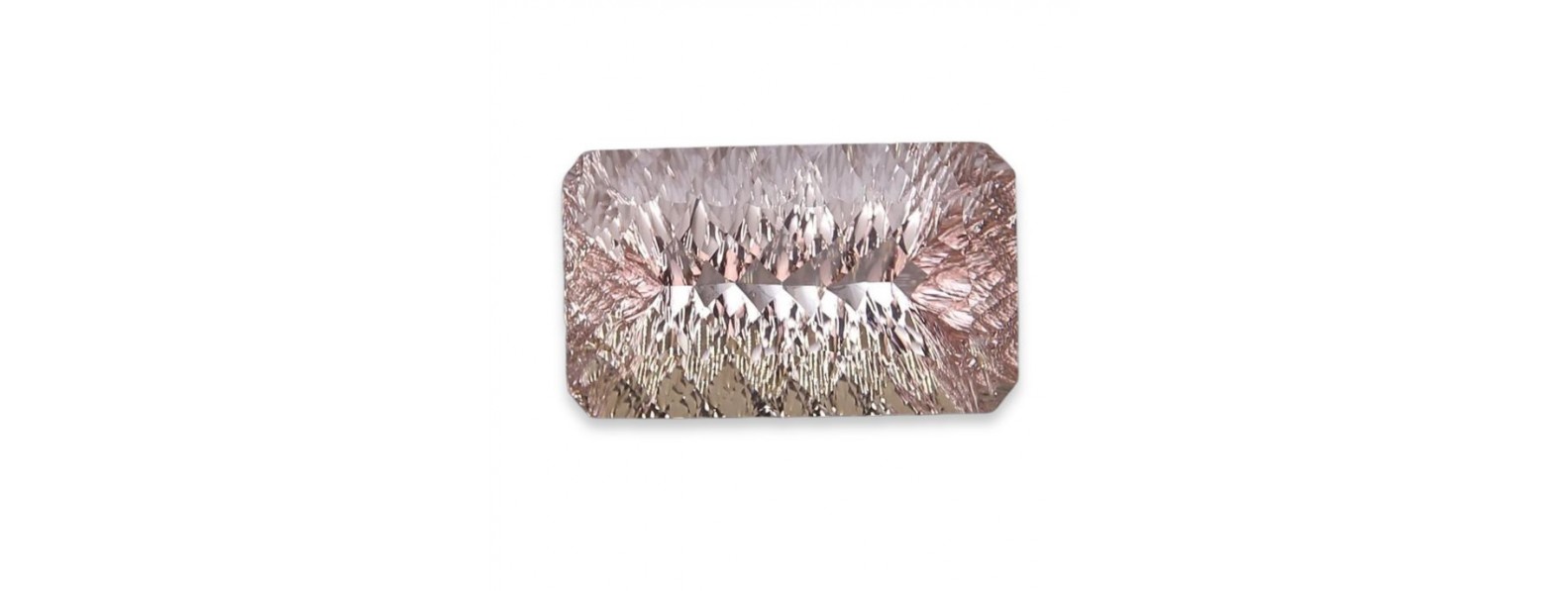
Morganite – Pink Beryl, Manganese Color and Brazil Origins
Morganite entered the world's gem literature in December 1910 at a meeting of the New York Academy of Sciences, when George Frederick Kunz — the legendary chief gemologist of Tiffany and Co. who had spent decades cataloging and naming new gem minerals — formally proposed the name morganite for a pink beryl variety first officially collected from Madagascar, in honor of the American financier John Pierpont Morgan. Morgan was not merely a wealthy patron; he was an active, knowledgeable gem collector who had donated significant gemstone collections to the American Museum of Natural History and the Paris Museum of Natural History, contributing to public scientific understanding of mineralogy. The naming was fitting — a stone of quiet, aristocratic elegance honoring a collector of genuine passion. What Kunz could not have known in 1910 was that morganite would spend most of the twentieth century as a relative obscurity in the gem trade before becoming, in the 2010s, one of the most commercially significant pink gemstones in the world — driven by a perfect convergence of its color with the rose gold aesthetic that reshaped fine jewelry design in that decade.
This guide covers everything a serious buyer, designer, or collector needs to understand about morganite: its beryl mineralogy and crystal chemistry, the manganese color mechanism and why it produces a range from peach to vivid pink, the science of heat treatment and what it does to color, the full global source map with origin-specific quality profiles, gemological properties, clarity assessment, the distinction between commercial-grade and collector-grade material, value factors, comparison with competing pink gemstones, and complete care guidance. Explore our natural morganite collection from Brazil and Afghanistan. For the broader family context, see our complete beryl guide (view beryl collection). Related variety guides: aquamarine (view collection), emerald (view collection), pezzottaite (view collection), and goshenite (view collection).
Mineral Composition and Physical Properties
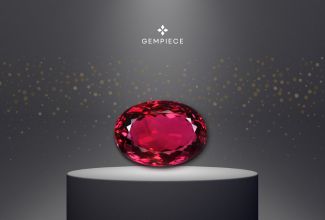
Morganite is the pink gem variety of beryl — chemical formula Be₃Al₂Si₆O₁₈ — sharing the species' hexagonal crystal system, dihexagonal dipyramidal symmetry class, and characteristically prismatic crystal habit. Morganite crystals tend to be tabular to short-prismatic rather than the elongated prisms typical of aquamarine, reflecting slightly different growth conditions in the evolved lithium-rich pegmatites that host morganite. Some morganite crystals from Brazil grow to impressive sizes — crystals producing faceted stones of 100 carats and above are not unknown from Minas Gerais, which is the primary reason large morganite is commercially accessible in a way that large fine pink sapphire is not.
Mohs hardness: 7.5 to 8. Specific gravity: 2.71 to 2.90 — slightly higher than most beryl varieties due to elevated cesium content in morganite's structural channels, as morganite forms in the more evolved, cesium-enriched pegmatites of the beryl family. Refractive index: 1.572 to 1.600, uniaxial negative. Birefringence: 0.008 to 0.009. Dichroism: Weak to moderate — pale pink to deeper pink or slightly bluish-pink along different crystal axes. Luster: Vitreous. Fluorescence: Inert to weak pink or weak lilac under UV. Inclusions: Fingerprints, irregular fluid inclusions, growth tubes, two-phase inclusions. GIA Type I clarity — eye-clean expected and standard.
Color Origin — The Manganese Mechanism in Detail
Morganite's color is produced by manganese — specifically by Mn²⁺ or Mn³⁺ substituting for Al³⁺ in the octahedral aluminum sites of the beryl crystal lattice. The manganese ion absorbs blue and green wavelengths from the visible spectrum through d-d electronic transitions, transmitting primarily red and pink wavelengths and producing the characteristic pink color. The precise oxidation state of manganese and its concentration determine whether the color tends toward a purer, cooler pink (associated more with Mn³⁺ in specific coordination) or a warmer, more saturated rose.
The complication in morganite color is iron. Many morganite crystals contain both manganese and iron impurities — and while manganese produces pink, iron in its ferric state (Fe³⁺) produces a yellow-green component. The combination of pink from Mn and yellow from Fe³⁺ produces the characteristic peach, salmon, and orangey-pink colors seen in natural unheated morganite. The proportion of Mn to Fe in the crystal determines whether a given stone trends toward pure pink (manganese dominant), peach (iron and manganese balanced), or salmon-orange (iron-influenced). Understanding this mechanism explains both the color range of morganite and the logic of heat treatment.
Heat Treatment — The Science and the Market Impact
Heat treatment of morganite is the standard commercial practice that has shaped the variety's appearance in the global market. The treatment works as follows: when morganite is heated to approximately 400°C in a controlled environment, the Fe³⁺ color centers that produce the yellow-orange component are selectively destabilized and destroyed, while the Mn²⁺/Mn³⁺ color centers that produce pink are left intact. The result is a purer, cooler, more stable pink that the market overwhelmingly prefers over the natural peach and salmon of unheated material. The treatment is permanent under normal conditions — it cannot be reversed by normal wear or standard lighting. Heat-treated morganite is indistinguishable from natural pink morganite by standard visual examination alone; laboratory spectroscopic analysis is required to confirm untreated status.
From a market perspective, most commercial morganite — particularly from Brazil — has been heat treated before it reaches buyers. A growing segment of the collector market actively prefers unheated morganite, particularly from Afghanistan, where the natural color is already deep and vivid enough that heat treatment is unnecessary. GemPiece explicitly discloses heat treatment status on every morganite and distinguishes natural untreated material from heat-treated commercial material — a level of disclosure that allows buyers to make fully informed decisions.
Sources — Global Origin Profile
Brazil — Minas Gerais (largest commercial source globally) — The municipalities of Governador Valadares, Araçuaí, and Itinga in Minas Gerais state form the world's commercial foundation for morganite supply. Brazilian pegmatites produce large, well-crystallized morganite with a color range from pale blush through medium rose-pink, in crystal sizes that make large faceted stones commercially accessible. The Cruzeiro Mine near São José da Safira and the Golconda area are among the most documented production localities. Most Brazilian morganite is heat treated commercially. GemPiece sources Brazil material directly with full treatment documentation.
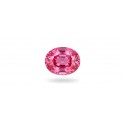
Afghanistan — Nuristan and Kunar provinces (finest deep pink) — The pegmatite belts of northeastern Afghanistan's Nuristan Province — particularly the Laghman, Pech, and Kunar valleys — produce morganite with color saturation and purity that Brazilian commercial material rarely matches. Afghan material shows a vivid, deeply saturated rose-pink that is natural and unenhanced in the finest specimens, produced by high manganese concentrations in highly evolved lithium-cesium pegmatites of the same geological province that yields Afghanistan's renowned tourmaline and kunzite. Crystal sizes are typically smaller than Brazilian material, but color quality is consistently superior in the finest tier. GemPiece sources Afghan morganite with natural untreated documentation for collector-grade pieces.
Madagascar (type locality) — Madagascar's pegmatite districts, particularly in the central highland regions, provided the material for morganite's original scientific description and continue to produce commercial quantities of fine pink morganite. Madagascan material often shows excellent clarity and a clean pink color. Madagascar is also the type locality for pezzottaite — the related cesium-rich beryl-group mineral — reflecting the cesium-enriched pegmatite chemistry of the island's gem deposits.
Mozambique, Namibia, Nigeria, and USA (California) — Mozambique's Zambezia Province and Alto Ligonha pegmatite belt produce commercial morganite alongside aquamarine. Namibia's Erongo Mountains yield morganite alongside world-class heliodor. Nigeria produces morganite with occasionally strong purplish-pink hues. The Himalaya Mine in San Diego County, California is a historically important North American source producing limited quantities of fine morganite alongside tourmaline.
Clarity Assessment
Morganite is a GIA Type I gemstone — eye-clean clarity is the commercial standard, and inclusions are not expected in quality material. The majority of commercial morganite meets this standard, which — combined with the large crystal sizes available — makes morganite unusual among fine gemstones in offering very large, visually clean stones at accessible prices. Inclusions when present typically include hollow growth tubes parallel to the c-axis, fingerprint inclusions from healing fractures, and irregular fluid inclusions. The combination of pale-to-medium color and high transparency means that any visible inclusions are relatively easy to detect in morganite — a practical argument for careful stone selection and for buying from sources that assess stones individually rather than selling parcels.
Morganite vs. Competing Pink Gemstones
Understanding morganite's position requires honest comparison with the pink gemstones it competes with in fine jewelry and collector markets.
Morganite vs. pink sapphire — Pink sapphire (corundum, Mohs 9, chromium-iron colored, often heat treated) is harder, commands higher prices for fine quality, and represents a more traditional prestige choice. Morganite offers comparable visual impact in large sizes at dramatically lower prices. Fine unheated pink sapphire commands premiums over equivalent morganite, but the comparison favors morganite strongly for buyers prioritizing visible impact over mineralogical prestige.
Morganite vs. pink tourmaline (rubellite) — Pink tourmaline and rubellite (Mohs 7–7.5) offer comparable hardness range, similar price accessibility, and a color range from pale pink to vivid purplish-pink. Rubellite's stronger color saturation at the vivid end exceeds what most morganite achieves. For buyers who want the most vivid pink in the accessible price tier, fine rubellite and fine Afghan morganite are direct color competitors. See our beryl collection for the broader context.
Morganite vs. kunzite — Kunzite (spodumene, Mohs 6.5–7, manganese colored) produces a similar pink-to-violet-pink color range but with lower hardness and perfect cleavage in two directions that limits its durability in daily-wear rings. Morganite's superior hardness and freedom from cleavage make it meaningfully more practical for ring applications. Kunzite's stronger pleochroism produces a more variable color appearance under different lighting conditions.
Value Factors
Color intensity and purity are the primary value drivers. Pure, vivid rose-pink without orange, yellow, or grey modifiers represents the premium tier. The collector benchmark is fine deep pink Afghan morganite — color approaching light pink sapphire quality in saturation, combined with natural untreated status. Untreated status with laboratory documentation adds meaningful collector premium over equivalent heat-treated material. Eye-clean clarity is expected and standard; any visible inclusions reduce value. Large size is a positive factor — commercial morganite above 20 carats in fine color is available and visually impressive at prices far below equivalent pink sapphire. Cut quality matters — well-proportioned cuts that maximize color face-up and brilliance add visual and commercial value. Origin documentation for Afghan material commands collector premiums.
Durability and Care
Mohs hardness 7.5 to 8 makes morganite a practical everyday jewelry gemstone resistant to ordinary surface scratching from household dust and contact. Beryl has no cleavage — providing better impact resistance than cleavage-prone gems like kunzite or topaz at comparable hardness. Clean with warm water, mild soap, and a soft brush. Ultrasonic cleaning is generally safe for eye-clean morganite without fractures. Avoid steam cleaning. Avoid sustained exposure to strong direct sunlight as a precaution. Store separately from harder gemstones including sapphire, ruby, and diamond to prevent surface scratching of the Mohs 7.5–8 surface.
Explore the Beryl Family
Beryl family guide (view collection), aquamarine (view collection), emerald (view collection), pezzottaite (view collection), and goshenite (view collection).