Mahenge Spinel: Origin, Color, Properties and Value
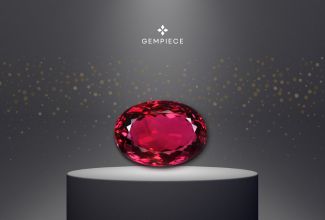
Mahenge spinel is the most celebrated modern discovery in the colored gemstone world — a variety of spinel from the Mahenge region of Tanzania's Ulanga District whose extraordinary neon pinkish-red to vivid red color, intense UV fluorescence, and exceptional crystal transparency have, in less than two decades, transformed global understanding of what spinel can be and what it is worth. Before August 2007, no buyer anywhere in the world had paid more than $3,000 per carat for spinel. The Mahenge discovery changed that permanently. Within years of the landmark Ipanko crystal find, Mahenge spinel was being sold at prices that rivaled fine Burmese ruby — and the collectors and dealers who recognized the material earliest made some of the most successful gem acquisitions of the twenty-first century.
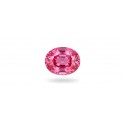
What makes Mahenge spinel exceptional is not simply its color — though that color, in the finest material, is genuinely unlike anything else in the gem world — but the combination of color, transparency, and fluorescence that interacts to create the phenomenon Mahenge collectors call "the glow." Under natural outdoor light, a fine Mahenge spinel appears to generate its own illumination, the neon pinkish-red intensifying rather than washing out as light levels increase. Under incandescent light, the same stone deepens and warms. Under a UV lamp, it blazes with brilliant red fluorescence that demonstrates the chromium concentration driving the color. This multi-condition optical performance — consistent, vivid, and extraordinary in every lighting environment — is the defining characteristic of top Mahenge material and the reason it commands prices that no other pink gemstone, including fine pink sapphire and rubellite tourmaline, can consistently match per carat.
This guide covers the geology and discovery history of Mahenge spinel, the chromium color and fluorescence mechanisms, the full color range of Mahenge production, gemological properties, value factors, comparison with ruby and Burmese spinel, and the market context. Return to the complete spinel gemstone guide or explore companion variety guides: Burmese Red Spinel, Cobalt Blue Spinel, Madagascar Blue Spinel. Explore our full natural spinel collection.
Discovery History: The Ipanko Find That Changed Everything
Spinel was first noticed near Mahenge in the late 1980s, when a local hunter unearthed a red stone near Lukande village in Tanzania's remote Ulanga District. Thai operators ran limited mining in the area from 1986 to 1992, and around 2000, farmers at Ipanko village discovered transparent spinel crystals weathering out of marble outcrops. But Mahenge's international recognition was minor until August 2007, when miners at the Ipanko site unearthed four colossal spinel crystal formations weighing approximately 52 kg, 28 kg, 20 kg, and 5.7 kg — among the largest gem-quality spinel crystals ever recorded. The 52 kg crystal displayed the characteristic vivid orangey pinkish-red color that defines the finest Mahenge material. Though the final yield of gem-quality facetable material from these crystals was only a few percent — typical for large natural crystals — the stones produced several thousand carats of exceptional neon spinel that circulated to dealers and collectors worldwide, demonstrating a color quality that had never been seen at commercial scale before.
The Mahenge discovery immediately attracted the attention of major gem laboratories, auction houses, and the international collector community. GRS, Lotus Gemology, and GIA studied the material extensively, documenting the chromium concentrations and fluorescence mechanisms responsible for the extraordinary color. The deposit's limited geographic extent — confined to specific marble pockets within the Mahenge massif — and the extensive mining of the richest Ipanko deposits since 2007 have progressively constrained supply, driving continued price appreciation for top material.
Geology: Why Mahenge Produces This Color
Mahenge spinel forms in marble-hosted metamorphic deposits within the Mahenge massif — a Precambrian granulite and marble terrane in the Ulanga District of Morogoro Region, Tanzania. The geological setting is broadly similar to Mogok's marble-hosted environment: high-temperature metamorphism of carbonate rocks in the presence of aluminum-rich fluids and trace chromium produces the conditions for simultaneous corundum and spinel crystallization. What distinguishes Mahenge from Mogok geologically is the specific chromium concentration range and crystal size available in the Tanzanian marble pockets — conditions that produce unusually high Cr³⁺ content in spinel crystals (documented at 871–2,640 ppm by gemological researchers including Reuven Veksler's published analysis) combined with exceptional crystal transparency. This combination — high Cr³⁺ for intense color, high transparency for maximum light interaction — is the geological explanation for Mahenge's extraordinary optical performance.
Color and Fluorescence: The Science Behind the Glow
The color of Mahenge spinel is driven by chromium (Cr³⁺) at concentrations sufficient to produce vivid absorption in the 400 nm (violet) and 550 nm (yellow-green) spectral regions, transmitting the pinkish-red that defines the variety. The specific orange-pinkish-red character of Mahenge — distinct from the slightly purer red of classic Mogok material and from the more purplish-pink of Sri Lankan production — reflects the precise Cr³⁺ concentration and the absence of significant iron contamination in the Mahenge marble environment.
The fluorescence of Mahenge spinel is as significant as its body color. Chromium (Cr³⁺) in spinel produces a characteristic R-line fluorescence at approximately 685 nm (deep red) under UV excitation — the same mechanism responsible for ruby's celebrated fluorescence. In Mahenge spinel, the Cr³⁺ concentration is high enough to drive fluorescence that is visible under natural outdoor lighting conditions (which contains UV), causing the stones to appear luminous — to glow from within — in a way that iron-colored gems and lower-chromium spinels cannot replicate. This is what collectors mean by "the Mahenge glow": not metaphor, but a measurable spectroscopic phenomenon produced by the interaction of natural UV with the stone's high chromium content and exceptional transparency.
Color Range of Mahenge Production
Mahenge is most celebrated for its neon pinkish-red to vivid hot-pink material, but the deposit produces a range of colors reflecting the variability of chromium concentration and iron content across different crystal pockets. The finest and most valuable Mahenge color is a saturated, vivid orangey pinkish-red — sometimes described as "neon red" or "hot pink-red" — that occupies the color register between pure red and vivid hot pink. Medium chromium concentrations produce vivid hot pink to deep pink material. Lower chromium with iron contributions produces lavender, purplish-pink, and more muted pink tones that, while less commercially prominent, are still beautiful and genuinely Mahenge in origin. Rare Mahenge material shows deeper red tones approaching classic Burmese red spinel. The range of colors from a single deposit reflects the geological variability within the Mahenge marble pockets — each crystal pocket's specific trace element balance producing a distinct color profile.
GemPiece and Mahenge Spinel
GemPiece has direct experience acquiring, evaluating, and selling Mahenge spinel including large stones above 20 carats with exceptional clarity and color to private collectors. Our Bangkok sourcing position gives us direct access to Mahenge rough and cut material as it enters the market, and our gemological assessment of each stone — including evaluation of color under multiple light sources, transparency assessment, and certification coordination for significant pieces — ensures buyers receive genuine Mahenge material with accurate representation. Explore our current natural spinel collection for available Mahenge material.
Gemological Properties
Chemical formula: MgAl₂O₄. Crystal system: Cubic. Hardness (Mohs): 8. Specific gravity: 3.58–3.61. Refractive index: 1.719. Optic character: Singly refractive (isotropic). Color: Neon pinkish-red to vivid hot pink (primary); vivid red, deep pink, lavender-pink (secondary range). Chromium concentration: 871–2,640 ppm documented in finest material. Fluorescence: Strong to very strong red under long-wave UV; strong red under short-wave UV. Clarity: Typically eye-clean; finest material loupe-clean. Treatment: Virtually always untreated and natural; minor heat treatment reported in isolated commercial material but rare and must be disclosed. Origin confirmation: GRS, Lotus Gemology origin reports the standard for premium pricing.
Value Factors and Market Position
Color intensity is the dominant value driver. The most valued Mahenge material displays the characteristic neon orangey pinkish-red in maximum saturation — stones where the glow is immediately apparent under any lighting condition. Even color distribution without zoning is critical; the Ipanko deposits produce some zoned material that is discounted relative to evenly saturated stones. Clarity at eye-clean or better is the commercial standard; loupe-clean material above 5 carats commands exceptional collector premiums. Carat weight is critical: Mahenge spinel above 5 carats in top color is genuinely rare; above 10 carats is extraordinary; stones above 20 carats in vivid neon color represent some of the most significant collector spinel acquisitions available. Laboratory origin certification from GRS or Lotus Gemology confirming Mahenge Tanzania origin and natural untreated status is required for premium market pricing and secondary market liquidity.
Explore the Collection
Explore our natural spinel gemstones or return to the complete spinel guide. See also: Burmese Red Spinel, Cobalt Blue Spinel, Madagascar Blue Spinel, ruby.