
Understanding Pyrope Garnet
Pyrope garnet is one of the oldest continuously used gemstones in human civilization. Its deep, clean red has been prized by cultures separated by thousands of miles and thousands of years — from the funeral jewelry of ancient Egypt to the imperial seals of Rome, from the Bohemian garnet workshops of 18th century Central Europe to the alluvial gem gravels of modern Tanzania. To understand pyrope garnet fully is to understand one of the longest-running relationships between humans and natural materials in history.
Explore our pyrope garnet collection and related varieties including our rhodolite garnet collection and color change garnet collection. For related guides see Rhodolite Garnet Guide, Color Change Garnet Guide, and the complete Garnet Gemstone Guide.
What Is Pyrope Garnet
Pyrope is a magnesium aluminum silicate garnet with the ideal end-member formula Mg₃Al₂(SiO₄)₃. It belongs to the pyralspite series of the garnet group, alongside almandine (iron-dominant) and spessartite (manganese-dominant). In nature, pure end-member pyrope is essentially unknown in gem-quality material — the purest gem-quality pyrope ever analyzed contained approximately 83% pyrope component, with the remaining 17% consisting primarily of almandine with traces of other garnet species. This is the structural reality of all natural garnets: they are solid solutions, never pure species.
The name pyrope derives from the Greek "pyropos," composed of "pyr" (fire) and "ops" (eye or face), meaning fire-like or fiery-eyed. This etymology predates modern mineralogy — it was applied to red gems in antiquity and eventually standardized to this specific magnesium garnet species in the 19th century. The name is apt: fine pyrope in good lighting has exactly the quality the name describes — an internal glow that seems to come from within the stone rather than from reflected light on its surface.
Chemical Composition and Color
Pyrope's magnesium-dominant X-site chemistry is the direct cause of its distinctive visual character. Iron (as in almandine) and manganese (as in spessartite) absorb specific wavelengths of light strongly, producing deep, sometimes brownish or orange-tinted reds. Magnesium, being a colorless cation, does not contribute absorption of its own. In pyrope, the red color comes from trace chromium (Cr3+) and iron (Fe2+/Fe3+) impurities rather than from the dominant cation itself, and the levels of these chromophores are typically lower in pyrope-dominant material than in almandine, producing a cleaner, brighter, more purely red color.
The absorption spectrum of pyrope shows a moderately strong band centered at approximately 570nm in the yellow-green region, with iron bands at 505nm and 527nm visible when iron content is significant. In chrome pyrope, chromium produces additional strong absorption in the violet and strong transmission in the red, creating the intensely saturated red to violet-red color that characterizes the finest specimens. Some pyrope garnets show a color change — Norway material can shift from wine red under incandescent light to violet in daylight, and some pyrope-spessartite material from the Umba Valley of Tanzania shifts from greenish-blue in daylight to magenta under tungsten light, overlapping compositionally with color change garnet.
Physical and Optical Properties
Hardness: 7 to 7.5 Mohs. Among the pyralspite garnets, pyrope sits at the harder end relative to spessartite, and is equivalent to almandine. This hardness places pyrope well above the scratch threshold of common environmental abrasives and makes it suitable for all jewelry types including daily-wear rings.
Refractive Index: 1.714 to 1.742 for pyrope-dominant material. The RI increases as almandine content increases — pure almandine sits at approximately 1.830. The RI of a specific stone's composition can be used to estimate its pyrope-to-almandine ratio.
Specific Gravity: 3.65 to 3.80 for pyrope-dominant material. This is significantly lighter than almandine (SG approximately 4.00 to 4.25), reflecting the lower atomic mass of magnesium versus iron. SG measurement is one of the practical tools for separating pyrope-dominant from almandine-dominant material.
Clarity: Pyrope and pyrope-almandine mixtures are among the cleanest red garnets. Most pyrope garnet is eye-clean, a significant practical advantage for buyers who require unincluded stones. Common inclusion types when present include needles, negative crystals, and occasionally zircon halos.
Magnetism: Pyrope garnet shows weak to moderate magnetic attraction due to its iron content, even in pyrope-dominant compositions. This is a useful field identification property.
Cleavage: None, like all garnets.
Luster: Vitreous. Well-cut pyrope displays a bright, glassy surface luster that enhances the depth of its red color.
Formation Geology: From the Mantle to the Surface
Pyrope garnet forms under high pressure conditions at depths substantially greater than most other garnet species. While almandine and grossular form in crustal metamorphic rocks at depths of 15 to 50 kilometers, pyrope commonly forms in the Earth's mantle — in peridotite and eclogite rocks at depths of 100 to 200 kilometers or more, under pressures exceeding 30 kilobars and temperatures of 900°C to 1,300°C. This deep-earth origin distinguishes pyrope from essentially all other commercially significant gemstones.
The mechanism that brings pyrope to the surface is one of the most violent geological processes that affects the earth's near-surface environment: kimberlite eruption. Kimberlite is an unusual, volatile-rich ultramafic magma that forms at great depth, incorporates fragments of the surrounding mantle rocks (xenoliths and xenocrysts), and ascends to the surface at extraordinary speed — estimates suggest kimberlite magmas rise from depths of 150 kilometers or more in a matter of hours to days, fast enough to prevent the diamonds they carry from converting to graphite. This rapid ascent also preserves the high-pressure pyrope garnet crystals from the mantle peridotite environment.
When kimberlite reaches the surface, it erupts explosively, forming carrot-shaped volcanic pipes filled with fragmental kimberlite rock. The pyrope garnets carried in these pipes are scattered by erosion into surrounding soils and stream sediments over geological time, creating the secondary alluvial deposits where most commercial pyrope is recovered.
Pyrope as a Diamond Indicator Mineral
The geological association between pyrope garnet and kimberlite has given pyrope a scientific application of enormous practical importance: it is one of the primary indicator minerals used in diamond exploration worldwide. When geologists suspect a kimberlite pipe may lie upstream or upslope from a sampling point, they look for the distinctive mineral suite that kimberlite erosion produces — and pyrope garnet, particularly chromium-rich material, is consistently the most abundant and most diagnostic component of this suite.
The specific geochemical signature of diamond-indicator pyrope, sometimes called "G10 pyrope," is characterized by high chromium content and low calcium content. This chemical signature reflects formation in the depleted lithospheric mantle at depths within the diamond stability field (below approximately 150 kilometers). By analyzing the calcium and chromium composition of recovered pyrope grains using electron microprobe analysis, exploration geologists can assess whether the source kimberlite was emplaced through potentially diamondiferous mantle. This application — entirely independent of pyrope's use as a gemstone — makes pyrope garnet one of the economically most important minerals in modern mineral exploration.
The genetic relationship between pyrope and diamonds extends even further: some diamonds contain pyrope garnet as crystal inclusions within the diamond host. These pyrope inclusions, preserved within the diamond from the time of diamond crystallization in the mantle, provide geochemists with direct samples of the mantle environment in which the diamond grew.
Chrome Pyrope and Anthill Garnets
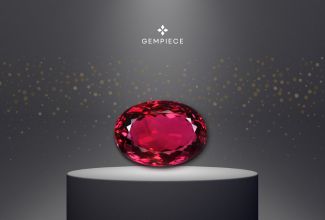
Chrome pyrope is the chromium-rich variety of pyrope, distinguished by its more vivid, more saturated red to violet-red color driven by chromium rather than iron as the primary chromophore. Chromium in pyrope produces an absorption spectrum dominated by strong bands in the violet and strong transmission in the red — the same chromium-driven color chemistry that produces the color in ruby and alexandrite. The result in chrome pyrope is a red that can genuinely rival fine ruby in saturation, though chrome pyropes are typically much smaller than commercial ruby.
The most famous chrome pyrope source in the world is the Navajo Nation lands in the Four Corners region of northern Arizona, where the stones are known as anthill garnets. The geological setting is a kimberlite field in the Colorado Plateau, and the pyrope garnet crystals have been eroded from the kimberlite pipes and scattered through the surrounding soils. Ants (specifically harvester ants of the Pogonomyrmex genus) excavate their underground colonies to depths of several meters, bringing gem-quality pyrope crystals to the surface in the process. The surface concentrations around active anthills can yield significant quantities of small but intensely colored chrome pyrope crystals. Navajo people have collected these stones since long before European contact and have historically incorporated them into traditional jewelry. Historical accounts document that some Navajo used the hard, rounded anthill garnet crystals as bullets in the 19th century.
Chrome pyropes from Tanzania, particularly from the Loolera area, produce larger stones than the Arizona material with similarly vivid violet-red color. These provide an alternative to Arizona chrome pyrope for buyers who need stones above half a carat in size.
The Bohemian Garnet Tradition
The Bohemian garnet tradition represents one of the most sustained and culturally specific uses of any gemstone in European jewelry history. Pyrope garnets from the Bohemia region of what is now the Czech Republic — small, intensely saturated, blood-red stones mined from kimberlite- related deposits near the town of Trebnitz (Třebenice) and the Bohemian Massif — were used in Central European jewelry from at least the 14th century and reached peak fashion in the 17th through 19th centuries.
Bohemian garnet jewelry is characterized by its distinctive aesthetic: multiple small pyrope garnets set closely together in rose gold or silver settings, creating rich, saturated red surfaces that were fashionable among European aristocracy and middle-class buyers throughout this period. The stones were sometimes called "Bohemian rubies" in trade, a historical name that the US Federal Trade Commission now prohibits as misleading. Genuine antique Bohemian garnet jewelry, particularly well-documented pieces from the 18th and 19th centuries, is actively collected today as important historical decorative art.
The Bohemian tradition established the aesthetic vocabulary of pyrope garnet as a jewelry material: small, perfectly colored, densely set, warm rather than cold, with a glow rather than a flash. This aesthetic continues to influence contemporary pyrope jewelry design.
Global Sources
Czech Republic (Bohemia): The historical benchmark for pyrope color, producing small but intensely saturated red stones from the Bohemian Massif. Commercial mining continues on a modest scale, and Czech material retains premium status for traditional garnet jewelry.
South Africa: Produces pyrope in superb blood-red color from kimberlite and eclogite associated with the diamond mines of Kimberley, Premier (Cullinan), and other operations. South African pyrope is typically small but of exceptional color saturation. Pyrope sometimes occurs as inclusions within diamonds from these sources.
Tanzania: Produces both standard pyrope and chrome pyrope, with chrome material from the Loolera kimberlite area producing vivid violet-red stones in larger sizes than Arizona equivalents. Tanzania also produces pyrope-almandine material across the rhodolite color range.
United States (Arizona — Navajo Nation): Source of the famous anthill garnet chrome pyropes, small but intensely colored stones recovered from kimberlite-related alluvial concentrations by ants. Also: Arkansas, New Mexico, and North Carolina produce pyrope material in various qualities.
Madagascar, Sri Lanka, India, Kenya, Mozambique: All produce pyrope and pyrope-almandine material in various qualities for the commercial market.
Pyrope in Jewelry
Pyrope's deep red pairs beautifully with both yellow gold and rose gold settings, where the warm metal tones complement and deepen the stone's already warm red. White gold and platinum create a cooler, more graphic contrast that emphasizes the red color's intensity. The stone's hardness of 7 to 7.5 Mohs and absence of cleavage make it suitable for all ring constructions including channel settings, which are excellent for the small, close-set stone presentation traditional in Bohemian garnet design.
Chrome pyrope's violet-red color is particularly stunning in white metal settings, where the slightly cool violet undertone creates a rich, complex color presentation. Large chrome pyropes above 2 carats in vivid color are uncommon and highly collectible.
Value and Market Pricing
Common pyrope garnet is among the most accessible quality gemstones available: $5 to $100 per carat in standard commercial grades covering the full range from attractive to exceptional for mainstream red material. Chrome pyrope in fine vivid violet-red from Arizona or Tanzania commands $40 to $200 per carat for clean stones in available sizes. Antique Bohemian garnet jewelry retains separate market value based on the historical pieces' design and provenance rather than the individual stones' per-carat value.
Care and Maintenance
Pyrope garnet requires standard care. Clean with warm water, mild soap, and a soft brush. Rinse thoroughly and dry with a soft cloth. Avoid ultrasonic cleaners for stones with visible inclusions. Store separately from harder stones to prevent surface scratching. No treatment or re-treatment required. Pyrope is entirely stable.
Buying Pyrope Garnet
When selecting pyrope, color is the primary criterion. Look for a vivid, clean red that reads as genuinely red — not brownish-red (which indicates high almandine content) and not too dark to show brilliance. The stone should display lively light return rather than appearing flat or dark. For chrome pyrope specifically, the color should show the distinctive violet-red saturation that distinguishes it from standard iron-colored pyrope.
Browse our pyrope garnet collection or explore related guides: Rhodolite Garnet Guide, Color Change Garnet Guide, and the complete Garnet Gemstone Guide.