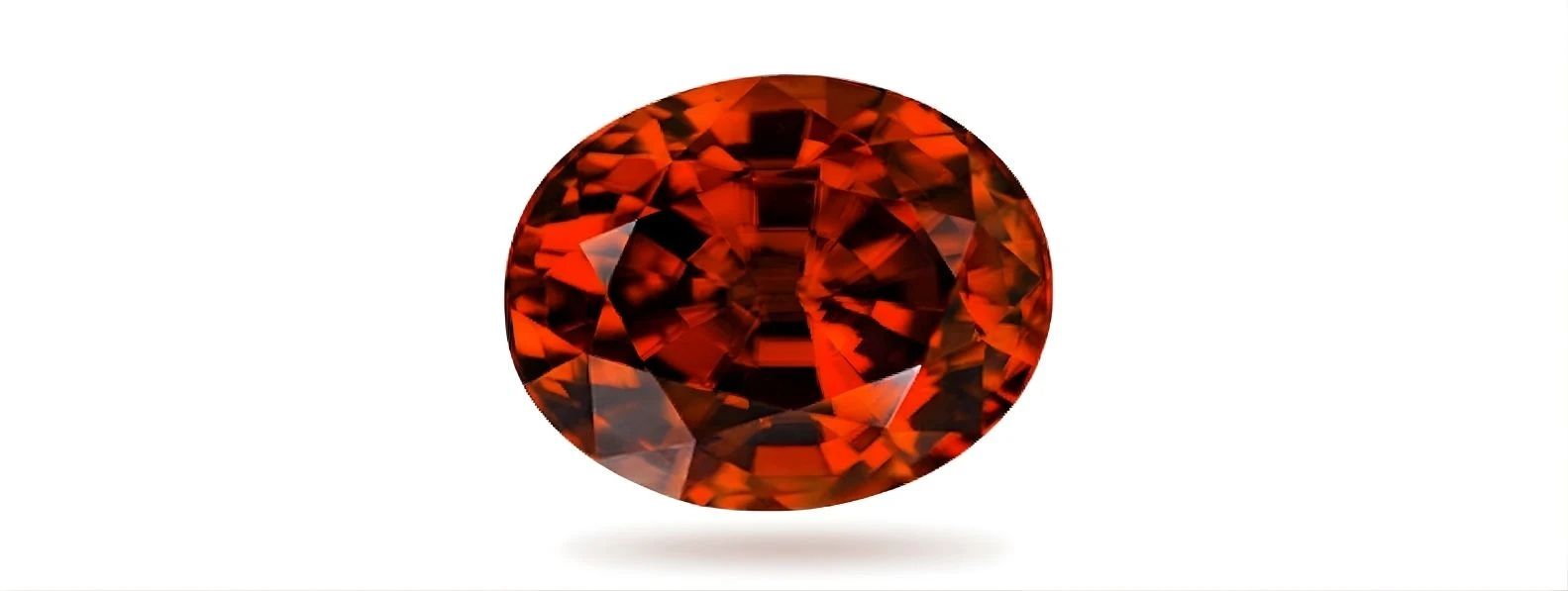
Understanding Zircon Gemstone
When geologists in 1986 analyzed tiny detrital zircon crystals from the Jack Hills region of Western Australia using uranium-lead radiometric dating, they found something extraordinary: a crystal that had formed 4.374 billion years ago, making it the oldest known material on the surface of the earth. At that time, the earth itself had only existed for approximately 170 million years. These crystals predate the earliest known rocks, predate the formation of a stable crust, and formed in conditions so extreme that almost everything from that era has been melted, recycled, and lost. The reason zircon survived is the same reason it makes such exceptional gems: it is extraordinarily chemically stable, physically resistant, and mechanically durable. A mineral that can survive 4.4 billion years of geological cycling is well qualified to last a human lifetime as a gemstone.
Explore our natural zircon collection including blue zircon, red zircon, colorless zircon, and collector varieties. Browse our rare gemstone collection for exceptional collector-grade pieces. For related guides see Blue Tourmaline Guide, Garnet Guide, and Peridot Guide.
What Is Natural Zircon
Natural zircon is a zirconium silicate mineral with the chemical formula ZrSiO₄, crystallizing in the tetragonal crystal system. It belongs to the nesosilicate (island silicate) mineral group, where individual SiO₄ tetrahedra are not connected to each other but are instead isolated and bonded through zirconium atoms. This structural framework is responsible for zircon's extraordinary durability and chemical resistance.
Zircon almost always contains trace amounts of uranium (U) and thorium (Th) that substitute for zirconium in the crystal structure. These radioactive trace elements undergo radioactive decay over geological time, emitting alpha particles that gradually damage the crystal lattice. In heavily damaged specimens, this process produces what mineralogists call metamict zircon: material where the original crystalline order has been disrupted into a partially amorphous state by billions of years of internal radiation damage. Metamict zircon shows distinctly different physical properties from undamaged crystalline zircon, including lower specific gravity, lower refractive index, and loss of the strong birefringence characteristic of high-quality gem zircon.
The same uranium and thorium content that causes this radiation damage also makes zircon one of the most important minerals in geochronology. The uranium-lead (U-Pb) decay series, with its precisely known decay constants, allows geochronologists to date individual zircon crystals with extraordinary precision. The Jack Hills Western Australian zircons were dated this way, establishing the 4.374 billion year age record. Every gem-quality zircon carries within it the equivalent of a geological timestamp that could theoretically date its formation to within a few million years of accuracy.
Name and Historical Trade Names
The name zircon is believed to derive from one of two linguistic origins. The most widely cited is the Persian word "zargun" meaning gold-colored, which reflects the warm yellow-brown tones of the naturally colored material most familiar to early traders in the Persian and Arab gemstone trade. An alternative derivation proposes the Arabic "zarkun" meaning cinnabar or vermillion, which would reference the reddish-brown varieties. Both derivations reflect historical knowledge of the warm-colored zircon varieties before heat treatment was used to produce the blue variety that now dominates commercial production.
Zircon has accumulated more historical trade names than almost any other gemstone, a testament to its diversity of colors and widespread occurrence across multiple trading regions. Hyacinth (also spelled jacinth) was applied to the reddish-brown to orange-red variety and appears in ancient Greek and Roman gemological texts. Jargoon (also jargon) was used for light-colored, pale yellow to colorless varieties. Starlite was introduced as a trade name for the blue heat-treated variety in the late 19th century by gem dealer George Kunz. Matura Diamond referred specifically to colorless zircon from the Sri Lankan city of Matara, marketed for its diamond-like brilliance.
The Optical Properties That Make Zircon Special
Natural zircon's optical performance is exceptional by any standard. Its refractive index of 1.810 to 1.984 is among the highest of any natural gemstone and approaches diamond's RI of 2.417. This high refractive index produces the intense brilliance and light return that make well-cut zircon visually striking even to buyers unfamiliar with the species.
Zircon's dispersion of 0.039 is also high, comparable to demantoid garnet and significantly above the dispersion of most colored gems. This dispersion produces the vivid spectral fire visible in lighter-colored zircon, particularly in colorless and pale blue varieties where the body color does not mask the dispersed spectral flash.
The most diagnostically important optical property of zircon is its strong birefringence. Zircon is optically anisotropic (birefringent) with a birefringence sufficiently high that in most faceted stones the back facets appear doubled when viewed through the table without magnification. This "back facet doubling" or "fuzziness" of the back facets is visible to the naked eye in most zircon and is one of the most reliable field identification tools for the species. It distinguishes natural zircon from cubic zirconia (isotropic, no doubling), from blue topaz (weaker birefringence, doubling much less prominent), and from aquamarine (similar RI range but much weaker birefringence).
High, Medium, and Low Zircon: The Radiation Damage Spectrum
Because all natural zircon contains trace uranium and thorium, the degree of radiation damage accumulated over geological time directly affects the physical and optical properties of individual specimens. Gemologists and mineralogists classify natural zircon into three types based on the degree of this radiation-induced metamictization.
High zircon (also called alpha zircon or normal zircon) shows minimal radiation damage and displays the full crystalline properties of undamaged ZrSiO₄: high RI (1.925 to 1.984), high SG (4.6 to 4.7), strong birefringence, and the sharp tetragonal crystal habit expected of the mineral. Most gem-quality blue, red, orange, and colorless zircon on the market is high zircon.
Intermediate zircon shows partial metamictization: slightly reduced RI and SG, weakened birefringence, and a somewhat duller optical performance compared to high zircon. Intermediate zircon can still be attractive as a gemstone but does not achieve the brilliance of high zircon.
Low zircon (metamict zircon) shows substantial to complete radiation damage, with RI values dropping as low as 1.78 to 1.85, SG as low as 3.93 to 4.10, and essentially no birefringence. Metamict zircon has a dull, resinous appearance and cannot achieve the brilliance associated with natural zircon as a gemstone. Heat treatment of metamict zircon can partially restore crystal order and improve optical properties.
Color Chemistry of Natural Zircon
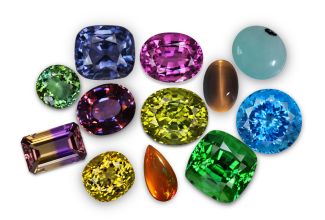
Zircon occurs in a remarkable range of colors produced by several different mechanisms. Unlike rubellite or peridot where a single chromophore dominates, zircon's color diversity reflects multiple independent coloration mechanisms operating across different specimens.
Blue zircon, the most commercially important variety, is produced by heat treatment of naturally brown or reddish-brown material. The heating converts iron-based color centers and partially restores crystal order in metamict specimens, producing the characteristic blue through a color center mechanism. The specific shade depends on heating temperature, duration, and the specific chemistry of the individual rough. Cambodia produces the finest and most consistent blue zircon through heat treatment of Cambodian and regional rough.
Colorless zircon occurs when trace element concentrations are sufficiently low that no significant coloration occurs. Sri Lankan Matara-area material is the historical benchmark for colorless zircon.
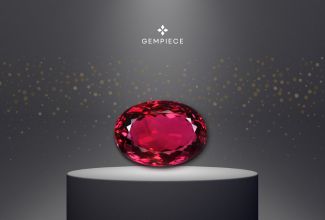
Red and orange zircon in Tanzania and other African sources represent some of the most dramatic natural zircon colors. Tanzanian red zircon derives its vivid reddish color from a combination of iron and color center effects in the crystal structure. Natural red-orange is found without heat treatment in specific Tanzanian deposits, and the combination of vivid color with zircon's exceptional brilliance produces a gemstone that directly rivals red garnet and even ruby in visual impact at significantly more accessible prices.
Green zircon is the rarest variety, occurring when specific radiation-induced color centers are produced in the crystal lattice. Its scarcity makes it particularly sought by collectors.
Yellow and golden zircon from various Southeast Asian and African sources often display natural warm color without heat treatment, appreciated for the combination of vivid warm hue and zircon's characteristic high brilliance.
Formation Geology and Global Distribution
Zircon is one of the most geologically ubiquitous accessory minerals on earth, occurring in small amounts in virtually all igneous and metamorphic rocks. Its extreme chemical stability means it survives weathering and erosion that destroy other minerals, concentrating in alluvial and beach placer deposits alongside other resistant minerals like rutile, ilmenite, and monazite.
Cambodia is the world's most important source for gem-quality blue zircon, with material from the Ratanakiri Province particularly well-known for producing large, clean, vividly colored blue material after heat treatment. The brown to reddish-brown Cambodian rough has physical properties that produce especially attractive blue after heating.
Sri Lanka's gem gravels have produced zircon for millennia alongside sapphire, spinel, and other gems. Sri Lankan material includes colorless, golden, yellow, and reddish varieties. The colorless Matura Diamond variety from the Matara area has historical trade significance. Sri Lanka also produces some naturally colored blue material without heat treatment.
Tanzania produces the most vivid and commercially significant red zircon. Specific deposits near Umba Valley and other Tanzanian gem-producing regions yield naturally red to orange-red material that is collected globally. Production from the finest Tanzanian red zircon deposits has been declining, increasing the scarcity premium for fine material.
Myanmar produces a range of zircon colors including golden and reddish material from the Mogok Valley, the same region famous for ruby and sapphire. Vietnam has become increasingly important as a source of reddish to brownish zircon used as heat treatment feedstock for blue production. Australia, despite being the source of the oldest known zircon crystals, contributes primarily industrial-grade material from the heavy mineral sands mining industry rather than gem-quality facetable material. Australia produces approximately 37% of global industrial zircon supply used in ceramics, refractory materials, and other technical applications.
Physical and Optical Properties: Full Reference
Chemical Formula: ZrSiO₄, zirconium silicate (nesosilicate)
Crystal System: Tetragonal; prismatic crystals with pyramidal terminations
Hardness: 6 to 7.5 Mohs (varies; high zircon 7 to 7.5; metamict zircon lower)
Refractive Index: 1.810 to 1.984 (high zircon); lower in metamict varieties
Dispersion: 0.039
Birefringence: 0.059 (high zircon); diagnostic back facet doubling visible naked eye
Specific Gravity: 3.93 to 4.73 (varies with metamict state and uranium content)
Cleavage: Indistinct; fracture conchoidal to uneven
Luster: Adamantine to vitreous
Radioactivity: Trace to low (from U and Th substitution); no health concern at gem levels
Fluorescence: Variable; some specimens show yellow to orange under UV
Treatment: Blue typically heat treated; orange/yellow often natural; green natural
Birthstone: December (with tanzanite and blue topaz)
Durability and Jewelry Use
Natural zircon at 7 to 7.5 Mohs hardness is adequate for all jewelry applications. However, two practical considerations affect its long-term wearability. First, zircon's crystal structure has indistinct cleavage, and the facet edges of cut stones can chip under direct hard impact, particularly where facet edges meet at acute angles. The term "paper wear" describes the gradual chipping of facet edges that can occur with hard daily wear over time.
For these reasons, natural zircon is excellent for pendants, earrings, and brooches where impact risk is minimal. For rings, protective settings such as bezels that protect the stone's edges, or designs that limit edge exposure, are recommended for daily wear. Zircon in occasional-wear rings with well-designed settings performs very well. Its brilliant optical performance makes it particularly suited to settings that maximize light entry and display.
Buying Natural Zircon
When evaluating natural zircon, the back facet doubling test is the quickest and most reliable field identification tool. Looking through the table facet at the back facets of the stone, genuine natural high zircon shows clear doubling of the back facets visible to the naked eye. Cubic zirconia shows no doubling. Blue topaz and aquamarine show minimal doubling compared to zircon. If the doubling is not visible, you may be looking at a metamict low zircon, a different gemstone, or synthetic cubic zirconia.
For blue zircon, evaluate color in natural daylight and confirm that the vivid blue reads attractively without being too dark or too pale. Cambodia-origin blue zircon in medium to medium-dark vivid blue represents the finest commercial quality. For red zircon, assess color vividness and confirm Tanzanian origin documentation for the most valuable material. For colorless zircon (Matura Diamond), evaluate the fire and brilliance in comparison with the face-up white appearance. The best colorless zircon shows vivid spectral flashes while remaining predominantly white face-up.
Browse our natural zircon collection or explore related collector gemstones: Blue Tourmaline Guide, Garnet Guide, Peridot Guide, and our rare gemstone collection.
GemPiece Expert Notes
Though the market is behind vivid blue zircons, knowing the fact that many of these stones will eventually fade a little under long direct light exposure and it should be faceted with a heavy bottom to maintain saturation. We strongly suggest buyers go for natural untreated zircons like pink, orange, green, yellow, brown and more. These are stable in color which we personally believe makes them the best investment.