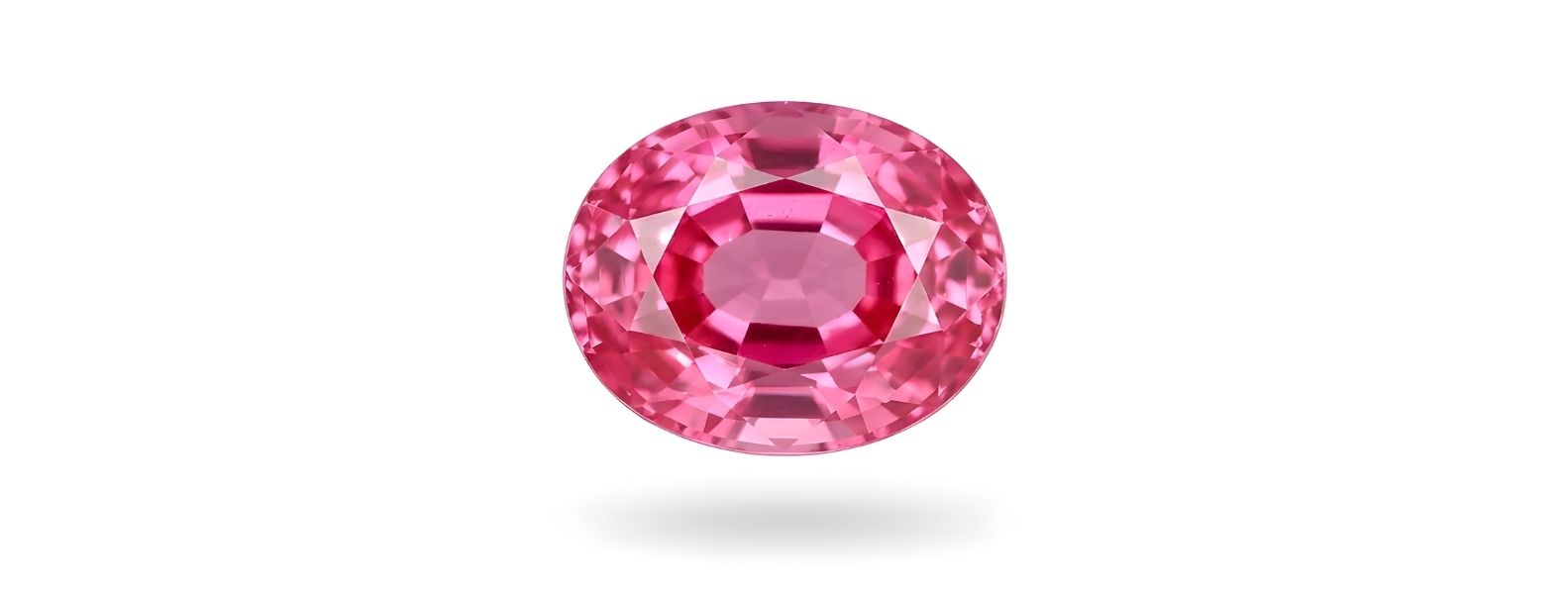
Tourmaline Guide – Colors, Varieties, Properties and Value
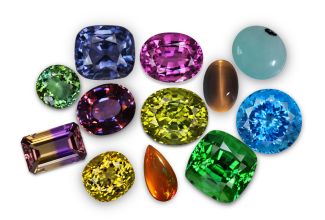
Tourmaline is the most chemically complex and color-diverse gemstone family on earth. While other minerals achieve a spectacular individual color, ruby's red, emerald's green, sapphire's blue, tourmaline achieves all of them simultaneously in a single geological environment, sometimes in a single crystal. The same boron cyclosilicate framework that produces transparent colorless achroite also produces the neon blue-green of Paraiba, the blood red of rubellite, the chromium-saturated green of chrome tourmaline, and the watermelon gradient of pink-to-green within one stone. No other mineral group spans this range. Understanding tourmaline means understanding both the chemical flexibility that makes this possible and the geological environments where that flexibility is expressed.
This guide covers the full depth of tourmaline gemology, from the mineral group's crystal structure and species classification through the color chemistry of every major variety, global formation geology, piezoelectric and pyroelectric properties, treatment science, historical significance, and comprehensive buying guidance.
Explore our natural tourmaline gemstone collection and individual variety collections: Paraiba tourmaline, chrome tourmaline, green tourmaline, pink tourmaline, blue tourmaline, bi-color tourmaline, tourmaline cats eye, and other tourmalines. For individual variety guides see: Paraiba Tourmaline Guide, Chrome Tourmaline Guide, Green Tourmaline Guide, Pink Tourmaline Guide, Blue Tourmaline Guide, Bi-color Tourmaline Guide, Tourmaline Cats Eye Guide, and Other Tourmalines Guide.
What Is Tourmaline: Mineralogy and Classification
Tourmaline is not a single mineral but a mineral group, a family of at least 30 distinct species that share the same basic crystal structure but differ dramatically in chemical composition and resulting color. All tourmalines are boron cyclosilicates, sharing a foundation of silicon-oxygen rings (Si₆O₁₈ cyclosilicate units) linked by boron-oxygen triangles (BO₃ units). This structural framework can accommodate an extraordinary range of additional elements in its available cation sites, producing the chemical flexibility responsible for tourmaline's color diversity.
The general chemical formula for tourmaline is XY₃Z₆(T₆O₁₈)(BO₃)₃V₃W, where X, Y, Z, T, V, and W represent specific crystallographic sites that can be occupied by different elements. The X site typically holds sodium (Na), calcium (Ca), or potassium (K); the Y site holds lithium (Li), magnesium (Mg), iron (Fe), manganese (Mn), aluminum (Al), or other elements; the Z site holds aluminum (Al), iron (Fe), chromium (Cr), or vanadium (V); and the T site is primarily silicon (Si). The specific combination of elements in these sites produces different tourmaline species and different colors.
The five most commercially important tourmaline species are elbaite (Na(Li,Al)₃Al₆Si₆O₁₈(BO₃)₃(OH)₄), the lithium-rich species producing virtually all gem-quality tourmaline in jewelry; dravite (NaMg₃Al₆Si₆O₁₈(BO₃)₃(OH)₄), the magnesium-rich species named after the Drava River in Austria; schorl (NaFe₃Al₆Si₆O₁₈(BO₃)₃(OH)₄), the iron-rich opaque black species making up approximately 95% of all tourmaline on earth; liddicoatite (Ca(Li,Al)₃Al₆Si₆O₁₈(BO₃)₃(OH)₄), the calcium-rich species from Madagascar named after GIA president Richard T. Liddicoat; and uvite (CaMg₃(Al₅Mg)(Si₆O₁₈)(BO₃)₃(OH)₄), the calcium-magnesium species named after the Uva Province of Sri Lanka.
Discovery, History, and Cultural Significance
Tourmaline's formal introduction to Western gemology dates to 1703, when a parcel of mixed colored stones labeled "turamali" arrived from Sri Lanka at a Dutch lapidary workshop. The Sinhalese word "turamali" meaning mixed stones reflected the local practice of applying the same name to diverse gemstone types found together in the island's alluvial gravels. Children playing with the stones in sunlight noticed that they attracted bits of ash and straw like a magnet, a pyroelectric behavior that led to further scientific investigation.
The Dutch East India Company had been trading tourmaline from Sri Lanka for decades before formal mineralogical identification, calling the stones "aschentrekkers" (ash-drawers) for this electromagnetic property. It took nearly a century of investigation before scientists confirmed that the apparently different gems, the green Brazilian stones, the red Sri Lankan stones, and the multicolored Elba specimens, were all varieties of the same mineral group.
The first documented green tourmaline crystal encountered by Europeans came from a 1554 expedition led by Francisco Spinoza near present-day São Paulo, Brazil. The crystals were initially identified as emeralds, a misidentification that persisted for over a century. Ancient tourmaline mining predates formal gemological classification: the earliest known tourmaline mines were in the Wadi El-Gemal region of Egypt's Eastern Desert, the same deposits historically called Cleopatra's Emerald Mines, where many stones being mined were tourmaline rather than true emerald. Egyptian pharaonic jewelry has been reanalyzed and found to contain tourmaline long misidentified as emerald.
In the 20th century, tourmaline received its most significant commercial attention through two events. The emergence of fine rubellite from Brazil's Jonas Mine in the 1970s and 1980s produced extraordinary cranberry-red crystals of remarkable size and clarity. Then the 1987 to 1989 discovery of Paraiba tourmaline by Heitor Dimas Barbosa in Brazil's Paraíba state transformed the entire colored gemstone market permanently.
Piezoelectricity and Pyroelectricity
Tourmaline has two extraordinary electrical properties that no other common gemstone possesses to the same degree: pyroelectricity and piezoelectricity. These properties are a direct consequence of tourmaline's crystal structure, specifically its trigonal crystal system combined with hemimorphic growth (where the two ends of a crystal are structurally different) and the absence of a center of symmetry.
Pyroelectricity is the ability to generate an electric charge when the temperature of the crystal changes. When tourmaline is heated, the positive and negative charge centers within the crystal structure shift at different rates, creating a temporary electric dipole. This is the property that Dutch children observed in 1703 when tourmaline crystals warmed by sunlight attracted ash and dust particles through electrostatic attraction. Tourmaline's pyroelectric behavior was formally documented by Franz Aepinus in 1756.
Piezoelectricity is the ability to generate electricity when physical pressure is applied to the crystal. Mechanical compression creates charge separation in the asymmetric crystal structure. Tourmaline's piezoelectric properties became critically important during World War II, when tourmaline crystals were used as pressure-sensitive gauges in sonar instrumentation aboard submarines and in pressure-measurement equipment for which quartz substitutes were insufficient. The US government's demand for tourmaline during WWII created a significant commercial market for the mineral that had previously been valued primarily as a gemstone.
Crystal Structure and Color Zoning
Tourmaline crystallizes in the trigonal crystal system, forming elongated prismatic crystals with characteristic triangular cross-sections and strongly striated faces parallel to the crystal length. The three-sided prism habit is diagnostic, as no other common mineral forms three-sided prisms, making well-crystallized tourmaline immediately recognizable to trained gemologists.
The ends of tourmaline crystals are asymmetric (hemimorphic), with structurally different terminations at each end. This asymmetry is the crystallographic basis of the piezoelectric and pyroelectric properties.
Tourmaline crystals grow from fluid solutions in pegmatite chambers over geologically extended periods. As the fluid composition changes, through the introduction of new elements from surrounding rock, the depletion of specific elements as they are incorporated into growing crystals, or through temperature and pressure changes, the chemistry of the growing crystal front changes in real time. These changes are recorded as color zones within the crystal. A pink core becomes a white zone becomes a green rim as manganese is depleted and iron increases. This is precisely how watermelon tourmaline forms, and it is the foundation of the enormous color diversity found within single tourmaline crystals.
Color Chemistry: What Makes Tourmaline Every Color
Iron (Fe²+ and Fe³+) is the dominant chromophore in most green, blue, and yellow tourmalines. Fe²+ in the Y site produces blue-green colors through d-d electron transitions; Fe³+ produces yellow to brown. The interaction between Fe²+ and Fe³+ through intervalence charge transfer can produce intense greenish-blue to teal colors. Indicolite (blue tourmaline) gets its color primarily from Fe²+ combined with minor titanium (Ti⁴+), which enhances the blue through a charge transfer mechanism.
Manganese (Mn²+ and Mn³+) produces pink to red colors. Mn²+ absorbs in the blue-green region and transmits pink; Mn³+ absorbs in the green-yellow region and produces deeper red and purplish-red. The ratio of Mn²+ to Mn³+ determines whether a tourmaline appears light pink, vivid rose, or rubellite-red. True rubellite must maintain its red or purplish-red color under both daylight and incandescent light, which requires sufficient Mn³+ content.
Chromium (Cr³+) in the Z site produces the exceptionally saturated green of chrome tourmaline. Cr³+ absorbs strongly in the red-violet and blue regions while transmitting green, the same absorption responsible for emerald's green. In tourmaline's specific crystal field environment, chromium produces an intense, pure green that rivals emerald. Vanadium (V³+) produces green in tourmaline through a similar mechanism; many East African chrome tourmalines actually contain vanadium as the dominant chromophore rather than chromium, and advanced spectroscopic analysis is required to distinguish them.
Copper (Cu²+) is the chromophore responsible for the extraordinary neon quality of Paraiba tourmaline. Cu²+ in elbaite's Y site produces a very broad absorption in the orange-red region, leaving a wide transmission window in the blue-green region. Because this transmission window is broad and highly transparent, Paraiba tourmaline transmits blue-green light with exceptional efficiency. Combined with manganese absorption effects, copper-bearing tourmaline achieves the characteristic neon glow that defines Paraiba. Copper is not a known chromophore in any other tourmaline variety, making Paraiba chemically unique within the mineral group.
Strong Pleochroism: The Cutter's Challenge
All tourmalines display strong pleochroism, the property by which a crystal shows different colors or different intensities of the same color when viewed along different crystallographic directions. The color viewed along the crystal's c-axis is typically darker and more saturated than the color viewed perpendicular to the c-axis.
This directional color difference creates a critical challenge for lapidaries. If the table is oriented parallel to the crystal length (looking down the c-axis), the stone will appear darker. If the table is perpendicular to the crystal length, the stone will appear lighter and brighter. For most tourmaline varieties, cutters orient the table perpendicular to the c-axis to maximize brightness. For deeply colored rubellites, cutters may orient the table at an angle to balance saturation and brightness. Understanding and managing pleochroism is part of what distinguishes expert tourmaline cutting. At GemPiece, cutting orientation is evaluated individually for each stone.
Formation Geology
Tourmaline forms in two primary geological environments. The most gemologically important is granitic pegmatites, the coarse-grained, volatile-rich final-stage crystallization products of granite magmas. Pegmatites are where elbaite forms: lithium, sodium, boron, aluminum, and silicon concentrate in the residual melt and eventually crystallize. The slow cooling and volatile-rich environment allows extremely large crystals to form, with the chemical variability in the evolving fluid producing the color zoning that makes pegmatite tourmalines visually distinctive. Significant gem tourmaline pegmatites occur in Brazil's Minas Gerais, Afghanistan's Nuristan and Kunar provinces, Pakistan, Madagascar, Nigeria, Mozambique, Namibia, and Maine and California in the USA.
The second important environment is metamorphic rocks, specifically schists, marbles, and gneisses where magnesium-rich and calcium-rich environments support the formation of dravite and uvite. Chrome-dravite, colored by chromium in a dravite composition, produces gem-quality green material in East African metamorphic terranes and is part of what is sold commercially as chrome tourmaline.
Tourmaline is an exceptionally stable mineral, hard, chemically resistant, and mechanically durable, which allows it to survive erosion and concentrate in alluvial placer deposits. Sri Lanka's gem gravels, which have produced tourmaline for millennia, are primarily alluvial concentrations derived from ancient metamorphic terranes.
Tourmaline Varieties in Detail
Paraiba tourmaline is copper-bearing elbaite with neon blue to green color, found in Brazil, Mozambique, and Nigeria. It is the most valuable tourmaline and among the most expensive gemstones per carat in the world. Read the full Paraiba Tourmaline Guide.
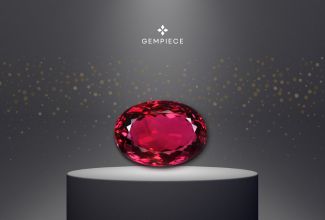
Rubellite is dark pink to red elbaite, defined by color stability under both daylight and incandescent light. Sources include Brazil's Jonas Mine, Madagascar, Nigeria, Mozambique, Afghanistan, and Russia's Transbaikal region.
Indicolite is blue to bluish-green elbaite, iron and titanium-colored. Fine dark indicolite from Namibia and Brazil commands the highest premiums. Read the Blue Tourmaline Guide.
Verdelite is green elbaite, iron-colored, spanning a wide spectrum from pale mint to vivid forest green. See the Green Tourmaline Guide.
Chrome tourmaline is chromium and/or vanadium-colored green dravite or elbaite from East Africa, primarily Tanzania and Kenya, rivaling emerald in color intensity. Read the Chrome Tourmaline Guide.
Bi-color and watermelon tourmaline is elbaite with color zoning from changing pegmatite chemistry. Watermelon shows pink core, white zone, and green rim. See the Bi-color Tourmaline Guide.
Achroite is colorless elbaite, the rarest tourmaline variety, found primarily in Brazil, California, and Maine. Siberite is violet to purple elbaite from Siberia's Transbaikal region. Canary tourmaline is vivid neon yellow elbaite primarily from Malawi, highly sought by collectors for its electric yellow color. Liddicoatite is calcium-rich tourmaline from Madagascar with complex triangular color zoning, named after GIA president Richard T. Liddicoat. Dravite is sodium-magnesium tourmaline, typically brown to yellow, named after the Drava River in Austria. Uvite is calcium-magnesium tourmaline, typically dark green to brown, named after Uva Province, Sri Lanka. Schorl is iron-rich, typically opaque black, the most abundant tourmaline in nature at approximately 95% of all tourmaline.
Tourmaline cats eye is elbaite with densely packed parallel hollow tubes producing strong chatoyancy in cabochon cut. Read the Tourmaline Cats Eye Guide. See also the Other Tourmalines Guide for full coverage of honey, cognac, champagne, and additional collector varieties.
Global Sources in Detail
Brazil (Minas Gerais, Paraíba, Bahia, and other states) is the most historically important tourmaline producer. Minas Gerais produces exceptional bi-color, watermelon, rubellite, and green elbaite from multiple pegmatite zones. The Jonas Mine produced famous cranberry-red rubellite crystals. Paraíba state is the original and most prestigious source of copper-bearing Paraiba tourmaline, though the primary Batalha mine is now largely depleted.
Nigeria (Oyo State and surrounding areas) is one of the most important current sources for vivid pink tourmaline with exceptional saturation. Nigerian material often appears darker in the natural state and responds dramatically to controlled heating. Nigeria also produces copper-bearing Paraiba-type tourmalines. Mozambique (Manica and Zambezia Provinces) is a critically important current source for Paraiba-type copper-bearing tourmaline in larger sizes and better clarity than most Brazilian material, and also produces excellent rubellite and purplish-pink tourmaline.
Tanzania (Umba Valley, Landanai, and other locations) and Kenya are the primary sources of chrome tourmaline with emerald-like color intensity. Namibia (Erongo Region) produces some of the world's finest blue indicolite, but current production is extremely limited. Afghanistan (Nuristan and Kunar Provinces) produces some of the finest mint green tourmaline in the world along with excellent bi-color material. Pakistan produces lighter green and pink tourmaline from pegmatites in the northern mountain regions.
Madagascar is the source of liddicoatite with complex color zoning and multiple-color crystals. Sri Lanka remains a historically significant alluvial source of multiple tourmaline varieties. The United States, particularly Maine (Newry, Paris) and California (San Diego County), produces fine elbaite including rubellite, bi-color, and some of the world's finest achroite.
Physical and Optical Properties
Hardness: 7 to 7.5 Mohs across all species, placing tourmaline above quartz (7) and below topaz (8), durable enough for daily wear in all jewelry applications.
Cleavage: None. Tourmaline has no cleavage planes, making it significantly more resistant to breakage from impact than cleaved gems such as topaz or moonstone. Fracture is conchoidal.
Refractive Index: 1.624 to 1.644 for elbaite; varies by species. Biaxial negative optic character.
Specific Gravity: 3.02 to 3.26 (varies by species, with iron-rich species being heavier).
Pleochroism: Distinct to strong in most species. Typically shows darker color down the c-axis and lighter color perpendicular to the c-axis.
Dispersion: 0.017, moderate, producing reasonable fire in lighter-colored stones but masked by body color in deeply saturated specimens.
Fluorescence: Generally weak to inert. Some pink tourmalines from Brazil and Tanzania show blue or lavender fluorescence under short-wave UV.
Inclusions: Common types include hollow tubes parallel to the crystal length, liquid-filled healed fractures, and gas-liquid two-phase inclusions. Densely packed aligned tubes produce chatoyancy in cabochon-cut stones. Red and watermelon tourmalines are typically the most included (Type III clarity); green tourmalines are usually the cleanest (Type I clarity).
Treatment Science: Heating Tourmaline
Heating is by far the most common treatment applied to tourmaline and is accepted as standard practice in the gemstone industry. The mechanism involves oxidation and reduction of specific chromophore ions within the crystal structure. When iron-bearing tourmalines are heated in oxidizing conditions, Fe²+ can be partially or fully oxidized to Fe³+, changing absorption characteristics and modifying color. For manganese-bearing pink and red tourmalines, oxidation of Mn²+ to Mn³+ deepens and intensifies the red component, which is why some brownish-pink tourmalines become bright rubellite-red after heating.
For Paraiba tourmaline, heating is more complex. The initial purplish or pinkish tones in unheated Paraiba rough result from Mn³+ absorption combined with Cu²+ absorption. When Paraiba is heated in specific atmospheric conditions, Mn³+ is reduced back to Mn²+, removing the red-purple absorption while retaining the Cu²+ blue-green absorption. The result is a dramatically cleaner and more vivid neon blue-green with the characteristic Paraiba glow. This specific mechanism explains why Paraiba heating must be carefully controlled: incorrect conditions can damage the stone or produce undesirable colors. For most tourmalines, heating is undetectable by any currently available gemological test.
Tourmaline Value and Market Pricing
Paraiba tourmaline: $1,000 to $100,000+ per carat depending on origin (Brazilian commands the highest premium), color, clarity, and size. Top Brazilian material above 2 carats is extraordinary in rarity and price. Mozambique Paraiba: $100 to $50,000 per carat. Nigerian Paraiba: $70 to $50,000 per carat.
Chrome tourmaline: $50 to $2,000 per carat. Fine vivid clean chrome tourmaline above 2 carats from Tanzania rivals emerald visually and commands significant premiums.
Rubellite (dark pink to red): $300 to $3,000 per carat for vivid, eye-clean material. Only approximately 3% of mined tourmalines qualify as true rubellite.
Indicolite (blue): $50 to $1,000 per carat for standard quality; exceptional ink blue from Namibia reaches significantly higher. Prices have increased approximately 18% over 2024 to 2025.
Standard pink tourmaline: $30 to $300 per carat for fine vivid material. Lighter commercial pink ranges from $5 to $50 per carat. Green tourmaline (verdelite): $25 to $300 per carat standard; fine vivid blue-green in larger sizes reaches $1,000 to $5,000 per carat. Bi-color and watermelon: fine watermelon with vivid colors and sharp zones commands $100 to $500 per carat for exceptional slices. Achroite (colorless): $50 to $500 per carat for fine collector-grade material.
Buying Tourmaline: Guidance for All Varieties
The first evaluation criterion for any tourmaline purchase is color, specifically how the color reads in face-up position under natural light. A stone that looks spectacular in the dealer's light box may appear dark and closed under normal room lighting. Always request to see the stone under different lighting conditions, or ask for video footage in both daylight and indoor incandescent light.
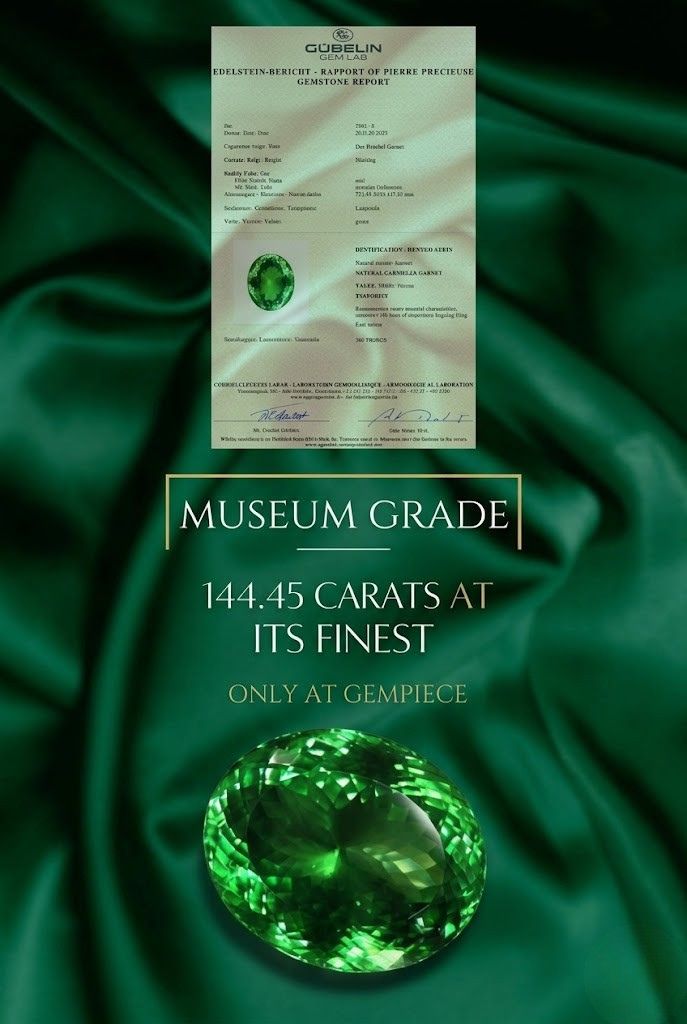
For Paraiba tourmaline, verify that the neon glow is genuine and not simply a vivid blue-green iron-bearing tourmaline without copper. The only reliable method is laboratory testing with LA-ICP-MS (Laser Ablation Inductively Coupled Plasma Mass Spectrometry), which identifies copper content and can provide origin determination. A laboratory report from GIA, GRS, or Gübelin is essential for any significant Paraiba purchase.
For chrome tourmaline, a Chelsea filter is a useful field tool. Chrome tourmaline shows red under the Chelsea filter due to chromium absorption, while standard iron-colored green tourmaline shows green. However, a Chelsea filter alone is not definitive; spectroscopic testing provides more reliable identification.
At GemPiece, all tourmaline is individually assessed, accurately represented, and available with laboratory documentation upon request. Browse our complete tourmaline collection or explore individual variety guides: Paraiba Tourmaline, Chrome Tourmaline, Green Tourmaline, Pink Tourmaline, Blue Tourmaline, Bi-color Tourmaline, Tourmaline Cats Eye, and Other Tourmalines.