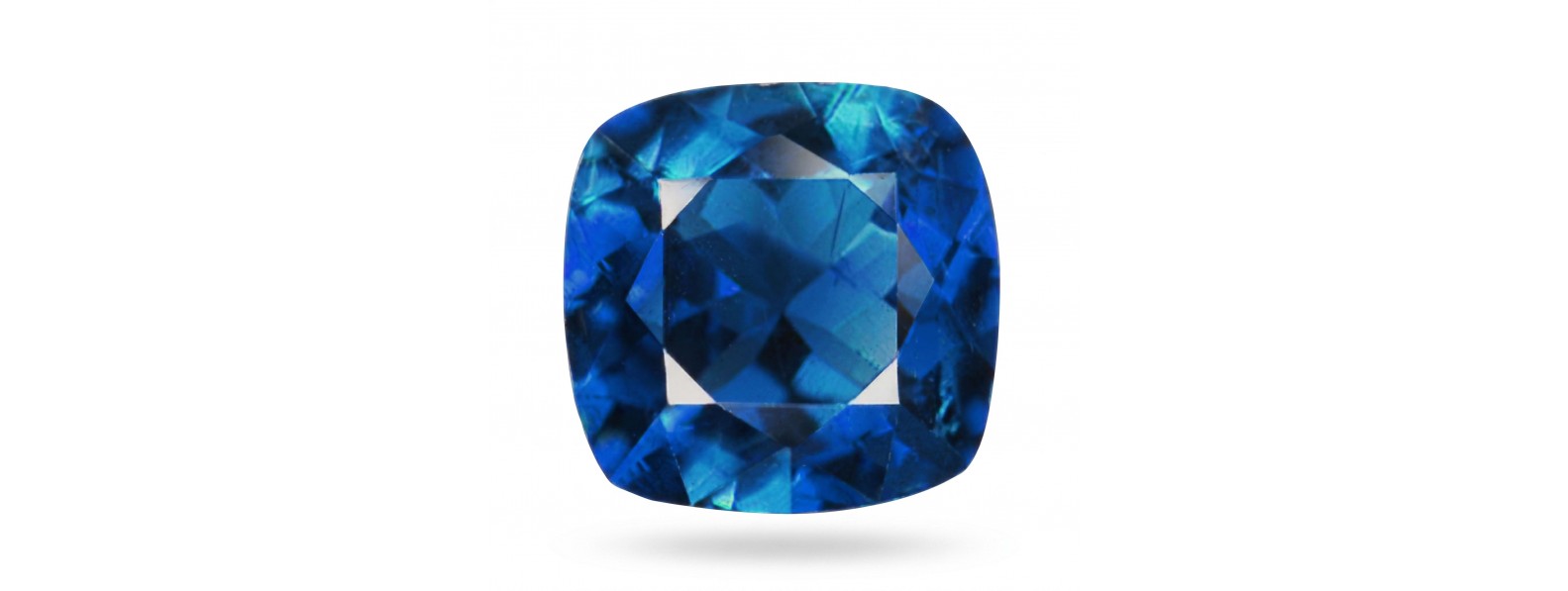
Understanding Blue Tourmaline Colors, Indicolite, Sources and Value
Blue is one of the rarest naturally occurring colors in the mineral kingdom. Most minerals that appear blue owe their color to structural light scattering or to very specific chromophore arrangements that are geologically uncommon. In the tourmaline family, blue is produced by the interaction of iron and titanium within the elbaite crystal structure through a mechanism called inter-valence charge transfer, a process that requires both elements to be present in the same crystallographic site neighborhood simultaneously at specific concentrations. This rarity of the required conditions is precisely why fine blue tourmaline is less common than green or pink tourmaline, and why top-quality indicolite commands steadily increasing collector premiums.
This guide covers the complete science and commerce of blue tourmaline, from the electron transfer physics of its color production through the gemological detail of its optical properties, the global geography of its sources, and the practical guidance needed to evaluate and purchase it intelligently.
Explore our blue tourmaline collection and related varieties including green tourmaline, Paraiba tourmaline, and chrome tourmaline. For related guides see Green Tourmaline Guide, Paraiba Tourmaline Guide, Chrome Tourmaline Guide, and the complete Tourmaline Gemstone Guide.
What Is Blue Tourmaline
Blue tourmaline is a variety of elbaite tourmaline displaying blue as the dominant body color. The gemological trade name "indicolite" (also spelled indigolite in older literature) applies specifically to blue tourmaline with sufficient saturation and depth to be classified as genuinely blue rather than greenish-blue or teal. The name derives from the Latin "indicum" for indigo, referencing the deep blue-violet tone of the indigo plant dye that was the standard reference for dark blue before synthetic dyes were developed.
The distinction between indicolite and general blue tourmaline is a matter of color saturation and hue purity. The ICGA and GIA both recognize that blue tourmaline exists on a continuum from very light blue through to deep inky blue, and that the trade name "indicolite" is generally applied to the more saturated end of this range. In practice, the boundary is applied inconsistently in the trade, and buyers should focus on evaluating the specific color quality of each stone rather than relying on the name alone.
Blue tourmaline belongs entirely to the elbaite species within the tourmaline mineral group. Its chemical formula is Na(Li₁.₅Al₁.₅)Al₆Si₆O₁₈(BO₃)₃(OH)₄, with iron substituting for some of the lithium and aluminum in the Y and Z crystallographic sites to produce the color.
The Color Chemistry of Blue Tourmaline
The blue color of indicolite is produced primarily by a process called intervalence charge transfer (IVCT) between Fe²⁺ and Fe³⁺ ions in adjacent crystallographic sites, with Ti⁴⁺ (titanium) as an additional contributing element that enhances the blue component of the color.
In isolation, Fe²⁺ (divalent iron) in tourmaline's Y-site produces a broad absorption band in the blue-green region through simple d-d electron transitions, contributing to yellowish-green coloration. When Fe²⁺ and Fe³⁺ (trivalent iron) are present in neighboring sites, photons can trigger an electron transfer from Fe²⁺ to Fe³⁺, temporarily converting them to Fe³⁺ and Fe²⁺. This charge transfer absorbs strongly in the red and orange spectral region, shifting the transmitted color toward blue-green. When titanium (Ti⁴⁺) is also present in adjacent sites, a similar Fe²⁺-to-Ti⁴⁺ charge transfer occurs, absorbing in the yellow-red region and producing a cleaner, more vivid blue component that pushes the color toward true blue rather than blue-green.
The specific ratio of Fe²⁺, Fe³⁺, and Ti⁴⁺ determines exactly where within the blue to blue-green spectrum a given tourmaline falls. Higher iron with more Fe²⁺/Ti⁴⁺ charge transfer produces cleaner, more vivid blue. Higher Fe³⁺ content introduces more yellowish absorption that shifts the color toward teal or greenish-blue. This explains why the color of blue tourmaline varies so significantly between specimens from the same deposit, and why careful selection from rough is essential for producing top-quality faceted indicolite.
This color mechanism is fundamentally different from the copper-based color of Paraiba tourmaline, which achieves its neon quality through a completely different electron configuration. Iron-based blue is more complex in its hue sensitivity and more challenging to achieve in the pure saturated form, which is one reason fine indicolite is rarer than fine green tourmaline (also iron-based but involving different iron oxidation state combinations).
Physical and Optical Properties
Chemical Species: Elbaite (lithium-sodium-aluminum-rich tourmaline)
Primary Chromophore: Fe²⁺ to Ti⁴⁺ and Fe²⁺ to Fe³⁺ intervalence charge transfer
Hardness: 7 to 7.5 Mohs
Refractive Index: ne 1.624; no 1.644 (biaxial negative)
Birefringence: 0.020
Specific Gravity: 3.02 to 3.20
Crystal System: Trigonal
Cleavage: None; fracture conchoidal
Luster: Vitreous
Clarity Grade: Type I — usually eye-clean
Pleochroism: Distinct — blue to darker blue or greenish-blue from different crystal directions
Fluorescence: Generally inert to UV; some specimens show weak blue or green
Pleochroism and the Challenge of Cutting
Blue tourmaline displays some of the most gemologically significant pleochroism of any tourmaline variety. Viewed down the c-axis (the crystallographic direction parallel to the elongated crystal length), the color appears darkest and deepest. Viewed perpendicular to the c-axis, the color is lighter and brighter. The practical consequence for lapidaries is significant: the same crystal produces a dramatically different visual result depending on how the cutter orients the table relative to the crystal axes.
For most indicolite, the preferred orientation is with the table perpendicular to the c-axis, which maximizes brightness and vividness while reducing the excessive darkness that can make face-up c-axis oriented stones appear almost black in strong colors. However, for very lightly colored blue tourmaline that needs every bit of saturation to appear attractively blue, orienting the table along the c-axis can deepen and enrich the color enough to push it into a desirable range.
This orientation decision is one of the most nuanced judgment calls in blue tourmaline lapidary work, and it significantly affects both the visual quality of the finished stone and the yield of polished gem from the rough. Orienting along the c-axis often yields a larger finished stone from a given piece of rough (because the crystal's elongated form aligns with the desired gem shape), but may produce a stone that is too dark. The perpendicular orientation yields a brighter stone but may require more rough to achieve the same finished weight. Experienced blue tourmaline cutters at GemPiece evaluate each piece individually for this tradeoff.
Global Sources in Depth
Namibia (Erongo Region): The benchmark for fine blue tourmaline quality. Namibian indicolite from mines in the Erongo Region has produced stones with a combination of strong saturation and brightness that most gemologists regard as unmatched anywhere. The color is often described as a clean, vivid "electric blue" with minimal green or gray modifiers. Current production is extremely limited, and the Namibian indicolite market is now driven primarily by existing inventory and occasional small parcels rather than consistent new production. This scarcity is a significant factor in the price premiums Namibian material commands.
Brazil (Minas Gerais and other states): The primary source of commercial volume blue tourmaline. Brazilian indicolite can achieve deep, saturated color in good crystal sizes, and the country's well-developed gem mining infrastructure means that a consistent supply of quality material reaches the market. Some specific Brazilian deposits produce material with a distinctive inky-dark blue that certain collectors prize for its depth and intensity. The historical trade name "Brazilian sapphire" was applied to dark blue Brazilian indicolite, a practice that is no longer appropriate but illustrates the quality association.
Nigeria: Produces blue to blue-green tourmaline from the same Oyo State pegmatite belts that are famous for pink tourmaline. Nigerian blue tourmaline is typically more teal to blue-green in character than the pure blue of Namibian material, but can achieve attractive vivid tones in good clarity. The color range overlaps partially with Paraiba-type material, and some Nigerian blue tourmaline carries trace copper that places it in the Paraiba category under laboratory testing.
Mozambique: Contributes blue tourmaline in the full color range from light blue-green through deeper indicolite. Mozambique's status as a major tourmaline producer for Paraiba-type stones means that some blue material from this source contains sufficient copper to qualify as Paraiba tourmaline under laboratory analysis.
Afghanistan (Nuristan and Kunar Provinces): Produces primarily lighter blue and blue-green tourmaline rather than deep indicolite. Afghan blue tourmaline tends toward pale to medium blue-green tones with good crystal clarity. It is valued for its accessibility in price relative to fine Namibian or Brazilian indicolite.
Madagascar: Contributes blue tourmaline including some stones with a violet-blue quality. Madagascar also produces the calcium-rich liddicoatite variety, which can display blue in its complex color-zoned crystals.
United States (Maine): Maine's Oxford County pegmatites have produced blue tourmaline historically, and some fine indicolite material from the Newry mines shows exceptionally strong blue fluorescence under shortwave UV, a property documented in gemological literature as distinctive for Maine material.
Indicolite vs Blue Tourmaline: The Distinction Matters
The commercial distinction between "indicolite" and general "blue tourmaline" is significant in practice. The trade generally applies "indicolite" to material showing deep, vivid, concentrated blue saturation comparable to a fine sapphire in color depth, while "blue tourmaline" covers the full range from pale to vivid. This means that a light sky blue stone correctly identified as blue tourmaline is in a very different commercial category from a deep, saturated indicolite.
The International Colored Gemstone Association (ICGA) defines blue tourmaline as "dark violetish blue, blue or greenish blue" and notes that the hue is "often modified by green so you can have a blue color with just a little bit of green modifying color or a color that is very greenish but still blue." This definition recognizes that pure blue without a green modifier is less common in tourmaline than blue with some green influence, which is why truly pure blue without greenish tinge commands the highest premiums.
Heat Treatment in Blue Tourmaline
Heating blue tourmaline produces more subtle and less predictable results than heating pink or Paraiba tourmalines, because the iron-titanium charge transfer mechanism that produces blue is less thermally responsive than manganese or copper-based chromophores.
The primary effect of heating in blue tourmaline is the partial oxidation of Fe²⁺ to Fe³⁺, which reduces the charge-transfer absorption responsible for the deepest blue components. The result is typically a lightening and sometimes clarification of the color, which can be beneficial for stones that are initially too dark and closed under normal viewing conditions. Stones that achieve their best color when heated will typically be lighter and brighter blue than their unheated equivalents.
Many fine blue tourmalines, particularly from Namibia, reach the market completely unheated and in their natural color state. This is worth noting at purchase because unheated, natural-color blue tourmaline is considered more desirable by informed collectors, particularly for stones whose natural color already qualifies as fine indicolite. Treatment status in blue tourmaline is generally disclosed but is often undetectable by standard gemological testing.
Inclusions in Blue Tourmaline
Blue tourmaline belongs to the Type I clarity category in the GIA system, meaning that gem-quality blue tourmaline is usually eye-clean without visible inclusions under normal viewing. This relatively clean clarity is one of the practical advantages of blue tourmaline over red and pink varieties, which are more commonly included.
Common inclusion types in blue tourmaline include hollow tubes running parallel to the crystal length, liquid-filled healed fractures, and occasional mineral inclusions. When hollow tubes are densely and uniformly packed, they can create a cat's eye effect in cabochon-cut stones, producing cat's eye indicolite. This is a relatively rare occurrence and significantly adds to the value of any blue tourmaline cabochon displaying a well-defined chatoyant band.
The IGS gemological encyclopedia documents a 9.84-carat emerald-cut indicolite from Brazil displaying "a pure, dark blue body color with indigo-colored ends" as an example of fine large indicolite. Large clean stones of this quality are exceptionally rare in the current market.
Value, Market Pricing, and Investment
The market for fine blue tourmaline has strengthened consistently over the past decade, driven by growing collector recognition of the variety's quality, combined with tightening supply from the finest sources. The approximately 18% average price increase in indicolite between 2024 and 2025 reflects a market that is responding rationally to genuine scarcity at the quality level.
Current pricing: pale to medium blue tourmaline in commercial quality ranges from $50 to $250 per carat. Fine vivid blue indicolite in eye-clean material under 3 carats ranges from $500 to $1,000 per carat. Large clean indicolite above 5 carats with vivid color is genuinely rare and commands $1,000 to $3,000 per carat or more depending on specific quality and origin. Namibian origin adds a 25 to 50% premium over equivalent quality from other sources. Cat's eye indicolite cabochons of good quality range from $30 to $200 per carat depending on eye quality and body color.
Buying Blue Tourmaline
The most important evaluation factor for blue tourmaline is the face-up color under natural daylight or daylight-equivalent lighting. The stone should appear clearly and attractively blue in this viewing condition, not merely blue in the dealer's directional display light. A stone that reads as dark gray-blue or greenish-blue under natural light is less desirable than one that maintains vivid, clear blue across lighting conditions.
Examine the stone from multiple angles because pleochroism means the color shifts with viewing direction. The face-up position under natural light is the primary evaluation position, but oblique views show how the pleochroism contributes to or detracts from the overall color impression.
For collector-grade pieces, laboratory documentation confirming natural origin and treatment status from GIA, GRS, or equivalent is advisable. For Mozambique or Nigerian origin blue tourmaline in the vivid blue-green range, LA-ICP-MS copper testing determines whether the stone qualifies as Paraiba tourmaline under laboratory criteria, which would significantly affect its value.
Browse our blue tourmaline collection or explore related guides: Green Tourmaline Guide, Paraiba Tourmaline Guide, Pink Tourmaline Guide, and the complete Tourmaline Gemstone Guide.