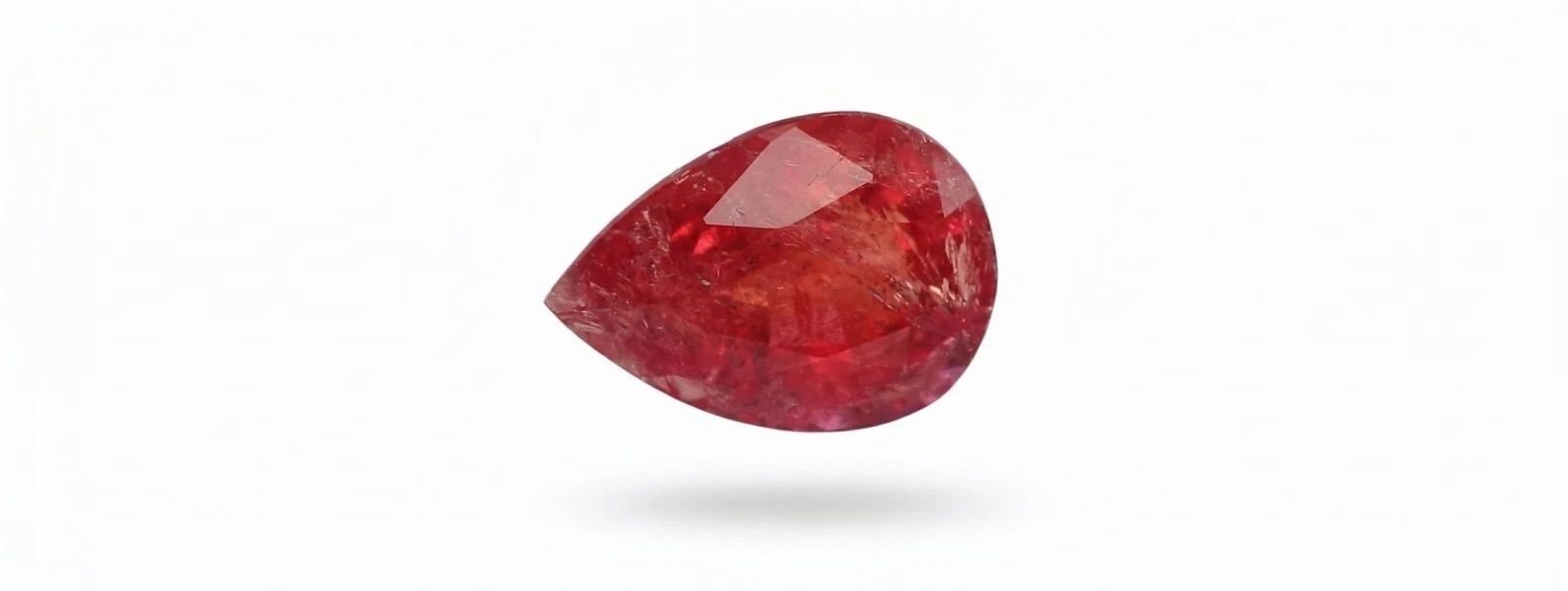
Pezzottaite – Raspberry Beryl, Madagascar Discovery and Cesium Chemistry
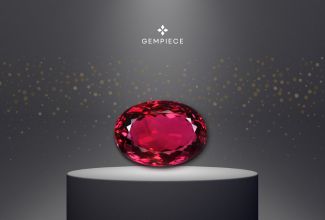
Pezzottaite represents one of the most significant gemological discoveries of the twenty-first century — a new mineral species recognized only in 2003, found initially in Madagascar in late 2002, and producing a vivid raspberry-pink to purplish-pink color that immediately established it as one of the rarest and most intensely colored pink gemstones known to the profession. Named in honor of Italian mineralogist Dr. Federico Pezzotta for his extensive research on Madagascan pegmatites, pezzottaite was initially classified as cesium-bearing morganite or red beryl before advanced analysis revealed it to be a fundamentally distinct species — with a cesium-lithium chemistry, trigonal crystal structure, and physical constants measurably different from standard beryl. With the primary Madagascan deposit essentially exhausted within a year of its discovery, pezzottaite is now one of the most geologically finite gem minerals in existence. This guide covers pezzottaite's mineralogy and distinction from beryl, color chemistry, the Madagascan discovery, global sources, and collector value.
Explore our natural pezzottaite collection.
Mineral Composition and Distinction from Beryl
Pezzottaite has the ideal chemical formula CsLiBe₂Al₂Si₆O₁₈ — a cesium- and lithium-rich member of the beryl group in which cesium (Cs) occupies the large-channel sites along the c-axis (normally occupied by sodium, potassium, or water in beryl) and lithium (Li) substitutes for beryllium (Be) in the tetrahedral sites. These substitutions are not merely compositional variations within beryl but represent a fundamentally different crystal chemistry that produces distinct physical properties.
The crystal system of pezzottaite is trigonal — specifically in the rhombohedral class — rather than the hexagonal dihexagonal dipyramidal class of beryl. This structural difference, combined with the cesium and lithium chemistry, was the basis for IMA recognition of pezzottaite as a separate mineral species. Physical properties: Mohs hardness 8 (same as beryl); specific gravity 2.90 to 3.10 (measurably higher than beryl's 2.63 to 2.92); refractive index 1.601 to 1.620 (higher than beryl's 1.565 to 1.602); birefringence 0.011; uniaxial negative; strong pleochroism.
Color and Pleochroism
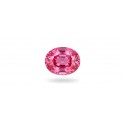
The color of pezzottaite ranges from deep purplish-pink through vivid raspberry-pink to red-pink. The most commercially desirable color is a pure, deeply saturated raspberry-pink — distinct from the pale to medium pastels of most morganite and from the cherry-red of red beryl (bixbite). The color mechanism involves manganese color centers modified by natural radiation within the crystal lattice — a similar mechanism to red beryl but in a different structural environment that produces the characteristic raspberry rather than cherry-red tone.
Pezzottaite is strongly pleochroic, displaying noticeably different pink intensities — from deeper purplish-pink to lighter pink — when viewed along different crystallographic axes. Skilled lapidaries orient the cut to maximize the desired face-up color.
The Madagascar Discovery
The Sakavalana pegmatite near Ambatovita in central Madagascar had been mined for polychrome tourmalines since 1940. In November 2002, miners discovered a pocket of vivid pink crystalline material unlike any previously encountered at the site. The crystals were initially sold in Antananarivo before being examined by Federico Pezzotta, whose analysis revealed high cesium concentrations and physical properties inconsistent with morganite or red beryl. The species was formally described and submitted to the IMA, receiving validation as pezzottaite in September 2003.
The total production from the Madagascar type locality was approximately 150 kilograms — a remarkably small quantity by any measure. The deposit appeared essentially exhausted within months of its discovery. The Madagascar material ranges from transparent to translucent, with transparent faceted-grade specimens being the premium tier. Cat's eye pezzottaite cabochons — containing parallel growth tubes producing chatoyancy — were cut from some of the translucent material and are highly collectible in their own right.
Secondary Sources
Afghanistan produced a secondary occurrence of pezzottaite initially misidentified as morganite before laboratory analysis confirmed its true identity. Afghan pezzottaite is typically slightly lighter in color than the finest Madagascar material but still displays the characteristic higher RI and SG of the species. Myanmar (Burma) also yielded a small quantity of confirmed pezzottaite. A potential new deposit in Madagascar emerged in 2025, though the extent and quality of this occurrence remains to be established. None of the secondary sources approaches the production volume or collector significance of the original Madagascar deposit.
Treatment Status
Pezzottaite is not treated. The vivid raspberry color is entirely natural. No known treatment exists that is applied commercially to pezzottaite. Laboratory authentication should confirm both species identity and untreated status.
Value Factors
Color saturation is the primary value driver — vivid, pure raspberry-pink commands the highest premiums. Transparency drives the second value tier — transparent faceted material commands substantially more than translucent cabochon material. Madagascar origin with laboratory documentation commands the strongest collector premiums. Size is a major factor — most faceted pezzottaite is under 1 carat, and stones above 2 carats in transparent quality represent significant collector acquisitions. Average market prices range from $300 to $3,000 per carat for fine faceted material.
Explore Related Beryl Family Varieties
Beryl family guide (view collection), morganite (view collection), red beryl (bixbite), and goshenite.