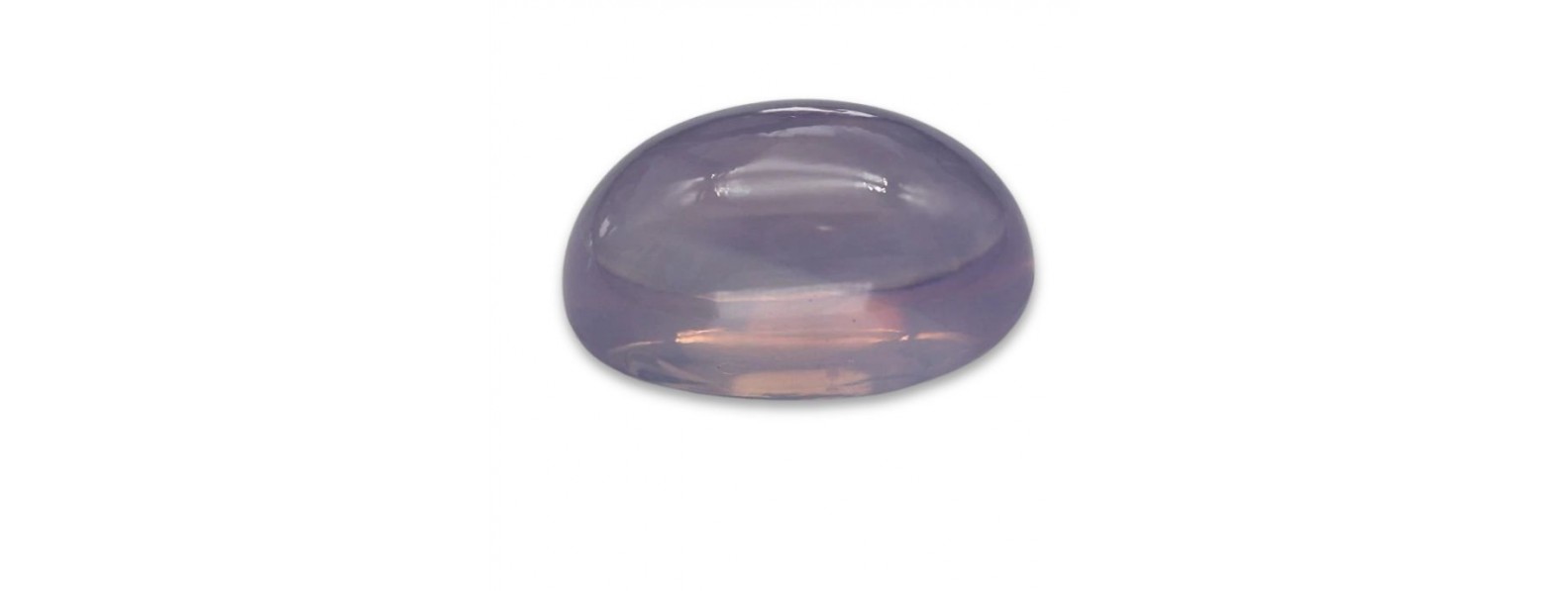
Lavender Quartz – Natural Pale Violet Quartz, Color Origin and Value
Lavender quartz is the pale violet to soft lavender variety of macrocrystalline quartz (SiO₂) — a naturally occurring, untreated gemstone with a distinctive cool violet color that occupies a unique position within the quartz color family. Its delicate, muted lavender tone is neither as saturated as amethyst nor as warm and pink as rose quartz, giving it a singular identity among quartz varieties that has driven growing demand among fine jewelry designers, gemstone collectors, and buyers seeking pastel-toned natural gemstones. This comprehensive lavender quartz guide covers color origin and mechanism, geological formation, global sources, gemological properties, optical character, treatment status, value factors, comparison with related varieties, jewelry applications, and care — providing the complete reference buyers, designers, and collectors need.
Explore our lavender quartz collection, or return to the complete quartz gemstone guide (view all quartz). Related variety guides: amethyst (view collection), rose quartz (view collection), lemon quartz (view collection), and prasiolite (view collection).
Mineralogy and Chemical Composition
Lavender quartz is silicon dioxide (SiO₂) crystallized in the trigonal system — the same mineral species as amethyst, citrine, smoky quartz, rose quartz, and all other macrocrystalline quartz varieties. The crystal structure consists of SiO₄ tetrahedra linked in a three-dimensional helical framework — one of the most stable mineral structures in nature, responsible for quartz's extraordinary chemical resistance, mechanical durability, and geological ubiquity. Lavender quartz is distinguished from other quartz varieties entirely by its specific color mechanism, not by any difference in chemistry or crystal structure. Mohs hardness 7. Specific gravity 2.65. Refractive index 1.544–1.553, uniaxial positive, birefringence 0.009. No cleavage — conchoidal fracture. Vitreous luster. Trigonal symmetry (hexagonal morphology in crystal habit).
Color Origin: How Lavender Quartz Gets Its Color
The lavender color in lavender quartz is produced by a combination of iron-related color centers and hydrogen-associated lattice defects within the SiO₂ crystal structure. In amethyst, the purple color is caused by Fe³⁺ ions substituting for Si⁴⁺ in tetrahedral sites within the crystal lattice — these iron color centers absorb yellow light and transmit violet and red wavelengths, producing the characteristic purple of amethyst. In lavender quartz, a different configuration of iron oxidation states and hydrogen-related defect centers produces a paler, cooler, more muted violet that lacks the warm red-violet component typical of fine amethyst. The result is the characteristic cool, grey-tinged lavender color — visually distinct from amethyst at any saturation level.
The precise balance of Fe³⁺ concentration, associated hydrogen defects, and growth conditions during crystallization determines whether a given quartz crystal develops as amethyst, lavender quartz, or a transitional tone between the two. Natural lavender quartz occurs only in geological environments where these specific iron and hydrogen conditions are simultaneously present — explaining its relative rarity compared to amethyst, which forms under a broader range of iron-enriched hydrothermal conditions. The lavender color is stable under normal wear and ambient light conditions, though prolonged intense UV exposure should be avoided as a general precaution for iron-colored quartz varieties.
Geological Formation and Occurrence
Lavender quartz forms in pegmatitic and hydrothermal geological environments — the same settings that produce amethyst, smoky quartz, and other macrocrystalline quartz varieties. Pegmatites are extremely coarse-grained intrusive igneous rocks that form during the late stages of magma crystallization when residual fluids are highly enriched in silica, water, and trace elements including iron. Hydrothermal quartz forms when silica-rich aqueous fluids circulate through fractures and voids in host rock, depositing quartz crystals as conditions cool and pressure drops. In both settings, the presence of iron in the correct oxidation state and concentration — combined with the hydrogen-related lattice defect chemistry specific to lavender quartz — produces the lavender color variety rather than colorless, smoky, or amethyst-colored material.
Sources and Origins
The primary commercial sources for natural facetable lavender quartz are Brazil and Madagascar, both well-established within the global colored gemstone supply chain for quartz variety material.
Brazil — Minas Gerais state is the world's most prolific source of macrocrystalline quartz gem varieties, producing amethyst, citrine, smoky quartz, rose quartz, rock crystal, and lavender quartz in significant quantities. Brazilian lavender quartz tends toward cooler, slightly greyer lavender tones, with excellent clarity and good crystal sizes that yield well-cut calibrated stones. The Boquira Mine in Bahia state has also been identified as a notable source for lavender-toned quartz with a distinctive pinkish-purple character.
Madagascar — The island of Madagascar is a globally significant gemstone source, producing a wide range of quartz varieties alongside sapphire, ruby, tourmaline, and other colored gems. Madagascan lavender quartz often displays a slightly warmer, cleaner violet than Brazilian material — with good transparency and reliable clarity. The Sahatany Valley and other quartz-producing regions of central Madagascar contribute lavender quartz rough to the international market.
Gemological Properties: Complete Data
Species: Quartz. Variety: Lavender quartz. Chemical formula: SiO₂. Crystal system: Trigonal. Hardness (Mohs): 7. Specific gravity: 2.65. Refractive index: 1.544–1.553. Birefringence: 0.009. Optic character: Uniaxial positive. Luster: Vitreous. Transparency: Transparent to semi-transparent. Cleavage: None. Fracture: Conchoidal. Color: Pale violet to medium lavender with cool grey undertone. Color mechanism: Iron color centers and hydrogen-related lattice defects. Treatment: None — natural color. Fluorescence: Typically inert to weak under UV. Inclusions: Generally eye-clean; may show growth tubes, fluid inclusions, or needle-like mineral inclusions.
Optical Character and Appearance
Faceted lavender quartz displays a clean, vitreous luster with good brilliance. The uniaxial positive optic character produces mild birefringence (0.009) visible under magnification — a characteristic shared by all quartz varieties that gemologists use as a diagnostic indicator. The pale lavender body color diffuses softly through the stone rather than flashing with high dispersion, giving lavender quartz a glowing, silky quality under light that is quite different from the fire of diamond or zircon. This optical character suits the gem's aesthetic — understated, luminous, and refined rather than bold or flashy.
Lavender quartz is typically transparent to semi-transparent — significantly more transparent than rose quartz, which is rendered translucent by its fibrous inclusions. This transparency allows lavender quartz to be faceted into brilliant-style and step cuts that maximize the interaction of light with the pale color, producing the characteristic soft glow that distinguishes fine lavender quartz from paler amethyst.
Treatment Status: Natural and Untreated
Lavender quartz is one of the few commercially available quartz varieties that is entirely natural and requires no treatment, while some are heated with Cobalt to create the intensity of the lavender color. This is an important distinction within the quartz family, where several commercially prominent varieties are routinely produced by artificial means: citrine is almost universally heat-treated amethyst or smoky quartz; prasiolite is almost universally heat-treated amethyst; some blue quartz is produced by gamma irradiation. Natural lavender quartz color is a product of geological process alone — the iron and hydrogen chemistry specific to the deposits in Brazil and Madagascar produces the color without any intervention. GemPiece discloses treatment status on every stone and confirms natural, untreated status for all lavender quartz in the collection. See the quartz guide treatment section for full detail on treatments across the quartz family.
Lavender Quartz vs. Amethyst: Gemological Comparison
Lavender quartz and amethyst are both iron-colored macrocrystalline quartz varieties and share identical physical and chemical properties — they can only be distinguished by color. Amethyst is defined by its medium to deep purple color, typically with a warm red-violet component at higher saturations. Lavender quartz is distinctly paler and cooler — a soft, muted, grey-tinged lavender that never develops the depth or warmth characteristic of fine amethyst. In the trade, material that is too pale and cool to be called amethyst — but clearly not colorless — occupies the lavender quartz category. Some sellers incorrectly label pale lavender quartz as "light amethyst" or "lilac amethyst," but the correct gemological designation for the distinct cool-lavender color variety is lavender quartz. See our amethyst guide for full detail on amethyst color grading and variety distinctions.
Value Factors
Color is the primary value driver for lavender quartz. The most valuable material displays a clean, even, medium-light lavender with sufficient saturation to read clearly as lavender rather than near-colorless — and with the characteristic cool violet-grey tone rather than a warm pink-purple that would approach amethyst or rose quartz. Evenness of color distribution across the stone is important; zoning, which is common in amethyst, can also occur in lavender quartz. Clarity is secondarily important — eye-clean material commands premium pricing over included stones. Cut quality affects brilliance and the visual impact of the pale color; well-proportioned cuts maximize the soft glow of lavender quartz. Size is generally accessible in quartz, but larger lavender quartz stones with strong color and excellent clarity are relatively rare. Natural untreated status is inherent to lavender quartz and therefore implicit in the value rather than a separate premium factor.
Lavender Quartz in Jewelry Design
Lavender quartz has experienced growing popularity in fine and designer jewelry over recent years, driven by consumer demand for pastel, feminine, and alternative gemstone colors alongside the rise of non-traditional engagement ring and cocktail ring styles. Its transparent, facetable character — unlike the translucent cabochon aesthetic of rose quartz — makes lavender quartz directly competitive with colored gemstones like light amethyst, pink tourmaline, kunzite, and light sapphire in ring, pendant, and earring designs, but at a fraction of the price of fine specimens of those species.
Lavender quartz works particularly well in elongated cuts — oval, cushion, pear, marquise — where the larger surface area allows the pale color to build visual depth. It suits all metal types: white gold and platinum enhance the cool violet character; rose gold creates a romantic warm-cool contrast; yellow gold provides a vintage or Art Nouveau aesthetic. For buyers comparing lavender quartz jewelry options, see our full lavender quartz collection.
Durability and Care
Clean lavender quartz with warm water, mild soap, and a soft brush. Rinse thoroughly and dry with a soft lint-free cloth. Ultrasonic cleaning is safe for natural untreated lavender quartz. Steam cleaning is generally safe but should be applied cautiously to avoid thermal shock in very large stones. Avoid prolonged direct sunlight as a general precaution for iron-colored quartz. Store separately from diamond, ruby, sapphire, and other materials of hardness 8 and above to prevent scratching. Do not store in contact with corundum or hardness-9+ materials.
Explore Related Gemstones
amethyst (view collection), rose quartz (view collection), lemon quartz (view collection), prasiolite (view collection), and all quartz varieties (view all quartz).