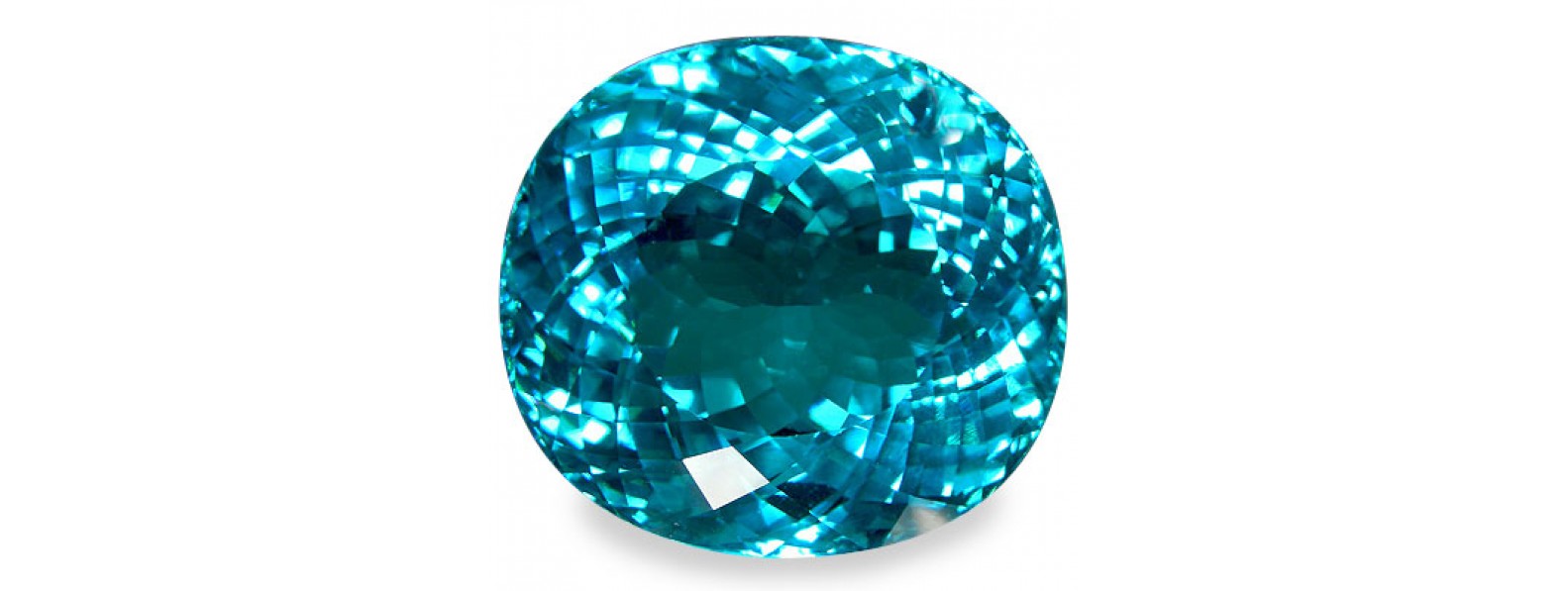
Understanding Paraiba Tourmaline Gemstone
Paraiba tourmaline occupies a position in modern gemology that has no real parallel: a gemstone discovered within living memory, named after the Brazilian state where it was found, that rose within a decade from unknown to among the most expensive gemstones per carat on earth. The neon blue-green of Paraiba is genuinely unprecedented in the natural mineral world. No other gemstone, at any price point, produces a body color of comparable luminous quality. Understanding why requires understanding both the specific copper chemistry that produces it and the geological rarity of conditions that allow copper to act as a chromophore in tourmaline.
This guide covers the complete story of Paraiba tourmaline, from the years of digging by a single determined prospector through the scientific discovery of copper as its color agent, the global expansion of the variety to African sources, the heating science that transforms most rough into commercial material, and the current market dynamics that make fine Paraiba one of the most compelling collector gemstones available.
Explore our Paraiba tourmaline collection and related varieties including chrome tourmaline, green tourmaline, and blue tourmaline. For related guides see Chrome Tourmaline Guide, Green Tourmaline Guide, Pink Tourmaline Guide, and the complete Tourmaline Gemstone Guide.
Discovery: Heitor Dimas Barbosa and the Batalha Mine
The story of Paraiba tourmaline begins not with a geological survey or a commercial mining operation but with one man's conviction that something extraordinary was hidden beneath the hills of his home state. Heitor Dimas Barbosa was a Brazilian gem prospector who had worked the hillsides of the state of Paraíba, in Brazil's northeastern region, since at least the late 1970s, believing that the specific geological character of the area, with its unusual pegmatites and distinctive mineralogy, indicated the presence of a gem variety not yet known to the market.
In 1982, Barbosa began systematic excavation of what would become known as the Batalha mine, formally the Mina da Batalha, located on a steep hillside near São José da Batalha in Paraíba state. He and his team dug for years without finding the material he was convinced existed. The International Colored Gemstone Association documents that Barbosa spent years digging in the pegmatite galleries of some modest hills without proof that anything lay there. The full story of his persistence has become part of gemological legend: tirelessly searching for something the existence of which had never been proven.
The first copper-bearing tourmaline crystals were reportedly found in 1987 or 1988, with the material reaching the broader gem trade in 1989 and making its international debut at the Tucson Gem and Mineral Show in early 1990. The reaction was immediate and definitive. Some top-quality specimens fetched prices of up to $3,000 per carat at Tucson, a record for tourmaline at the time. In hindsight, this was the beginning of a price appreciation story that would eventually see comparable material reach $100,000 per carat or more.
Researchers who examined the crystals quickly identified the color mechanism. These elbaite tourmalines received their intense coloration from copper, with manganese and often a trace of bismuth also present. The copper content was entirely unprecedented in tourmaline. The stones generated excitement not only among jewelers and collectors but among mineralogists and gemologists, for whom copper in tourmaline represented a genuinely new geochemical discovery.
The Copper Color Mechanism: Science of the Neon Glow
The color of Paraiba tourmaline is produced by divalent copper ions (Cu²⁺) occupying the Y-crystallographic site of the elbaite crystal structure. In this position, Cu²⁺ undergoes d-d electron transitions that produce a very broad, intense absorption band in the orange-red spectral region, centered approximately around 700 to 750nm. This absorption is far broader than the iron-based absorptions in other tourmaline varieties, and its position in the orange-red region leaves a wide, highly transparent transmission window in the blue to green spectral range (approximately 450 to 600nm).
Because the transmission window is both broad and high in transmission efficiency (very little blue-green light is absorbed even at saturation levels that would produce a deeply colored iron-bearing tourmaline), Paraiba tourmaline transmits blue-green light with exceptional efficiency. The stone does not merely reflect blue-green light from its surface; it transmits it through the full body of the crystal, and every photon that travels through the stone encounters the Cu²⁺ absorption only in the orange-red region. The result is a stone that appears actively lit, not passively colored.
This specific optical behavior, sometimes described as intervalence charge transfer between copper and manganese ions producing what some researchers describe as a photogenic re-emission of energy, is what creates the "neon" or "electric" quality that makes Paraiba tourmaline immediately recognizable even to non-specialists. The glow is not fluorescence, as it occurs under normal lighting conditions without UV excitation. It is a direct consequence of the unusually clean and broad blue-green transmission that copper achieves in the elbaite crystal field.
Manganese is also present in Paraiba tourmaline and plays a secondary but important role. Mn²⁺ contributes a subtle pink component that in unheated material manifests as a purplish or pinkish modifier on the blue-green base color. Mn³⁺ (trivalent manganese) produces stronger red-purple absorption. The interaction between Cu²⁺ and the Mn²⁺/Mn³⁺ ratio determines whether an individual stone appears blue, blue-green, teal, or greenish, and whether it shows any violet or purplish modifier.
Heating Science: From Rough to Neon
Understanding heating is inseparable from understanding Paraiba tourmaline commercially. Most Paraiba rough in its natural state does not display the neon blue-green color that defines the variety commercially. According to GIA research, approximately 80% of Brazilian Paraiba tourmalines have been heated to obtain the Paraiba color. African material has similar heating prevalence.
The mechanism of the color transformation is specific to the manganese oxidation state chemistry. In unheated rough, Mn³⁺ contributes red-purple absorption that combines with Cu²⁺ blue-green transmission to produce the purplish, pinkish, or brownish tones typical of natural-state Paraiba rough. When the stone is heated in controlled reducing atmospheric conditions, Mn³⁺ is converted back to Mn²⁺. This conversion removes the red-purple absorption component while the Cu²⁺ absorption remains unchanged. The result is that the blue-green transmission of copper, freed from the overlapping red-purple absorption of Mn³⁺, becomes dominant and the stone displays the clean neon blue-green that defines commercial Paraiba.
The practical execution of this transformation is demanding. Temperature must be controlled within specific ranges: too low and the Mn³⁺ reduction is incomplete; too high and structural damage or unwanted color changes occur. Atmospheric conditions during heating must be reducing (low oxygen) to drive the Mn³⁺ to Mn²⁺ conversion; oxidizing conditions would drive the conversion in the opposite direction, worsening the color. Timing must be calibrated to the specific stone's chemistry. At GemPiece, our heating process is developed from years of hands-on experience with all three Paraiba sources and represents one of the most technically demanding gemological skills we practice in-house.
Once completed, the heat treatment is permanent and stable. It does not reverse, does not require maintenance, and does not affect the stone's optical properties, durability, or long-term performance in any way.
Origins in Detail: Three Countries, Three Characters
Brazil (Paraíba state and Rio Grande do Norte): The original discovery site and the benchmark for all Paraiba quality. Three mines have been commercially active in Brazil: the Mina da Batalha (the original Barbosa discovery), the Mulungu Mine, and the Alto dos Quintos Mine. These mines typically find rough of up to 1 carat in gem quality; anything significantly larger is uncommon and commands extraordinary premiums. Brazilian stones are characterized by the most vivid, most saturated neon blue, typically with minimal green or violet modifier, in small crystals with relatively higher inclusion content. The mines are now largely depleted, and supply is declining year by year. Brazilian Paraiba at fine quality is currently priced at $20,000 to $100,000+ per carat, with exceptional stones exceeding these ranges at auction. A 1-carat Brazilian stone can cost $75,000 while a similar Mozambique stone might sell for $15,000 to $25,000.
In 2000, similar copper-bearing tourmalines were discovered in Nigeria, and in 2005 significant deposits were identified in Mozambique. These African discoveries expanded the Paraiba market enormously and created a more commercially accessible supply of copper-bearing tourmaline.
Mozambique (Manica and Zambezia Provinces): Now the primary commercial source for the Paraiba market, Mozambique material is available in substantially larger sizes than Brazilian stones. Mozambique Paraiba in fine quality ranges from $100 to $50,000 per carat. Mozambique stones often display a slightly different color character than Brazilian material, sometimes with a more greenish component or slightly lower saturation, but the finest Mozambique material achieves a vivid neon quality that some gemologists rank as comparable to Brazilian at the top end. The significantly better availability of large clean stones above 3 carats is a major commercial advantage for Mozambique material.
Nigeria: Nigerian copper-bearing tourmaline is known for strong and distinctive color, including rare ink blue and deep teal tones that are difficult to find from other sources. Nigerian material has become increasingly limited in availability. Fine Nigerian Paraiba ranges from $70 to $50,000 per carat. Some Nigerian material contains higher manganese content that produces a slightly different hue distribution from Brazilian material, with more blue-violet character in some specimens.
Origin Determination and Laboratory Testing
Distinguishing Brazilian from African Paraiba tourmaline requires advanced laboratory testing because visual examination alone cannot reliably differentiate origin. The standard method is LA-ICP-MS (Laser Ablation Inductively Coupled Plasma Mass Spectrometry), which measures the concentrations of copper, manganese, bismuth, and other trace elements with high precision.
Brazilian material typically shows higher bismuth content and a specific ratio of copper to manganese that differs from African material. African material generally shows lower bismuth and different trace element ratios reflecting the different geological host environments. Additionally, inclusion characteristics, internal growth features, and UV fluorescence patterns all contribute to origin assessment. The GIA, Gübelin, and GRS laboratories all have established protocols for Paraiba tourmaline origin determination and are the recommended sources for certification of significant stones.
The gem community has largely accepted that the term "Paraiba tourmaline" applies to all copper-bearing tourmaline meeting the color and chemistry criteria regardless of geographic origin, while recognizing that Brazilian material commands a separate premium tier reflecting historical prestige and supply scarcity. Some dealers still reserve "Paraiba" exclusively for Brazilian material and describe African copper-bearing material as "Paraiba-type" or "cuprian tourmaline," though this distinction is becoming less common as GIA and most laboratories apply the Paraiba name to all copper-bearing material meeting the standard.
Physical and Optical Properties
Chemical Species: Elbaite with copper (Cu²⁺) and manganese (Mn²⁺, Mn³⁺) as primary chromophores
Chemical Formula: Na(Li,Al)Al₆Si₆O₁₈(BO₃)₃(OH)₄ with Cu²⁺ substituting in Y-site
Hardness: 7 to 7.5 Mohs
Refractive Index: 1.624 to 1.644 (spot RI on GIA Bangkok-documented cat's eye Paraiba: 1.64)
Specific Gravity: 3.02 to 3.15
Crystal System: Trigonal
Cleavage: None
Pleochroism: Weak to moderate (less pronounced than in iron-bearing tourmalines; the copper absorption is less directionally variable in this crystal field)
Fluorescence: Inert to weak under UV
Clarity: Varies by origin; Mozambique generally cleaner than Brazilian; Brazilian material often contains characteristic two-phase inclusions and growth features used in origin determination
Color Range: Vivid neon blue, electric blue-green, turquoise, vivid green with blue modifier
Cutting Paraiba Tourmaline
Cutting Paraiba tourmaline requires balancing color optimization against weight retention from what is often very small, expensive rough. The low pleochroism of copper-bearing tourmaline (compared to iron or manganese varieties) means that cutting orientation is less critical for color than in standard tourmalines. However, the saturation and brightness balance still depend on cutting proportions: stones cut too deep appear darker and lose the open neon quality; stones cut too shallow sacrifice color depth and appear washed out.
The best-performing cuts for Paraiba are oval, cushion, pear, and emerald cut, which maximize face-up color presentation and allow good light return through the crown. Brilliant faceting styles are preferred over step cuts for smaller stones where maximum color display per unit area is the priority.
Because Brazilian rough is so small, most Brazilian Paraiba stones in the market are under 1 carat. Anything above 2 carats from Brazil is considered large for the variety. Mozambique rough provides much better prospects for larger finished stones, and some of the finest Paraiba collector pieces above 5 and 10 carats in the current market originate from Mozambique.
Rarity Context: One Per Ten Thousand Diamonds
The rarity of Paraiba tourmaline relative to other precious gemstones is often described in the trade using the comparison that for every Paraiba tourmaline found, approximately 10,000 diamonds are mined. While this figure is a trade approximation rather than a rigorous statistical measurement, it captures the essential reality: Paraiba tourmaline is extraordinarily rare even by the standards of fine colored gemstones, and its rarity is geological rather than market-created.
The copper-bearing pegmatite conditions required for Paraiba formation are globally uncommon. Most pegmatites do not have access to copper-rich geological environments during crystallization. Even in the three producing regions, only a small percentage of the total tourmaline production meets the copper content and color criteria for Paraiba classification. Within the qualifying material, only a fraction achieves the vivid neon saturation that defines top-quality Paraiba.
Value, Investment, and Market Pricing
Paraiba tourmaline pricing in 2025 to 2026 reflects both the sustained appreciation since the 1990 debut and the continued tightening of supply from Brazilian sources. The price differential between Brazilian and African material is significant and increasing as Brazilian supply declines.
Brazilian Paraiba: $20,000 to $100,000+ per carat for fine vivid neon blue in good clarity. Exceptional stones with exceptional color in sizes above 2 carats command premium prices regardless of per-carat calculations. A 1-carat Brazilian stone with fine color routinely exceeds $75,000 at retail.
Mozambique Paraiba: $100 to $50,000 per carat for commercial through fine material. Vivid neon blue above 3 carats in good clarity: $5,000 to $20,000 per carat. The finest Mozambique material with the strongest neon comparable to Brazilian stones: $20,000 to $50,000 per carat.
Nigerian Paraiba: $70 to $50,000 per carat. The current market for Nigerian material reflects its growing scarcity and recognition of distinctive color character.
Color accounts for 60 to 70% of a Paraiba's value by most market assessments. The neon or electric grade with unmistakable glow is the highest color grade. Medium tone that maximizes glow is ideal; stones that are too light appear washed out; stones that are too dark lose the open neon quality that defines the variety at its finest.
Buying Paraiba Tourmaline
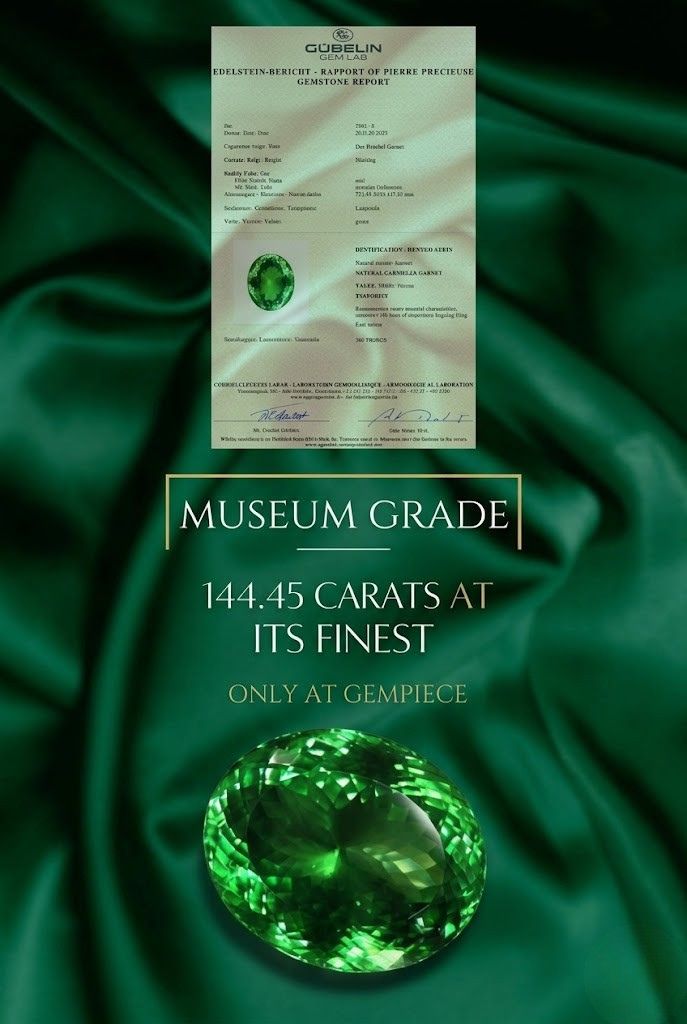
For any significant Paraiba purchase, laboratory certification from GIA, GRS, or Gübelin is essential. The certificate should confirm copper content (confirming Paraiba classification) and provide origin determination. For Brazilian material, a premium price without Brazilian origin confirmation is not justified. For all material, treatment disclosure (heated or unheated) should be explicit.
Evaluate color in multiple lighting conditions. The neon quality of fine Paraiba should be immediately apparent under natural daylight and should maintain its glow under incandescent lighting. A stone that looks vivid only under strong directional spotlight is not performing at the Paraiba standard.
Browse our Paraiba tourmaline collection or explore related guides: Chrome Tourmaline Guide, Green Tourmaline Guide, Blue Tourmaline Guide, and the complete Tourmaline Gemstone Guide. For premium and private-collection Paraiba, contact GemPiece directly.