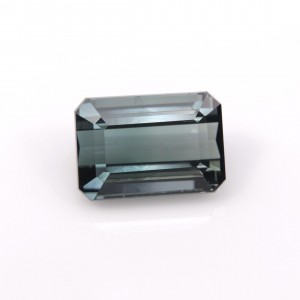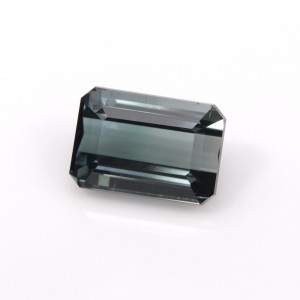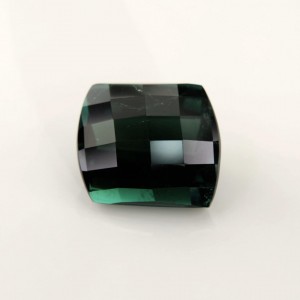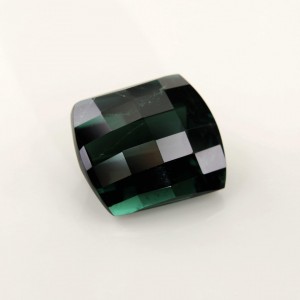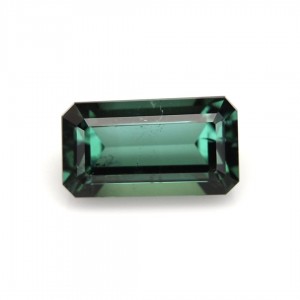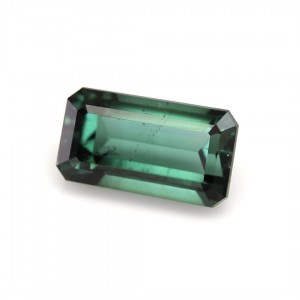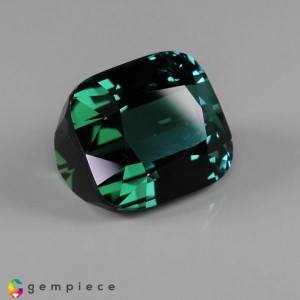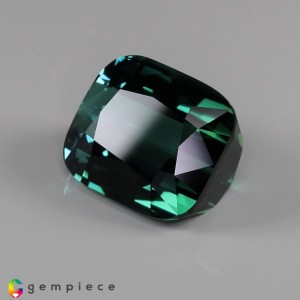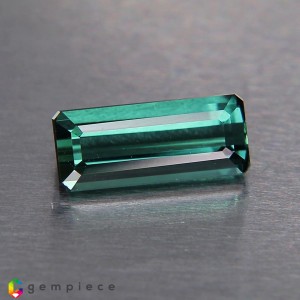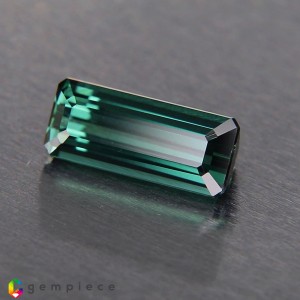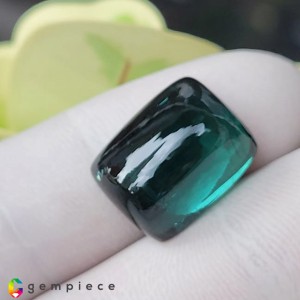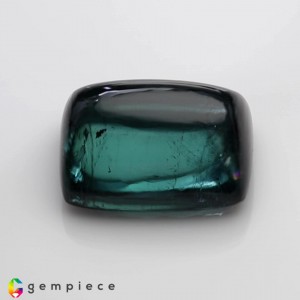
Buy Natural Blue Tourmaline & Indicolite Gemstones in Fine Quality Colors
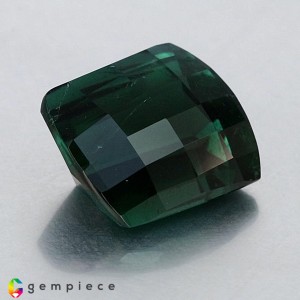
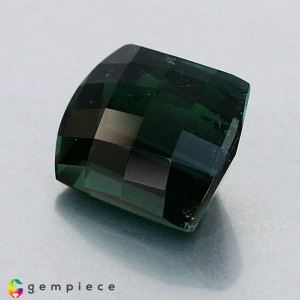
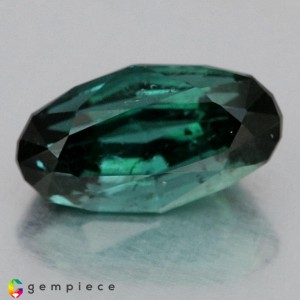
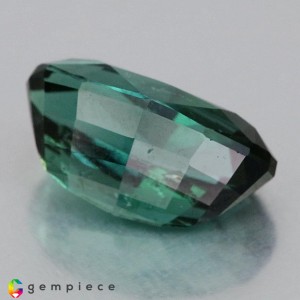
Blue tourmaline occupies a rare and distinctive position in the colored gemstone world. Among the hundreds of natural gemstone varieties that display blue coloration, very few achieve the depth, clarity, and character of fine indicolite. This is blue not borrowed from chromium like sapphire, not from copper like Paraiba, but from iron and titanium working together within the elbaite crystal structure to produce a blue that ranges from light sky through deep inky tones with a particular quality of richness that is entirely its own.
Indicolite is the trade name for the most intensely saturated blue tourmaline, derived from "indigo" in reference to its characteristic deep blue tones. While all indicolites are blue tourmalines, the reverse is not necessarily true. Lighter blue tourmalines that do not achieve the full saturation and depth associated with indicolite are often sold simply as blue tourmaline. The practical distinction matters commercially because fine indicolite with deep, vivid blue color is significantly rarer and more valuable than lighter blue material.
Namibia produces some of the finest blue tourmaline available anywhere in the world, with exceptional color quality combining strong saturation and brightness in a balance that very few other sources achieve. Supply from Namibia has become extremely limited in recent years, making fine Namibian indicolite among the rarest commercially available tourmaline. Brazil and Nigeria provide the majority of current commercial volume, while Afghanistan produces lighter blue-green material with attractive clarity.
Blue Tourmaline Color Range and Quality
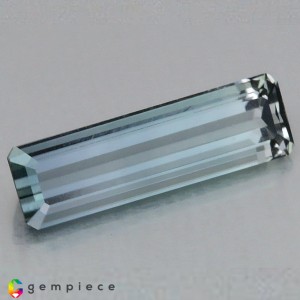
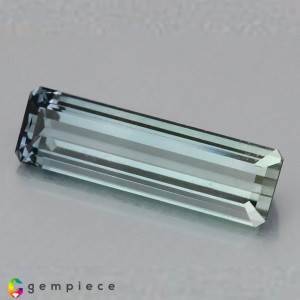
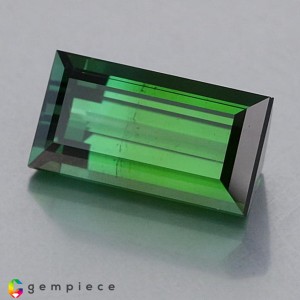
Blue tourmaline spans a significant range of blue tones, from pale sky blue and light greenish-blue through medium vivid blue to deep inky dark blue. Understanding this range is essential for evaluating quality and value because different positions within it represent very different commercial categories.
The most desirable color for indicolite in the collector and fine jewelry market is a vivid, saturated blue that is neither too light nor too dark. Stones that are too pale appear washed-out and lack visual presence. Stones that are too dark become difficult to read as blue under anything other than strong directional light. The ideal is a stone that holds vivid, lively blue across a range of lighting conditions, maintaining brightness without appearing closed or grayish.
A specific and highly sought-after indicolite color in the current market is what dealers describe as "ink blue" or "dark teal blue" with strong saturation and almost no gray modifier. Stones achieving this quality from Namibia and fine Brazilian sources command premium prices and have shown consistent price appreciation. The 2024 to 2025 market has seen approximately an 18% increase in average indicolite prices driven by limited supply combined with growing collector awareness.
Blue tourmaline from Afghanistan and Pakistan tends toward lighter blue-green and mint-blue tones rather than the deep saturated blue of Namibian and Brazilian material. These lighter tones have their own appeal and represent a different market segment at more accessible prices.
For full gemological information, read our Blue Tourmaline Gemopedia Guide. Browse related varieties including green tourmaline, Paraiba tourmaline, and pink tourmaline, with guides at Green Tourmaline Guide, Paraiba Tourmaline Guide, and Pink Tourmaline Guide. See the complete Tourmaline Gemstone Guide and browse our full natural tourmaline collection.
Sources and Origin Characteristics
Namibia produces what many experts regard as the world's finest blue tourmaline, with a combination of color quality and crystal clarity that sets it apart from other sources. Namibian indicolite from the Erongo Region in particular has achieved consistent recognition for exceptional pure blue with strong saturation and brightness. However, production from Namibia is now extremely limited, and fine Namibian blue tourmaline commands significant premiums reflecting both quality and scarcity.
Brazil contributes the most volume of quality blue tourmaline in the commercial market. Brazilian indicolite from Minas Gerais and other states can achieve deep, saturated blue in good crystal sizes, often with the characteristic iron-titanium color mechanism producing blues that have a slightly different optical character from Namibian material. Brazilian blue tourmaline from specific mines has historically been sold as "Brazilian sapphire" in trade contexts, though this designation is not approved under FTC guidelines and the stones are correctly identified as blue tourmaline.
Mozambique and Nigeria both produce blue tourmaline with varying color ranges. Nigerian material can achieve vivid teal-blue to blue-green in interesting sizes. Mozambique contributes both standard blue elbaite and occasionally copper-bearing material that crosses into Paraiba-type chemistry.
Blue Tourmaline Properties
Species: Elbaite (Na(Li,Al)Al₆Si₆O₁₈(BO₃)₃(OH)₄)
Color Cause: Iron (Fe²⁺) combined with titanium (Ti⁴⁺) through charge transfer
Hardness: 7 to 7.5 Mohs
Refractive Index: 1.624 to 1.644
Specific Gravity: 3.02 to 3.20
Pleochroism: Distinct — typically shows blue and dark blue/greenish-blue from different directions
Clarity: Type I — usually eye-clean
Cleavage: None
Treatment: Some blue tourmalines may be lightly heated; many are completely natural
Cutting and Pleochroism
Blue tourmaline displays strong pleochroism, showing noticeably different color intensities when viewed along different crystal directions. The color appears darkest when viewed down the c-axis (along the crystal length) and lighter and more vivid when viewed perpendicular to the c-axis. This creates a direct challenge for lapidaries: cutting the stone with the table facing down the c-axis produces a darker, less desirable appearance, while orienting the table perpendicular to the c-axis produces the brighter, more attractive blue that maximizes value.
This orientation requirement means that a significant portion of the original rough crystal must often be sacrificed to achieve proper orientation in the finished gem. Expert cutters at GemPiece evaluate each piece of blue tourmaline rough individually to determine the orientation that will produce the best face-up color, balancing the depth of blue with the brightness that keeps the stone lively under different lighting conditions.
Heat Treatment
Some blue tourmalines undergo controlled heating to lighten and improve the color quality of stones that are initially too dark. Heating oxidizes some of the Fe²⁺ responsible for the deepest blue tones toward Fe³⁺, which reduces the dark component and can produce a more vivid, open blue. However, this effect is less dramatic in blue tourmaline than heating is in pink or Paraiba varieties. Many fine blue tourmalines reach the market completely untreated, which is an important selling point for buyers who prioritize natural stone integrity.
Value and Market Pricing
Fine-quality indicolite with deep, vivid blue and good clarity ranges from $600 to $1,000 per carat for collector-grade material under 5 carats. Large clean indicolite above 5 carats in fine color is genuinely rare and commands significant premiums above this range. Standard commercial blue tourmaline with lighter color or minor inclusions ranges from $50 to $500 per carat depending on specific quality. Namibian origin material commands a 25 to 50% premium over equivalent quality from other sources reflecting both quality and the extreme scarcity of current production. Browse our complete blue tourmaline collection or explore the full natural tourmaline range.
Frequently Asked Questions
What is indicolite?
Indicolite is the gemological trade name for deep blue elbaite tourmaline with strong saturation. The name derives from "indigo" and refers to the characteristic deep blue color achieved when iron and titanium combine within the crystal structure. Not all blue tourmalines qualify as indicolite; the designation applies to deeply saturated material that achieves true blue tonal depth rather than light or pale blue tones.
Is blue tourmaline the same as blue sapphire?
No. Blue tourmaline and blue sapphire are completely different mineral species. Blue sapphire is corundum (aluminum oxide) colored by iron and titanium. Blue tourmaline is a complex boron cyclosilicate colored by the same elements but in a very different crystal structure that produces different optical properties. Fine blue tourmaline has historically been called "Brazilian sapphire" by some traders, but this name is misleading and not approved under FTC guidelines.
Is blue tourmaline rare?
Fine-quality blue tourmaline with deep vivid indicolite color and good clarity is relatively rare compared to pink and green tourmaline. Large clean indicolite above 5 carats is genuinely scarce. Namibian blue tourmaline, considered among the finest, is increasingly difficult to source as production has become extremely limited.
Is blue tourmaline treated?
Some blue tourmalines are lightly heated to improve color brightness. Many are completely natural and untreated. The effect of heating is less dramatic in blue tourmaline than in pink or Paraiba varieties. At GemPiece, treatment status is fully disclosed for every stone.
Where is the best blue tourmaline found?
Namibia produces the finest blue tourmaline in terms of color quality, though supply is now extremely limited. Brazil provides the most commercial volume of quality blue tourmaline. Nigeria and Mozambique contribute additional material. Afghanistan produces lighter blue-green varieties.
Can blue tourmaline be used in rings?
Yes. At 7 to 7.5 Mohs hardness with no cleavage, blue tourmaline is durable for ring use. Protective settings such as bezels or halos are recommended for daily-wear rings to prevent surface scratching. For occasional-wear rings and pendants, standard prong settings are appropriate.
Clear ✖