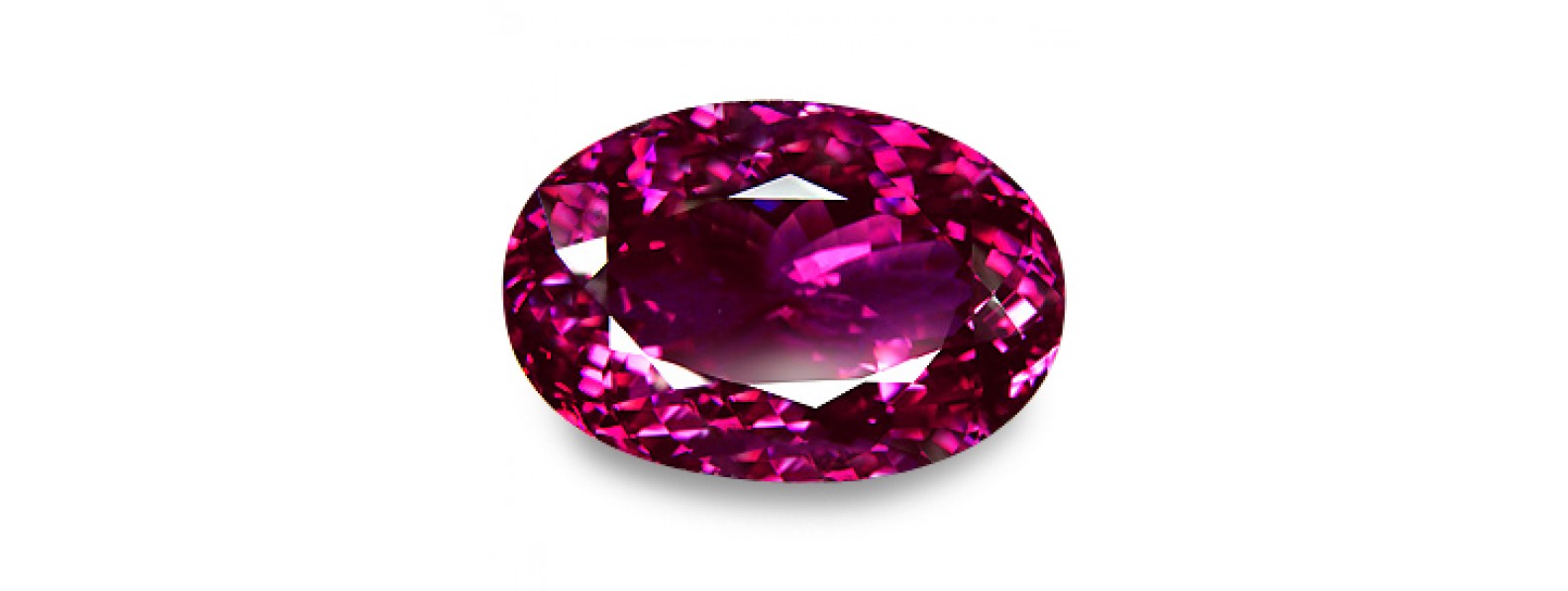
Pink Tourmaline Guide – Color, Composition, Sources and Value
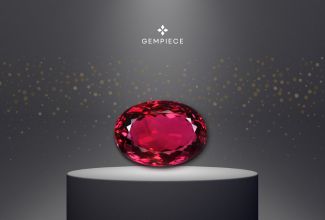
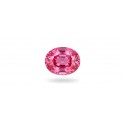
Pink tourmaline is the October birthstone variety that most buyers actually want: a vivid, clean, beautiful pink gem with excellent durability, a wide range of tones to suit every preference, and prices that deliver far more optical quality per dollar than most alternative pink gemstones. At the premium end, rubellite, the deeply saturated red-pink tourmaline that maintains its color intensity under any light source, competes visually with pink sapphire and ruby at a fraction of the price with the added distinction of coming from a mineral that produces genuinely diverse and interesting geology.
Explore our pink tourmaline collection and related varieties including Paraiba tourmaline, blue tourmaline, and bi-color tourmaline. For related guides see Paraiba Tourmaline Guide, Blue Tourmaline Guide, Green Tourmaline Guide, and the complete Tourmaline Gemstone Guide.
What Is Pink Tourmaline
Pink tourmaline is elbaite tourmaline displaying pink as the dominant body color, where the pink is produced by manganese substituting in the Y-crystallographic site of the crystal structure. Within this category, rubellite is the premium subset defined by color stability under incandescent light. All rubellites are pink to red tourmalines, but not all pink tourmalines qualify as rubellite. The distinction is critical for valuation and buyer expectations.
Pink tourmaline belongs to the elbaite species (Na(Li,Al)Al₆Si₆O₁₈(BO₃)₃(OH)₄). Its chemical formula accommodates manganese substituting primarily at the Y-site, where Mn²⁺ produces lighter pink tones through absorption in the blue-green region (complementary to pink) and Mn³⁺ produces deeper, redder tones through absorption in the green-yellow region. The ratio and total concentration of these two manganese oxidation states determine exactly where within the pink-to-red spectrum any individual stone falls.
Pink tourmaline is designated as a Type II to Type III gemstone in the GIA clarity classification, meaning some inclusions are expected and normal. Lighter pinks (lower manganese, cleaner crystal growth) tend toward Type II; deeply saturated rubellites (higher manganese, often more complex crystal chemistry) tend toward Type III where inclusions are almost always present. Eye-clean rubellite is significantly rarer and more valuable than included material of equivalent color quality.
Manganese Color Chemistry in Detail
Manganese is the dominant chromophore in pink tourmaline, but its behavior in the elbaite crystal structure is more complex than a single element producing a single color. Manganese exists in two commercially relevant oxidation states in tourmaline: Mn²⁺ (divalent) and Mn³⁺ (trivalent).
Mn²⁺ in the Y-site of elbaite produces absorption centered approximately in the blue-green spectral region (around 500 to 550nm), leaving pink and red wavelengths to transmit preferentially. This produces the lighter, more purely pink tones seen in pale to medium pink tourmaline. The absorption from Mn²⁺ is relatively narrow and occurs in a spectral position that is relatively insensitive to the type of illuminating light source, which is why pale pink tourmaline typically maintains its pink character under both daylight and incandescent lighting.
Mn³⁺ produces absorption centered in the yellow-green region (approximately 540 to 580nm), which is a different and deeper position in the spectrum than Mn²⁺ absorption. This stronger, differently positioned absorption produces deeper, more saturated color with a stronger red component. Mn³⁺ is the chromophore responsible for rubellite's deep red-pink character and its stability under incandescent light.
The practical significance of this chemistry for buyers: a deep saturated pink tourmaline that shows brownish-pink under incandescent light is showing the effect of Mn²⁺ absorption being overwhelmed by the warm incandescent spectrum, which increases the appearance of brown or orange undertones. A true rubellite with sufficient Mn³⁺ content maintains its red-pink under incandescent light because Mn³⁺ absorption is positioned deep enough in the green-yellow region that incandescent light cannot shift the balance toward brown.
Rubellite: Definition, History, and the Incandescent Light Test
Rubellite comes from the Latin "rubellus" meaning reddish, and has been in use in gemological literature since at least the 18th century to describe deep red tourmalines. The GIA defines rubellite as a dark pink to red tourmaline that maintains its color under incandescent light. The International Colored Gemstone Association (ICGA) similarly specifies that the color must be saturated and stable under different lighting conditions to qualify.
The practical incandescent light test involves moving the stone from daylight or fluorescent light into the warm orange-yellow light of an incandescent bulb and observing whether the color remains intensely red-pink or shifts toward brownish or orangey-pink. If the color remains vivid and red-toned under incandescent light, the stone is rubellite. If it shifts noticeably toward brown or orange, it is a standard pink tourmaline, however beautiful it may appear in daylight.
This test matters commercially because rubellite commands significantly higher prices than standard pink tourmaline of similar daylight appearance. A dealer who sells a daylight-vivid pink tourmaline as rubellite without confirming incandescent performance is either uninformed or misrepresenting the stone. Experienced buyers at GemPiece always verify rubellite status under incandescent light before classification.
Only approximately 3% of tourmalines qualify as true rubellite, reflecting the specific Mn³⁺ content required. This rarity, combined with strong collector demand driven by rubellite's ruby-competitive visual quality, has driven rubellite prices up by more than 15% year-on-year in 2025.
Jonas Mine, Brazil: The Most Famous Rubellite in History
The Jonas Mine (officially Mina Jonas) in Conselheiro Pena, Doce Valley, Minas Gerais, Brazil, holds a unique place in pink tourmaline history. Discovered in 1978 and actively mined through the 1980s and 1990s, the Jonas Mine produced the most famous and most commercially significant rubellite crystals ever found: extraordinary cranberry-red specimens of remarkable size and clarity that set the global standard for what rubellite could be.
Jonas Mine rubellite crystals were documented up to several hundred carats in rough form with strong, consistent red-pink color and unusual clarity for rubellite, which is normally heavily included. The distinctive cranberry-red color of Jonas Mine material, sometimes described as a pure, clean red-pink without brownish or orangey modifiers, was attributed to an unusually favorable Mn³⁺/Mn²⁺ ratio combined with low iron content that could otherwise introduce brownish undertones.
Jonas Mine production is now largely depleted, and authentic Jonas Mine rubellite with provenance documentation commands significant premiums in the collector market over equivalent material of anonymous Brazilian origin. IGS documents two rubellites on lepidolite clusters from Jonas Mine (with the largest crystal at 2.5cm) as representative examples of the mine's characteristic output.
Global Sources in Detail
Nigeria (Oyo State and surrounding pegmatite belts) is the most commercially important current source for vivid pink tourmaline. Nigerian material is known for strong saturation and color intensity that few other origins match. Some Nigerian stones appear deeper or more closed in their natural state and respond dramatically to controlled heating, revealing a bright open vivid pink. Not all Nigerian material is heated; the nature of each individual piece determines the approach. Some Nigerian material also qualifies as near-rubellite or rubellite with Mn³⁺-rich composition.
Mozambique (Manica Province and Zambezia Province) produces attractive purplish-pink tourmalines with excellent brightness and visual appeal. Mozambique material is available in larger sizes with better clarity than most Nigerian stones, making it preferred for fine jewelry applications requiring larger clean calibrated stones. The purplish-pink character of Mozambique rubellite is distinctive and commercially recognizable, and some Mozambique material achieves the deep, lighting-stable color qualifying as rubellite.
Congo produces pink tourmaline in available sizes. Congo material can be more complex and challenging to cut than material from other origins due to internal structural characteristics. At GemPiece, our in-house cutting capability and experience with Congo rough allows us to work with this material successfully and extract well-proportioned, attractive finished stones that other cutters might not attempt.
Brazil (Minas Gerais) remains historically the most important rubellite source, though production has decreased significantly since the peak Jonas Mine years. Brazilian rubellite commands origin premiums reflecting both quality history and supply scarcity. Madagascar produces pink tourmaline across a range of pink tones with varied quality. Afghanistan produces smaller but intensely colored tourmalines, often with excellent clarity and the strongest pleochroism of any source. Russia's Transbaikal region (Mursinka and related deposits) produces pink to rubellite material with distinctive cool purple-pink tones (siberite).
Physical and Optical Properties
Hardness: 7 to 7.5 Mohs, adequate for all jewelry applications including daily-wear rings with appropriate settings.
Refractive Index: 1.624 to 1.644 for elbaite. Good RI for brilliant faceting, producing attractive light return in well-cut stones.
Specific Gravity: 3.02 to 3.20.
Pleochroism: Distinct to strong in pink tourmaline. Viewed along the c-axis (crystal length), the stone appears more saturated and redder. Viewed perpendicular to the c-axis, it appears lighter and more pink. This pleochroism means that cutting orientation significantly affects the face-up color of finished stones.
Cleavage: None. Excellent toughness with conchoidal fracture.
Clarity Type: Type II to Type III. Lighter pinks are typically cleaner; deeply saturated rubellites are almost always included. Eye-clean rubellite is rare and commands premiums.
Fluorescence: Some pink tourmalines from Brazil and Tanzania show blue or lavender fluorescence under short-wave UV. This fluorescence is not diagnostic but can be visually attractive in UV-rich natural daylight environments.
Birefringence: 0.018 to 0.020. Low enough that doubling of back facets is not visible to the naked eye in standard faceted stones.
Cutting and Pleochroism Management
Cutting pink tourmaline requires careful management of pleochroism to achieve the optimal face-up color. The table orientation relative to the crystal's c-axis is the primary determinant of face-up color performance.
For pale to medium pink tourmaline, orienting the table perpendicular to the c-axis produces the lightest, brightest face-up color. This is typically the preferred orientation for lighter material where maximum brightness enhances the stone's appeal. For deeply saturated rubellite that may appear very dark when viewed along the c-axis, a diagonal or perpendicular-to-c-axis orientation produces better balance between saturation and brightness.
At GemPiece, each piece of pink tourmaline rough is evaluated by experienced cutters before any orientation decision is made. The internal color distribution, the crystal's size and shape, the desired finished stone shape and proportions, and the specific pleochroism of the individual stone all inform the cutting orientation decision. This individualized approach consistently produces better results than a standardized protocol applied to all material.
Value and Market Pricing
Pale to medium commercial pink tourmaline: $5 to $50 per carat. Fine vivid pink in good clarity: $30 to $300 per carat. Hot pink approaching rubellite saturation in eye-clean material above 3 carats: $100 to $500 per carat. True rubellite maintaining red-pink under incandescent light, eye-clean: $300 to $3,000 per carat. Fine Jonas Mine rubellite with provenance: commands additional premiums above standard rubellite pricing.
Rubellite prices have increased over 15% year-on-year in 2025, driven by recognition of the 3% qualifying rate and growing collector demand for ethically sourced, certified material. For buyers evaluating value, fine clean rubellite from Mozambique at $300 to $800 per carat represents exceptional value relative to comparable pink sapphire at $1,000 to $5,000 per carat for equivalent visual quality.
Buying Pink Tourmaline and Rubellite
Always evaluate pink tourmaline under both natural daylight and incandescent light. The two lighting conditions reveal different aspects of the stone's color chemistry. For rubellite evaluation, the incandescent test is not optional; it is the definitive test of rubellite status. A stone that looks deep red-pink under daylight but shifts to brownish-pink under incandescent is not rubellite and should not be priced as rubellite.
For clarity evaluation, apply the standard appropriate to the specific tone. Lighter pinks should be eye-clean or very close to it; inclusions in light pink tourmaline are more visible and more commercially significant than in deeply saturated rubellite where inclusions are expected. For rubellite, assess whether inclusions are visible face-up under natural light at normal viewing distance; inclusions visible only under magnification or only from the side are significantly less concerning than those visible face-up in normal use.
Browse our pink tourmaline collection or explore related guides: Paraiba Tourmaline Guide, Green Tourmaline Guide, Blue Tourmaline Guide, and the complete Tourmaline Gemstone Guide.