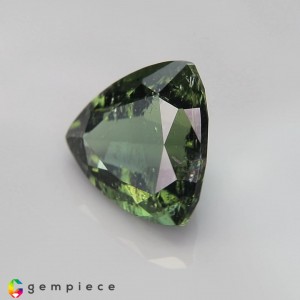
Buy Authentic Natural Moldavite – Czech Tektite Online
Moldavite is one of the most extraordinary natural substances ever found on Earth — not a mineral formed within the planet's crust, but a natural glass born from the violent collision of a meteorite with Earth's surface approximately 15 million years ago. The resulting superheated material was ejected into the atmosphere, cooled in flight, and fell back to Earth across a strewn field that now covers parts of the Czech Republic, Austria, and Germany. The result is a gemstone unlike any other: an olive to forest green natural glass with a deeply etched, sculptural surface texture and a cosmic origin story that no other gemstone in the world can claim.
Read our complete moldavite gemstone guide (view collection) covering the meteorite impact origin, Czech sources, authenticity identification, and value — or explore our natural moldavite collection with full provenance documentation on every piece.
What Makes Moldavite Unique
Moldavite belongs to a class of natural glasses called tektites — formed when a meteorite impact melts and ejects terrestrial rock material at extreme temperatures and velocities. What distinguishes moldavite from all other tektites is its color and location: the olive green to bottle green color caused by a specific iron concentration in the ejected silica-rich material, and the fact that it is found only within the Czech Republic strewn field — making it a geographically exclusive natural material with no substitute and no new geological formation possible.
The surface texture of natural moldavite rough is immediately recognizable — deeply pitted, wrinkled, and sculpted by the forces of atmospheric cooling and subsequent geological weathering over 15 million years. This distinctive surface is one of the primary authenticity markers for natural moldavite and cannot be perfectly replicated in manufactured glass imitations, though the market does contain significant quantities of fake moldavite that buyers must guard against.
Color and Appearance
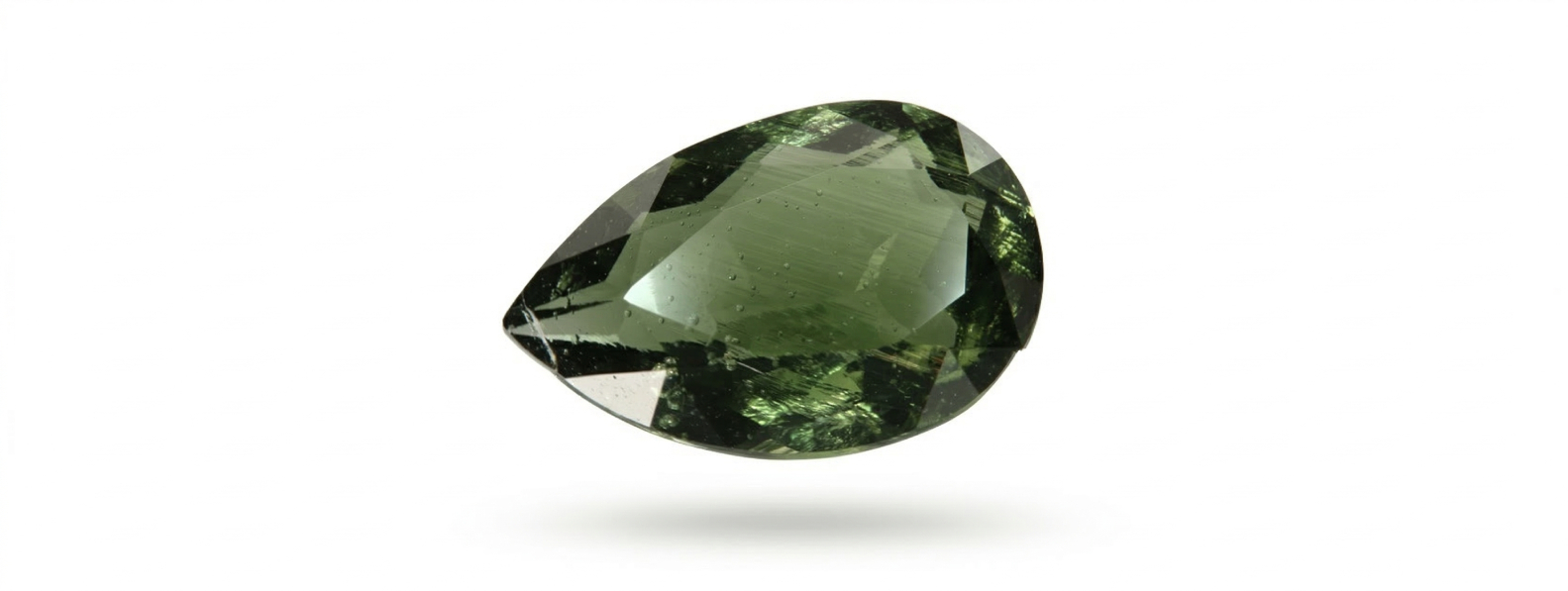
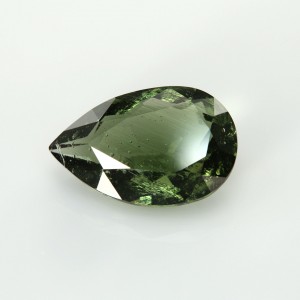
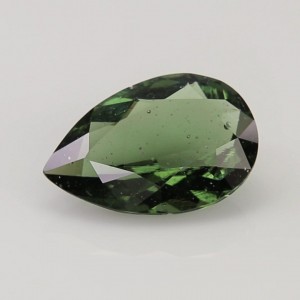
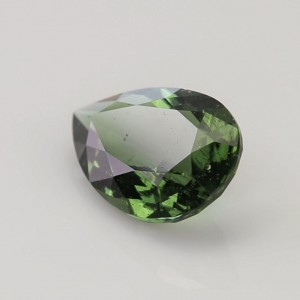
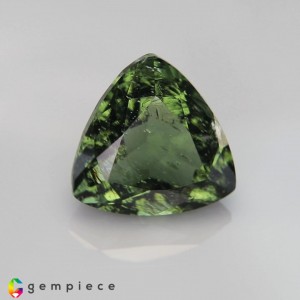
Moldavite occurs in a range of green tones from pale yellowish-green and olive through vivid medium green to deep forest or bottle green. The most commercially desirable color for faceted and polished moldavite is a clear, transparent medium green — vivid enough to display strong color face-up while light enough to allow transparency and brilliance. Very dark bottle-green material, while natural, can appear opaque or near-opaque in larger pieces. Brownish-green material exists but is less desirable in the collector market.
Faceted moldavite — cut from transparent rough — displays a pleasant vitreous luster and moderate brilliance. Natural raw moldavite pieces with their sculpted surfaces are collected as specimens and worn as pendants in their natural form, which is equally valid as a display of the material's unique character. Both faceted and natural-surface moldavite are commercially significant.
The Czech Republic — The Only Source
Moldavite is found exclusively within the strewn field of the Nördlinger Ries meteorite impact in Germany — but the material itself landed primarily in what is now the Czech Republic, with concentrations in southern Bohemia and southern Moravia, and minor occurrences in Austria. The Czech localities — particularly the Moldau River valley (from which moldavite takes its name) and the areas around Třebenice, Chlum, and Besednice — are the definitive and only sources of authentic moldavite in the world.
Any material described as "African moldavite," "Indian moldavite," or moldavite from any location outside the Czech-Austrian strewn field is not genuine moldavite. It may be another type of tektite — such as Libyan desert glass or Ivory Coast tektite — or it may be manufactured glass. Geographic origin is the most fundamental authenticity criterion for moldavite.
Authenticity — A Critical Buying Consideration
The moldavite market has a significant and well-documented problem with fake material. The surge in global demand for moldavite — driven in part by social media interest — has resulted in large quantities of manufactured green glass entering the market, often presented convincingly as genuine moldavite with artificial surface texturing. The volume of fake moldavite available online is substantial, and buyers without gemological testing capability can easily be deceived.
Genuine moldavite can be identified by a combination of characteristics: the natural surface texture on raw pieces (irregular, deeply etched, not uniformly patterned), the presence of natural flow structures and gas bubbles visible under magnification in cut or polished material, a specific gravity of approximately 2.32 to 2.38 (lighter than most glass imitations), and the refractive index of approximately 1.48 to 1.51. Laboratory certification from a reputable gemological laboratory is the most reliable guarantee of authenticity for significant purchases.
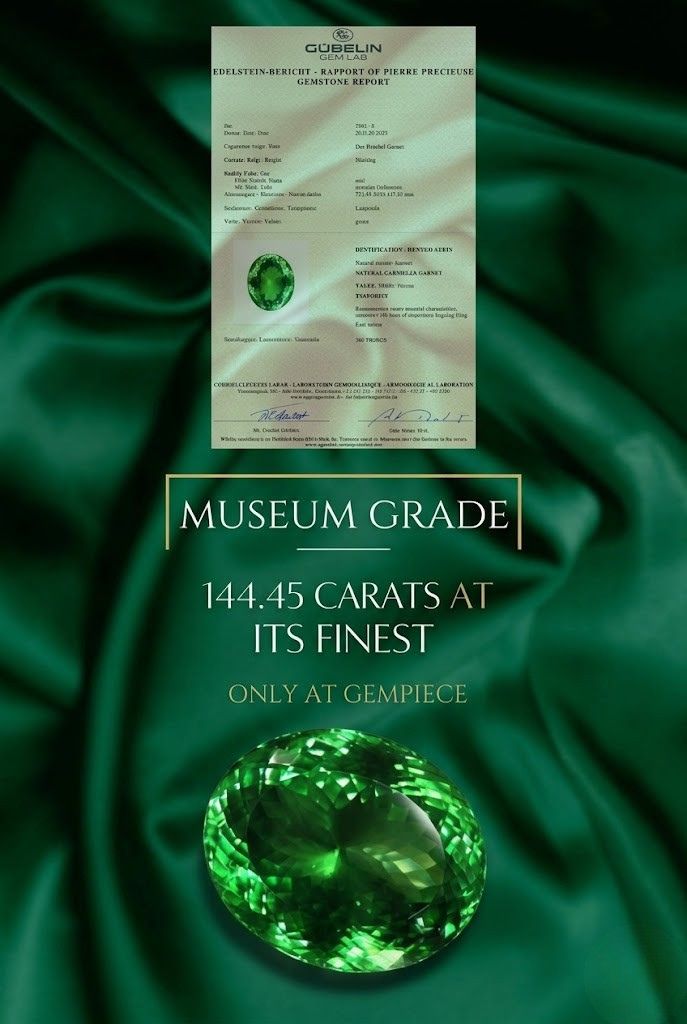
GemPiece sources moldavite exclusively from verified Czech suppliers with full provenance documentation. Authenticity documentation is provided on request for all moldavite pieces in our collection.
Clarity and Quality Grades
Moldavite quality is assessed primarily on transparency, color, and — for raw pieces — the sculptural quality of the natural surface. Transparent to highly transparent material with vivid green color and clean internal structure represents the premium tier for faceted moldavite. Natural raw specimens with deeply sculpted, aesthetically interesting surface forms command premiums in the specimen market regardless of internal clarity. Heavily included or opaque material is the lowest commercial grade but retains value as authentic moldavite given the material's finite supply.
Size and Availability
Moldavite is available across a wide size range — from small chips and fragments to large museum-quality specimens of tens of grams. Faceted moldavite is most commonly found in the 1 to 5 carat range for transparent gem-quality material. Larger faceted pieces above 10 carats in good transparency are less common and command premiums. Raw moldavite specimens of significant sculptural interest and size are valued independently of per-carat gem pricing. The finite supply of Czech moldavite — no new meteorite impact is generating fresh material — means that all authentic moldavite carries an inherent scarcity premium that will only increase over time.
Hardness and Durability
Moldavite has a Mohs hardness of approximately 5 to 5.5 — moderate hardness that makes it susceptible to scratching from harder gemstones and abrasive surfaces. As an amorphous glass rather than a crystalline mineral, it has no cleavage but can fracture or chip if subjected to sharp impact. Moldavite is best suited for pendants, earrings, and occasional-wear rings in protective settings. Daily-wear ring applications are not recommended without protective bezel settings. Handle with care and store separately from harder gemstones.
Value and Buying Considerations
Moldavite value is driven by transparency, color intensity, size, surface sculptural quality (for raw pieces), and — above all — verified authenticity. Transparent faceted moldavite with vivid medium green color commands the highest per-carat prices. Unique natural specimens with exceptional surface forms command premium prices in the collector and specimen market regardless of size. The finite nature of Czech moldavite supply supports long-term value appreciation for authentic material. Always purchase moldavite with provenance documentation from a supplier who sources directly from Czech origins.
GemPiece offers authentic Czech moldavite in both faceted and natural specimen form, with full provenance documentation and authenticity verification available on every piece.
Explore Related Rare and Unusual Gemstones
Collectors drawn to moldavite's unique origins may also appreciate
grandidierite (view collection),
clinohumite (view collection), and
diaspore (view collection).
Frequently Asked Questions
What is moldavite?
Moldavite is a natural glass — classified as a tektite — formed approximately 15 million years ago when a meteorite struck Earth in what is now Germany. The impact melted and ejected terrestrial rock material into the atmosphere, which cooled in flight and fell as moldavite across a strewn field in the Czech Republic, Austria, and Germany. It is the only gemstone of extraterrestrial impact origin with a vivid green color.
Is moldavite a crystal or a gemstone?
Moldavite is neither a crystal nor a mineral in the strict scientific sense — it is an amorphous natural glass with no crystalline structure. It is classified as a mineraloid and is the only tektite widely used as a gemstone due to its distinctive green color and transparency.
Where does moldavite come from?
Authentic moldavite comes exclusively from the Czech Republic — primarily southern Bohemia and southern Moravia — with minor occurrences in Austria. Any moldavite claimed to originate from Africa, India, or any other location is not genuine moldavite.
How can I tell if moldavite is real?
Natural moldavite has a distinctive deeply etched, sculpted surface on raw pieces. Cut or polished material shows natural flow structures and gas bubbles under magnification. Specific gravity of 2.32–2.38 and refractive index of approximately 1.48–1.51 are diagnostic. Laboratory certification from a reputable gemological lab is the most reliable guarantee for significant purchases.
Is moldavite rare?
Yes. Moldavite is finite — no new material is being created. The 15-million-year-old strewn field in the Czech Republic is the only source, and decades of intensive collecting and mining have significantly depleted surface deposits. Authentic moldavite supply is declining over time, supporting its long-term collector value.
Is moldavite suitable for jewelry?
Yes, with care. Moldavite has a hardness of 5 to 5.5, making it suitable for pendants, earrings, and protected ring settings. Daily-wear open prong rings are not recommended. Protective bezel settings are preferred for ring use.
Why is there so much fake moldavite on the market?
Significant global demand combined with moldavite's finite supply and relatively accessible appearance in manufactured glass has made it one of the most heavily counterfeited gemstones in the current market. Always buy from reputable suppliers who source directly from Czech origins and provide provenance documentation.
Does GemPiece sell authentic moldavite?
Yes. All moldavite at GemPiece is sourced directly from verified Czech suppliers with full provenance documentation. Authenticity verification is available on request for all pieces in our collection.