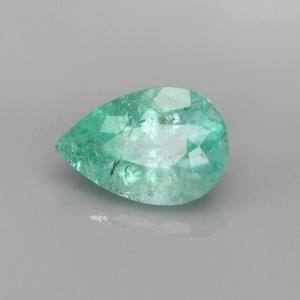
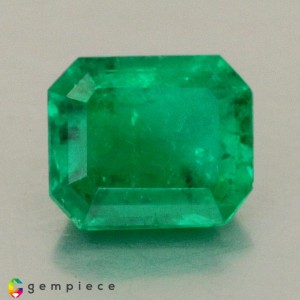
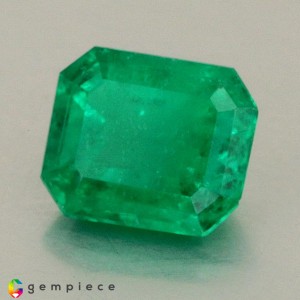
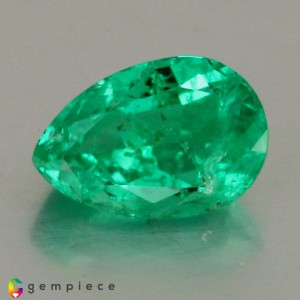
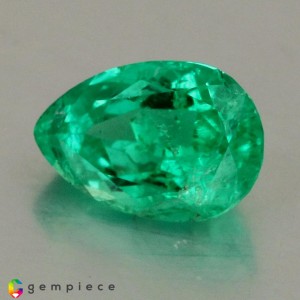
Buy Natural Emerald – Colombian, Zambian and Afghan Origins
Emerald is the green variety of beryl — and one of the most historically significant, commercially valuable, and universally recognized precious gemstones in the world. For thousands of years, the vivid green of a fine emerald has commanded the highest admiration across cultures, civilizations, and eras — from the mines of ancient Egypt that supplied Cleopatra's legendary collection, to the Mughal emperors of India who adorned themselves with Colombian emeralds of extraordinary size and quality, to the finest auction rooms and private collections of the modern era. Emerald is the birthstone for May, the traditional gem for 20th and 35th wedding anniversaries, and the defining symbol of the color green in gemology. No other green gemstone — not tsavorite, chrome tourmaline, or demantoid garnet — approaches emerald in historical prestige, cultural significance, or price at the finest quality levels.
Read our complete emerald gemstone guide (view collection) covering chromium color chemistry, Colombian origin premiums, clarity standards, oil enhancement, and value — or explore our natural emerald collection with full treatment disclosure and gemological certification available on all significant stones.
The Color of Emerald
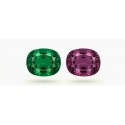
Emerald's defining characteristic is its color — and the specific green of fine emerald is produced primarily by chromium (Cr³⁺) substituting for aluminum within the beryl crystal lattice. Chromium absorbs red and blue wavelengths and transmits green in a particularly vivid, warm, slightly yellowish-green that is distinctly different from iron-based greens. Vanadium can produce a similar green in beryl — and whether vanadium-colored green beryl qualifies as emerald is a long-standing gemological debate that different laboratories resolve differently. Most major laboratories now accept both chromium and vanadium as qualifying coloring agents for the emerald designation, provided the color meets the minimum saturation threshold.
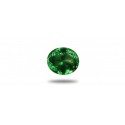
The emerald color range spans from pale grassy green through vivid medium green to the deep, rich, slightly bluish-green of the finest Colombian material. The most commercially prized emerald displays a vivid, pure green with slight blue modifier, strong saturation, and medium to medium-dark tone — the color described in the Colombian trade as verde esmeralda, the defining emerald green standard.
Colombia — The Benchmark Source
Colombia produces the most prestigious and most commercially significant emeralds in the world. The Muzo mine — perhaps the single most famous emerald mine in history — is known for producing deeply saturated, slightly bluish-green emeralds of exceptional color intensity. Chivor produces a slightly lighter, more purely green material with distinctive three-phase inclusions. Coscuez is a third major Colombian locality. Colombian emerald commands origin premiums — a fine Colombian emerald with GRS, Gübelin, or GIA laboratory certification of Colombian origin and minor to no oil enhancement can command multiples of the price of a comparable stone of unknown or other origin.
Major Global Sources
Zambia — particularly the Kagem mine, the largest emerald mine in the world by production volume — produces fine emeralds with strong color and typically lower inclusion density than Colombian material. Zambian emeralds often display a slightly bluish-green character and are highly regarded for their clarity relative to Colombian material. Brazil (Belmont, Carnaíba, Itabira) produces emerald of good color with moderate inclusion density. Afghanistan's Panjshir Valley produces fine, sometimes unusually clear emerald. Ethiopia's Shakiso region has emerged as an important source producing fine color material. Zimbabwe (Sandawana) produces vivid green material typically in smaller sizes.
The Emerald Cut — History and Purpose
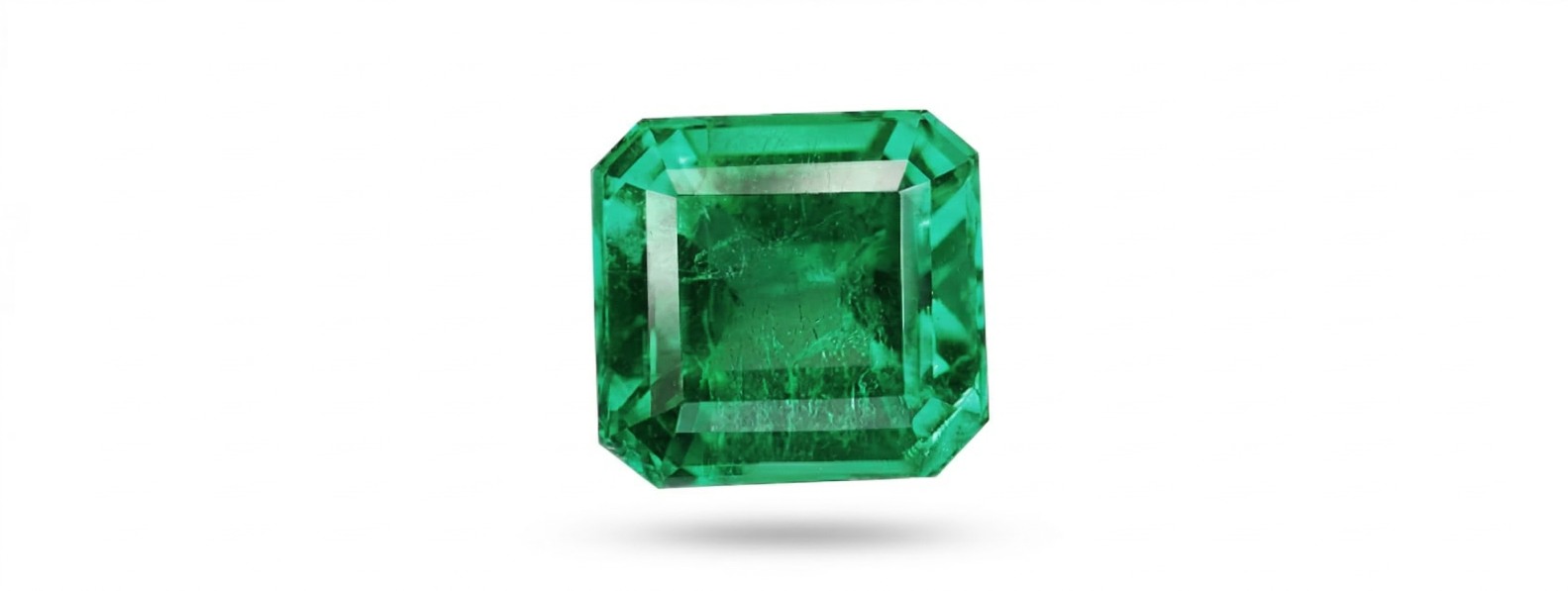
The rectangular step cut with cut corners — known today as the emerald cut — was specifically developed to address the characteristics of emerald crystals. The elongated octagonal shape maximizes recovery from the naturally prismatic emerald crystal habit, the step facets minimize pressure during cutting that could exploit the crystal's natural fractures, and the large flat table presents the color with maximum clarity and depth. This cut was so closely associated with emerald that it took the stone's name. Today the emerald cut is used across many gemstone species, but its historical development is inseparable from emerald.
Clarity and the Jardin
Emerald is a GIA Type III gemstone — inclusions are expected, accepted, and integral to the identity of the stone. The inclusion landscape of a natural emerald is so characteristic that gemologists call it the jardin — French for garden — reflecting the organic, layered complexity of the inclusions within. Common inclusion types in emerald include three-phase inclusions (a cavity containing liquid, gas, and a solid crystal), two-phase inclusions, growth tubes, healing fractures, and crystals of pyrite, calcite, or other minerals. The jardin is also a primary tool for distinguishing natural emerald from synthetic emerald and from emerald simulants.
Eye-clean emerald — free of visible inclusions to the naked eye — is genuinely rare at any meaningful size and commands extraordinary premiums. Unlike aquamarine or heliodor, where eye-clean clarity is standard, even fine collector-grade emerald typically displays visible inclusions that are accepted as natural and expected.
Oil Enhancement — The Standard Treatment
Virtually all natural emerald in the commercial market has been clarity enhanced through fracture filling — the application of colorless oil, resin, or other filler to surface-reaching fractures to reduce their visibility and improve apparent clarity. This practice is universally accepted in the emerald trade and disclosed on all reputable laboratory certificates, which grade the degree of enhancement as: none, insignificant, minor, moderate, or significant (or equivalent terminology). The degree of enhancement directly affects value — emerald with no or minor oil is worth substantially more than the same stone with significant oil at equivalent visual appearance.
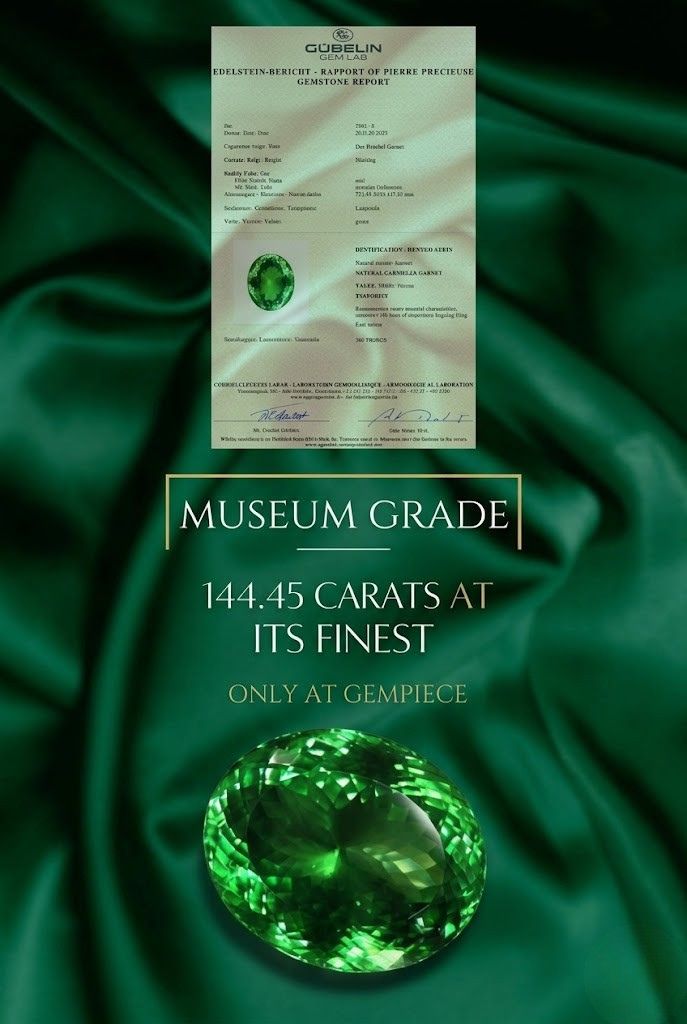
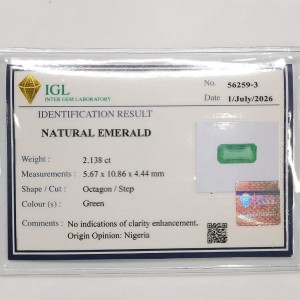
At GemPiece, all emeralds are sold with full disclosure of enhancement degree, and laboratory certificates from GRS, Gübelin, GIA, or AIGS are available on significant stones.
Value and Buying Considerations
Emerald value is driven by color, transparency, treatment status, and origin — in roughly that order of importance. The finest Colombian emerald with no oil and vivid color can command $20,000 to $100,000 per carat or more at auction. More accessible fine Colombian or Zambian material in the 1 to 3 carat range with minor oil and strong color represents the commercial premium tier at $500 to $5,000 per carat depending on quality. Treatment disclosure is the most critical factor for value accuracy — always purchase emerald with laboratory certification that explicitly documents origin and enhancement degree. Never purchase significant emerald without documentation.
GemPiece sources emerald from Colombia, Zambia, Brazil, and Afghanistan with full laboratory certification and treatment disclosure on all significant stones.
Explore Related Beryl Varieties
Beryl family guide (view collection),
aquamarine (view collection),
morganite (view collection),
mint beryl (view collection), and
heliodor.
Frequently Asked Questions
What is emerald?
Emerald is the vivid green variety of beryl, colored by chromium and/or vanadium. It is the May birthstone, the traditional gem for 20th and 35th anniversaries, and one of the most historically significant and commercially valuable gemstones in the world.
Why does emerald have inclusions?
Emerald forms in complex geological environments where different types of fluids interact — this environment produces characteristic inclusions known as the jardin (French for garden). Unlike Type I beryl varieties, inclusions are expected in emerald and are accepted as a natural characteristic rather than a defect.
What is the emerald cut?
The emerald cut is a rectangular step cut with clipped corners, historically developed specifically for emerald to maximize crystal yield, minimize cutting pressure on fractures, and present the color with maximum clarity. It was so associated with emerald that it took the stone's name.
What is emerald oil enhancement?
Most emeralds are clarity enhanced by filling surface-reaching fractures with colorless oil or resin — a universally accepted, disclosed practice graded on laboratory certificates as none, insignificant, minor, moderate, or significant. The less oil, the higher the value for equivalent color.
Why is Colombian emerald more expensive?
Colombian emerald — particularly from Muzo and Chivor — is considered the benchmark for color quality, displaying a vivid, slightly bluish-green that defines the emerald color standard. Laboratory-confirmed Colombian origin with minor or no oil commands significant premiums over comparable material from other sources.
What is the difference between emerald and green beryl?
Emerald is the saturated chromium and/or vanadium-colored variety of beryl. Light green beryl colored primarily by iron — lacking the vivid chromium-driven green — is called green beryl or mint beryl rather than emerald. The distinction requires a minimum color saturation level defined by the gem trade.
Should I buy emerald with or without oil?
No-oil or minor-oil emerald commands significant collector premiums but is rarer. Minor oil is widely accepted in the trade. Significant oil materially affects long-term value. Always purchase emerald with laboratory documentation specifying the degree of enhancement — never buy significant emerald without a certificate.