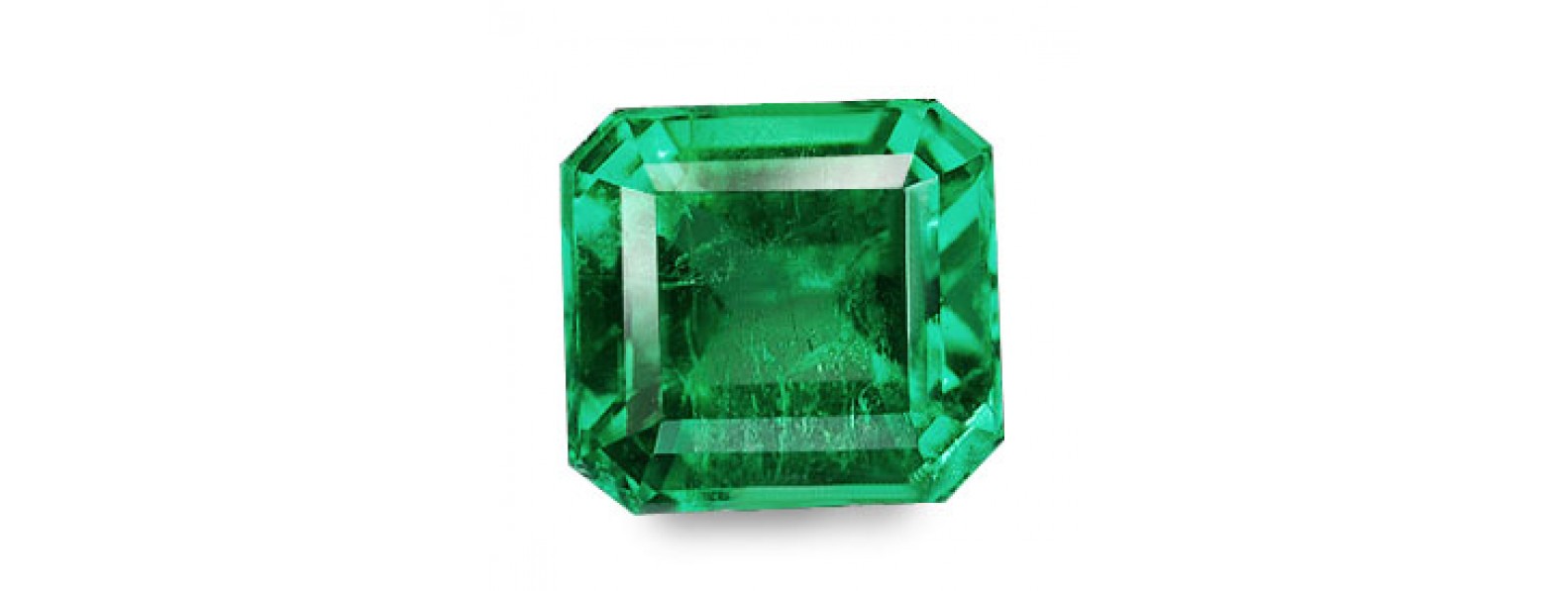
Emerald – Colombian Green Beryl, Jardin Inclusions and Oil Enhancement
Emerald is perhaps the most historically loaded gemstone name in the human lexicon — a word that has meant the deepest green, the most precious, the most royal, and the most coveted, across virtually every civilization that has ever had access to the gem. The name derives from the Old French esmeraude, from Medieval Latin esmaraldus, from Latin smaragdus, from Greek smaragdos — all meaning simply green gem. That lineage of naming reflects emerald's single defining characteristic: a green of such purity, saturation, and warmth that no other green gemstone in the world has ever displaced it from the apex of the green gem hierarchy, despite the occasional rival. This guide covers emerald's beryl mineralogy, chromium-vanadium color chemistry, the jardin and Type III clarity standard, Colombian geology, global sources, oil enhancement, and the value factors that place fine emerald among the most expensive natural objects per gram on Earth.
Explore our natural emerald collection from Colombia, Zambia, Brazil, and Afghanistan.
Mineral Composition and Crystal Structure
Emerald is the vivid green gem variety of beryl (Be₃Al₂Si₆O₁₈), sharing the species' hexagonal crystal system and chemical framework. The physical constants of emerald: Mohs hardness 7.5 to 8; specific gravity 2.67 to 2.78 (slightly higher than most beryl due to chromium substitution); refractive index 1.565 to 1.602, uniaxial negative, birefringence 0.005 to 0.009; weak dichroism (bluish-green to yellowish-green). The typical crystal habit is elongated prismatic with hexagonal cross-section, though emerald crystals are rarely as well-formed as aquamarine due to the geological conditions of formation.
Color Chemistry — Chromium and Vanadium
The vivid green of emerald is produced primarily by Cr³⁺ (trivalent chromium) substituting for Al³⁺ in the octahedral sites of the beryl crystal lattice. Chromium creates two strong absorption bands — one in the violet-blue region and one in the yellow-red region — leaving the green region of the spectrum as the primary transmission window. This transmission pattern produces a uniquely vivid, warm green with a slightly yellowish or bluish modifier depending on the precise chromium concentration and the influence of secondary trace elements. The characteristic fluorescence of Colombian emerald under UV light — a strong red fluorescence driven by the chromium content — is one of the diagnostic tools used in laboratory origin determination.
Vanadium (V³⁺) in the same structural site produces a similar but slightly different green — generally described as slightly more yellowish-green than chromium-colored material. Whether vanadium-colored green beryl constitutes emerald has been debated for decades; most major gemological laboratories now accept vanadium alongside chromium as a qualifying coloring agent for the emerald designation, provided the color meets the minimum saturation threshold.
The Type III Clarity Standard and the Jardin
Emerald is the pre-eminent example of a GIA Type III gemstone — a species that almost always contains visible inclusions as a natural consequence of its geological formation. The inclusions in emerald are so characteristic and so expected that the trade gave them a special name: the jardin (French: garden) — reflecting the organic, complex, layered internal landscape that is the norm rather than the exception in natural emerald.
The three-phase inclusion — a cavity containing simultaneously a liquid phase, a gas bubble, and a solid crystal, typically of sodium chloride or other salt minerals — is the most diagnostically significant inclusion type in Colombian emerald and is a primary indicator of Colombian origin in laboratory testing. Two-phase (liquid + gas) inclusions, growth tubes, healed fractures, and crystals of pyrite, calcite, actinolite, and chromite are also common. The specific inclusion assemblage varies by origin — Colombian, Zambian, Brazilian, and Afghan emeralds have recognizably different jardin landscapes that trained gemologists and laboratories use for origin determination.
Colombian Emerald Geology
Colombian emerald has a unique and geologically anomalous origin that distinguishes it from virtually all other emerald sources and contributes to its exceptional color quality. Unlike most beryls which form in pegmatites, Colombian emerald forms in black bituminous shales in the Eastern Cordillera of the Andes through a process of hydrothermal fluid interaction. Beryllium-bearing fluids derived from igneous intrusions far from the deposit interact with chromium-bearing brines derived from evaporitic formations within the black shales, creating the precise chemical conditions for emerald crystallization in fracture-hosted veins and calcite pods. This geologically unusual combination of beryllium and chromium from separate sources produces the characteristic deep, slightly bluish-green color and the three-phase inclusions that define Colombian emerald.
The three most important Colombian mining regions are: Muzo (western emerald zone — known for vivid, slightly bluish-green material of the highest color intensity), Chivor (eastern emerald zone — slightly lighter, more purely green, with distinctive pyrite inclusions), and Coscuez (western zone — producing fine deep green material). Colombian emerald with laboratory-confirmed origin commands significant premiums in the international market.
Global Sources
Zambia: The Kagem mine (majority-owned by Gemfields) is the world's largest emerald mine by production volume and produces fine quality emerald with strong color and typically lower inclusion density than Colombian material. Zambian emerald often displays a slightly bluish-green character with good transparency. Brazil: The Belmont mine in Minas Gerais, the Carnaíba mine, and the Itabira region produce emerald colored primarily by vanadium — accepted as emerald by most laboratories. Brazilian material typically has moderate inclusion density. Afghanistan: The Panjshir Valley produces fine, sometimes unusually clear emerald in a strikingly beautiful vivid green, though political instability has impacted supply. Ethiopia: The Shakiso region in the Tigray area has emerged as a significant source producing fine color material, though some Ethiopian emerald has been found to show unusual behavior under heat and strong light that requires caution. Zimbabwe: The Sandawana mine produces vivid intense green emerald typically in smaller sizes, highly prized for color intensity per carat.
Oil Enhancement and Disclosure
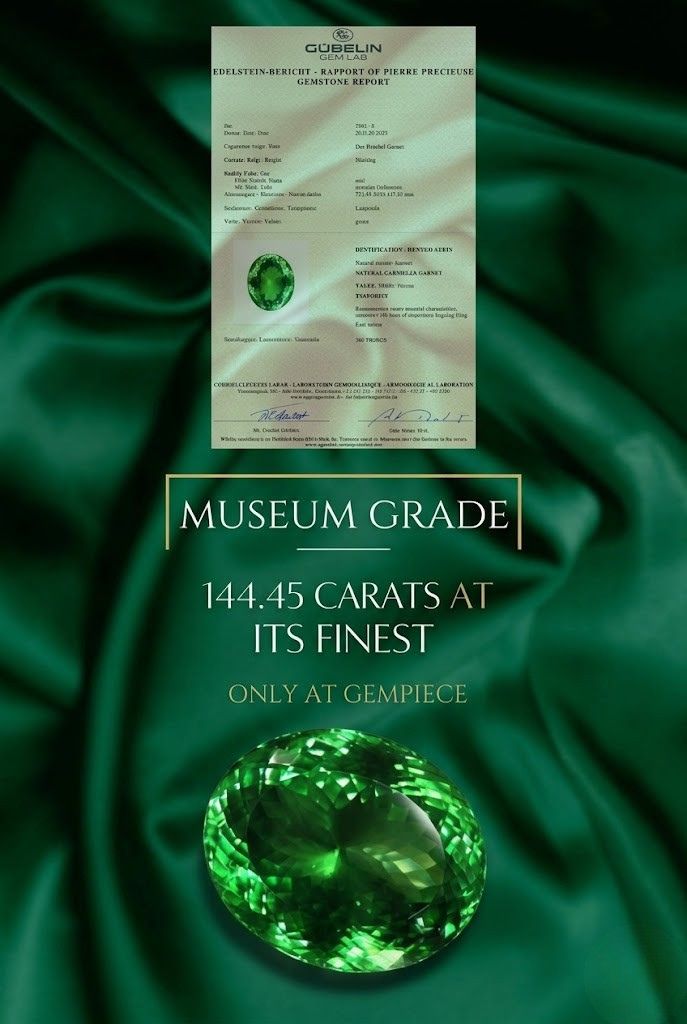
The clarity enhancement of emerald with colorless oils, resins, and other fillers is universally practiced and universally accepted in the emerald trade — it is essentially universal for natural emerald of any commercial significance. The practice reduces the visibility of surface-reaching fractures (which are common in emerald) by filling them with a substance of similar refractive index to the emerald crystal, improving apparent clarity. Major gemological laboratories — GRS, Gübelin, GIA, AGL, AIGS — all evaluate and disclose the degree of enhancement on their certificates using standardized grading scales: none (F — fracture free), insignificant, minor, moderate, or significant.
The degree of enhancement is a critical value factor. No-oil emerald of fine color is extraordinarily rare and commands the highest premiums — multiples of the price of enhanced material of equivalent appearance. Minor oil is widely accepted and has moderate impact on value. Significant oil substantially affects long-term value and resale desirability. GemPiece provides specific enhancement degree documentation for all emeralds, with laboratory certificates from GRS, Gübelin, GIA, or AIGS available on significant stones.
Value Factors
Color is the dominant value factor for emerald — vivid, pure green with slight blue modifier, strong saturation, and medium to medium-dark tone represents the finest quality. Colombian origin with laboratory confirmation commands the strongest origin premiums. Enhancement degree is the second most critical factor — no-oil or minor-oil status dramatically increases value per carat for fine color material. Transparency and jardin character influence value — fine, semi-transparent material with an aesthetically interesting but not overwhelming jardin is preferred over heavily opaque or excessively fractured material. Cutting quality, size, and provenance complete the value assessment. Fine no-oil Colombian emerald above 3 carats in vivid green is one of the most valuable natural gemstones per carat available in the world market.
Durability and Care
Hardness 7.5 to 8 but emerald's typical inclusion density makes it more brittle than other beryl varieties — avoid sharp impacts. Never use ultrasonic or steam cleaners — vibration can worsen fractures and heat or solvents can remove oil enhancement. Clean with warm water, mild soap, and a very soft brush. Bezel or protective half-bezel settings are recommended for ring use. Store separately from harder gemstones and sharp objects.
Explore Related Beryl Varieties
Beryl family guide (view collection), aquamarine (view collection), morganite (view collection), mint beryl (view collection), and heliodor.