
Understanding Color Change Garnet Gemstone
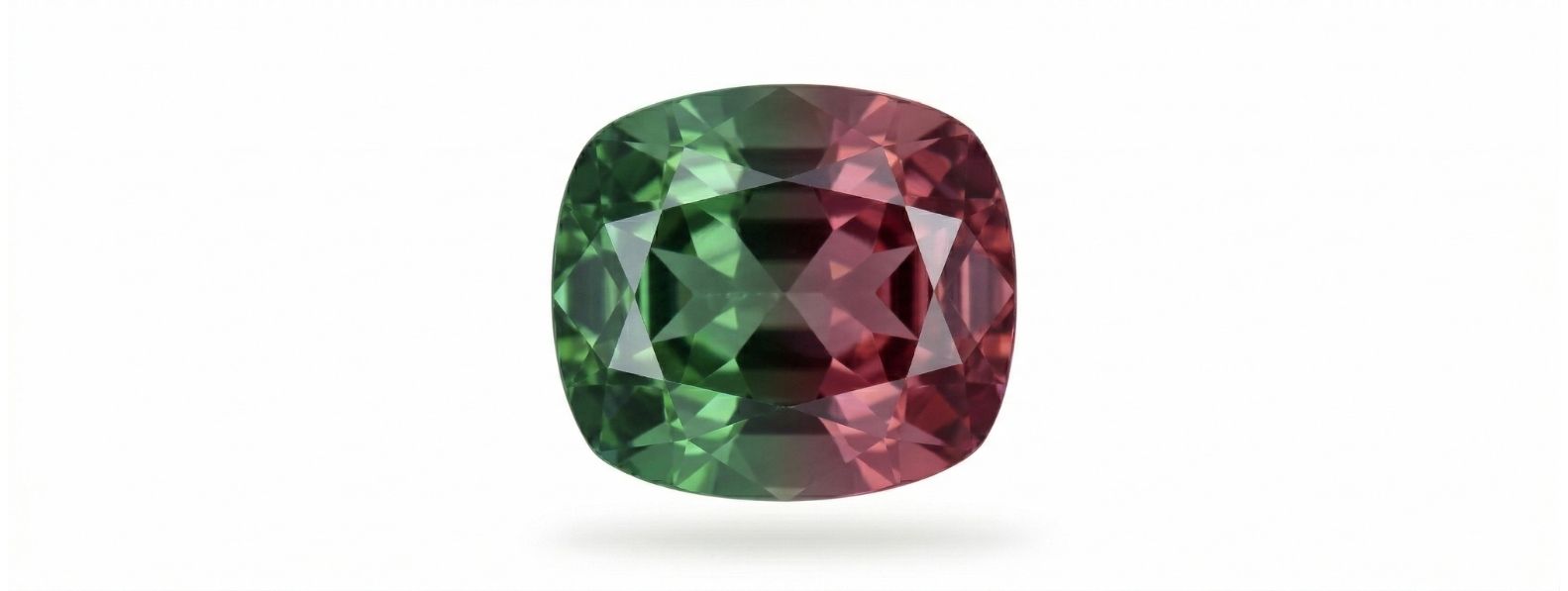
Color change garnet is one of the most scientifically fascinating and visually captivating gemstones on earth. It challenges assumptions, rewrites textbooks, and delivers an optical experience that no photograph can adequately convey. To understand a color change garnet, you need to hold it in natural light, then carry it inside under a warm lamp, and watch what happens. The transformation is immediate, complete, and genuinely startling in the finest examples. This guide explains every aspect of that experience, from the atomic chemistry responsible for it through the global geology that produces it, the grading criteria that determine its value, and the practical guidance needed to acquire one intelligently.
Explore our color change garnet collection and related varieties including our malaya garnet collection and spessartite garnet collection. For related Gemopedia guides see Malaya Garnet Guide, Spessartite Garnet Guide, and the complete Garnet Gemstone Guide.
Discovery and Scientific History
Color change garnet entered formal gemological literature in 1970 when Robert Crowningshield of the Gemological Institute of America examined a stone from Tanzania that exhibited what he described as an "alexandrite-like" color change: blue-green in daylight, purplish-red under incandescent light. This was not the first time color change garnet had been encountered by humans — the gem gravels of Sri Lanka had almost certainly produced such stones for centuries — but it was the first time the phenomenon was documented and analyzed systematically.
Early scientific interest focused primarily on the mechanism rather than the commercial potential. The 1982 publication "Gemstones with Alexandrite Effect" by Gübelin and Schmetzer in Gems and Gemology established the theoretical framework for understanding how different gem species produce the alexandrite effect. Further research through the 1980s and 1990s refined the understanding of which trace elements were responsible and why the phenomenon was geologically restricted to specific deposit types.
The watershed moment in color change garnet's commercial history came in 1998 when blue color change garnets were discovered in the Bekily region of Madagascar. These stones, predominantly pyrope-spessartite in composition with specific vanadium-chromium chemistry, appeared genuinely blue in daylight — a color that gemological textbooks had explicitly stated was impossible for garnet. The discovery overturned decades of accepted gemology and introduced the market to the rarest and most extraordinary subset of an already rare gem variety.
A 2015 GIA research paper by Ziyin Sun, Aaron Palke, and Nathan Renfro profiled vanadium and chromium-bearing pink pyrope garnets from Tanzania with measurable color change behavior, using UV-Vis spectroscopy and CIE1931 colorimetric analysis to quantify the shift. This study, published in Gems and Gemology, confirmed that the alexandrite effect in garnet could be precisely measured and that the Usambara effect (where larger stones show more pronounced color change than smaller ones due to longer light path length) was an observable property in some color change garnets.
The Mineralogy of Color Change
Color change garnet is not a single mineral species but a cross-species phenomenon. It has been documented in pyrope, almandine-pyrope, pyrope-spessartite, malaya garnet (pyrope-spessartite), and even grossular-dominant blends. The vast majority of commercially significant color change garnets, however, belong to the pyrope-spessartite series within the pyralspite group of the garnet family.
The garnet family divides into two solid-solution series: the pyralspite series (pyrope, almandine, spessartite) and the ugrandite series (uvarovite, grossular, andradite). Color change has been observed in every species except uvarovite. The compositional analysis of important color change garnet populations from GIA research confirms that the Tanzanian color change garnets from Morogoro are predominantly pyrope (68.92 to 72.90 mol%) with spessartite (9.55 to 15.08 mol%), grossular (4.88 to 5.61 mol%), and almandine (5.66 to 10.14 mol%) present in varying proportions, with higher vanadium and chromium concentrations than typical pyrope.
East African color change garnets with spessartite-grossular-pyrope blends show particularly complex compositions. The spessartite component can be the majority species in some East African material, with grossular approaching half the composition in some stones and almandine or pyrope completing the blend. These complex compositions reflect the complex metamorphic geology of the East African Mozambique Belt, where multiple garnet species crystallize simultaneously from fluids of mixed chemical character.
The Physics of the Color Change
The color change phenomenon in garnet is governed by the interaction between trace chromophore elements and the spectral composition of different light sources. Understanding this interaction requires understanding both sides of the equation: what the stone absorbs and what different light sources emit.
Trace vanadium (V3+) and chromium (Cr3+) ions within the garnet crystal lattice create absorption bands in the yellow-green region of the visible spectrum, centered approximately at 570 to 590 nm. This is the critical wavelength range where human color perception transitions between green sensitivity and red sensitivity. The absorption band in this region acts as a spectral switch: it suppresses the yellow-green middle of the spectrum, leaving two transmission windows — one in the blue-green region (approximately 460 to 510 nm) and one in the red region (approximately 650 to 700 nm).
Under natural daylight (CIE D65), which has a relatively flat spectral distribution weighted slightly toward shorter wavelengths, the blue-green transmission window dominates and the eye perceives green or blue-green. Under tungsten incandescent light (CIE A), which has a spectral distribution heavily weighted toward longer red wavelengths, the red transmission window dominates and the eye perceives red, purple, or raspberry. The closer the absorption band is to precisely 575 nm, and the deeper and narrower it is, the more complete and dramatic the color change.
Research has also confirmed the Usambara effect in some color change garnets: because the light path through a larger stone is longer than through a smaller one, the selective absorption has more material to work with, producing a more pronounced color difference. This partly explains why larger color change garnets often display more vivid and complete shifts than smaller stones of identical chemical composition.
Physical and Optical Properties
The physical properties of color change garnet reflect its pyrope-spessartite composition and vary depending on the specific blend ratio of each individual stone.
Hardness: 7 to 7.5 on the Mohs scale. This reflects the pyralspite composition, which is harder than andradite garnets (6.5 Mohs) and on par with most other pyralspite varieties. The hardness places color change garnet in a durable category well suited to all jewelry applications including daily-wear rings.
Refractive Index: 1.730 to 1.810. The RI varies with the pyrope-to-spessartite ratio. Higher spessartite content pushes the RI toward the upper end of this range. The high RI relative to common gemstones contributes to the good brilliance that makes color change garnet visually active in both its color states.
Specific Gravity: 3.75 to 3.95. This density range reflects the manganese content of the spessartite component (spessartite has the highest SG of the pyralspite garnets) blended with the lower-density magnesium-dominant pyrope component.
Optical Character: Singly refractive (isotropic), though anomalous double refraction under the polariscope may be present in some stones due to internal crystal strain. This is normal in mixed-species garnets and does not affect appearance or value.
Absorption Spectrum: UV-Vis spectra of color change pyrope-spessartite garnets show two zones of transmittance: in the red region at 650 to 700 nm and in the blue-green region at 460 to 510 nm. The absorption bands at 4100, 4210, and 4300 Angstroms may merge to form a cutoff at 4350 Angstroms. In stones with strong color change, a broad, strong band at 5730 Angstroms is diagnostic.
Inclusions: Color change garnets commonly contain acicular (needle-like) rutile inclusions, hematite platelets, and fluid inclusions. Eye-clean material exists but is less common than in pyrope or rhodolite. Clarity is a meaningful value factor; face-up clean stones with good color change command premiums over heavily included material.
Cleavage: None, like all garnets. This absence contributes to durability.
Luster: Vitreous. Well-cut and well-polished color change garnet displays a bright, glassy surface luster that enhances the visual impact of the color change.
Blue Garnet: The Rarest Discovery in Modern Gemology
The existence of blue garnet represents one of the most significant revisions to gemological understanding in the past century. For generations, the statement "garnet occurs in every color except blue" appeared in textbooks and educational materials as established fact. When pyrope-spessartite garnets appearing genuinely blue in daylight emerged from the Bekily district of Madagascar in 1998, this accepted fact was disproved.
Blue garnet, technically a pyrope-spessartite (or pyrope-spessartite-grossular in some analyses) mixture with high vanadium and chromium content, displays a unique spectral response. Under fluorescent or natural daylight, the blue-green transmission window dominates sufficiently that the eye perceives blue rather than merely green. Under incandescent light, the red window dominates and the stone shifts to red, purple, or deep raspberry. The combination of genuinely blue daylight color with a complete warm incandescent transformation is unique in the gem world.
Production of fine blue color change garnet from the Bekily region has been limited and reportedly declining. The most vivid blue material may represent a largely depleted deposit. Combined with the extraordinary visual impact and the historical significance of disproving decades of gemological orthodoxy, this scarcity has driven prices for the finest specimens to extraordinary levels. One large blue garnet has reportedly sold for $1.5 million per carat — a price that places it among the most expensive gemstones on earth by weight.
Global Sources and Their Characteristics
Tanzania (Tunduru District and Umba Valley): Tanzania is the origin of the first formally documented color change garnet and remains one of the most important commercial sources. The Tunduru district in southern Tanzania and the Umba River Valley in the northeast both produce pyrope-spessartite color change material. Tunduru stones typically show green-to-red or green-to-purple shifts. Umba Valley material includes pyrope-spessartite-grossular blends with sometimes complex color behavior, including some stones that appear brownish-green in fluorescent light and shift to purplish-red under incandescent. Some North Pare Mountain material from Tanzania shows an exceptional blue-to-red shift analogous to Madagascar blue garnet but rarer.
Madagascar (Bekily District): The source of the most celebrated color change garnets in the world, including the legendary blue specimens. Bekily material ranges from standard green-to-red shift stones to the extraordinary blue-to-purple or blue-to-red shift garnets that command the highest market premiums. Production of the finest blue material has become limited in recent years, and top Bekily color change garnet is increasingly difficult to source. Madagascar also produces color change garnet from other deposits with varying color characteristics.
Sri Lanka: Sri Lanka's ancient alluvial gem gravels have produced pyrope-spessartite color change garnets for decades. Sri Lankan material typically shows a green-to-red or brownish-green-to-reddish shift with moderate to good intensity. The material is more consistently available than East African sources and provides accessible entry-level color change garnet for the broader market. Some Sri Lankan stones show the shift from reddish-purple in incandescent to blue, green, or gray in daylight.
Kenya: Kenya produces limited quantities of color change garnet, often from deposits that also yield rhodolite and malaya garnet. Kenyan material varies in shift intensity and color combination.
Norway: Norway has produced limited quantities of color change garnet, primarily almandine-dominant material. Norwegian color change garnet is primarily a collector's curiosity rather than a commercial source.
Idaho, United States: Almandine-pyrope garnets from Idaho occasionally show a color shift from red to purplish-red under incandescent and LED light. This is a weaker, less dramatic shift than the classic green-to-red change of East African material but is nonetheless documented and collectible.
Grading the Color Change
Color change garnet is evaluated on a spectrum of shift intensity and quality. This grading is specific to this variety and does not parallel the standard GIA four Cs in the same way it does for other gems, because the color change itself is the primary value driver rather than a secondary quality factor.
A complete color change describes a stone where the two display colors are visibly, clearly, and unambiguously different with no overlap or ambiguity under the respective light sources. The daylight color reads clearly as one distinct color (green, blue-green, or blue) and the incandescent color reads clearly as a different distinct color (red, purple, raspberry). This is the highest grade of shift.
A strong color change describes a pronounced, visible transformation where both colors are well-saturated but the daylight color may retain a slight warm cast or the incandescent color may retain a slight cool cast. Both colors are clearly different and distinct.
A moderate color change shows a noticeable but less dramatic transformation. Both colors are identifiable but the contrast between them is less vivid.
A weak or partial color change shows only a subtle tonal difference between lighting conditions. These stones are the most affordable and least collectible.
Beyond shift intensity, color quality under each light source matters independently. A stone that shows a complete shift from a muted grayish-green to a brownish-red is less desirable than one that shifts from vivid teal to saturated raspberry. Both may technically qualify as complete color change, but the saturation and attractiveness of each display color are evaluated separately.
Color Change Garnet Value and Market Pricing
Color change garnet pricing reflects the strong premium placed on shift intensity and completeness. The market divides naturally into several tiers.
Entry-level color change garnet — stones with a partial or moderate brownish-green to pink-brown shift — typically ranges from $100 to $500 per carat for accessible sizes under one carat.
Standard quality with a complete green-to-red or green-to-purple shift in sizes under one carat typically ranges from $300 to $1,000 per carat. For stones between one and three carats showing complete vivid shift, prices range from $1,000 to $3,000 per carat. Clean stones above three carats showing a strong complete shift are rare and command $3,000 to $5,000 per carat or higher depending on the specific colors and origin.
Madagascar blue color change garnet occupies a completely separate price tier. The finest specimens have sold at auction for prices approaching or exceeding $1.5 million per carat. Even modest quality blue garnets with a genuine daylight blue component command significant premiums over standard color change material.
Size adds a consistent premium across all tiers. Stones above three carats showing a complete vivid shift are genuinely rare across all origins. The Usambara effect means larger stones often show stronger shifts, making large, clean color change garnet particularly valuable.
Treatment Status and Authentication
Color change garnet is entirely natural and untreated. The color change phenomenon is a product of natural chemistry and cannot be replicated, enhanced, or produced by any known treatment. This natural integrity is an important part of the variety's appeal for collectors and investors.
Authentication concerns for color change garnet center primarily on distinguishing it from alexandrite (a chrysoberyl variety) and from color change glass simulants such as Nanosital. Alexandrite has a higher RI (1.746 to 1.755), different absorption spectrum, and strong pleochroism (showing different colors from different crystal directions). These properties allow reliable separation from color change garnet by any qualified gemologist with standard equipment.
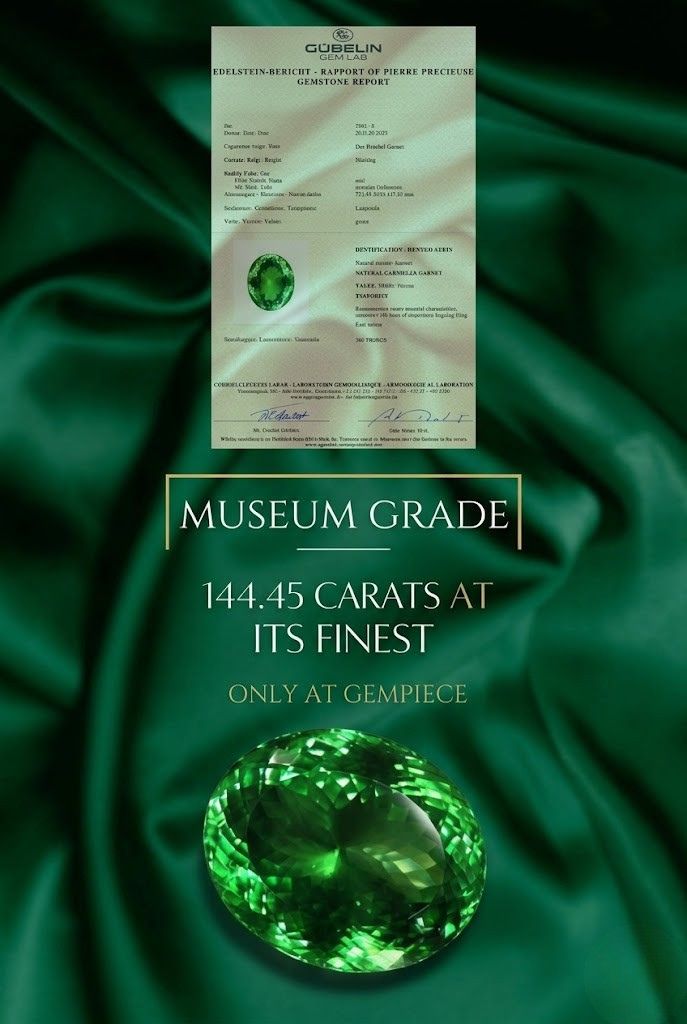
Color change glass and synthetic color change corundum are disclosed simulants that should always be identified and declared by sellers. For significant purchases, particularly blue garnet specimens or any stone above two carats with strong shift, a laboratory report from GIA, Gübelin, or AGL confirming species, composition, and origin provides meaningful assurance.
Jewelry Use, Care and Maintenance
Color change garnet is well suited for all jewelry applications. Its hardness of 7 to 7.5 Mohs and complete absence of cleavage make it genuinely durable. Standard ring constructions including prong and bezel settings are appropriate. The color change property adds a unique interactive dimension to any jewelry piece — a ring that appears one color at an outdoor lunch and transforms completely under restaurant lighting is a genuinely unusual experience.
Color change garnet complements both warm and cool metal settings. The daylight green or blue-green tones are enhanced by white gold and platinum; the incandescent red or purple tones work beautifully with yellow gold. Setting choices can be made based on which display environment the piece will most commonly be worn in.
Care is straightforward. Clean with warm water, mild dish soap, and a soft brush. Rinse thoroughly and dry with a soft cloth. Avoid ultrasonic cleaners for stones with visible inclusions. Store separately from harder gemstones to prevent surface scratching. Color change garnet is stable to light and heat under normal jewelry conditions.
Buying Color Change Garnet
The first and most important rule when purchasing color change garnet is to evaluate the stone under both lighting conditions before committing. The shift must be clearly visible and immediately apparent without magnification. Ask for photographs or video under both natural daylight and a tungsten incandescent lamp. At GemPiece, every color change garnet is filmed under both lighting conditions as standard practice.
Assess the quality of both display colors independently. Both the daylight color and the incandescent color should be attractive and well-saturated on their own merits. A complete shift from one unattractive color to another is less desirable than a strong shift between two vivid, beautiful colors.
For significant purchases, verify origin claims. Madagascar blue garnet commands the highest premiums; verification by a reputable laboratory protects both the buyer and the value of the stone. Browse our color change garnet collection or explore related guides: Malaya Garnet Guide, Spessartite Garnet Guide, Andradite Garnet Guide, and the complete Garnet Gemstone Guide.