
Understanding Apatite Gemstone
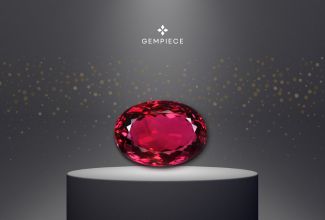
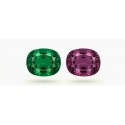
Apatite is the gemstone hidden in plain sight. It is one of the most abundant mineral groups on earth, forms in virtually every geological environment, and is a direct component of every human skeleton and set of teeth. Yet gem-quality transparent apatite in vivid color is genuinely rare, visually extraordinary in its finest forms, and systematically undervalued by a market that has not yet fully recognized what it offers. The single most important development in apatite's commercial history was the emergence of neon blue and Paraiba-colored material from Madagascar in the late 20th century, which transformed the species from a secondary collector curiosity into a primary market gem by producing a color that rivals the most sought-after blue-green in any gemstone family at a fraction of the cost.
Explore our natural apatite collection and our apatite cat's eye collection. For the cat's eye guide see Apatite Cat's Eye Guide. Browse related neon blue collector gemstones including Paraiba tourmaline at Paraiba Tourmaline Guide. See our rare gemstone collection.
What Is Apatite
Apatite is not a single mineral but a mineral group, the apatite supergroup, encompassing several related calcium phosphate species that share the same basic crystal structure but differ in their anion composition. The three most important members are fluorapatite (Ca₅(PO₄)₃F), chlorapatite (Ca₅(PO₄)₃Cl), and hydroxylapatite (Ca₅(PO₄)₃OH). The general formula Ca₅(PO₄)₃(F,Cl,OH) describes the complete series. Most gem-quality apatite is fluorapatite or a mixed fluorine-hydroxyl variety.
Apatite crystallizes in the hexagonal crystal system, forming prismatic crystals with a characteristic six-sided cross-section. The mineral occurs in igneous rocks (as an accessory mineral in granite, syenite, and pegmatite), metamorphic rocks (as a product of calcium-rich metasomatism), and sedimentary rocks (as biogenic and chemogenic deposits). Its ubiquitous distribution in geological environments means that apatite as a mineral is not rare at all. What is genuinely rare is transparent gem-quality apatite with the color intensity, crystal clarity, and crystal size required for faceting into attractive collector gemstones.
The biological significance of apatite is extraordinary. Hydroxylapatite and carbonated apatite are the primary mineral components of vertebrate bone and tooth enamel. Human teeth are approximately 96% hydroxylapatite by weight. Human bone is approximately 70% apatite by weight. When dentists recommend fluoride treatments for teeth, they are promoting the conversion of hydroxylapatite to the harder and more acid-resistant fluorapatite. Every gemologist who handles apatite is holding a mineral cousin of the material that constitutes their own skeleton.
The Name: Apatao and the History of Deception
The name apatite was formally established by the German geologist Abraham Gottlob Werner in 1786, derived from the Greek "apatao" meaning to deceive or cheat. Werner chose this name specifically because apatite specimens had repeatedly been misidentified as other minerals and gemstones by mineralogists and gemologists. The specific stones that apatite most commonly deceived were tourmaline (particularly in its green varieties), beryl (particularly aquamarine), olivine (peridot), and various colored forms of topaz, amblygonite, and brazilianite.
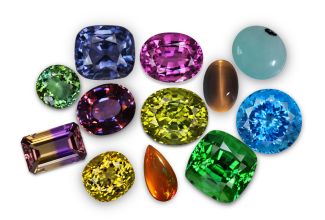
This historical deception is mineralogically understandable. Apatite occurs in colors spanning the full visible spectrum, from colorless through yellow, green, blue, purple, pink, and brown, in crystals that can closely resemble tourmaline crystals in habit, luster, and color. Without optical property testing, visual identification of apatite is genuinely unreliable, which is why many historical gemological records contain apatite specimens recorded as tourmaline, beryl, or other species.
Hardness and the Mohs Scale Connection
Apatite has a hardness of exactly 5 on the Mohs scale, and this is not a coincidence. When Friedrich Mohs developed his hardness scale in 1812, he selected apatite as the reference mineral for the midpoint specifically because of its widespread occurrence and consistent hardness. The Mohs scale is defined by ten reference minerals: talc (1), gypsum (2), calcite (3), fluorite (4), apatite (5), orthoclase feldspar (6), quartz (7), topaz (8), corundum (9), diamond (10). Every gemologist learns this scale using the mnemonic "Toronto Girls Can Flirt And Only Quit To Cuddle Diamonds" or similar. Apatite is therefore not just a gemstone but a fundamental reference standard of the science of mineralogy.
The practical consequence of 5 Mohs hardness for gem use is significant. Apatite can be scratched by a steel knife blade (5.5 Mohs) and by quartz (7 Mohs), which means unprotected apatite surfaces are vulnerable to everyday abrasion from dust, which contains quartz particles. This limits apatite to protective jewelry settings and occasional-wear applications, particularly for ring use.
Color Chemistry: Rare Earth Elements and Multiple Mechanisms
Apatite's extraordinary color diversity arises from multiple coloring mechanisms operating across different specimens, making it one of the most complex color-chemistry gemstones in the mineral kingdom.
Rare earth elements (REE) are the primary chromophores in many apatite colors. The calcium sites in the apatite structure can accommodate REE substitution due to the similar ionic radius of Ca²⁺ and many REE³⁺ ions. Neodymium (Nd³⁺) produces the characteristic absorption spectrum seen in many yellow, green, and purplish apatites, with its distinctive series of narrow absorption bands visible under the spectroscope. Praseodymium, samarium, europium, dysprosium, and other REE contribute additional color components in different specimens. The specific combination and relative concentration of REE ions determines the exact hue and saturation of any individual apatite crystal.
Manganese (Mn²⁺) activated luminescence is responsible for the vivid orange-yellow fluorescence under UV light that many apatite specimens display, and contributes to yellow body color in some material. Iron (Fe³⁺) contributes brownish and yellowish color components. Natural irradiation from radioactive elements in the surrounding rock creates color centers that contribute to blue and green colors in some material.
For Paraiba-colored and neon blue apatite, the color mechanism involves a combination of REE activators and heat-induced color center modification. The green rough that becomes vivid blue-green after heating contains color centers that are thermally rearranged by the heating process, shifting the absorption characteristics from green-transmitting to blue-green-transmitting. This is distinct from the copper-based Paraiba tourmaline color mechanism but produces a visually comparable result.
The Heat Treatment Reality for Paraiba-Colored Apatite
Understanding the treatment reality of Paraiba-colored apatite is one of the most important knowledge gaps in the commercial apatite market. This is a topic where GemPiece's direct experience with rough processing and cutting produces information that most guide sources do not provide, because most guides rely on laboratory analysis of finished stones rather than first-hand experience with the transformation from rough to finished gem.
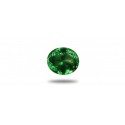
Natural apatite rough that will become Paraiba-colored in finished form does not display the vivid blue-green color before treatment. The rough appears as dark green, forest green, or ashy green with low visual appeal. When subjected to controlled heating at appropriate temperatures, a chromatic transformation occurs: the green color center absorptions shift, producing the characteristic vivid blue-green transmission that defines Paraiba-colored apatite commercially. Without this heating, the finished stone would appear dull green rather than vivid neon blue-green.
Many sellers and some online gemological resources claim that Paraiba-colored apatite is natural and untreated. Based on direct experience processing apatite rough from Madagascar and other sources through the heating and cutting process, we can state clearly that this claim is generally incorrect for commercial Paraiba-colored apatite. The commercial color simply does not develop without heat treatment in the vast majority of material.
This does not diminish the beauty or value of Paraiba-colored apatite. Heat treatment of apatite is a stable, accepted enhancement comparable to heating sapphire or tourmaline. The important principle is accurate disclosure. At GemPiece, every apatite is described accurately with its treatment status, and buyers can trust that what we describe as heated is heated and what we describe as natural is natural.
Global Sources in Detail
Madagascar is the most important source for neon blue and Paraiba-colored gem apatite. The material originates from alluvial deposits and primary pegmatite zones in the north and northwest of the island. Madagascar apatite has the characteristic heavily included rough that challenges yields, and the finest clean faceted material commands premiums reflecting both visual quality and yield difficulty.
Brazil contributes blue apatite known as "Brazil Blue" for its vivid electric blue color that some experts consider the most vivid of any source, with a slightly different blue character from Madagascar material. Brazil Blue apatite commands the highest per-carat premiums in the blue apatite category.
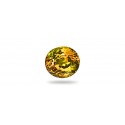
Mexico (Durango state) is the primary source of yellow apatite, producing material with a bright, clean yellow that has been commercially available for decades. Mexican yellow apatite in large transparent crystals is well-known to mineral collectors and gem buyers.
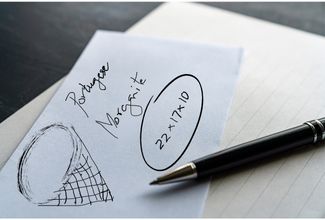
Norway (Arendal, Telemark region) produced the historical blue-green apatite variety called moroxite, a trade name for the distinctive blue-green to greenish-blue color produced by Norwegian material. Moroxite was one of the earliest commercially named apatite varieties and appears in historical gemological literature from the 19th century.
Canada (Quebec, Ontario) produces apatite in various colors from pegmatite and skarn deposits. Portugal, Germany (Ehrenfriedersdorf, Saxony), and the United States (Maine, New Hampshire) produce purple and violet apatite that attracts collector interest. Myanmar, Sri Lanka, Tanzania, and Kenya contribute cat's eye apatite material in honey, yellow, and green colors.
Physical and Optical Properties
Chemical Formula: Ca₅(PO₄)₃(F,Cl,OH); fluorapatite (F dominant) most common in gems
Crystal System: Hexagonal; prismatic with 6-sided cross-section
Hardness: 5 Mohs exactly (defines Mohs scale midpoint)
Refractive Index: ne 1.628 to 1.649 (uniaxial negative)
Birefringence: 0.002 to 0.008 (low)
Specific Gravity: 3.17 to 3.23
Cleavage: Imperfect on {0001}; indistinct on {1010}
Luster: Vitreous to resinous
Transparency: Transparent to opaque
Fluorescence: Variable; many specimens show vivid yellow to orange under UV (Mn²⁺ activated); some show blue-white; some inert
Primary Chromophores: Rare earth elements (Nd, Pr, Sm, Eu, Dy), Mn²⁺, Fe³⁺, color centers
Clarity Type: Type II; inclusions normal; heavy inclusion content common in Madagascar neon blue
Treatment: Paraiba-colored and neon blue typically heat treated; disclosed per stone at GemPiece
Inclusions and Clarity
Apatite is classified as a Type II gemstone in the GIA system, meaning some inclusions are expected. The inclusion landscape varies significantly by variety and source. Madagascar neon blue apatite is notoriously heavily included, with liquid inclusions, healing fractures, and growth irregularities common throughout most rough. The yield of eye-clean material from this source is exceptionally low, which is the primary reason clean neon blue apatite commands meaningful premiums.
Yellow apatite from Mexico is generally cleaner, with many specimens achieving eye-clean or near-eye-clean clarity in faceted form. Brazilian blue apatite can achieve good clarity in cleaner crystals. Cat's eye apatite, by definition, requires parallel needle-like inclusions to produce chatoyancy, and is therefore evaluated on the quality of the chatoyant effect rather than inclusion absence.
Value and Market Pricing
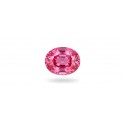
Neon blue Madagascar apatite in eye-clean quality: $50 to $300 per carat depending on color intensity and clarity. Brazil Blue apatite: highest pricing in blue category, commanding premiums above Madagascar material. Paraiba-colored apatite in vivid blue-green: $50 to $300 per carat for commercial to fine quality. Teal apatite in larger sizes: $20 to $80 per carat. Purple apatite: $30 to $150 per carat. Yellow apatite from Mexico in fine quality: $15 to $100 per carat.
The value proposition of fine apatite is compelling for buyers who evaluate gemstones on optical quality: Paraiba-colored apatite at $100 to $300 per carat delivers a visual experience comparable to Paraiba tourmaline at $1,000 to $50,000 per carat. The difference is geological and chemical rarity rather than visual impact.
Buying Apatite
When buying Paraiba-colored or neon blue apatite, always ask directly about heat treatment. A seller who claims their Paraiba-colored apatite is completely natural and untreated is either misinformed or not being transparent. This does not make the stone less beautiful or less valuable, but it means the buyer deserves accurate information.
Evaluate clarity carefully. The difference between eye-clean and heavily included apatite is more visually significant in this species than in many others, because the inclusions in heavily included material can significantly reduce the transparency and color saturation that make apatite visually compelling. Request video or examine the stone in person under natural light before purchase.
Browse our apatite collection and apatite cat's eye collection. For related guides see Apatite Cat's Eye Guide, Paraiba Tourmaline Guide, and our rare gemstone collection.