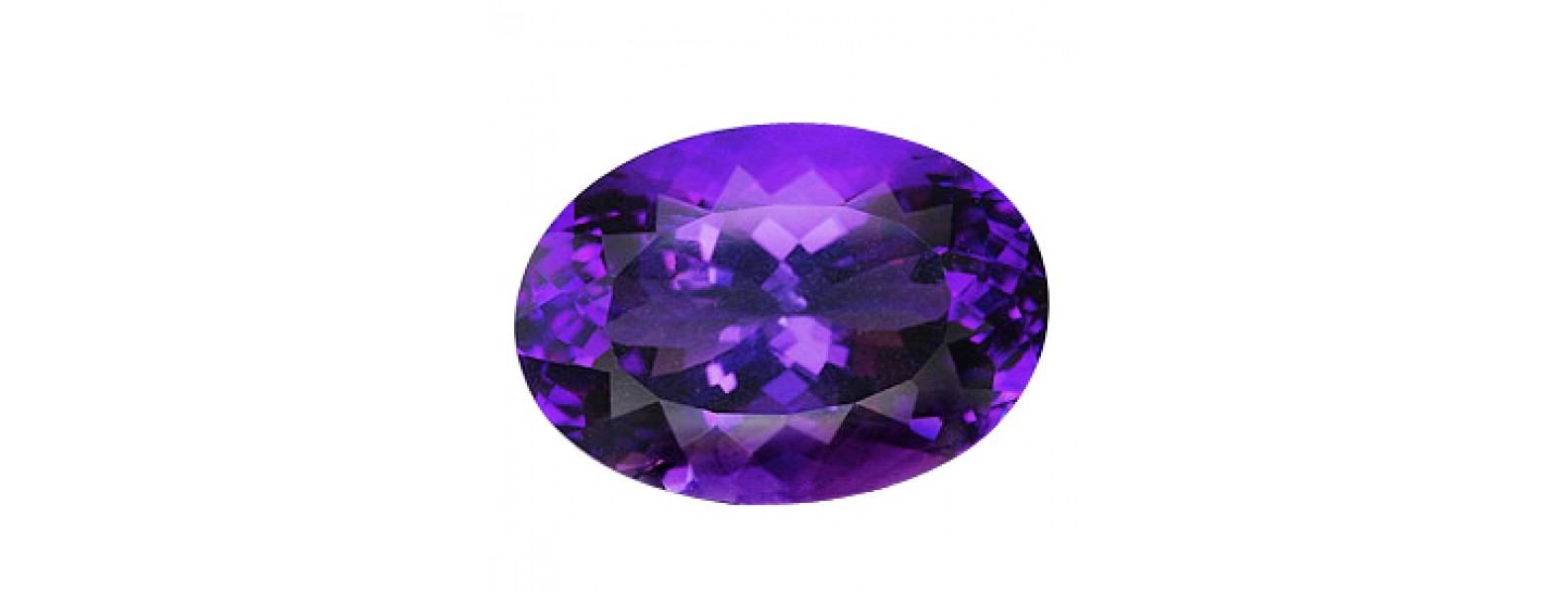
Understanding Amethyst Gemstone
Amethyst is a well-known variety of quartz distinguished by its purple coloration, ranging from light lavender to deep violet. It is one of the most widely used gemstones in jewelry due to its availability, durability, and visual appeal.
This guide explains how amethyst forms, its physical and optical properties, sources, color zoning characteristics, and the key factors that determine its value.
Amethyst is also closely related to ametrine, where both amethyst and citrine occur together within a single crystal due to variations in iron oxidation during formation.
Explore our amethyst gemstone collection or browse the complete quartz family.
Formation and Color Origin
Amethyst forms as a result of iron impurities within the quartz crystal structure combined with natural irradiation. The presence of iron is responsible for the purple coloration, while exposure to natural radiation enhances and stabilizes the color.
Variations in temperature and geological conditions during formation influence the intensity and distribution of color within the crystal.
Sources and Origin
Amethyst is found in many parts of the world, including Brazil, Bolivia, Uruguay, Zambia, and other African regions.
Among these sources, Bolivian and Uruguayan amethysts are widely regarded as the finest. Uruguayan material is known for its deep, rich purple tones with strong saturation, while Bolivian amethyst often displays excellent balance between color intensity and brightness.
Brazilian amethyst is abundant and widely available, typically showing lighter to medium purple tones.
Physical and Optical Properties
Amethyst is composed of silicon dioxide (SiO₂) and belongs to the quartz family. It has a hardness of 7 on the Mohs scale, making it suitable for everyday jewelry.
It has a refractive index ranging from approximately 1.544 to 1.553 and a specific gravity of about 2.65. The gemstone exhibits a vitreous luster and is typically transparent to translucent.
Color Characteristics
Amethyst displays a wide range of purple shades, from pale lavender to deep violet. The most desirable stones exhibit strong saturation with good brightness, avoiding overly dark or dull tones.
Color zoning may occur naturally, but skilled cutting can minimize its visibility and enhance uniformity.
Cutting and Appearance
Amethyst is commonly cut into various shapes such as oval, cushion, emerald, and pear. Proper cutting enhances both brilliance and color distribution.
Poorly cut stones may appear dark or uneven, while well-cut stones display vibrant color and good light return.
Clarity and Transparency
Amethyst is generally classified as a Type II gemstone, meaning inclusions may be present. However, high-quality stones are typically eye-clean and show good transparency.
Clarity plays an important role in overall appearance, especially in lighter-colored stones.
Grading and Value Factors
The value of amethyst depends on color, clarity, cut, carat weight, and origin. Color is the most important factor, with deep, vivid purple tones being the most desirable.
Stones from Bolivia and Uruguay often command higher demand due to their superior color quality.
Amethyst remains an accessible gemstone even in larger sizes, offering good value compared to many other gemstones.
Jewelry Use and Durability
With a hardness of 7, amethyst is suitable for rings, earrings, pendants, and bracelets. It is durable enough for regular wear with proper care.
Care and Maintenance
Amethyst should be cleaned using mild soap, water, and a soft cloth. Avoid prolonged exposure to high heat and direct sunlight, as this may affect the color over time.
Store separately to prevent scratches from harder gemstones.