
Buy Natural Star Ruby – Six-Rayed Asterism, Myanmar and Sri Lanka
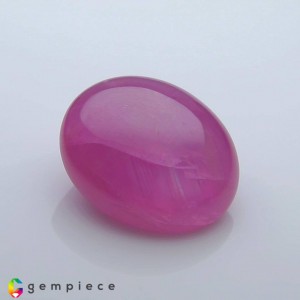
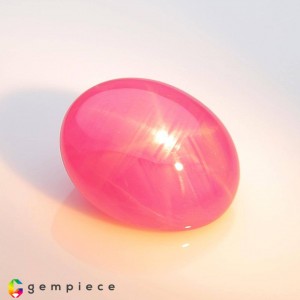
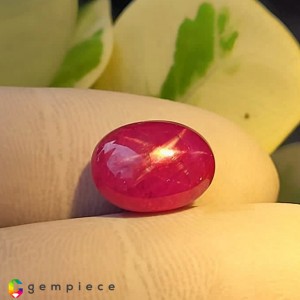
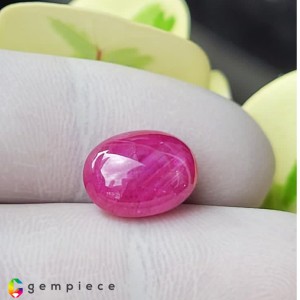
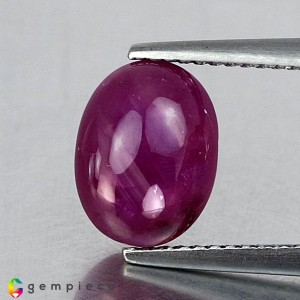
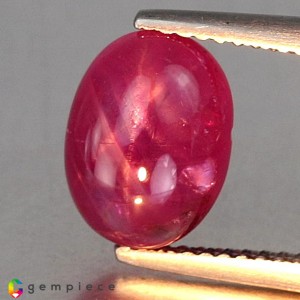
Star ruby is the asterism-displaying variety of ruby — a corundum gemstone that produces a natural six-rayed star across the polished dome of a cabochon when lit by a single concentrated light source. The star is not a surface treatment or a carving — it is produced by aligned rutile (TiO₂) needle inclusions that formed inside the crystal during natural geological growth, oriented in three intersecting sets at 60-degree angles within the hexagonal corundum structure. When light strikes the dome, all three sets simultaneously reflect it as a pair of rays each, their intersection forming the six-pointed star that moves fluidly as the stone is turned.
What makes fine star ruby genuinely rare is the demand for both phenomena simultaneously — vivid ruby-red body color and a sharp, well-centered star in the same stone. Because heat treatment, which improves color in most faceted ruby, dissolves the very rutile silk inclusions that produce the star, the two qualities are structurally in competition: the treatment that improves one destroys the other. Most fine star ruby with a clearly visible star is therefore naturally unheated material, making it inherently natural in treatment status alongside its optical phenomenon.
Read the complete Star Ruby Gemopedia Guide for full coverage of the asterism mechanism, quality grading, and sources — or explore our star ruby collection. Related varieties: ruby, star sapphire, sapphire.
What to Look for in Star Ruby
Star sharpness and brightness — the single most important quality factor. The six rays must be clearly defined, bright, and well-differentiated from the body. A fuzzy, incomplete, or barely visible star significantly reduces both aesthetic appeal and value.
Star centering — a star that sits precisely at the center of the cabochon crown commands premiums over off-center material. The lapidary must orient the cabochon so the c-axis of the corundum crystal passes directly through the dome's apex — any deviation displaces the star.
Body color intensity — the stronger the red body color against which the star plays, the more visually compelling the stone. The most valuable star rubies display vivid ruby-red body color, not pale pink or grey-red. A bold red body with a bright silver-white star is the premium combination.
Translucency — star ruby requires some degree of translucency to allow light to penetrate and interact with the rutile inclusions throughout the dome. A slightly translucent body with good depth reads as richer and more dimensional than a fully opaque stone.
Carat weight and dome quality — large star rubies above 10 carats with strong color and a sharp centered star are genuinely uncommon collector pieces. The cabochon must be well-proportioned — too flat a dome weakens the star; too steep reduces the visual body color.
Origins
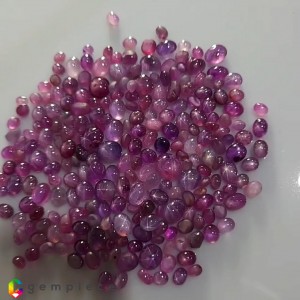
Myanmar produces star ruby of the finest color quality — high chromium, vivid red body, and sharp asterism from well-developed rutile silk. Mogok material commands the strongest origin premiums for star ruby. Sri Lanka produces star ruby across a wide size range; Sri Lankan material tends toward lighter body color but often shows excellent star definition and clarity. India is a major commercial source of star ruby cabochons including very large sizes. Madagascar, Tanzania, and Vietnam produce star ruby in smaller commercial quantities.
Frequently Asked Questions
What is star ruby?
Star ruby is a variety of ruby displaying a natural six-rayed star produced by aligned rutile needle inclusions within the corundum crystal. The star appears on the cabochon surface under single directional light and moves across the dome as the stone rotates.
Why is most star ruby naturally unheated?
Heat treatment at high temperatures dissolves the rutile silk inclusions that produce the star — effectively destroying the asterism. A star ruby with a clearly visible star cannot have been heat-treated at the temperatures used for standard ruby enhancement, making it inherently unheated.
How is star ruby cut?
Star ruby is always cut as a cabochon — a smooth rounded dome with a flat base. The lapidary must orient the crystal so the c-axis passes precisely through the crown of the dome for the star to appear centered and complete.
Are star rubies valuable?
Fine star rubies with vivid body color and a sharp, well-centered star from Myanmar or Sri Lanka are genuinely rare and valuable collector pieces. Large stones above 10 carats combining both qualities at high standard represent important acquisitions.
Clear ✖