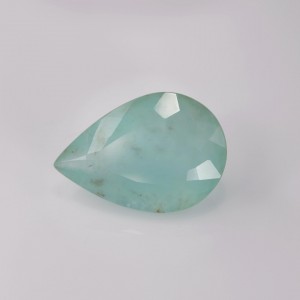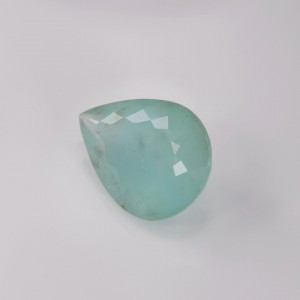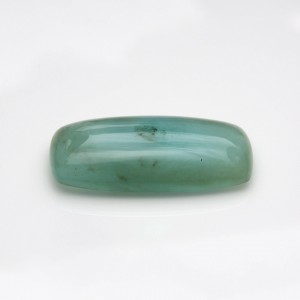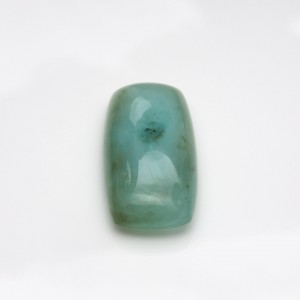
Buy Natural Peruvian Blue Opal Gemstones Online
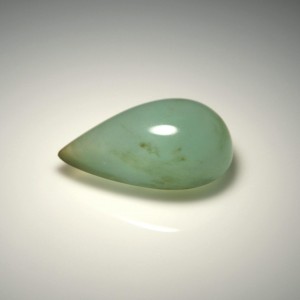
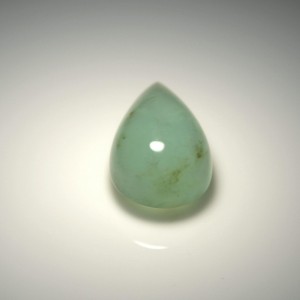
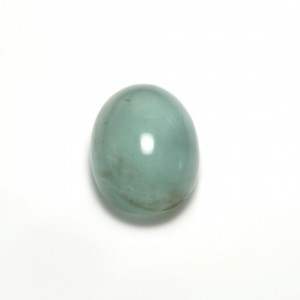
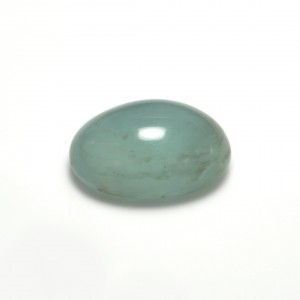
Peruvian blue opal is as far from the fireworks of precious opal as a gemstone can get — and that distance is precisely its appeal. Where most opals are valued for visual drama, for shifting spectral color, for play of light that demands attention, Peruvian blue opal offers something entirely different: a deep, clean, serene blue-green color of extraordinary consistency, a surface that appears to hold the light rather than scatter it, and a stone that suggests stillness rather than movement. It has been compared to the still waters of a tropical lagoon, to the Peruvian sky above the Andes at altitude, and to the Caribbean Sea from a distance. All these comparisons are accurate.
Peruvian blue opal is the national stone of Peru — officially recognized as the gemstone most representative of Peruvian natural and cultural identity. In Andean tradition, it is considered a gift from Pachamama, the Inca goddess of Earth, fertility, and time. Long before European gemological classification gave it technical identity, the indigenous peoples of Peru knew this stone, valued it, and incorporated it into the spiritual and cultural fabric of Andean civilization. Today, it remains one of the most distinctively Peruvian of all the world's gemstones — it is found only in the Andes, and nowhere else produces material of equivalent character.
What Makes Peruvian Blue Opal Distinctive
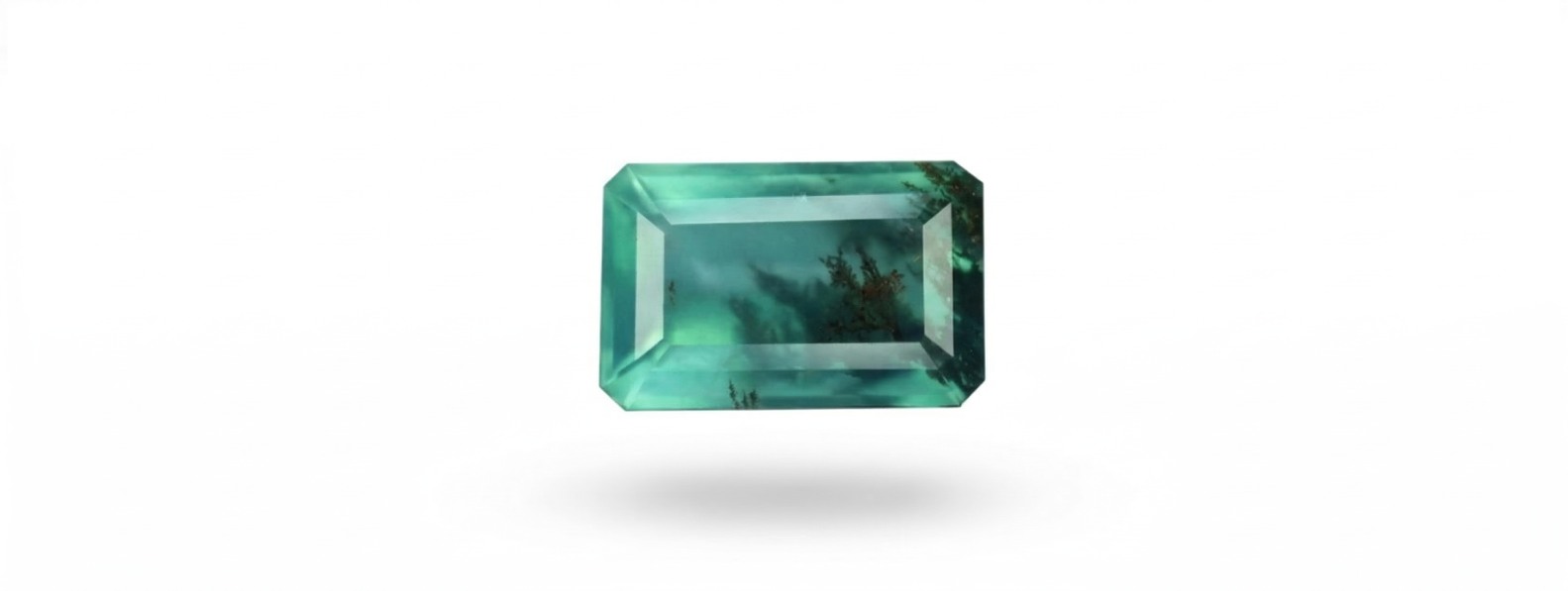
Peruvian blue opal is a common opal — it does not display play of color. Its color is produced not by silica sphere diffraction but by trace elements within the silica matrix, primarily copper compounds (including chrysocolla-type copper silicate), palygorskite clay minerals, and in the pink variety, iron oxide. The copper contribution produces the characteristic blue-green tones that range from pale sky blue through aqua and teal to more saturated blue-green in the finest specimens. This copper-influenced color has caused some Peruvian blue opal to be compared to Paraiba tourmaline in its color quality — not in its mechanism or price, but in the specific quality of its vivid blue-green saturation.
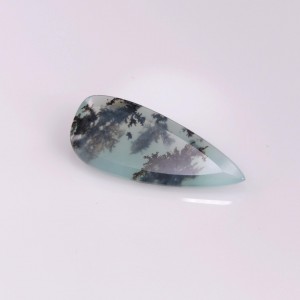
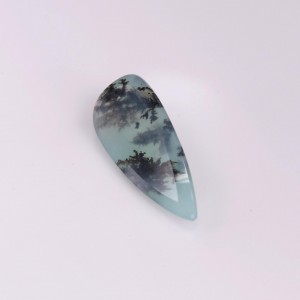
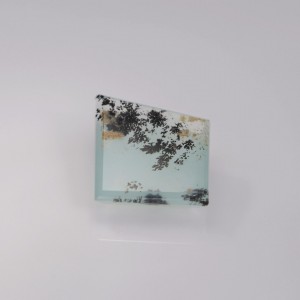
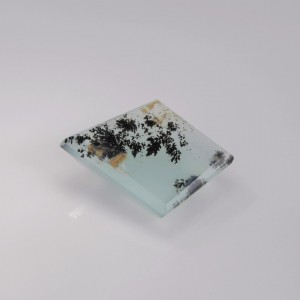
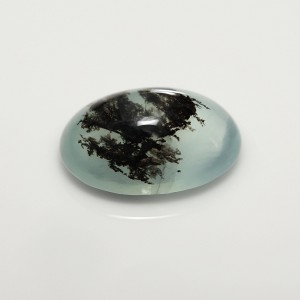
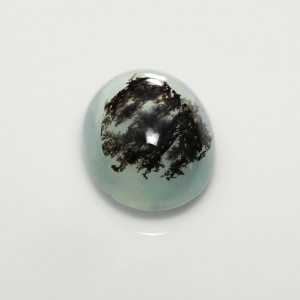
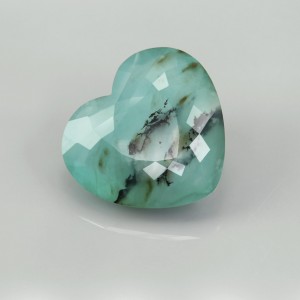
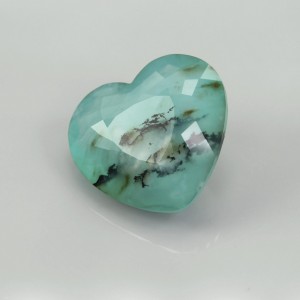
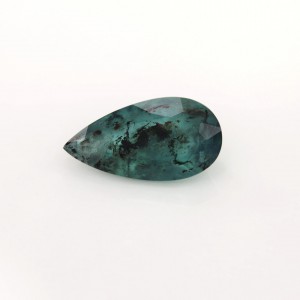
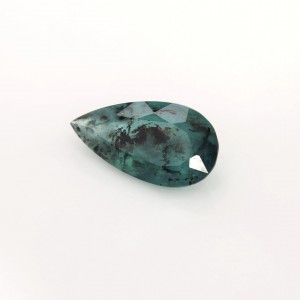
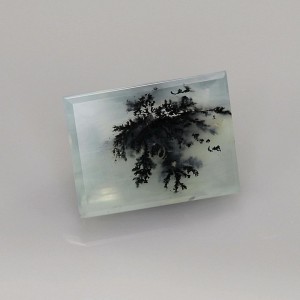
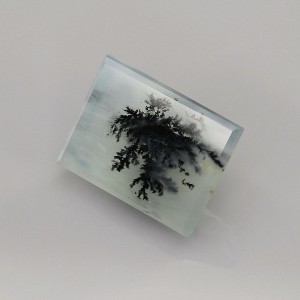
One of the most distinctive visual features of Peruvian blue opal is the frequent presence of black dendritic inclusions — branching, tree-like patterns of manganese oxide that developed within the opal during formation. These inclusions, which in most gemstones would be considered flaws, are embraced as an identity feature in Peruvian blue opal. A stone with beautifully developed black dendrites on a vivid blue background is considered more interesting and distinctive than a clean stone, and the most appealing dendritic patterns can command premiums from collectors.
For comprehensive gemological information, read our Peruvian Blue Opal Gemopedia Guide. Browse related opal varieties including opal cats eye, water opal, and yellow opal, with guides at Opal Cats Eye Guide, Water Opal Guide, and Yellow Opal Guide. See the complete Opal Gemstone Guide and browse our full natural opal collection.
Peruvian Blue Opal Color Varieties
Peruvian opal occurs in three primary color varieties, all from the same Andean geological setting and all sharing the same basic common opal chemistry.
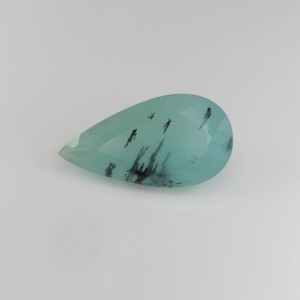
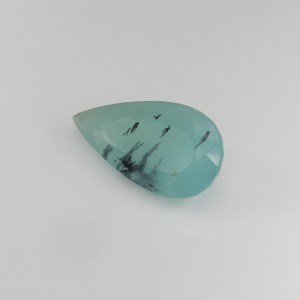
Blue Peruvian opal is the most recognized and commercially important variety. Ranging from pale sky blue through Caribbean aqua to medium saturated blue-green, this is the stone most commonly described as "Peruvian opal" in the gem trade. The finest material displays a vivid, even blue color with good translucency that allows the stone to appear to glow from within.
Pink Peruvian opal (also called Andean pink opal, Angelskin opal, or Peruvian pink opal) is the second major variety. Its delicate rose to salmon-pink color is caused by iron rather than copper substitution in the silica structure. Pink Peruvian opal is scientifically described as silicified palygorskite and is considered stable with good color consistency. It has significant appeal in contemporary jewelry design.
Green Peruvian opal occurs as a transitional or separate variety in some Andean deposits, displaying soft green to yellow-green tones. Less commercially significant than blue or pink, it is nonetheless produced naturally from the same geological source.
Peruvian Blue Opal Properties
Hardness: 5.5 to 6 Mohs (slightly softer than other opal types)
Refractive Index: approximately 1.42 to 1.45
Specific Gravity: approximately 2.10 g/cc
Water Content: approximately 3.2% — relatively low, contributing to stability
Play of Color: None — common opal
Transparency: Opaque to semi-translucent
Luster: Waxy to vitreous
Treatment: Natural and untreated; color is entirely natural
Sources and Formation
Peruvian blue opal is found exclusively in the Andes Mountains of Peru, with the primary commercial deposits in the Cajamarca region of northern Peru. The deposits formed during the Miocene epoch, approximately 23 to 5.3 million years ago, in association with volcanic activity and low-temperature hydrothermal processes in the Andean geological framework. The silica-rich solutions that deposited the opal incorporated trace copper from the copper- rich geological environment of the Andes — one of the world's most copper-endowed geological terrains, host to major porphyry copper deposits — which produced the characteristic blue color. The Huanuco region in central Peru is also documented as a source of high-quality blue and blue-green Peruvian opals. The Ica region along Peru's southern coast produces opals ranging from pale blue to pink and purple.
Price and Value
Peruvian blue opal represents excellent value for its visual quality. Standard commercial material in good blue color ranges from $10 to $50 per carat. Fine translucent material with vivid, saturated blue-green color and attractive dendritic inclusions ranges from $20 to $100 per carat. The finest semitranslucent cabochons and faceted stones with a spectacular greenish-blue to pure blue color can sell for $10 to $20 per carat in bead form and higher for well-cut faceted pieces. All Peruvian blue opal is entirely natural and untreated — its blue color is a natural product of copper trace element chemistry, requiring no enhancement. Browse our complete Peruvian blue opal collection or explore the full natural opal gemstone range.
Frequently Asked Questions
What is Peruvian blue opal?
Peruvian blue opal is a natural common opal (without play of color) found exclusively in the Andes Mountains of Peru. It is the national stone of Peru, valued for its serene blue to blue-green color produced by trace copper compounds and palygorskite clay minerals. It is considered a gift from Pachamama in Andean tradition and has been used by Andean civilizations since antiquity.
Why is Peruvian blue opal blue?
The blue-green color is caused by trace copper compounds — primarily chrysocolla-type copper silicate and palygorskite clay minerals — incorporated into the silica matrix during formation in the copper-rich geological environment of the Andes. Higher copper content drives color toward more saturated blue-green; lower content produces paler sky blue tones.
Does Peruvian blue opal show play of color?
No. Peruvian blue opal is a common opal without play of color. Its appeal is its serene, consistent body color rather than the shifting spectral display of precious opal. Some specimens show a subtle iridescence in raking light, but this is distinct from the Bragg diffraction play of color of precious opal.
What are the dendritic inclusions in Peruvian blue opal?
Dendritic inclusions are black, branching, tree-like or fern-like patterns within the stone formed by manganese oxide that crystallized within the opal during its geological development. Unlike inclusions in most gemstones, dendrites in Peruvian blue opal are widely considered an attractive and desirable feature rather than a flaw, as they add visual depth and uniqueness to the stone.
Where is Peruvian blue opal found?
Exclusively in the Andes Mountains of Peru. The primary commercial deposits are in the Cajamarca region of northern Peru, with additional sources in the Huanuco and Ica regions. The deposits formed during the Miocene epoch approximately 23 to 5.3 million years ago.
Is Peruvian blue opal treated?
No. Peruvian blue opal's color is entirely natural, produced by copper trace elements in the silica matrix. No dyeing, heating, or coating is used or required. It is an entirely natural gemstone.
Clear ✖