
About Gemopedia
Gemopedia is the educational gemstone encyclopedia of Gempiece, created to help gemstone enthusiasts, collectors, and buyers better understand natural gemstones. It features detailed guides covering gemstone origins, color varieties, treatments, quality factors, and practical buying advice.
Drawing on more than 20 years of hands-on industry experience — from rough gemstone selection and precision faceting to active involvement in the international gemstone market — GemPiece brings practical, real-world knowledge to this resource.
Having worked with both fine precious stones and rare collector-grade gems across high-end and commercial markets, we understand gemstone grading standards, pricing structures, and evolving global trends. This experience allows Gemopedia to present clear, reliable information that helps buyers make confident and well-informed decisions.
Within Gemopedia, you will discover insights into gemstone origins, color characteristics, treatments, and value factors for stones such as Ruby, Sapphire, and many other natural gemstones — all organized to provide clarity before making a purchase or investment.
Browse the gemstone guides below to explore the fascinating world of natural gems.
What You Will Learn
1) How to distinguish natural gemstones from treated stones.
2) The difference between precious and semi-precious gemstones.
3) How to evaluate fair pricing based on quality and demand.
4) Important gemstone origins and mining regions.
5) Color grading, clarity factors, and inclusions.
6) The impact of cut and carat weight on value.
7) How overall gemstone quality influences long-term worth.
Understanding Gemstone Types
Natural Gemstones are formed within the earth over millions of years without laboratory creation.
Treated Gemstones undergo processes such as heat treatment to improve color or clarity — a widely accepted and industry-standard practice when properly disclosed.
Synthetic Gemstones are laboratory-grown stones with the same chemical composition as natural gems but differ significantly in origin and market value.
Imitation Stones resemble gemstones visually but do not share the same mineral composition or structural properties.
Precious Gemstones
The traditional precious gemstones include Ruby, Sapphire, and Emerald. These stones are valued for their rarity, durability, historical importance, and timeless beauty.
Popular Semi-Precious Gemstones
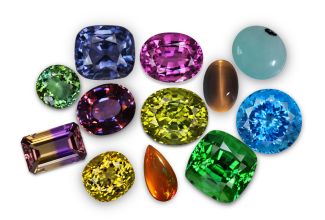
Explore detailed guides on Spinel, Tourmaline, Garnet, Aquamarine, Topaz, Amethyst, Citrine, and Alexandrite.
Opal Gemstone Guide
Opal is one of the most unique gemstones, known for its wide range of varieties and optical effects. From vibrant play-of-color to smooth body tones, each type of opal offers a distinct appearance and character.
Explore our complete opal gemstone guide including Opal, Peruvian blue opal, rainbow opal, fire opal, water opal, yellow opal, boulder opal, and opal cat’s eye.
Spinel Gemstone Guide
Spinel is a highly valued gemstone known for its brilliance, durability, and wide range of colors. Historically mistaken for ruby, spinel is now recognized as a premium gemstone with excellent clarity and strong color.
Explore our spinel gemstone guide including Spinel and its varieties to understand color differences, origins, and value factors.
Featured Gemstone Guides
Explore some of our most detailed gemstone guides, covering origin, quality, and buying insights.
Ruby Gemstone Guide
Star Ruby Guide
Sapphire Gemstone Guide
Spinel Guide
Tourmaline Guide
Why Trust GemPiece?
GemPiece focuses exclusively on natural gemstones with full transparency in treatment disclosure. Our Gemopedia is built on real industry experience — not theory — ensuring buyers receive accurate, practical, and reliable gemstone knowledge.
Explore Gemstone Guides
Select a gemstone from the left menu to read its complete guide, including origin details, treatment information, quality evaluation tips, and buying advice.