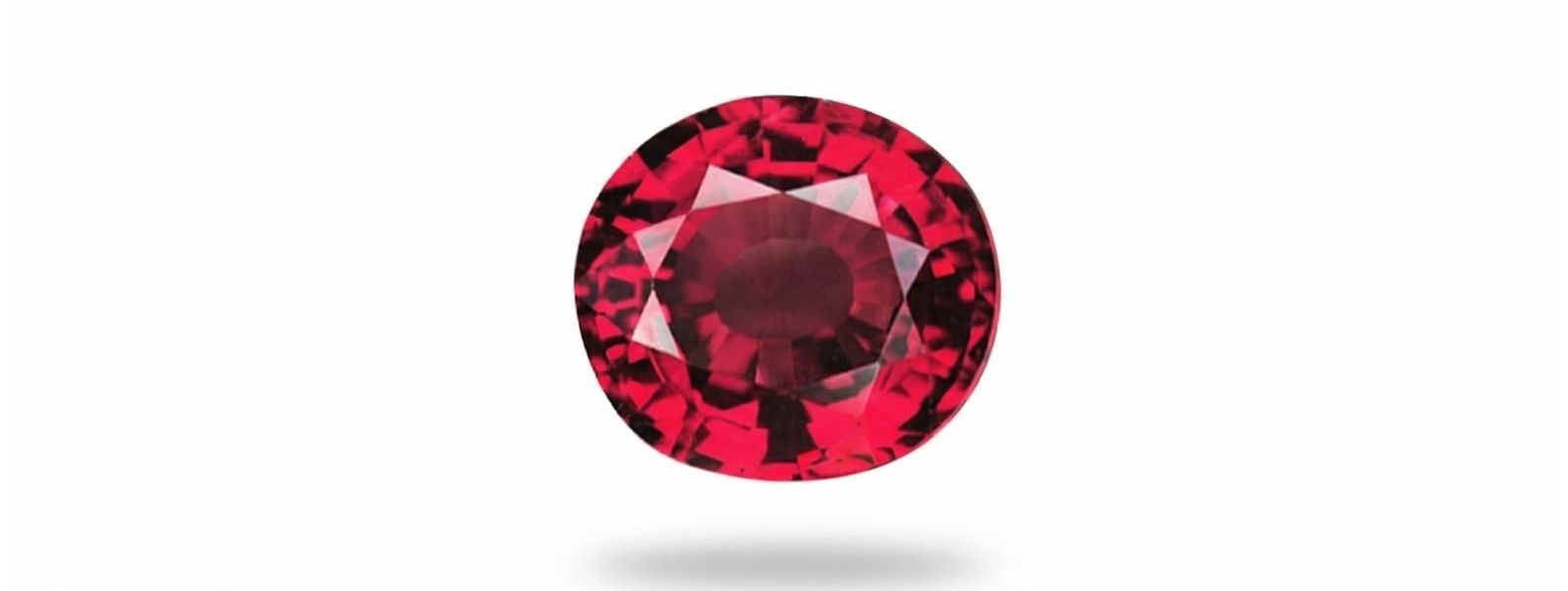
Understanding Malaya Garnet
Malaya garnet has one of the most interesting origin stories in the modern gem trade. Literally thrown aside by miners in Tanzania's Umba Valley in the 1960s because it did not match any known garnet variety, it was named after the Swahili word for outcast, traded as curiosities to a few early Western dealers, and then transformed — within a decade — into one of the most sought-after members of the garnet family when collectors recognized its extraordinary color combinations. From outcast to prize, in ten years. That trajectory tells you everything about what this gem delivers once you understand what you are looking at.
Explore our malaya garnet collection and related varieties including our spessartite garnet collection, rhodolite garnet collection, and color change garnet collection. For related guides see Spessartite Garnet Guide, Rhodolite Garnet Guide, Color Change Garnet Guide, and the complete Garnet Gemstone Guide.
Discovery and Name Origin
Malaya garnet was first encountered in the Umba River Valley of northern Tanzania in the late 1960s, mixed into the production of rhodolite garnet that East African miners were working to supply. The rhodolite deposits of the Umba Valley had been known and commercially worked since the late colonial era, and miners were paid specifically to find the violet-red pyrope-almandine material. When they encountered pink, orange, and peach stones that clearly belonged to the garnet group but did not match rhodolite's color or optical properties, the material was rejected by local dealers and set aside. The miners coined the name "malaya" or "malaia" in Swahili, meaning outcast, misfit, or out of the family.
The material first came to the attention of Western gemologists and dealers in the early 1970s when some pieces reached the international market. Testing quickly established that these were not mislabeled or unusual rhodolites — they were genuinely distinct garnet compositions producing colors not previously associated with any named variety. The garnet trade enthusiastically adopted the malaya name, and by the 1980s, malaya garnet had established a recognized commercial niche particularly in the American market.
The original Umba Valley deposit produced primarily the pink and pinkish-orange material that established malaya's commercial identity. That initial deposit was substantially depleted through the 1970s and 1980s. Subsequent discoveries in Madagascar's Bekily region in the 1990s, and more significantly in Tanzania's Mahenge area beginning around 2015, have provided fresh supply — the Mahenge material in particular displaying some of the most vivid and saturated pinkish-orange colors seen in any malaya production.
Chemical Composition and Classification
Malaya garnet's defining characteristic is compositional variability. Unlike most named garnet varieties that have a relatively consistent chemical identity (rhodolite is consistently pyrope-almandine, spessartite is predominantly Mn₃Al₂Si₃O₁₂), malaya's composition spans a remarkably wide range. IGS laboratory analysis documents malaya garnet compositions ranging from 0 to 83% pyrope, 2 to 78% almandine, 2 to 94% spessartite, and 0 to 24% grossular, with no more than 4% andradite. This compositional latitude means that different malaya specimens from the same deposit can have different primary garnet species as their dominant component.
The most commercially significant malaya compositions center on the pyrope-spessartite join of the pyralspite triangle, with pyrope as the dominant component in most of the finest orange and peach material. The presence of manganese from spessartite drives color toward orange; the presence of magnesium from pyrope provides the brightness and clarity of color that makes the finest malaya so attractive. Where almandine iron content increases, the color deepens toward reddish tones. Trace chromium or vanadium, when present in sufficient concentration, can produce the red flashes visible under direct light in some stones and, in exceptional cases, a true color change effect.
The terms "umbalite" and "malaya" have been used interchangeably in some gemological literature to describe the same material. Strictly, umbalite refers to material from the Umba Valley specifically and has historically been applied particularly to the redder, more pyrope-almandine dominant material from that region. The internationally accepted term is malaya (or malaia), which covers the full compositional range of this pyrope-spessartite family regardless of specific origin within the East African producing region.
Physical and Optical Properties
Hardness: 7 to 7.5 Mohs, reflecting the pyralspite composition that dominates malaya's chemistry. This places malaya in the harder and more durable range of the garnet group, excellent for all jewelry types including daily-wear rings.
Refractive Index: 1.740 to 1.800, varying with the exact pyrope-spessartite- almandine ratio. Higher spessartite content elevates the RI; higher pyrope content moderates it. The RI range overlaps with rhodolite (1.740 to 1.770) and spessartite (1.790 to 1.820), which reflects the compositional overlap between these related varieties.
Specific Gravity: 3.75 to 3.95. The higher end of this range reflects higher spessartite content (spessartite has the highest SG of the pyralspite garnets at 4.12 to 4.20); the lower end reflects higher pyrope dominance.
Dispersion: Good, reflecting pyralspite composition. Malaya garnets display lively brilliance when well cut, and the presence of trace chromium in some specimens produces scintillating red flashes visible in face-up position that add to the stone's visual dynamism.
Optical Character: Singly refractive (isotropic), though anomalous double refraction is common due to internal crystal strain.
Fluorescence: Most malaya garnets are inert to UV light. However, some pale pink malaya stones from Tanzania with low iron content show pink or red fluorescence under long-wave UV, caused by chromium. The 2022 trade introduction of "Dragon Garnet" — pale pink garnets from Kenya and Tanzania with red LWUV fluorescence — appears to represent a chromium-bearing pale pink malaya on the compositional evidence.
Inclusions: Malaya garnets commonly contain quartz inclusions, apatite, graphite, rutile needles, fingerprint patterns, growth tubes, and negative crystals. Eye-clean material exists but is not universal across all sources.
Cleavage: None, like all garnets.
Color Range and Grading
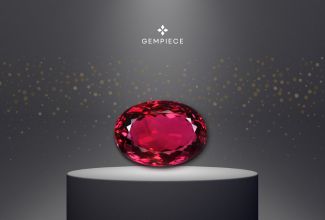
Malaya garnet's color range runs from light pinkish-orange through vivid peach, saturated reddish-orange, brownish-orange, and occasionally into nearly red territory overlapping with lighter rhodolite. The most commercially prized colors are vivid pinkish-orange and clean peach — tones that read clearly as "warm pink-orange" in natural light and have no strong brownish undertone.
Imperial Malaya describes the finest-quality vivid pinkish-orange to orange material with strong saturation, clean color, and eye-clean to near-eye-clean clarity. This designation is trade-specific rather than gemologically standardized but reflects the market recognition of top-quality material.
Mahenge garnet refers specifically to material from the Mahenge area of Morogoro Region in Tanzania, which began appearing commercially around 2015. Mahenge malaya is characterized by particularly vivid, saturated pinkish-orange to peach colors that many dealers and collectors consider the finest malaya produced. The Mahenge deposit has produced both loose stones for the collector market and rough for cutting, with the finest pieces commanding premiums over standard Umba Valley material.
Color change malaya represents a rare subset where trace chromium or vanadium produces a genuine light-source color change. These stones typically shift from pink, salmon, or magenta in daylight to reddish-pink, light purple, or pinkish-orange under incandescent light. The shift is generally less dramatic than in dedicated color change garnet (pyrope- spessartite with high vanadium specifically selected for shift quality), but in the finest examples it is clearly visible and highly collectible.
Formation Geology
Malaya garnet forms in metamorphic environments within the East African Mozambique Belt, the same ancient orogenic terrane that produces tsavorite, rhodolite, and color change garnet in the region. The Umba River Valley straddles the Tanzania-Kenya border within this belt, and the specific metamorphic conditions of the valley — which appears to have produced an unusual chemical environment favoring the complex pyrope-spessartite-almandine mixtures that define malaya — are not widely replicated elsewhere, which is why the gem's primary sources remain geographically concentrated.
Malaya garnet is most commonly found in alluvial (secondary) deposits in the Umba Valley, where it has been eroded from primary metamorphic host rocks and concentrated by rivers and streams over geological time. The Mahenge deposit in Morogoro Region appears to involve both primary metamorphic occurrences and secondary alluvial material. The compositional flexibility of malaya — its wide range of pyrope-spessartite-almandine ratios — likely reflects variable geochemical conditions across different parts of the primary metamorphic terrain, with different zones providing different proportions of magnesium, manganese, and iron.
Global Sources
Umba River Valley (Tanzania and Kenya border): The original and historically most important source of malaya garnet. The valley produces a range of malaya colors from pinkish-red umbalite-type material through orange to brownish-orange. Supply has been sporadic over the decades as the alluvial deposits are worked intermittently.
Mahenge (Morogoro Region, Tanzania): The most exciting current source of malaya garnet. Mahenge material, which appeared commercially around 2015 and has continued to appear at international gem shows and in collector offerings, displays some of the most vivid and saturated pinkish-orange colors seen in the entire malaya category. Mahenge garnets have attracted significant collector attention and command premium pricing.
Madagascar (Bekily region): Bekily in southern Madagascar is one of the most gemologically productive areas in the world, yielding color change garnet, rhodolite, and malaya-composition material. Madagascar malaya generally shows orange to reddish-orange tones with variable quality.
Other sources: Kenya's various gem-producing regions have yielded malaya material including the pale pink fluorescent material recently marketed as Dragon Garnet.
Malaya Garnet vs Related Varieties
Malaya garnet occupies a distinctive visual niche between several related garnet varieties and is sometimes confused with them by buyers unfamiliar with its specific character.
Rhodolite (pyrope-almandine) produces a cooler, more distinctly purple-red color. The color difference between a typical rhodolite and a typical malaya is immediately apparent to an experienced eye: rhodolite reads as purplish-red or raspberry; malaya reads as orange-pink or peach. The two can overlap at the boundary in rare specimens, but standard material is easily distinguished by hue.
Spessartite produces a more purely orange to reddish-orange with the characteristic "mandarin" brilliance of high-manganese material. Standard spessartite orange is brighter and more purely orange than typical malaya's warm peach or pinkish-orange. Fine spessartite has less pink component; fine malaya has more. Both are pyrope-spessartite blends but with different dominant ratios.
Color change garnet (pyrope-spessartite with high vanadium/chromium) overlaps with malaya in composition but is specifically selected for shift quality. All color change malaya is malaya, but not all malaya changes color. The color change property in malaya is a bonus feature of specific individual stones rather than a defining characteristic of the variety.
Malaya Garnet in Jewelry
Malaya's hardness of 7 to 7.5 Mohs and complete absence of cleavage make it excellent for all jewelry applications including daily-wear rings. Its warm peach, salmon, and orange-pink tones pair beautifully with yellow gold and rose gold settings. The soft warmth of malaya's color in yellow gold produces a harmonious combination that many buyers find more wearable than the sharper visual contrast of orange spessartite against the same metal.
In white gold or platinum, malaya's warm tones create an interesting contrast — the coolness of the metal makes the stone's warmth more apparent. This setting choice is effective for buyers who want the stone's color to be the dominant visual element.
Malaya garnet pairs beautifully with colorless diamonds in accent positions, which enhance the peach-orange tone without competing with it. Combinations with cognac diamonds or champagne diamonds create sophisticated warm-toned palettes.
Value and Market Pricing
Malaya garnet pricing is primarily driven by color quality — specifically the vibrancy and saturation of the peach or pinkish-orange tone. Standard commercial malaya with good color and reasonable clarity ranges from $120 to $500 per carat in accessible sizes. Fine Imperial Malaya quality with exceptional vivid pinkish-orange, eye-clean clarity, and good cut in sizes from 1 to 3 carats commands $500 to $2,000 per carat. Mahenge material in the finest colors reaches $900 to $2,000 per carat at the premium end. Stones above 5 carats in vivid, clean malaya quality are genuinely rare and command significant collector premiums. Color change malaya adds 30% to 100% or more premium over equivalent non-shifting material.
Care and Maintenance
Malaya garnet requires no unusual care. Clean with warm water, mild soap, and a soft brush. Rinse thoroughly and dry with a soft cloth. Avoid ultrasonic cleaners for stones with visible inclusions. Store separately from harder stones to prevent surface scratching. No treatment or re-treatment is required. Malaya's color is entirely stable.
Buying Malaya Garnet
Color is the primary evaluation criterion for malaya garnet. The stone should display a vivid, clean tone that reads clearly as peach, pinkish-orange, or orange-pink in natural light, without significant brownish undertone. The most desirable stones have a warm, glowing color that appears luminous rather than flat. Clarity in the face-up position matters; stones with heavy surface inclusions interrupting the color display are less desirable regardless of color quality.
For stones with claimed color change, evaluate the shift clearly under both natural daylight and incandescent light before purchase. At GemPiece, every malaya garnet is macro-photographed to show the actual face-up color character. Browse our malaya garnet collection or explore related guides: Spessartite Garnet Guide, Rhodolite Garnet Guide, Color Change Garnet Guide, and the complete Garnet Gemstone Guide.