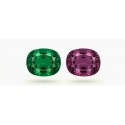
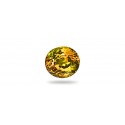
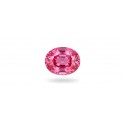

Understanding Fire Opal
Fire opal is one of gemology's most distinctive personalities — a gemstone that plays by completely different rules than the opal family it belongs to, yet belongs there in a way that cannot be argued. Where other opals are evaluated for the rainbow display they produce through structural light diffraction, fire opal is evaluated for color — warm, vivid, saturated, glowing body color that comes from chemistry rather than physics, from iron oxide rather than silica sphere geometry. And where every other commercially significant opal is cut as a cabochon to maximize a surface optical effect, fire opal is cut as a faceted gem because its transparency allows light to work inside the stone rather than on its surface.
The result is a gemstone that satisfies two completely different aesthetic demands simultaneously: the warmth and glow of an orange body color stone, and the interactive internal light of a faceted transparent gem. When the finest fire opal additionally displays play of color on top of that orange body — superimposed spectral flashes dancing within the warm orange transparency — the stone achieves something that virtually nothing else in the natural gem world matches.
Explore our fire opal collection and related varieties including boulder opal, water opal, and yellow opal. For related guides see Boulder Opal Guide, Water Opal Guide, Rainbow Opal Guide, and the complete Opal Gemstone Guide.
What Is Fire Opal
Fire opal is a variety of opal (hydrated amorphous silica, SiO₂·nH₂O) defined by its warm body color — yellow, orange, or red — rather than by play of color. In the gemological classification system, fire opal may be either precious (displaying play of color in addition to body color) or common (body color only, no play of color). The majority of commercial fire opal is common fire opal valued for body color alone; precious fire opal with both warm body color and play of color is genuinely rare and significantly more valuable.
The defining physical property that distinguishes fire opal from other opal varieties is its transparency. While common opal is typically opaque and precious opal from Australia ranges from opaque to translucent, fine fire opal from Mexico is transparent to semi-transparent — it allows light to pass through the stone rather than blocking or scattering it. This transparency is the result of the volcanic formation environment (discussed in detail in the formation section below), which produces a relatively low-water-content, dense opal structure more amenable to transparency than the sedimentary formation environments of Australian opal.
Fire opal is the national gemstone of Mexico — officially recognized by the Mexican government as the stone most representative of the country's natural heritage. This status reflects not only the geological reality that Mexico contains the world's primary fire opal deposits but also the deep pre-Columbian cultural relationship between Mexican civilization and this particular gemstone.
Ancient History and Mesoamerican Cultural Significance
Fire opal's human history in Mexico predates the Spanish conquest by centuries and possibly millennia. The Aztec and Maya civilizations both revered fire opal, incorporating it into their jewelry, ceremonial mosaics, sculptures, and religious rituals with a sophistication that indicates long familiarity and deep cultural investment.
The Aztecs gave fire opal two recorded names. The first, "quetzalitzlipyollitli," translates as "Stone of the Bird of Paradise" — a name that refers either to the quetzal bird (sacred to Mesoamerican culture, its iridescent feathers serving as royal adornment) or to the bird of paradise flower, both associations that capture the gem's vivid warmth and sacred quality. The second name, "vitzitziltecpal," means hummingbird stone, evoking the rapid flashing iridescence of a hummingbird's throat feathers — a description that applies particularly well to the fire opal specimens that display play of color within their orange body.
The Aztecs associated fire opal with the sun, with sacred fire, and with the feathered serpent deity Quetzalcoatl. The stone was incorporated into the ritual objects and personal adornment of Aztec rulers and warriors, who believed it carried divine protection. Fire opals were embedded in ceremonial objects of gold and jade, used in mosaic work on ritual masks and headdresses, and offered at temples dedicated to the sun. This was not a marginal or incidental use — fire opal was among the most sacred gem materials of the Aztec world.
This indigenous knowledge and reverence for fire opal persisted through generations until, as the International Colored Gemstone Association documents, the gemstone knowledge of Mexico's natives somehow sank into relative obscurity for a period — until around 1835, when systematic commercial mining of the Mexican highland fire opal deposits began. The rediscovery and commercialization of fire opal in the 19th century brought what had been a sacred indigenous material into the international gem market, where it was recognized for its exceptional beauty and the unique geological context of its formation.
In the Persian and Indian traditions, fire opal — like other opals — was associated with burning love and passionate devotion. Romans called all opals "opalus" (from the Latin "opis" for plenty, associated with Ops, the wife of Saturn and goddess of fertility) and considered fire opals symbols of divine love and creative energy.
The Color Chemistry of Fire Opal
Fire opal's body color is produced by a straightforward but specific chemical mechanism. Trace iron oxide impurities within the hydrated silica matrix absorb blue and green wavelengths of visible light while transmitting orange, yellow, and red wavelengths. The precise concentration of iron oxide — and its specific oxidation state (ferric iron, Fe3+) — determines both the depth and the specific tone of the resulting color.
At low iron oxide concentrations, the absorption of blue and green wavelengths is partial, and the transmitted light is primarily yellow. At moderate concentrations, the blue absorption is more complete and the transmitted color shifts toward orange. At higher concentrations, with additional absorption of green wavelengths, the transmitted color moves toward reddish- orange and eventually red. The most vivid and saturated orange fire opal represents a specific iron oxide concentration range where the absorption windows in blue and green wavelengths are deep but the red-orange transmission window remains clean and unrestricted.
This is a fundamentally different color mechanism from the structural color of precious opal's play of color. Play of color requires no absorbing chromophore — it is produced entirely by the physical arrangement of silica spheres. Fire opal's body color is a pure absorption phenomenon. In fire opals that display both body color AND play of color, both mechanisms operate simultaneously — the iron oxide creates the warm orange background while the ordered silica spheres overlay spectral diffraction flashes on top of that background. This combination is the holy grail of fire opal collecting.
Formation Geology: Volcanic Origins
Fire opal forms in a completely different geological environment from the sedimentary-hosted Australian opal that produces boulder opal, white opal, and black opal. Where Australian opal forms in ancient sea-floor sediments over millions of years at relatively low temperatures, fire opal forms in volcanic environments — in and around the lava flows and volcanic rock sequences of Mexico's highland plateau and Trans-Mexican Volcanic Belt.
The formation process begins when silica-rich groundwater or hydrothermal fluid enters cavities, vesicles (gas bubbles trapped in cooling lava), and fractures within volcanic host rocks — particularly rhyolite, trachyte porphyry, and other siliceous volcanic lithologies. The water carries dissolved silica along with trace iron compounds derived from the iron-rich volcanic minerals surrounding the cavity. Under the elevated temperatures and pressures of the volcanic environment, the silica-bearing fluid deposits colloidal silica gel within the cavity, incorporating iron oxide impurities as it does so.
As the silica gel slowly dehydrates and solidifies under the influence of volcanic heat, the iron oxide impurities are locked into the hardening silica matrix, producing the warm body color. If the dehydration is sufficiently slow and the silica concentration sufficiently uniform to produce regularly sized spheres in regular packing during solidification, play of color develops in addition to the body color. More commonly, the volcanic heat drives more rapid dehydration, producing the non-ordered silica structure of common fire opal (body color only, no play of color).
The low water content of Mexican fire opal relative to Australian opal reflects this volcanic formation environment: the higher formation temperatures drove more complete initial dehydration, resulting in a more compact and less porous silica network. This structural difference explains why Mexican fire opal is generally more stable than Ethiopian Welo opal (which is hydrophane and can absorb and release water) and why it can be transparent where other opals are opaque or translucent.
Mexican Sources in Detail
The Mexican highland plateau, dotted with extinct volcanic peaks and threaded with volcanic rock sequences, contains the world's primary fire opal deposits. The geology of the Trans-Mexican Volcanic Belt — a major volcanic arc crossing Mexico from the Pacific to the Gulf coast — provides the rhyolitic and trachytic host rocks in which fire opal has formed.
Querétaro state has been the most historically significant and commercially dominant source of Mexican fire opal since systematic mining began around 1835. The deposits near the city of Querétaro and around the village of San Juan del Río occur within rhyolitic volcanic sequences of the central Mexican plateau. Querétaro produces fire opal ranging from vivid orange to deep reddish-orange in transparent quality with good clarity.
Jalisco state is known for fire opal with particularly rich and saturated colors and occasionally produces the full play of color within orange body specimens that represent the finest available fire opal. Columbia Gem House documents sourcing their premium fire opal specifically from Jalisco for its color quality and stability characteristics.
Hidalgo state, particularly near Zimapan, produces fire opal from a trachyte porphyry host rock at this location. Hidalgo material includes both yellow and red fire opal and historically has been an important supplementary source to Querétaro production.
Nayarit and several additional Mexican states contribute to the overall national production, with varying color characteristics and quality levels.
The specific cantera fire opal form deserves mention: cantera fire opal is found within its rhyolitic matrix and is cut retaining part of the original volcanic host rock around the fire opal center — an aesthetic presentation similar in concept to boulder opal's ironstone matrix retention, applied to fire opal in its volcanic rhyolite host.
Ethiopian Fire Opal: A Different Character
Ethiopia's Welo Province, famous for producing exceptional crystal opals with vivid play of color, also produces fire opal — but with a character distinct from Mexican material. Ethiopian fire opal tends to be hydrophane (water-absorbing and transparent when wet), produces stronger neon violet and green play of color within orange body tones, and is available in larger crystal sizes than Mexican material. The combination of orange body color with neon spectral fire creates some of the most spectacular fire opal available.
Ethiopian fire opal's higher water content means it requires more care regarding drying conditions and temperature stability than Mexican material. It should not be left in extremely dry environments or exposed to rapid temperature changes. Mexican fire opal, with its lower water content and more stable volcanic silica structure, is generally more appropriate for jewelry applications where robust wear resistance is required.
Physical and Optical Properties
Chemical Formula: SiO₂·nH₂O with trace iron oxide (Fe₂O₃)
Hardness: 5.5 to 6.5 Mohs — the same as all opal varieties
Refractive Index: approximately 1.37 to 1.47; typically toward the lower
end of this range for fire opal, reflecting its lower water content and denser silica structure
Specific Gravity: 1.98 to 2.20 — notably lower than most gemstones,
reflecting the low-density amorphous silica framework
Transparency: Transparent to semi-transparent for the finest Mexican
material; semi-translucent for lower-quality material
Water Content: Typically 3% to 8% for Mexican fire opal — significantly
lower than Ethiopian hydrophane opal (up to 21%)
Absorption Spectrum: Strong absorption in the blue and blue-green region
(below approximately 540nm for orange material, below 480nm for yellow material); clean
transmission in orange-red region above absorption threshold
Fluorescence: Variable; some fire opal shows green to yellow-green
fluorescence under long-wave UV, attributed to uranium trace content in some specimens
Cleavage: None; conchoidal fracture
Luster: Vitreous to resinous; finest transparent material shows high
vitreous luster comparable to glass
Cutting Fire Opal: Facets vs Cabochons
Fire opal is the only opal variety regularly cut in faceted styles — round brilliant, oval brilliant, cushion, trillion, pear, and emerald cut are all used commercially. The decision to facet rather than cabochon-cut reflects a fundamental difference in how light interacts with fire opal versus other opals.
In opaque or translucent opal, light cannot enter the body of the stone from below — it must interact with the stone's surface and the thin play-of-color layer near the surface. A dome-shaped cabochon maximizes the surface area presenting the play-of-color layer to the viewer and provides the curved surface that concentrates the diffracted light. Faceting a non-transparent opal would reduce rather than enhance its appearance.
In transparent fire opal, light enters the stone from all directions, travels through the full body of the stone, interacts with the iron oxide chromophores throughout the volume, and exits through the crown facets. A brilliant faceting style — with mathematically optimized facet angles creating total internal reflection — produces maximum light return and maximum depth of color interaction. The fire opal literally glows from within when well-faceted, because every photon that enters the stone interacts with the color-producing iron oxide throughout the stone's entire volume before exiting. This is why a well-faceted transparent fire opal appears more intensely and uniformly orange than an equivalent cabochon-cut stone.
Cabochon-cut fire opal is also produced commercially, particularly for material that is translucent rather than transparent, and for cantera fire opal in its volcanic matrix. But the signature presentation of fine fire opal is faceted, and this is what makes it unique in the opal world.
Crazing, Stability, and Practical Durability
Fire opal's primary practical vulnerability — shared with all opal — is the potential for crazing: the development of a network of internal micro-cracks caused by differential dehydration within the amorphous silica structure. For Mexican fire opal, which has lower water content than Ethiopian varieties, crazing risk is lower than for hydrophane material but not zero, particularly in newly mined material or material stored in extremely dry environments.
Commercial suppliers including Columbia Gem House document their process of thoroughly drying rough before cutting and conducting a second drying of finished cut stones to eliminate any possibility of crazing from remaining unstable water content before the material enters jewelry use. This process, combined with the naturally lower water content of Mexican volcanic fire opal, produces material that is substantially more stable than the hydrophone Ethiopian material for jewelry applications.
The practical guidance: avoid sudden temperature changes, avoid direct prolonged sunlight on new or recently cut fire opal, avoid ultrasonic cleaning, and avoid exposure to harsh solvents or acids. Store in moderate humidity. These precautions apply more stringently to Ethiopian fire opal than to well-stabilized Mexican material, but represent best practice for all fire opal varieties.
Value and Market Pricing
Fire opal pricing varies significantly with color quality, transparency, clarity, size, and whether play of color is present. The market divides into several distinct tiers.
Pale yellow to brownish commercial-grade fire opal, typically translucent, ranges from $5 to $30 per carat. Standard vivid orange material with decent transparency and reasonable clarity commands $30 to $150 per carat. High-quality transparent vivid orange fire opal in eye-clean to VVS clarity ranges from $100 to $300 per carat. The finest transparent, vivid orange-red fire opal with eye-clean clarity and strong play of color can reach $300 to $1,000 per carat or higher for exceptional specimens.
Size adds consistent premiums: common fire opal above 5 carats in vivid color and good transparency is genuinely scarce. Truly large stones (10 carats or above) with fine color quality are rare and transact at premiums independent of per-carat calculations. The most exceptional fire opals recorded include a 29.77-carat cushion and a 14.77-carat triangular specimen displayed at the 1995 Tucson Gem and Mineral Show; a 39.35-carat mandarin-colored fire opal is displayed in a gold ring at the Houston Museum of Natural Science.
Buying Fire Opal
Color is the primary evaluation criterion. The stone should display vivid, saturated orange — not brownish, not muddy, not pale yellow. The most desirable color is a pure, intense orange-red comparable to a sunset at maximum saturation. Transparency matters because it determines whether the stone can be effectively faceted: truly transparent material that allows you to see through the stone clearly (when not face-up) is significantly more valuable than translucent material that diffuses rather than transmits light.
For play of color on top of body color — which adds substantial value — evaluate in a darkened environment with a single directional light source. The spectral flashes should be clearly visible and clearly distinct from the orange body color. Clarity is particularly important for faceted fire opal: inclusions that are tolerated in cabochon-cut stones become much more visible when the stone is faceted and transparency allows examination through the body from all angles.
At GemPiece, every fire opal is individually photographed and filmed under natural light and incandescent light to show both the body color and any play of color character accurately. Browse our fire opal collection or explore related guides: Boulder Opal Guide, Water Opal Guide, Yellow Opal Guide, and the complete Opal Gemstone Guide.