
Kunzite – Pink Spodumene, Pleochroism and Photofading Explained
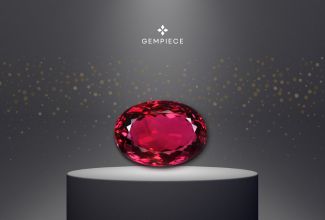
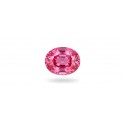
Kunzite is one of the most distinctively beautiful pink gemstones in the collector market — a lithium aluminum silicate mineral whose trace manganese content produces a range of soft pastel to vivid violet-pink colors that are uniquely its own, combined with remarkable crystal sizes, excellent natural clarity, and a strong pleochroism that adds optical complexity rarely found in a pink gemstone at accessible prices. Named for George Frederick Kunz — the most prominent American gemologist of the nineteenth and early twentieth centuries and longtime head gem buyer for Tiffany & Co. — kunzite was first formally described in 1902 from Pala, San Diego County, California. This guide covers spodumene mineralogy, manganese color origin, pleochroism, photofading, global sources, and value.
Explore our natural kunzite collection from Afghanistan, Brazil, and Madagascar.
Mineral Composition and Physical Properties
Kunzite is the pink to violet-pink gem variety of spodumene — a lithium aluminum silicate mineral with the chemical formula LiAlSi₂O₆. Spodumene belongs to the pyroxene group and the monoclinic crystal system, forming typically large, vertically striated, flattened prismatic crystals that can reach several kilograms in rough form — making kunzite one of the few gemstones where very large finished sizes are readily achievable. The lithium-rich granitic pegmatites in which spodumene crystallizes also produce other lithium-bearing gem minerals including tourmaline (elbaite), lepidolite, and occasionally morganite, giving kunzite pegmatite localities a characteristic mineralogical richness.
Kunzite measures 6.5 to 7 on the Mohs hardness scale. Specific gravity is 3.15 to 3.21. The refractive index is 1.660 to 1.681, biaxial positive, with birefringence of 0.014 to 0.027. Perfect cleavage in two directions at 87 degrees — an important practical consideration for cutting and jewelry use. The high birefringence contributes to optical complexity in faceted stones.
Color Origin and Manganese Chemistry
The pink to violet-pink color of kunzite is produced by Mn³⁺ (manganese in the trivalent oxidation state) substituting for aluminum within the spodumene crystal lattice. The absorption of Mn³⁺ in the green region of the visible spectrum transmits pink and violet wavelengths, producing the characteristic color. The intensity of the color is directly proportional to the manganese concentration — higher Mn³⁺ content produces deeper, more vivid pink and violet-pink, while lower concentrations produce the pale pastel pinks that are also commercially significant.
The photosensitivity of kunzite's color is also related to the manganese color centers — prolonged UV radiation can alter the oxidation state of manganese in the crystal, reducing color intensity over time. This is an inherent chemical property of the Mn³⁺ color centers and is not related to any treatment. It is reversible to a degree through irradiation but not reliably so, and prevention through proper storage and wear management is the recommended approach.
Pleochroism
Kunzite is strongly pleochroic across its three optical axes. The three trichroic colors are: near-colorless to very pale pink (along the optical axis yielding the weakest absorption), medium pink to violet (along the second axis), and strong pink to deep violet-pink (along the third axis). A skilled lapidary orients the table of the finished stone to look down the strongest pink direction — maximizing the face-up color — while the paler trichroic colors appear in the pavilion facets when the stone is tilted, adding the characteristic optical depth that distinguishes a well-cut kunzite from a poorly oriented one.
Sources
Afghanistan's Nuristan Province — particularly the Mawi pegmatite complex — produces the most deeply colored and collector-significant kunzite, with vivid pink to violet-pink material of excellent clarity that represents the benchmark quality for the species. Brazil's Minas Gerais state is the largest commercial producer by volume, supplying large crystals in pale to medium pink across the full size spectrum. Madagascar produces pale to medium pink kunzite in commercially significant quantities. The original California type locality (San Diego County, Pala district) still produces mineralogical specimens and occasional gem-quality material. Pakistan is a secondary commercial source.
Treatment Status and Photofading
Natural kunzite is sold untreated — the pink color is the standard commercial form and does not require heat treatment or irradiation to produce a marketable color. Some kunzite is irradiated to intensify pale natural color, but this is not universal or standard practice. Both natural and irradiated kunzite are susceptible to photofading under prolonged UV exposure. GemPiece discloses treatment status and photofading sensitivity on all kunzite stones as standard practice.
Value Factors
Color intensity and direction (toward violet-pink or pure pink) are the primary value drivers. Deep violet-pink Afghan kunzite commands the highest premiums. Large sizes represent exceptional value relative to other pink gemstones — a 20-carat kunzite in vivid pink delivers visual impact that few other pink gemstones can match at comparable pricing. Eye-clean clarity is standard and expected. Afghanistan origin with documented provenance adds collector value.
Durability and Care
Store away from direct sunlight and strong UV sources. Clean with warm water and mild soap — avoid ultrasonic cleaners due to cleavage sensitivity. Bezel settings recommended for ring use. Store separately from harder gemstones. Handle carefully to avoid impacts along cleavage directions.
Explore Other Pink and Lithium Pegmatite Gemstones
Diaspore (view collection), rose quartz (view collection), and kyanite (view collection).