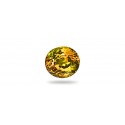
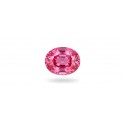

Danburite – Brilliant Transparent Gem from Mexico and Myanmar
Danburite is a calcium boron silicate mineral that occupies an unusual position in the gemstone world — possessing the transparency, brilliance, and durability of a fine jewelry gemstone, yet remaining genuinely obscure to most buyers outside the specialist collector community. Named after Danbury, Connecticut, where it was first discovered in 1839 by mineralogist Charles Upham Shephard, danburite has since been found in significant deposits across Mexico, Myanmar, Russia, and several other countries, producing a wide range of colorless, yellow, brown, and rare pink material of consistent quality. This guide covers danburite's mineralogy, optical properties, natural pink variety, global sources, clarity characteristics, and the value factors that define premium danburite in the professional market.
Explore our natural danburite gemstone collection sourced from Mexico, Myanmar, and Russia.
Mineral Composition and Physical Properties
Danburite is a calcium boron silicate mineral with the chemical formula CaB₂(SiO₄)₂. It belongs to the orthorhombic crystal system and forms characteristically elongated prismatic crystals with a diamond-like cross-section at the termination — the crystal form that gives danburite its distinctive appearance in rough form. The mineral belongs to the silicate group and is structurally related to topaz in some physical characteristics, though the chemical compositions are entirely different.
Danburite measures 7 to 7.5 on the Mohs hardness scale — natural pink danburite from Mexico reaches the higher end at 7.5, while material from other sources typically registers at 7.0. Cleavage is poor — a significant advantage for jewelry durability compared to minerals with perfect or good cleavage. The specific gravity is 2.97 to 3.02. The refractive index of 1.630 to 1.636 is notably high for a silicate mineral of this composition, contributing to the strong brilliance that makes well-cut danburite visually striking.
Optical Properties and Brilliance
Danburite's refractive index of 1.630–1.636 places it above aquamarine (1.577–1.583), amethyst and quartz (1.544–1.553), and blue topaz (1.610–1.620) in optical performance. The result is a gemstone that produces noticeably stronger brilliance than most of its commercial competitors in the transparent colored gemstone market. Danburite also exhibits weak pleochroism in colored varieties — natural pink danburite may show very slight color variations between crystallographic directions. Luminescence behavior includes blue, violet, or blue-green fluorescence under both long-wave and short-wave UV — a useful diagnostic characteristic for identification.
Natural Pink Danburite — The Rarest Variety
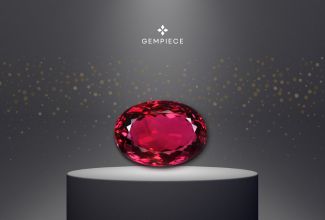
Natural pink danburite from San Luis Potosí, Mexico, represents the highest value tier of the species. The pink color in genuine natural danburite is untreated — it occurs naturally in the crystal without any heat treatment, irradiation, or coating. The single-source nature of natural pink danburite and its limited production make large faceted specimens particularly scarce. Pink danburite above 5 carats in fine natural color represents a meaningful collector acquisition. The Mexican source is effectively the only reliable supply of natural pink danburite of commercial significance.
The market for danburite also contains treated pink material — typically colorless danburite that has been coated to produce a pink appearance. This treated material is entirely legitimate if properly disclosed but must not be represented or sold as natural untreated pink danburite. GemPiece discloses all treatments clearly on every stone.
Sources and Global Occurrence
Mexico's San Luis Potosí state — particularly the Charcas locality — is the most commercially significant source, producing colorless, pale yellow, honey-brown, and natural pink danburite of excellent quality. Myanmar (Burma) is the source of the largest known facetable danburite crystals, with fine yellow specimens reaching 7 to 10 carats or more — these large Myanmar yellow danburites are genuinely rare and valued by collectors. Russia's Malkhan deposit produces yellowish and greenish-brown material. Madagascar, Bolivia, and Japan provide additional supply. The original type locality in Danbury, Connecticut, is no longer accessible, as urban development covers the site.
Clarity Characteristics
Danburite is generally an eye-clean to very slightly included gemstone. Natural inclusions in danburite include fingerprints, parallel growth tubes, and occasional two-phase inclusions. The mineral does not typically suffer from the heavy inclusion landscapes common to some colored gemstone species. Eye-clean danburite in colorless and pale yellow is commonly available. Large eye-clean specimens in pink and large yellow from Myanmar are less common and represent the premium clarity tier.
Treatment Status
Quality natural danburite is sold untreated in colorless, pale yellow, honey, and natural pink forms. Heat treatment of danburite is known for some varieties, and coating is used to produce artificial pink colors in commercial material. CVD (chemical vapor deposition) coating is occasionally used for color enhancement. GemPiece provides explicit treatment disclosure for all danburite stones.
Durability and Jewelry Use
Danburite's hardness of 7 to 7.5 combined with poor cleavage makes it one of the most practically durable colored gemstones available. It is suitable for all jewelry applications — rings, pendants, earrings, and bracelets — with standard care. Danburite withstands the rigors of daily wear significantly better than softer collector gemstones. The combination of hardness, brilliance, and natural availability of clean material makes it an excellent choice for both commercial jewelry and collector pieces.
Care and Maintenance
Clean danburite with warm water, mild soap, and a soft brush. Ultrasonic cleaning is safe for untreated colorless and yellow material. Avoid steam cleaning for treated or CVD-coated stones as heat sensitivity may affect the coating. Avoid prolonged exposure to strong heat sources regardless of treatment status. Store separately from diamond and corundum to prevent contact scratches.
Explore Related Gemstones
Collectors and jewelry buyers may also appreciate danburite cat's eye (view collection), topaz (view collection), and citrine (view collection).