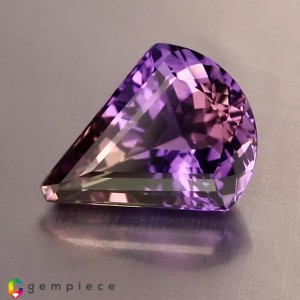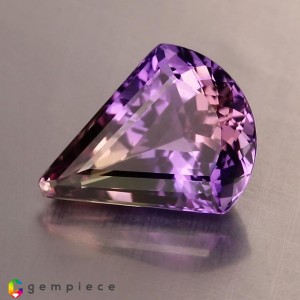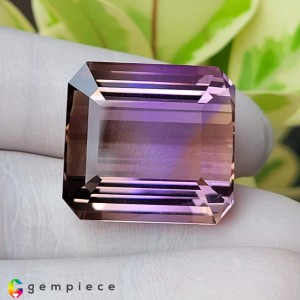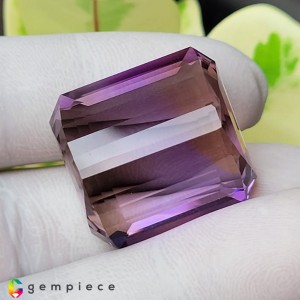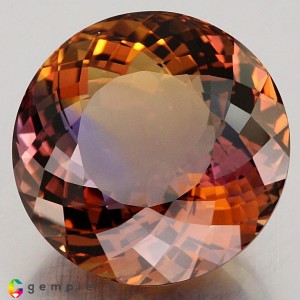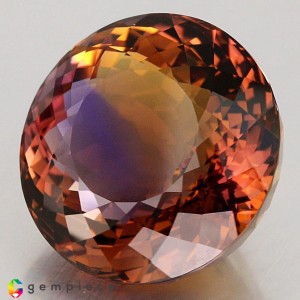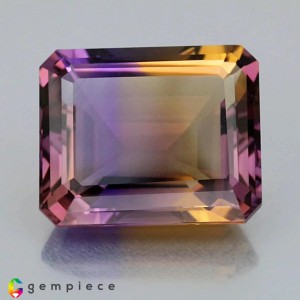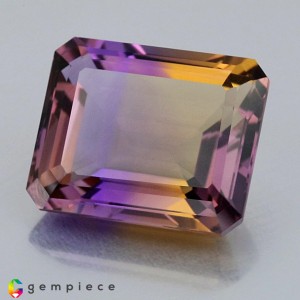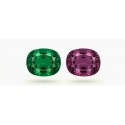
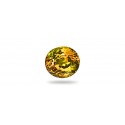
Buy Natural Ametrine Gemstones Online
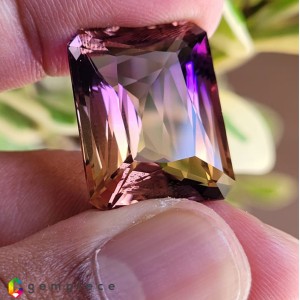
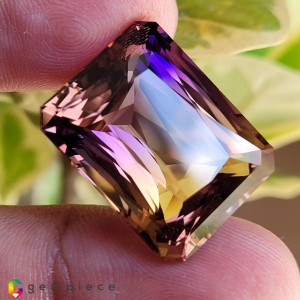
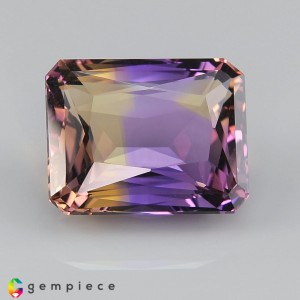
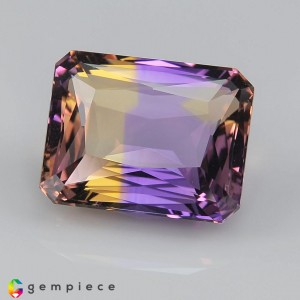
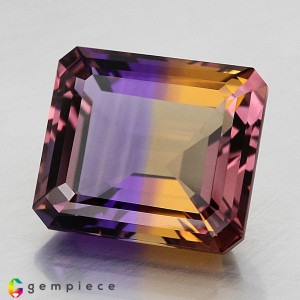
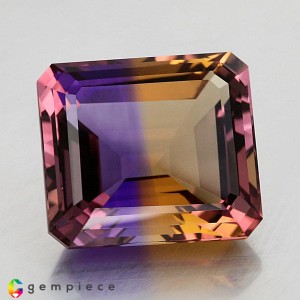
Ametrine is one of nature's most visually dramatic accidents: two completely different gemstone colors existing side by side within a single crystal, with a boundary between them that can be razor-sharp or softly blended depending on the specific conditions during its formation. One half is the deep violet of amethyst. The other is the warm golden yellow of citrine. Neither color bleeds into the other because of any artistic process or human intervention. The division exists because iron within the same growing quartz crystal reached two different oxidation states in two different temperature zones simultaneously, producing amethyst chemistry on one side and citrine chemistry on the other. This is geology making something that looks designed but is entirely natural, which is exactly why ametrine occupies such a compelling position in the collector and jewelry world.
At GemPiece, all ametrine in our collection is natural Bolivian material sourced from the Anahi Mine, the world's only commercially significant source of gem-quality ametrine. Every stone is individually cut in-house in our Bangkok workshop with careful attention to color zone orientation, ensuring that both the purple and golden zones display to maximum advantage in the finished gem. Browse our natural ametrine collection or read our complete Ametrine Gemstone Guide.
Two Colors, One Crystal: Why Ametrine Is Unique
Natural ametrine is a bi-color variety of quartz (SiO₂) that combines the purple of amethyst and the golden yellow of citrine within the same crystal structure. The name ametrine is a portmanteau of AMEThyst and citRINE, combining the two gemstone names that describe its two color zones. It is also known as Bolivianite (its national gemstone designation) and trystine in some trade contexts.
Unlike treated bi-color stones, which achieve two colors through selective irradiation or partial heating, natural ametrine forms through a genuine geological process involving iron in different oxidation states within the same growing crystal. The purple amethyst zone contains iron that was oxidized by natural gamma radiation from potassium-40 decay in surrounding rocks. The golden citrine zone contains iron aggregates in a different chemical state produced by higher localized temperatures during the same crystal growth period. Two states of the same element, separated by millimeters, producing two completely different colors in one stone.
This specific combination of conditions has produced commercially significant gem-quality ametrine in only one place on earth: the Anahi Mine in eastern Bolivia. For full gemological science and history, read our Ametrine Gemstone Guide. Browse related quartz gemstones including amethyst and citrine, with guides at Amethyst Guide and Citrine Guide. See our rare gemstone collection.
The Anahi Mine: The World's Only Source
Every piece of natural commercial-grade ametrine on the market comes from a single location: the Anahi Mine in the Sandoval Province of Santa Cruz department, eastern Bolivia, accessible only by small aircraft or an arduous combination of roads and river boats through remote jungle terrain. This single-source reality is one of the most important facts any ametrine buyer should know, because it means that ametrine's commercial availability is completely dependent on one mine's continued production.
The mine is named after a legendary indigenous princess of the Ayoreos tribe, whose story is tied to the mine's 17th-century rediscovery by Spanish explorers. According to the legend, a Spanish conquistador received the mine as a dowry upon marrying Princess Anahí, and he presented specimens to the Spanish court before the mine fell into obscurity for centuries. It was rediscovered in the 1960s and began commercial production in the 1970s, with ametrine becoming internationally recognized during the 1990s after extensive gemological research confirmed its completely natural bicolor origin.
Bolivian ametrine from the Anahi Mine is widely regarded as the finest in the world for color contrast, clarity, and consistency of bicolor zoning. Small quantities of ametrine exist in Brazil and parts of Africa, but none match the vibrancy and color balance of fine Bolivian material. GemPiece sources all ametrine directly from Bolivian suppliers with full origin documentation.
Color: What to Look For When Buying Ametrine
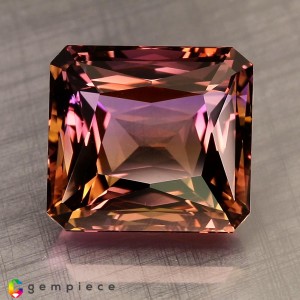
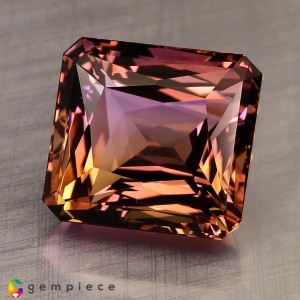
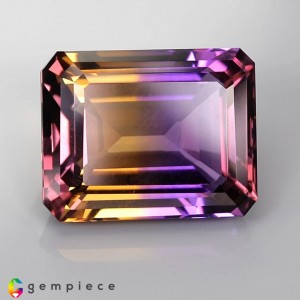
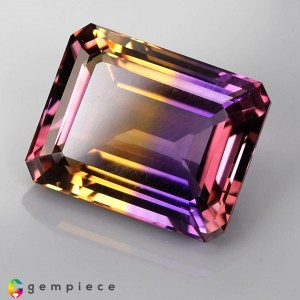
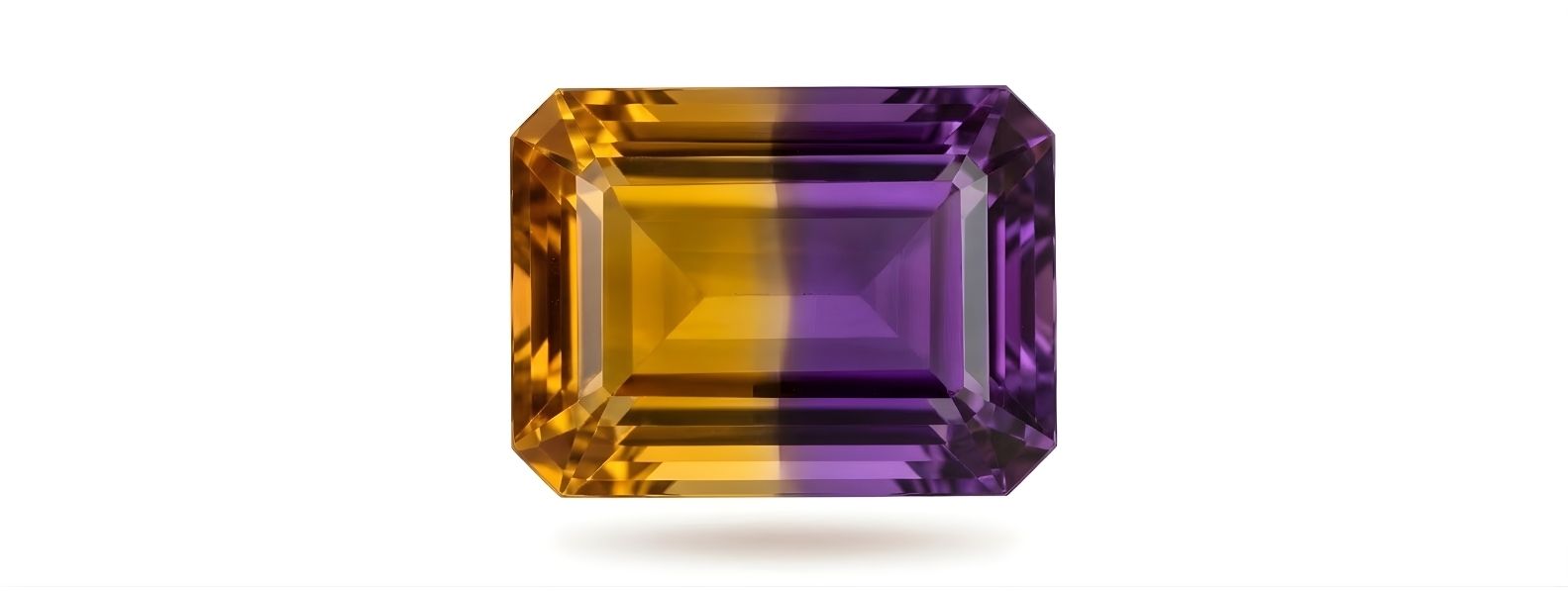
Color is the single most important quality factor in ametrine, and specifically the strength, balance, and contrast of the two color zones. The ideal natural ametrine displays a vivid, deeply saturated purple amethyst zone and a rich, warm golden yellow citrine zone in approximately equal proportions, with a clear, well-defined boundary between them.
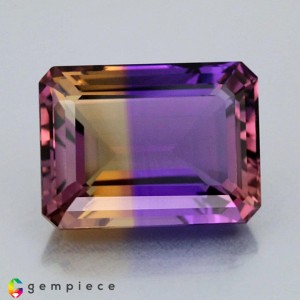
Stones where both colors are vivid and balanced in a roughly 50/50 split are the most commercially desirable. Stones where one color significantly dominates the other are considered less balanced and less valuable. Pale, washed-out color in either zone reduces the visual impact that makes ametrine distinctive. The most prized specimens show what collectors describe as a sharp, clean line between deep royal purple and rich honey-gold, as if nature drew a precise boundary within the crystal.
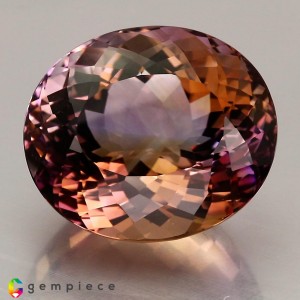
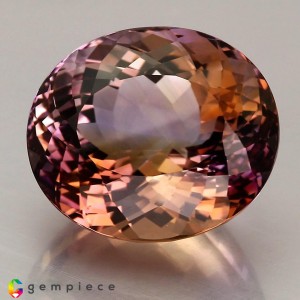
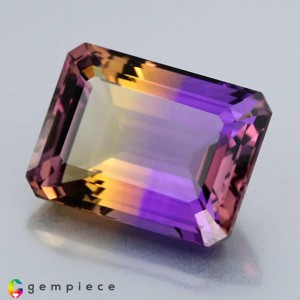
The transition between colors can also be blended rather than sharp, where the purple gradually fades into lavender, then into pale yellow-green before deepening into gold. This gradient style has its own collectors who prefer the softer, more painterly effect over the dramatic contrast of the sharp-boundary style. Both are entirely natural and both are beautiful; the preference is purely aesthetic and personal.
Cutting Ametrine: The Art of Showing Both Colors
Cutting ametrine requires a specific skill that goes beyond standard lapidary technique: the cutter must understand the three-dimensional geometry of the color zones within the rough crystal and determine how to orient the finished stone so that both color zones are clearly visible from the face-up position.
Because the color zoning in ametrine is directional, a poorly oriented cut can produce a finished stone where one color zone is visible face-up while the other appears only from the side, or where the colors mix into a muddy intermediate tone rather than displaying as distinct zones. An expertly oriented cut positions the color boundary to run visibly across the face of the stone, giving the viewer a clear simultaneous view of both zones.
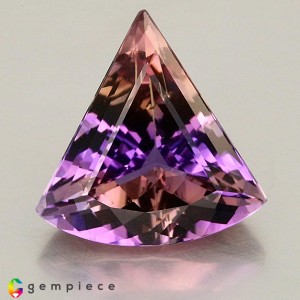
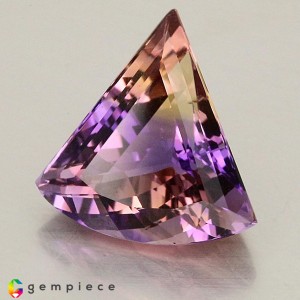
The emerald cut (rectangular step cut) is the most popular style for ametrine specifically because the clean rectangular face and step facets create a large, unobstructed viewing window that shows the color division most clearly. Fantasy cuts and free-form carvings are also popular, as skilled artists use the color zones creatively within three-dimensional forms. Oval, cushion, pear, and trillion cuts are used where the rough shape or size makes rectangular cutting impractical.
At GemPiece, all ametrine is cut in-house in our Bangkok workshop. Each piece of rough is assessed for color zone geometry before any cutting decision is made, and the orientation is chosen specifically to maximize the visibility and balance of both color zones in the finished stone.
Clarity and Size
Natural ametrine is generally a clean gemstone for its type. Most faceted Bolivian ametrine achieves eye-clean or near-eye-clean clarity, with inclusions, when present, typically consisting of tiger stripe patterns, liquid inclusions, internal fractures, and occasional hematite needle inclusions. As quartz, ametrine is classified as a Type II gemstone, meaning some inclusions are expected and normal.
One of ametrine's practical commercial advantages is that it occurs in large crystal sizes. Unlike many rare collector gems that are available only in small faceted pieces, fine Bolivian ametrine is available in sizes from under 1 carat through tens of carats, with the larger stones providing the most dramatic display of color zoning. The GIA notes that price per carat does not increase sharply with size in ametrine, making large fine stones excellent value for buyers who want a visually impressive centerpiece gemstone.
Natural Ametrine vs Synthetic and Treated Material
Buyers should be aware that synthetic ametrine and treated ametrine both exist in the market. Synthetic ametrine has been produced commercially by hydrothermal growth in Russia since 1994. It is chemically and structurally identical to natural ametrine but lacks geological origin and sells at a fraction of natural material pricing. Treated ametrine is produced by selectively irradiating or partially heating colorless or pale quartz to create zones of purple and yellow, mimicking the natural bicolor effect.
Laboratory testing using growth feature analysis, EDXRF chemical analysis, and infrared spectral analysis can distinguish natural from synthetic and treated material. For significant ametrine purchases, certification from a qualified gemological laboratory confirms natural origin. At GemPiece, all ametrine is natural Bolivian material with full origin documentation available.
Ametrine for Jewelry: Rings, Pendants, and Statement Pieces
With a hardness of 7 Mohs and no cleavage, natural ametrine is well suited for all jewelry types. Its practical durability is equivalent to amethyst and citrine individually, and it is appropriate for rings, pendants, earrings, and bracelets across all setting styles. For daily-wear rings, protective settings such as bezels or prong configurations that protect the stone's edges are recommended. For pendants and earrings, standard settings allow the stone's dramatic color display to be seen from all angles.
The emerald cut ametrine pendant is particularly popular in fine jewelry because it allows the full face of the stone to display both colors simultaneously. Large ametrine in statement cocktail rings and centerpiece pendants consistently attracts attention for its unusual color combination that no single-color gemstone can replicate.
Ametrine Price Per Carat and Value
Natural ametrine is genuinely affordable relative to its visual impact and single-source origin rarity. Commercial quality ametrine with decent color contrast and acceptable clarity: $5 to $20 per carat. Fine quality with vivid color in both zones, good clarity, and well-executed cut: $20 to $60 per carat. Premium Bolivian ametrine with exceptional color balance, near-loupe-clean clarity, and expert artisan cut: $60 to $150 per carat and above for the finest collector pieces. Custom-cut and carved ametrine with artistic execution commands additional premiums above these per-carat values, with artisanal value often exceeding raw material value for exceptional carved pieces.
Ametrine represents outstanding value for a genuinely single-source rare bicolor gemstone. No other natural gemstone consistently delivers both purple and golden tones in one stone at this price range. Browse our complete natural ametrine collection or explore our rare gemstone collection. See also our related quartz collections: amethyst and citrine.
Ametrine Properties
Chemical Formula: SiO₂, silicon dioxide (quartz variety)
Other Names: Bolivianite, trystine
Crystal System: Trigonal
Hardness: 7 Mohs
Refractive Index: 1.544 to 1.553
Birefringence: 0.009
Specific Gravity: 2.63 to 2.65
Cleavage: None; conchoidal fracture
Luster: Vitreous
Transparency: Transparent to translucent
Color Cause: Iron in two oxidation states (Fe³⁺ to Fe⁴⁺ = amethyst; Fe³⁺ aggregates = citrine)
Clarity Type: Type II; inclusions may be present
Treatment: Natural Bolivian material is untreated; synthetic and treated versions exist in the market
Primary Source: Anahi Mine, Sandoval Province, Santa Cruz, Bolivia (world's only commercial source)
Frequently Asked Questions
What is ametrine?
Ametrine is a naturally occurring bicolor quartz gemstone (SiO₂) that combines amethyst purple and citrine golden-yellow within a single crystal. The two colors are produced by iron in two different oxidation states within the same growing quartz crystal, separated by varying temperature and radiation conditions during formation. It is also called Bolivianite (Bolivia's national gemstone) and trystine. Virtually all commercial gem-quality ametrine comes from the Anahi Mine in eastern Bolivia.
Where does natural ametrine come from?
The world's only commercially significant source of gem-quality natural ametrine is the Anahi Mine in Sandoval Province, Santa Cruz department, eastern Bolivia. The mine is accessible only by small aircraft or by a combination of roads and river travel through remote jungle. Small ametrine occurrences exist in Brazil and parts of Africa but do not produce material of comparable quality or commercial volume to Bolivian material.
Why does ametrine show two colors?
Both colors are caused by iron (Fe) in the quartz crystal structure, but in two different oxidation states created by different conditions during crystal growth. In amethyst zones, Fe³⁺ is oxidized to Fe⁴⁺ by natural gamma radiation from potassium-40 decay in surrounding rocks, producing purple. In citrine zones, Fe³⁺ exists as aggregated clusters in a different chemical form produced by higher localized temperatures, producing golden yellow. The geological conditions that allow both states to exist within millimeters of each other in the same crystal are exceptionally rare, which is why natural ametrine comes from only one mine.
Is Bolivian ametrine the best?
Yes. Bolivian ametrine from the Anahi Mine is universally regarded as the finest in terms of color contrast, vividness, clarity, and consistency of bicolor zoning. Material from Brazil and Africa exists but does not consistently match Bolivian quality. GemPiece sources exclusively from Bolivian material with full origin documentation.
How do I buy natural ametrine online?
When buying natural ametrine online, look for: clear video showing both color zones under natural light, confirmation of Bolivian origin from the Anahi Mine, disclosure of any treatment, and individual stone photography rather than stock images. At GemPiece, every ametrine is individually filmed and photographed, all origin information is provided, and all material is confirmed natural. Certification from AIGS, GIT, GIA, or GRS is available on request.
Is ametrine suitable for everyday jewelry?
Yes. At 7 Mohs hardness with no cleavage, ametrine is practical for all jewelry applications including daily-wear rings. Protective settings are recommended for ring use. For pendants and earrings, standard settings are appropriate. It should be cleaned with mild soap and warm water, avoiding ultrasonic cleaners and harsh chemicals.
What is the best cut for ametrine?
The emerald cut (rectangular step cut) is the most popular and most effective cut for ametrine because the large rectangular face clearly displays both color zones simultaneously. Fantasy cuts and artisan carvings showcase the color zones creatively. Oval, cushion, and pear cuts are also used depending on rough shape. The critical factor in any cut is that the color zone boundary runs visibly across the face of the finished stone, allowing both colors to be seen simultaneously face-up.
Does synthetic ametrine exist?
Yes. Synthetic ametrine has been produced commercially in Russia since 1994 using hydrothermal growth from alkaline solutions. It is chemically and structurally identical to natural ametrine but lacks geological origin. Treated ametrine also exists, made by selectively irradiating or partially heating quartz. Laboratory testing using growth features, EDXRF analysis, and infrared spectroscopy can distinguish natural from synthetic. At GemPiece, all material is natural Bolivian ametrine.
Clear ✖