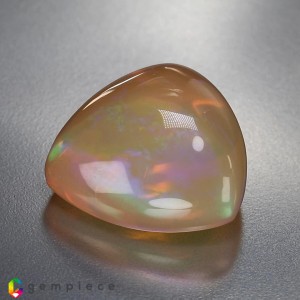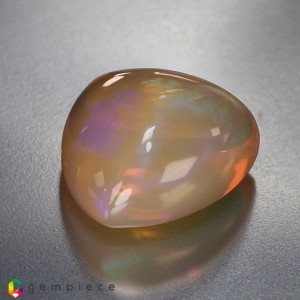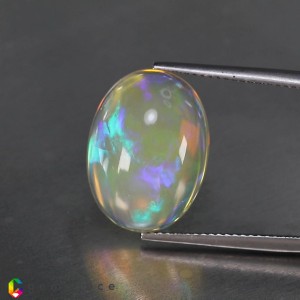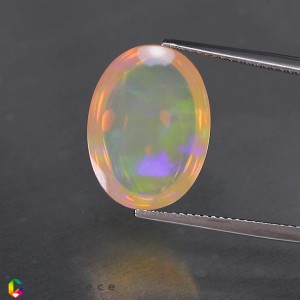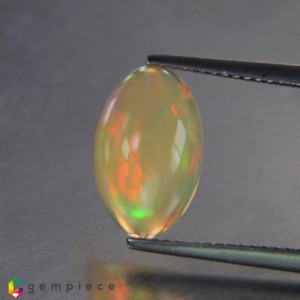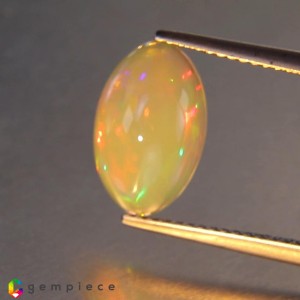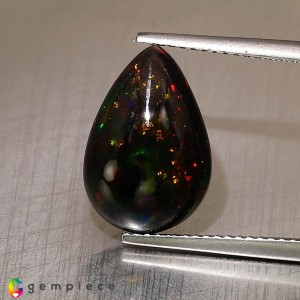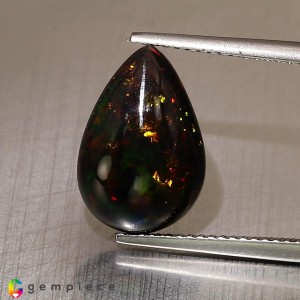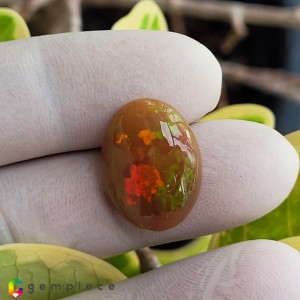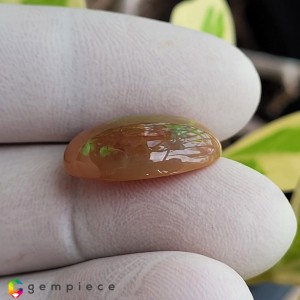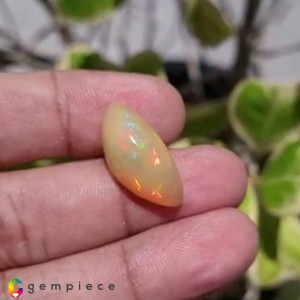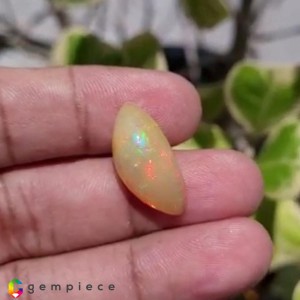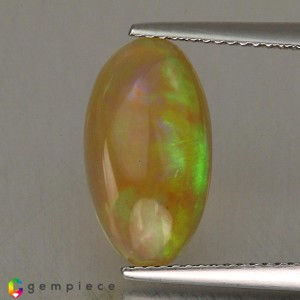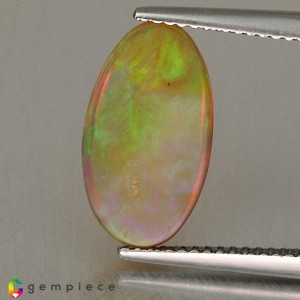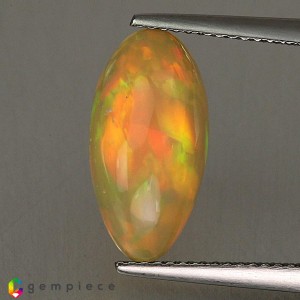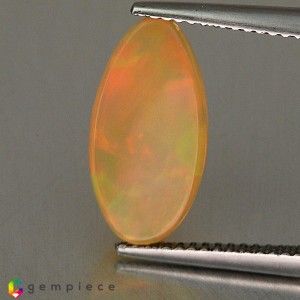
Buy High Quality Rainbow Opal Stones Online
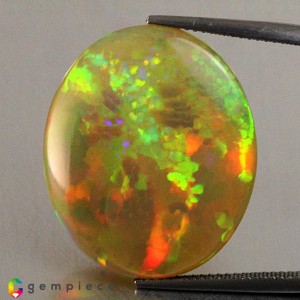
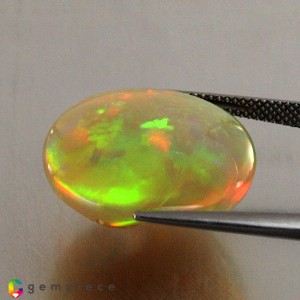
Rainbow opal is not a separate mineralogical species — it is precious opal at its absolute optical peak. While all precious opal displays play of color (the shifting spectral display produced by Bragg diffraction through ordered silica spheres), rainbow opal is specifically the term for precious opal that displays the full visible spectrum simultaneously or in rapid succession: red, orange, yellow, green, blue, indigo, and violet all visible within a single stone. To achieve this, the silica sphere structure within the opal must be extraordinarily uniform and regular — different regions of the stone containing spheres sized to produce each part of the spectrum, or a single region where the diffraction conditions cover the full wavelength range. This is rarer than it sounds, because achieving all spectral colors simultaneously requires the stone's silica sphere arrangement to be not merely good but exceptional.
Rainbow opal can occur in any opal type — black rainbow opal from Lightning Ridge, crystal rainbow opal from Coober Pedy and Ethiopia, boulder rainbow opal from Queensland — with the designation always referring to the completeness of the spectral color display rather than to the base opal type. Black rainbow opal, where the full-spectrum display appears against a dark N1-N4 body tone, is the most commercially prized combination. The dark background amplifies the contrast of every color in the spectrum simultaneously, producing a visual experience that gemologists and collectors consistently describe as unmatched in the natural mineral world.
What Makes a True Rainbow Opal
The term "rainbow opal" is used loosely in the trade but has a specific meaning in serious gemological and collector circles. A true rainbow opal must display at minimum five of the seven visible spectral colors (red, orange, yellow, green, blue, indigo, violet) visible within a single stone under appropriate lighting. The highest quality rainbow opals display all seven colors clearly and simultaneously, with each color vivid and well-saturated rather than muted or pale.
Red and violet are the rarest colors in opal because they require the largest (red) and smallest (violet) silica sphere diameters to produce — the extremes of the sphere size range that are hardest to achieve in regular, high-purity packing. An opal showing red in its rainbow display already represents exceptional silica sphere formation. An opal showing the full spectrum from red through violet in vivid saturation represents one of the finest natural optical phenomena observable in any gemstone.
For comprehensive gemological information, read our Rainbow Opal Gemopedia Guide. Browse related opal varieties including boulder opal, water opal, and opal cats eye, with guides at Boulder Opal Guide, Water Opal Guide, and Opal Cats Eye Guide. See the complete Opal Gemstone Guide and browse our full natural opal collection.
Rainbow Opal Sources
Rainbow opal can occur from any opal-producing region, but the finest and most stable examples come from Australia. Lightning Ridge in New South Wales produces black rainbow opal — the most valuable type — where full-spectrum color display appears against the characteristic dark N1-N4 body tone of Lightning Ridge material. Coober Pedy in South Australia produces crystal and white rainbow opals with vivid color display against lighter backgrounds. Queensland's boulder opal fields produce boulder rainbow opals where the full spectrum appears against the natural dark ironstone backing.
Ethiopia's Welo Province produces hydrophane crystal opals that frequently display full- spectrum rainbow color in exceptional vividness. Ethiopian rainbow opals have attracted significant collector interest for their transparency and color intensity, though their hydrophane character (water absorption and associated stability considerations) places them in a different category from Australian material for long-term jewelry use. Australia and Ethiopia together represent the dominant commercial sources for rainbow opal with strong full-spectrum display. Mexico and Brazil produce rainbow opal in limited quantities.
Stability and Natural vs Treated Material
Stability is a critical factor in evaluating rainbow opal, particularly Ethiopian material. Australian solid rainbow opal — whether black, crystal, or boulder — is non-hydrophane, does not absorb water, and is among the most stable opal types available. Australian rainbow opal of good quality will maintain its color display indefinitely under normal conditions.
Some darker rainbow opals in the market, particularly some Ethiopian material, undergo smoke treatment to darken the body tone and create greater contrast for the color display — artificially simulating the dark body tone that Lightning Ridge black opal achieves naturally. These treated stones are legitimate commercial products when properly disclosed but should not be represented as natural dark-body-tone opals. Natural rainbow opals, especially those from Australian sources, are entirely untreated. At GemPiece, treatment status is fully and accurately disclosed on every stone.
Properties
Hardness: 5.5 to 6.5 Mohs
Refractive Index: 1.37 to 1.47
Specific Gravity: 1.98 to 2.25
Play of Color: Full spectrum (red through violet) — by definition
Cut: Cabochon for black and boulder rainbow opal; cabochon or faceted for
crystal rainbow opal from Australia or Ethiopia
Treatment: None for solid Australian natural material
Price and Value
Rainbow opal is priced according to the quality, completeness, and vividness of its color spectrum, combined with body tone, clarity, size, and origin. Standard Ethiopian rainbow opal with good full-spectrum display and crystal body tone ranges from $50 to $500 per carat. High-quality Australian white or crystal rainbow opal ranges from $100 to $1,500 per carat. Fine Australian black rainbow opal — the most prized type — ranges from $500 to $10,000+ per carat depending on color quality, pattern, and size. Exceptional specimens with brilliant full-spectrum display on a dark body tone are at the pinnacle of opal valuation. Browse our complete rainbow opal collection or explore the full natural opal gemstone range.
Frequently Asked Questions
What is rainbow opal?
Rainbow opal is precious opal displaying the full visible spectrum — red, orange, yellow, green, blue, indigo, and violet — simultaneously or in rapid succession within a single stone. It is not a separate opal type but describes the quality of color display in precious opal at its most complete. It can occur in black, crystal, white, or boulder opal from any origin, with Australian black rainbow opal from Lightning Ridge being the most commercially prized.
How is rainbow opal different from regular precious opal?
All precious opal displays play of color, but not all show the complete spectrum. Rainbow opal specifically shows at least five — ideally all seven — visible spectral colors within one stone. Stones showing only blue and green are precious opal but not rainbow opal. Achieving the full red-through-violet spectrum requires exceptional uniformity and regularity in the silica sphere arrangement, making true rainbow opal rarer than standard precious opal.
Why is red color rare in rainbow opal?
Red requires the largest silica sphere diameter to produce (approximately 300nm or more), which is the hardest sphere size to maintain in perfect, regular packing over a significant volume of the stone. A stone showing vivid red play of color already represents exceptional silica formation quality. Full-spectrum rainbow opal that includes red is therefore rarer and more valuable than rainbow opal missing the red component.
Is rainbow opal stable?
Australian solid rainbow opal is highly stable. Ethiopian rainbow opal is hydrophane (absorbs water) and requires more careful handling to avoid drying-related crazing. For long-term jewelry use, Australian material is preferred for its stability. High-quality well-settled Ethiopian specimens are also durable when properly handled.
Can rainbow opal be treated?
Natural Australian rainbow opal is entirely untreated. Some Ethiopian rainbow opals undergo smoke treatment to darken body tone — a legitimate commercial process when disclosed, but these should not be represented as naturally dark-body-tone stones. Always verify treatment status before purchase.
Clear ✖