Menu
Your Cart

Opal Gemstones

Natural opal gemstone collection

Buy Natural Opal Gemstones Online

Opal is unlike any other gemstone on earth. No mineral, no crystal, no gem of any species duplicates what a fine opal does when light enters its structure — a shifting, living display of spectral color that moves as you turn the stone, flashing red, green, blue, orange, violet, and gold simultaneously from within a single gem. Ancient Romans called it the queen of gems. Pliny the Elder wrote that it combined the red of ruby, the green of emerald, the yellow of topaz, the blue of sapphire, and the purple of amethyst. Writers have compared it to volcanoes, galaxies, and fireworks. All of these descriptions are accurate, and none of them is complete. An opal has to be seen to be understood.

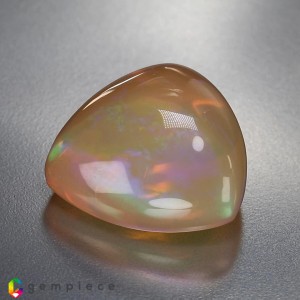
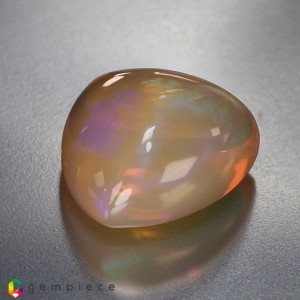
What makes opal's visual effect so extraordinary is its physical structure. Opal is not a crystal — it is a mineraloid, an amorphous hydrated silica (SiO₂·nH₂O) composed of submicroscopic silica spheres arranged in a three-dimensional grid. Where those spheres are uniform in size and perfectly ordered, they function as a natural diffraction grating: light waves entering the stone are diffracted, separated into spectral colors, and returned to the eye as the flashing rainbow display called play of color. The color produced depends on the diameter of the silica spheres — smaller spheres produce violet and blue; larger spheres produce red and orange. This Bragg diffraction phenomenon, operating at the nanometer scale, is the same physics principle used in modern photonic crystals. Nature discovered it first, in opal.


Opal Varieties at GemPiece

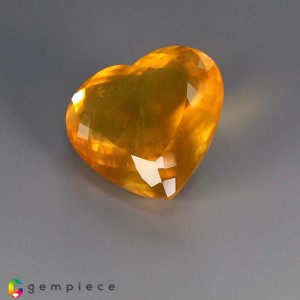
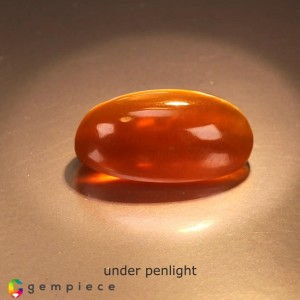
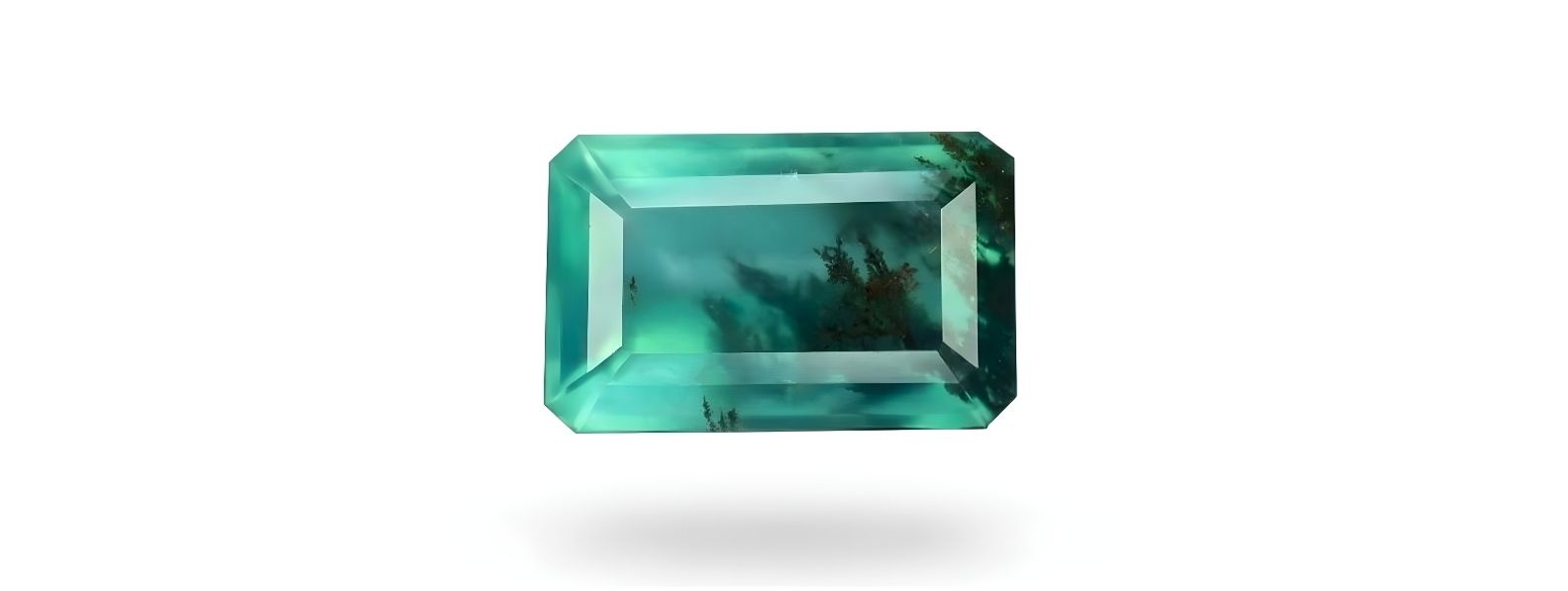
The opal family divides into two fundamental categories: precious opal (displaying play of color) and common opal (no play of color, valued for body color and other optical effects). Within these categories, a rich diversity of varieties offers something for every collector, designer, and buyer. At GemPiece we carry: boulder opal, fire opal, opal cats eye, Peruvian blue opal, rainbow opal, water opal, and yellow opal. Each variety has its own character, origin, and collector following. Boulder opal from Queensland, Australia is the second most valuable opal type, where precious opal grows directly within ironstone host rock. Fire opal from Mexico's Querétaro region is the only opal consistently faceted like a traditional gemstone, displaying vivid orange-to-red color in transparent form. Opal cats eye displays the rare chatoyancy phenomenon alongside opal's inherent beauty. Peruvian blue opal from the Andes is the national stone of Peru, a calming common opal with no peer for serene blue-green color. Rainbow opal and water opal showcase the full spectral range that makes opal the most optically complex natural gemstone. Yellow opal brings warm golden tones to the family.

For in-depth gemological guides on each variety, visit our Gemopedia: Boulder Opal Guide, Fire Opal Guide, Opal Cats Eye Guide, Peruvian Blue Opal Guide, Rainbow Opal Guide, Water Opal Guide, and Yellow Opal Guide.


Opal Properties and Gemology

Opal's unique structural and physical properties distinguish it from every other gemstone species. Understanding these properties is essential for evaluating, caring for, and appreciating opal correctly.

Chemical Composition: SiO₂·nH₂O — hydrated amorphous silica. The water content (n·H₂O) varies from approximately 3% to 21% by weight depending on the variety and origin, with most gem-quality opals containing 6% to 10% water. This water is structurally integrated into the silica framework and is what distinguishes opal from anhydrous quartz.
Hardness: 5.5 to 6.5 Mohs — significantly softer than most gemstones
Refractive Index: 1.37 to 1.47 (averages approximately 1.45)
Specific Gravity: 1.98 to 2.25
Crystal System: None — amorphous mineraloid
Cleavage: None, but exhibits conchoidal fracture
Luster: Vitreous to resinous
Transparency: Opaque to transparent depending on variety


Precious vs Common Opal

The most important distinction in opal gemology is between precious opal and common opal. Precious opal displays play of color — the shifting spectral display produced by Bragg diffraction through ordered silica spheres. Common opal (also called potch) lacks this ordered sphere structure and therefore shows no play of color, instead displaying a single body color that may itself be beautiful, as in Peruvian blue opal, yellow opal, and pink opal.

Within precious opal, body tone is the second key classification. Black opal from Lightning Ridge, New South Wales — the most valuable opal type — has a dark body tone (N1 to N4 on the gemological scale) against which play of color flashes brilliantly. White opal from Coober Pedy has a light milky body tone (N8 to N9). Crystal opal is colorless and transparent to semi-transparent, with play of color visible through the body. Boulder opal has precious opal fused to its natural ironstone host, giving it an effective dark backing.


Opal as October Birthstone

Opal is the traditional birthstone for October and has held this designation since the modern birthstone list was standardized in the early 20th century. The association between opal and October is ancient — the stone's shifting, multi-colored beauty was seen as capturing the full spectrum of the autumn season's colors. Queen Victoria was a passionate collector of opal jewelry and regularly gifted opal pieces to her daughters and friends, cementing the stone's association with royal favor in the 19th century.

The persistent superstition that opal brings bad luck to those not born in October traces directly to a single source: Sir Walter Scott's 1829 novel Anne of Geierstein, in which an opal plays a dramatic role in a character's misfortune. This fictional narrative, not any ancient belief or empirical observation, is responsible for the superstition. Throughout the vast majority of human history, opal has been considered the luckiest and most magical of all gems — Bedouins believed it fell from the heavens during lightning storms; ancient Greeks believed it granted the gift of prophecy; Romans called it the symbol of love and hope. The bad luck superstition is a 19th century literary invention.


Opal Value and Price Factors

Opal pricing varies more widely than almost any other gemstone, from a few dollars per carat for common opal to tens of thousands for exceptional black opal. The primary value factors are body tone (darker is generally more valuable for precious opal), play of color intensity and coverage, color range within the play of color (red being the rarest and most valuable), pattern (harlequin being the most prized), transparency, clarity, size, and origin. Treatment status is also significant — untreated solid opal commands premiums over doublets and triplets.

Australia produces approximately 95% of the world's precious opal, with Lightning Ridge producing the finest black opal, Coober Pedy the majority of white opal, and Queensland the world's entire supply of boulder opal. Ethiopia's Welo Province, where opal was discovered in 2008, has transformed the market with large, vivid crystal opals. Mexico remains the primary source of fire opal.


Opal Treatments and Care

Natural solid opal is entirely untreated in its finest form. However, opal is commonly enhanced or assembled. Doublets consist of a thin slice of precious opal cemented to a dark backing material to simulate black opal. Triplets add a transparent dome (usually quartz or glass) on top of the doublet for protection. Both are legitimate commercial products when disclosed but should not be represented as solid natural opal. Opal may also be impregnated with oil, wax, or plastic to improve appearance — all treatments that must be disclosed.

Opal care requires more attention than most gemstones. The water content in opal makes it sensitive to sudden temperature changes, which can cause crazing — the development of internal micro-cracks that permanently damage the stone. Avoid ultrasonic cleaners, steam cleaning, and prolonged exposure to strong sunlight or heat sources. Clean with warm water and a soft cloth only. Store opal separately from harder stones. Some collectors store high- quality opals with a small damp cotton ball in the storage container to maintain moisture, though this is not universally necessary for Australian solid opal.


Why Buy Natural Opal

Natural solid opal is one of the most visually unique materials on earth. No two opals are identical — the silica sphere arrangement that produces play of color is random within the constraints of the stone's formation environment, making every opal a unique optical fingerprint. For collectors who value natural uniqueness, opal offers something that no faceted gem species can: an entirely individual visual experience in every single stone.

At GemPiece, every opal is individually photographed with macro video under multiple lighting conditions so the play of color, body tone, and pattern can be fully evaluated before purchase. We source from trusted suppliers in Australia, Ethiopia, Mexico, and Peru with accurate origin representation. Browse our complete natural opal gemstone collection or read our comprehensive Opal Gemstone Guide.


Explore Opal Varieties


Frequently Asked Questions

What is opal?

Opal is a hydrated amorphous silica mineraloid (SiO₂·nH₂O) renowned for its play of color — a shifting spectral display produced by the diffraction of light through uniformly sized and ordered silica nanospheres within the stone's structure. It is the October birthstone and one of the most visually unique gemstones on earth. Australia produces approximately 95% of the world's precious opal.

What is play of color in opal?

Play of color is the shifting rainbow display seen in precious opal, caused by Bragg diffraction of light through silica spheres 150 to 400 nanometers in diameter arranged in a regular three-dimensional grid. The colors produced depend on sphere size: smaller spheres produce violet and blue; larger spheres produce red and orange. The effect changes as the viewing angle changes, making opal's display dynamic and three-dimensional.

What is the most valuable type of opal?

Black opal from Lightning Ridge, New South Wales, Australia is the most valuable opal type. Its dark body tone creates maximum contrast against the play of color, making the spectral flashes appear more vivid and brilliant than in lighter-toned white or crystal opal. Boulder opal from Queensland is the second most valuable variety. Ethiopian crystal opal ranks highly for its transparency and vivid color display.

Is opal hard enough for jewelry?

Opal at 5.5 to 6.5 Mohs is softer than many gemstones and requires mindful setting choices. Protective settings such as bezels, halos, or recessed prong configurations are strongly recommended for rings. Earrings, pendants, and brooches are ideal applications where impact risk is lower. Boulder opal, with its natural ironstone backing, is more durable than thin solid opal slabs.

What is the difference between doublet, triplet, and solid opal?

Solid opal consists entirely of natural opal, precious or common. A doublet is a thin slice of precious opal cemented to a dark backing to simulate the appearance of black opal. A triplet adds a transparent protective dome on top of the doublet. Doublets and triplets are legitimate commercial products at lower price points but must be disclosed — they should not be sold as solid natural opal.

Does opal really bring bad luck?

No. The bad luck superstition traces directly to Sir Walter Scott's 1829 novel Anne of Geierstein — fictional literature, not ancient belief. Throughout most of human history, opal has been considered the luckiest of all gems, associated with love, hope, prophecy, and divine favor by ancient Roman, Greek, Arabic, and Bedouin cultures.

How should I care for opal jewelry?

Clean with warm water and a soft cloth only. Avoid ultrasonic cleaners, steam cleaning, harsh chemicals, and sudden temperature changes. Store separately from harder stones. Protect from prolonged exposure to strong sunlight or heat. Never use abrasive cloths that could scratch the relatively soft surface.


Clear

Natural Opal Stone Collection

Total Products : 171
Peru Opal  8.10cts - 17x12mm Peru Opal  8.10cts - 17x12mm
Rare SOLD - Out Of Stock
SKU: GEM22031898
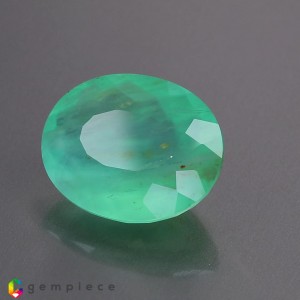
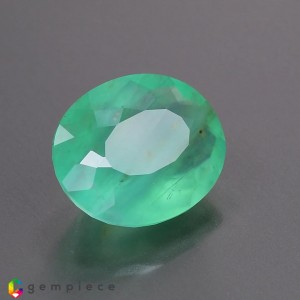
This Peruvian Blue Opal reflects a Sea Blue Green color with even distribution and visual richness. Durability and stable color make it reliable for frequent use. Widely accepted in global jewelry trade, this gemstone remains consistently relevant. This natural Peruvian Blue Opal weighing 8.10 carat..
$142.00
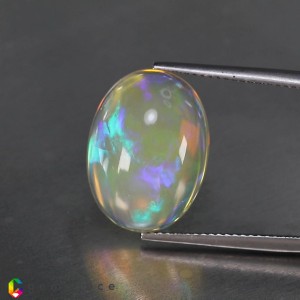
SKU: GEM22031894
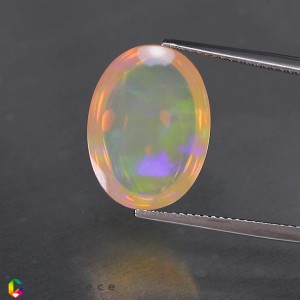
Characterized by a Rainbow hue, this Rainbow Opal displays natural brilliance and depth. A versatile gemstone with consistent color and clarity. Used globally in jewelry, reflecting its broad demand. This Rainbow Opal weighs 7.58 carats and is cut in Oval Cabochon, displaying a Rainbow tone with cla..
$175.00
peru opal  25.03cts - 31x21mm peru opal  25.03cts - 31x21mm
Rare
SKU: GEM22021833
Color is what defines the finest Peruvian Blue Opal, and this gemstone possesses the vivid Paraiba Blue tone that collectors actively seek. The combination of size and color gives the stone an immediate presence, allowing it to stand apart from the lighter and more commonly encountered material ofte..
$1,099.00
peru opal  18.82cts - 19x21mm peru opal  18.82cts - 19x21mm
Rare
SKU: GEM22021811
With a Paraiba Blue hue, this Peruvian Blue Opal shows an even color spread with a natural appearance. Its blend of color and accessible pricing makes it a versatile choice for everyday wear. Known for its consistent demand, this gemstone remains a preferred choice in international trade. A Heart cu..
$417.00
SKU: GEM22021799
This Fire Opal offers a Fire Orange tone with natural brilliance, suited for regular wear. A balance of durability and visual quality makes it suitable for daily wear. Valued across different countries, it holds strong presence in gemstone trade. With 30.63 carats and a Oval Cabochon cut, this Fire ..
$285.00
peru opal  6.82cts - 23x10mm peru opal  6.82cts - 23x10mm
Rare
SKU: GEM22021791
With a Paraiba Blue hue, this Peruvian Blue Opal shows an even color spread with a natural appearance. Its consistent color supports everyday wear. Recognized across major gemstone markets, it maintains steady demand among global buyers. A Pear cut Peruvian Blue Opal weighing 6.82 carats displays a ..
$274.00
SKU: GEM22021781
This Fire Opal reveals a Fire Orange hue with a soft and pleasing visual effect. A dependable gemstone option for those seeking accessible quality. Recognized within the gemstone industry, it maintains a steady presence among buyers. Weighing 0.97 carats, this Fire Opal is cut in Oval, displaying a ..
$21.00
peru opal  10.43cts - 16x15mm peru opal  10.43cts - 16x15mm
Rare
SKU: GEM22011766
With a Paraiba Blue hue, this Peruvian Blue Opal shows a refined finish and natural depth. Its balanced color and clarity support regular wear. Appreciated globally for its natural characteristics and visual appeal. A Cushion cut Peruvian Blue Opal weighing 10.43 carats displays a Paraiba Blue tone ..
$439.00
SKU: GEM22011740
Presenting a Rainbow hue, this Rainbow Opal reflects a rich and well-defined appearance. Reasonable value combined with natural beauty supports regular use. A gemstone with strong international appeal, suitable for various jewelry uses. Cut in Oval Cabochon, this Rainbow Opal weighing 2.52 carats di..
$32.00
SKU: GEM22011738
This Fire Opal reveals a Tangy Orange color with a lively and eye-catching presence. Well suited for frequent use, combining durability with natural characteristics. Recognized globally for its quality and presence in established gemstone markets. With 2.31 carats and a Oval cut, this Fire Opal pres..
$109.00
peru opal  22.44cts - 21x16mm peru opal  22.44cts - 21x16mm
Rare
SKU: GEM22011734
This Peruvian Blue Opal presents a Paraiba Blue Green color with even color distribution and depth. A reliable gemstone choice for regular use. Appreciated worldwide by collectors and jewelry designers. This natural Peruvian Blue Opal weighing 22.44 carats is cut in Oval Cabochon, showing a Paraiba ..
$384.00
SKU: GEM21121659
This Rainbow Opal gemstone shows a Rainbow color well suited for fine jewelry. Natural clarity and color contribute to its overall attractiveness. A gemstone with strong international presence and wide acceptance. Cut in Pear Cabochon, this Rainbow Opal weighing 3.32 carats displays a Rainbow tone w..
$87.00
Showing 121 to 132 of 171 (15 Pages)
Kindly sign up to get complete benefit of the site with special deals and promotions on most of our products.