Buy Natural Moonstone – Adularescence, Star and Cat's Eye
Moonstone is one of the most evocative and distinctive gemstones in the natural world — a feldspar mineral whose most prized specimens display a soft, glowing, billowing light that appears to float just beneath the surface of the stone as it is moved. This optical phenomenon — called adularescence — is unique to moonstone among all gemstones and produces an effect that has captivated jewelers, collectors, and wearers across cultures for thousands of years. From the blue-flash rainbow moonstones of Sri Lanka to the cat's eye varieties of India and the star moonstones of exceptional rarity, moonstone encompasses a family of related optical phenomena within the same mineral species that offers something remarkable at every level of the collector market.
Read our complete moonstone gemstone guide (view collection) covering adularescence, the feldspar chemistry, Sri Lanka and India origins, and the full range of moonstone varieties — or explore our natural moonstone collection including star moonstone (view collection) and moonstone cat's eye (view collection).
Adularescence — The Moonstone Effect
Adularescence is the optical phenomenon that defines the moonstone experience — a soft, glowing, floating light that appears to move within the stone as the viewing angle changes, reminiscent of moonlight on water or light visible just below the surface of milk glass. This effect is produced by the interference of light between alternating layers of two feldspar minerals — orthoclase and albite — that form during the cooling of the original feldspar crystal. As the crystal cools below a certain temperature, the originally homogeneous feldspar separates into alternating layers of these two compositionally distinct feldspars, creating a lamellar microstructure with slightly different refractive indices. When light enters the stone, it is scattered and diffracted between these internal layers, producing the characteristic glowing adularescence rather than direct reflection or transmission.
The quality of adularescence depends on the thickness, regularity, and number of the lamellar layers. Very thin, regular layers produce the finest blue adularescence — the most desirable and valuable expression of the phenomenon. Thicker layers produce white or silver adularescence. The color of the adularescence ranges from colorless or white through silver and pale blue to vivid blue — fine blue adularescence in a colorless or pale body color from Sri Lanka represents the benchmark quality for the species.
Color Varieties
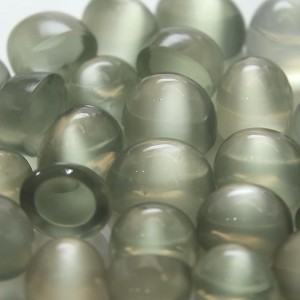
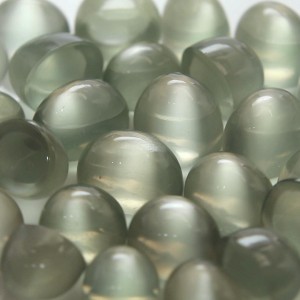
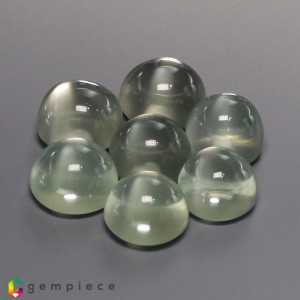
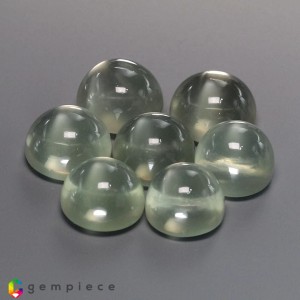
Moonstone occurs in a range of body colors, each with its own market and collector significance. Colorless to white moonstone with strong blue adularescence — the classic Sri Lanka variety — is the most commercially prized. Peach and orange moonstone from India offers warm, attractive tones with white to silver adularescence. Grey and black moonstone — actually a labradorite-moonstone hybrid from India — provides dramatic contrast between dark body color and bright adularescence. Green moonstone from India and Tanzania is less common and appreciated for its unusual combination of color and phenomenon. Rainbow moonstone — technically a transparent labradorite with multicolored adularescence — is widely sold as moonstone and is visually spectacular, though mineralogically distinct from orthoclase moonstone.
Star Moonstone
Star moonstone displays asterism — a star-shaped pattern of reflected light across the cabochon surface produced by intersecting sets of parallel fibrous inclusions or aligned lamellar structures within the crystal. Four-rayed stars are most common in moonstone; six-rayed stars are rarer and more valuable. Star moonstone combines two optical phenomena in one stone — adularescence and asterism — making it among the most optically complex of all gemstones. Fine star moonstones with a sharp, well-centered star and strong adularescence background are exceptional collector pieces.
Explore our star moonstone collection (view collection) for certified specimens with documented star quality.
Moonstone Cat's Eye
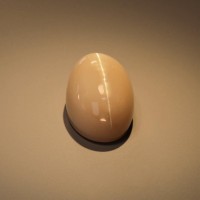
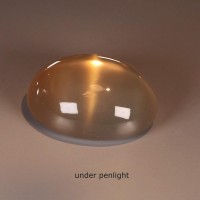
Moonstone cat's eye displays chatoyancy — a single bright band of reflected light across the cabochon surface, produced by a single set of parallel aligned inclusions or structural features within the crystal. The cat's eye effect in moonstone is less common than adularescence alone and represents a specialized collector variety. Fine moonstone cat's eye combines the glow of adularescence with the precision of a well-defined cat's eye band.
Explore our moonstone cat's eye collection (view collection).
Origins and Sources
Sri Lanka is the world's most important source of the finest moonstone — producing colorless to white material with vivid blue adularescence that represents the global benchmark for quality. The Meetiyagoda area of southern Sri Lanka has been producing fine moonstone for centuries. India is a significant source of peach, orange, grey, and black moonstone varieties. Myanmar produces fine white moonstone with blue adularescence of comparable quality to Sri Lankan material. Madagascar, Tanzania, Brazil, and the United States (particularly Oregon and New Mexico) produce moonstone in various qualities. The finest Sri Lankan blue adularescence moonstone has become increasingly scarce as quality deposits are depleted.
Hardness and Durability
Moonstone measures 6 to 6.5 on the Mohs hardness scale with perfect cleavage in two directions — a durability profile that requires care in jewelry use. Moonstone is best suited for pendants, earrings, brooches, and ring settings that protect the stone from direct impact. Everyday ring use with open prong settings is not recommended. Bezel settings provide the most protection for ring applications. Handle with care to avoid contact with harder surfaces and gemstones.
Value and Buying Considerations
The strength and color of adularescence is the primary value driver for all moonstone varieties. Fine blue adularescence in a colorless or near-colorless body from Sri Lanka commands the highest premiums — particularly as supply of top-quality material has diminished. Star moonstones with sharp, well-centered stars command significant premiums over plain adularescence material. Transparency and body color clarity are secondary factors. Moonstone is generally not treated, though some material may be clarity enhanced. GemPiece sources moonstone from Sri Lanka, India, and Myanmar with full documentation and treatment disclosure.
Explore Related Feldspar and Optical Phenomenon Gemstones
Collectors of moonstone may also appreciate
andesine (view collection),
scapolite cat's eye (view collection), and
danburite cat's eye (view collection).
Frequently Asked Questions
What is moonstone?
Moonstone is a feldspar mineral — primarily orthoclase with alternating layers of albite — that displays adularescence: a soft, glowing, floating light that moves within the stone as the viewing angle changes. It is one of the June birthstones and one of the most distinctive optical phenomenon gemstones in the world.
What causes the glow in moonstone?
The glow is called adularescence — produced by light scattering between alternating lamellar layers of orthoclase and albite feldspar within the crystal. The layers form during cooling and create a microstructure that diffracts light into the characteristic floating glow. Very thin, regular layers produce the finest blue adularescence.
What is the best moonstone color?
The most valuable moonstone combines a colorless or near-colorless body with vivid blue adularescence — produced by very thin, regular lamellar layers. This variety from Sri Lanka represents the benchmark quality for the species.
What is star moonstone?
Star moonstone displays asterism — a four or six-rayed star of reflected light across the cabochon surface — in addition to adularescence. It combines two optical phenomena in one stone and represents a premium collector variety.
Is moonstone the June birthstone?
Yes. Moonstone is one of three June birthstones alongside pearl and alexandrite.
Is moonstone durable for jewelry?
Moonstone has hardness 6 to 6.5 with perfect cleavage in two directions — requiring care in jewelry use. Best suited for pendants, earrings, and bezel-set rings rather than daily-wear open prong settings.
What is rainbow moonstone?
Rainbow moonstone is technically a transparent labradorite displaying multicolored adularescence across the visible spectrum — blues, greens, and oranges. It is widely sold as moonstone and is visually spectacular, though mineralogically it is labradorite rather than orthoclase moonstone.