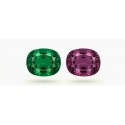
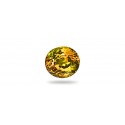
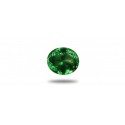
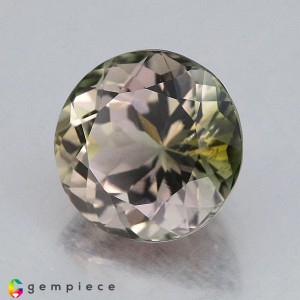
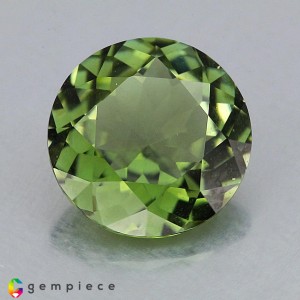
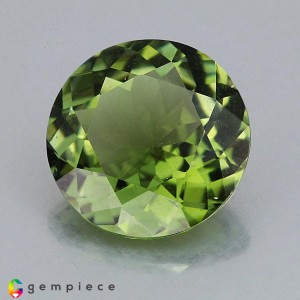
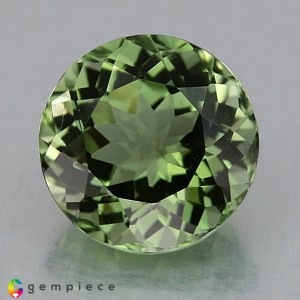
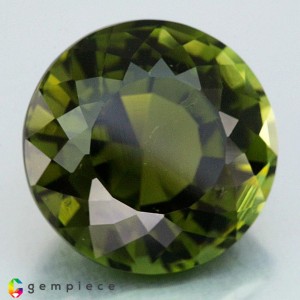
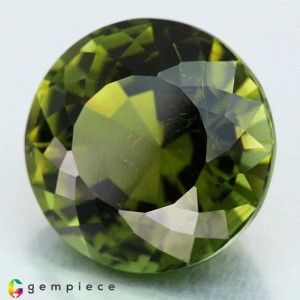
Buy Natural Green Tourmaline Gemstones – Certified Verdelite Collection
Green tourmaline, known in gemological trade as verdelite, is one of the most versatile and widely appreciated gemstones in the green color family. It spans a wider range of green shades than any other commercially significant green gemstone, from the palest mint and baby green through bright meadow green, rich leaf green, vivid blue-green, and deep forest tones. This breadth of color is not a limitation but a strength: it means that buyers seeking any particular quality of green, from delicate and subtle to bold and saturated, will find it within the green tourmaline family.
Green tourmaline is iron-colored, which distinguishes it chemically and visually from chrome tourmaline (colored by chromium) and from Paraiba tourmaline (colored by copper). Iron produces a wide and naturally variable green that accounts for much of the color diversity within the verdelite category. When stones carry higher chromium or vanadium concentrations alongside iron, the color shifts toward more saturated and intense green and the material is classified as chrome tourmaline. When copper is present, the stone enters Paraiba territory. Understanding this chemical boundary helps buyers know precisely what they are evaluating when they look at a green tourmaline.
Green Tourmaline Color Range and Quality
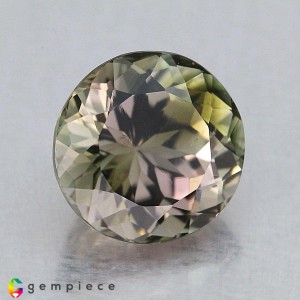
The most important quality criterion for green tourmaline is how well the color performs in face-up position under natural light. The stone should display a clean, open, bright green that reads attractively without appearing dark, closed, or muddy. Stones that are overly saturated to the point of looking almost black in normal lighting lose significant visual appeal and value regardless of how vivid they appear in a lightbox. Equally, stones that are too pale and lack presence fail to satisfy buyers seeking a meaningful green presence in jewelry.
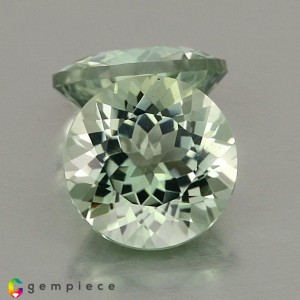
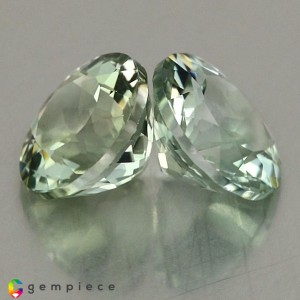
The most commercially desirable green tourmaline displays a vivid, open color that maintains brightness across different lighting conditions. Slightly blue-green shades, sometimes described as teal or blue-green, are particularly prized because they carry more visual interest than purely neutral greens. Mint green, light and fresh, appeals to a different but equally enthusiastic market segment, particularly among contemporary jewelry designers seeking a more subtle aesthetic.
Green tourmaline is a Type I gemstone in the GIA clarity classification, meaning it is usually eye-clean in the trade. This clean clarity is a practical advantage that allows green tourmaline to be cut in a wide variety of styles and sizes without the clarity concerns that affect rubellite or watermelon tourmaline.
For full gemological detail, read our Green Tourmaline Gemopedia Guide. Browse related varieties including chrome tourmaline, Paraiba tourmaline, and blue tourmaline, with guides at Chrome Tourmaline Guide, Paraiba Tourmaline Guide, and Blue Tourmaline Guide. See the complete Tourmaline Gemstone Guide and browse our full natural tourmaline collection.
Sources and Origin Characteristics
GemPiece sources green tourmaline rough directly from Africa and Afghanistan, the two most important current regions for commercial green tourmaline production. Each origin produces material with distinct character, and understanding origin helps buyers make better decisions.
African sources, including Mozambique, Nigeria, Congo, and Madagascar, produce green tourmaline across a wide range of sizes and qualities. Nigerian green tourmalines are known for strong and vivid green tones that make them highly desirable in the market. Mozambique produces material in larger sizes with better clarity, making it a key source for stones that need to perform in fine jewelry settings. Congo material is also available but can be more challenging during cutting due to its internal structure. Madagascar contributes additional material with varied color characteristics.
Afghanistan is celebrated for its mint green tourmalines, a light, clean, fresh green that is entirely distinct from the deeper verdelite of African sources. The crystal clarity typical of Afghan material is excellent, and the pale, elegant tones appeal strongly to buyers who prefer subtle rather than saturated color. Pakistan produces similarly light green material from pegmatites in the northern mountain regions, offering comparable characteristics to Afghan material at accessible prices.
Brazil contributes well-balanced material with good overall color and clarity from Minas Gerais and other states. Brazilian green tourmaline has a long commercial history and is found across the full range from light mint through deep forest green.
Green Tourmaline vs Chrome Tourmaline
The distinction between green tourmaline (verdelite) and chrome tourmaline is important for buyers evaluating green gemstones. Standard green tourmaline is colored by iron, while chrome tourmaline contains chromium or vanadium as the dominant chromophore. Chrome tourmaline typically achieves more concentrated, more intensely saturated green color at the premium end. Under a Chelsea filter, chrome tourmaline shows a red reaction while iron-colored green tourmaline shows green. This is a reliable and quick field test for distinguishing the two varieties.
Green tourmalines that contain trace chromium alongside iron may show a weak Chelsea filter response and approach chrome tourmaline territory in color quality. These transitional stones represent some of the finest value in the green tourmaline market because they achieve near-chrome color at verdelite pricing.
Heating and Color Enhancement
Some green tourmalines are heated under controlled conditions to improve color and brightness. Stones that appear slightly dark or muted can respond to heating by showing a more open, visually attractive tone. This process is stable, permanent, and widely accepted in the gemstone industry.
At GemPiece, the decision to heat or not to heat each stone is made individually based on the rough material. Some stones are cut directly without any heating because their natural color is already optimal. Others undergo controlled heating to open the color before cutting. This evaluation is based on experience with the specific material from each origin. All treatment decisions are fully disclosed.
GemPiece Cutting Expertise
Green tourmaline's strong pleochroism means that cutting orientation significantly affects the face-up color of the finished stone. Improperly oriented green tourmaline can appear darker, less vivid, or uneven in color across the face. At GemPiece, all green tourmaline is cut in-house in our Bangkok workshop, where our cutters evaluate each piece individually for optimal orientation before the cutting process begins. This hands-on control over proportioning, orientation, and finishing ensures that every stone achieves its best possible visual result.
Green Tourmaline Properties
Species: Elbaite (most commercial green tourmaline) or dravite (some African material)
Primary Chromophore: Iron (Fe²⁺ and Fe³⁺)
Hardness: 7 to 7.5 Mohs
Refractive Index: 1.624 to 1.644
Specific Gravity: 3.02 to 3.20
Clarity: Type I, usually eye-clean
Cleavage: None
Pleochroism: Distinct, lighter perpendicular to c-axis, darker along c-axis
Treatment: Some heated, some natural; disclosed individually per stone
Value and Market Pricing
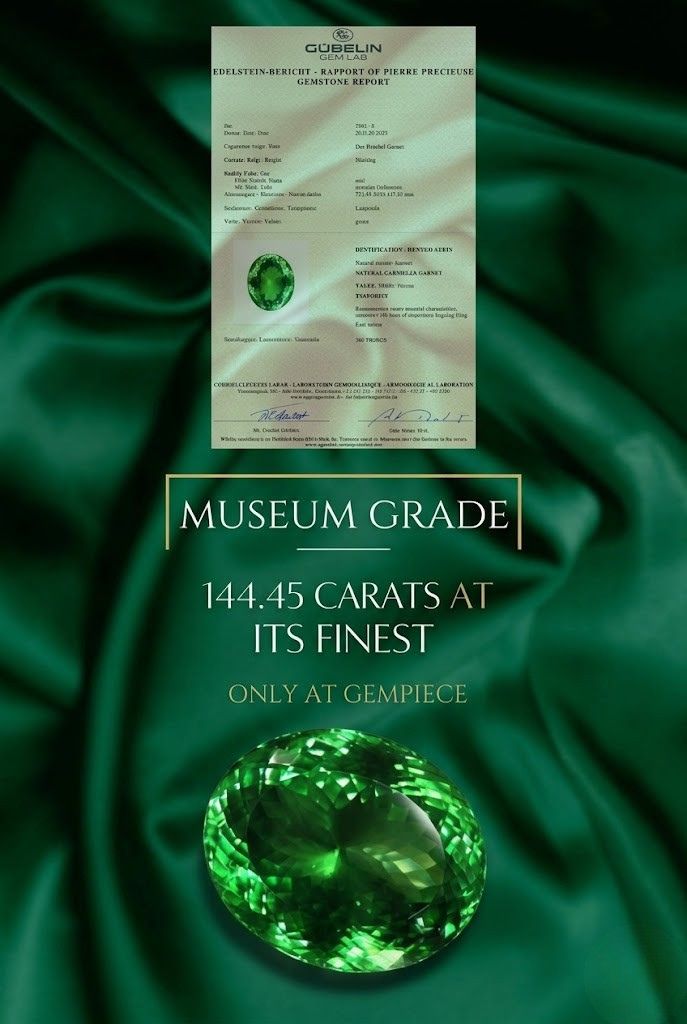
Green tourmaline represents outstanding value for its visual quality relative to cost. Standard commercial green tourmaline with decent color and clarity ranges from $25 to $100 per carat. Fine vivid green material with excellent color balance and eye-clean clarity ranges from $100 to $300 per carat. Large clean stones above 5 carats in vivid blue-green or fine forest green reach $500 to $3,000 per carat. Stones approaching chrome tourmaline color quality with Chelsea filter borderline response command premiums at the upper end of this range. All green tourmaline at GemPiece is 100% natural and certification is available from AIGS, GIT, GIA, and GRS upon request. Browse our complete green tourmaline collection or the full natural tourmaline range.
Frequently Asked Questions
What is green tourmaline?
Green tourmaline, also known as verdelite, is a variety of elbaite tourmaline colored primarily by iron. It spans a wide range of green shades from pale mint through vivid forest green and blue-green. It is one of the most widely available and versatile green gemstones commercially, offering excellent clarity and good durability at accessible prices.
What is the difference between green tourmaline and chrome tourmaline?
Green tourmaline (verdelite) is colored by iron, while chrome tourmaline is colored by chromium or vanadium. Chrome tourmaline typically achieves more saturated, concentrated green color and shows a red reaction under a Chelsea filter. Standard green tourmaline shows green under the Chelsea filter. Chrome tourmaline commands significantly higher prices for comparable visual quality.
Is green tourmaline treated?
Some green tourmalines are heated to improve color and brightness. This is a stable, permanent, and widely accepted practice in the trade. At GemPiece, the decision is made individually for each stone based on the rough material, and all treatment decisions are fully disclosed. Many stones are entirely natural and untreated.
Where is green tourmaline found?
Green tourmaline is produced globally. Key sources include Nigeria, Mozambique, Congo, and Madagascar in Africa; Afghanistan and Pakistan in Central Asia; and Brazil. Afghanistan is particularly known for mint green material with excellent crystal clarity. Nigeria is known for strong, vivid green tones.
Is green tourmaline suitable for everyday jewelry?
Yes. At 7 to 7.5 Mohs hardness with no cleavage and Type I eye-clean clarity, green tourmaline is well suited for rings, pendants, earrings, and bracelets. It is among the most practical green gemstones for daily wear.
Can green tourmaline be certified?
Yes. Certification is available from Bangkok laboratories including AIGS and GIT, and from international laboratories including GIA and GRS, upon request at GemPiece.