Buy Natural Spessartite Garnet Gemstones Online
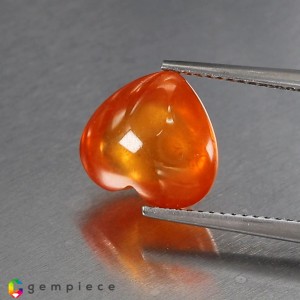
Spessartite garnet is the most vivid and commercially exciting orange gemstone in the natural gem world. No other widely available natural stone produces the specific orange of the finest Namibian mandarin garnet — a pure, saturated, sun-like color with no brownish undertone, no yellowish dilution, just a clean intense orange that appears to glow from within the stone. When the first mandarin garnets emerged from Namibia's Kunene Region in the early 1990s, they created an immediate sensation among gemologists and collectors who had never seen an orange gemstone of that quality and intensity. That excitement has not diminished.
Spessartite is a manganese aluminum silicate garnet belonging to the pyralspite series. It is ideochromatic — meaning its color is caused by manganese, the primary element in its composition, rather than by trace impurities. This is significant: take away the manganese and you no longer have spessartite. The element that colors the stone is the same element that defines the mineral. This chemical intimacy between composition and color means that the finest spessartite — high-purity, high-manganese material with minimal iron — is not just orange but incandescently orange, in a way that treated or composite stones can never replicate.
Mandarin Garnet: The Standard of Excellence
Mandarin garnet is the trade name for the finest, most vivid orange spessartite, originating primarily from the Marienfluss area of Namibia's Kunene Region. The first significant discovery occurred in the early 1990s and the stones were initially marketed under several trade names including "hollandines" and "Kunene spessartines" before the designation "mandarin garnet" became the accepted standard. These Namibian stones set the benchmark for orange garnet quality that the entire market has been measured against ever since.
Gemological analysis of the original Namibian mandarin garnets confirmed an average composition of approximately 85 mol% spessartite, 12.5 mol% pyrope, and 2.5 mol% grossular — a high-purity spessartite with minimal iron-bearing almandine content. This low iron content is precisely why Namibian mandarin garnet achieves such a pure, brilliant orange without the reddish or brownish undertones that higher iron content introduces. In 1998, Nigeria began producing gem-quality spessartite with up to 95 mol% spessartite purity, and in 2007, Tanzania's Loliondo area produced material with composition close to the Namibian stones (approximately 77.5 mol% spessartite). These new sources expanded availability while the Namibian material retained its premium status.
The Houston Museum of Natural Science displays a gold ring set with a faceted 39.35-carat mandarin garnet — one of the largest fine-quality spessartites ever cut. Stones above 10 carats in mandarin quality are considered extremely rare. At the 1995 Tucson Gem and Mineral Show, a 29.77-carat cushion-cut and a 14.77-carat triangular mix-cut were displayed — events that marked the beginning of serious collector interest in large mandarin garnet.
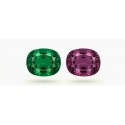
For comprehensive gemological information, read our Spessartite Garnet Gemopedia Guide. See also our malaya garnet collection and color change garnet collection, with guides at Malaya Garnet Guide and Color Change Garnet Guide.
Spessartite by Source
Namibia (Kunene Region, Marienfluss area): The defining source of mandarin garnet. Namibian material produces the purest, most vivid orange known in spessartite. The stones typically show high clarity at smaller sizes, though many Namibian mandarin garnets display a somewhat "sleepy" appearance at magnification due to numerous small crystal and needle inclusions that diffuse light without significantly reducing face-up brilliance. Namibian production has declined significantly since the 1990s peak, making fine mandarin garnet above 2 carats increasingly rare.
Nigeria: Began producing gem-quality spessartite commercially in 1998. Nigerian material achieves high spessartite purity (up to 95 mol%) and offers vivid orange color at more accessible price points than Namibian material. Some Nigerian stones show deeper reddish-orange tones reflecting slightly higher iron content. Nigeria remains the most important commercial-volume source of affordable quality spessartite today.
Tanzania (Loliondo and other areas): Produced significant spessartite from 2007 onward with composition close to Namibian material. Tanzanian stones offer another source of vivid orange at competitive prices.
Other sources: Madagascar, Mozambique, Brazil, Sri Lanka, and the United States (San Diego County, California; Amelia County, Virginia) all produce spessartite of varying quality. The Little Three Mine in Ramona, California has historical significance as an important American source. A specimen weighing more than 2,800 carats was found at the Rutherford Mine in Amelia County, Virginia — the "Rutherford Lady" — demonstrating that spessartite can form in extraordinary crystal sizes.
Spessartite Garnet Properties
Hardness: 7 to 7.5 Mohs
Refractive Index: 1.790 to 1.820
Specific Gravity: 4.12 to 4.20 — notably heavier than other pyralspite garnets
Dispersion: 0.027
Crystal System: Isometric (cubic)
Cleavage: None
Luster: Vitreous
Treatment: None — entirely natural and untreated
Price and Value
Fine Namibian mandarin garnet in vivid orange with good clarity: $200 to $800 per carat for 1 to 2 carat stones; $800 to $2,400 per carat for stones above 2 carats. Nigerian spessartite in vivid orange: $100 to $250 per carat for 1 to 4 carat stones; stones of 15 to 20 carats can reach $900 per carat. Tanzanian and Madagascar material prices overlap with Nigerian ranges. Eye-clean spessartite commands meaningful premiums over included material of equivalent color due to scarcity. All spessartite is entirely untreated.
Browse our complete spessartite garnet collection or explore the full natural garnet gemstone range.
Frequently Asked Questions
What is spessartite garnet?
Spessartite (also spelled spessartine) is a manganese aluminum silicate garnet producing vivid orange to reddish-orange colors. It is ideochromatic — colored by its own fundamental composition element, manganese. The finest quality is called mandarin garnet, characterized by pure, saturated orange with no brownish undertone.
What is mandarin garnet?
Mandarin garnet is the trade name for the finest, most vivid orange spessartite, primarily from Namibia's Kunene Region. The term describes spessartite with a pure, intensely saturated mandarin-orange color driven by high manganese content (approximately 85 mol% spessartite) and minimal iron. The Houston Museum of Natural Science displays a 39.35-carat mandarin garnet ring as a centerpiece of its collection.
Why is Namibian spessartite more expensive than Nigerian?
Namibian mandarin garnet displays the purest, most vivid orange color with minimal iron content, producing a cleaner, brighter orange than most Nigerian material. Namibian production has also significantly declined since the 1990s peak, reducing availability of fine material. Nigerian spessartite offers excellent value with vivid color at more accessible prices, making it practical for jewelry applications.
Does spessartite have inclusions?
Yes. Most spessartite, particularly orange material, contains eye-visible inclusions. Eye-clean spessartite exists but is not common and commands significant premiums. The Namibian mandarin garnet often shows a characteristic "sleepy" appearance due to small internal inclusions that scatter light without dramatically reducing face-up beauty.
Is spessartite garnet treated?
No. Spessartite is one of the purest examples of a completely natural, untreated gemstone. Its vivid orange color is entirely the product of its natural manganese-dominant chemistry.
What is the difference between spessartite and malaya garnet?
Both are pyrope-spessartite blends but with different dominant characters. Standard spessartite has spessartite as the dominant species producing vivid orange. Malaya garnet has a more complex pyrope-spessartite-almandine mix producing peach, pinkish-orange, and salmon tones. They are related but visually and chemically distinct varieties.
Clear ✖