
Understanding Rhodolite Garnet
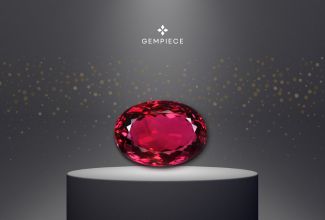
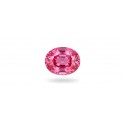
Rhodolite garnet is the best-kept secret in the pink and purple gemstone market. It offers the color range of fine pink sapphire, the clarity of a clean tourmaline, the durability of a quality garnet, and the entirely natural, untreated status that the most discerning segment of the gem market prizes — at prices that are a fraction of what sapphire or spinel commands for comparable quality. For anyone who has evaluated rhodolite seriously alongside its more famous competitors, the case for it is overwhelming. The reason it remains undervalued by casual buyers is simply that it is not as famous as ruby or pink sapphire. For collectors and designers who understand value, that unfamiliarity is the opportunity.
Explore our rhodolite garnet collection and related varieties including our pyrope garnet collection and spessartite garnet collection. For related guides see Pyrope Garnet Guide, Malaya Garnet Guide, and the complete Garnet Gemstone Guide.
What Is Rhodolite Garnet
Rhodolite is a pyrope-almandine garnet, a natural solid-solution mixture within the pyralspite series. The traditional description of rhodolite's composition is one part almandine and two parts pyrope, but modern gemological analysis demonstrates that this ratio is an approximation — rhodolite compositions vary significantly, and traces of other garnet species including spessartite, grossular, and even andradite are consistently present in small amounts. In practice, rhodolite is defined by its color range (pink-red to purplish-red to purple) and optical character rather than by a precisely fixed composition.
The formula for the pyrope-almandine series is (Mg,Fe)₃Al₂(SiO₄)₃, where magnesium (from pyrope) and iron (from almandine) share the X-site of the crystal lattice in proportions that vary continuously from one end-member to the other. Rhodolite occupies the lighter, more magnesium-rich segment of this series — roughly 50 to 75% pyrope component — where the lower iron content produces lighter, more transparent, more purple-red tones than iron-dominant almandine. The higher the spessartite content (which lightens color further), the lighter and more pink the stone will appear.
The name was first applied in an 1898 paper by W.E. Hidden and J.H. Pratt from material found in Cowee Valley, North Carolina. The color they described was clearly distinct from the dark brownish-red almandine that dominated commercial garnets of the era — lighter, rosier, more purplish, and more brilliant. That distinctiveness has sustained rhodolite's commercial identity for over 125 years.
Color Chemistry
Rhodolite's color is produced by the interaction of iron (Fe2+) and chromium (Cr3+) within the pyrope-almandine crystal lattice. Iron provides the primary absorption that produces the red-purple character. In the absorption spectrum, rhodolite shows a moderately strong band centered at approximately 570nm from chromium, with iron-related bands at 505nm and 527nm. The relative contribution of chromium versus iron to the color determines whether a stone reads as more red or more purple.
The pyrope-to-almandine ratio has a profound effect on color character. As pyrope content increases (more magnesium, less iron), the color lightens and becomes more transparent and pink. As almandine content increases (more iron), the color deepens toward red and eventually brownish-red. The intermediate compositions where rhodolite is most commercially attractive — approximately 50 to 75% pyrope — produce colors in the pink-red to purplish-red range that maximize both saturation and transparency simultaneously.
Spessartite content, when present as a trace component, further lightens the color because manganese creates different absorption than iron. Stones from deposits with spessartite in the local geology (some Tanzanian and Madagascar material) can display lighter, more purely pink or even magenta tones. Grossular trace content has minimal color effect but can slightly alter the RI and SG of the resulting stone.
Physical and Optical Properties
Hardness: 7 to 7.5 Mohs, reflecting the pyralspite composition. Excellent for all jewelry applications including daily-wear rings. The absence of cleavage adds to practical durability.
Refractive Index: 1.740 to 1.795. The RI varies with composition — higher almandine content (more iron) increases the RI toward almandine's value of approximately 1.830; higher pyrope content moderates it toward pyrope's 1.714. Tanzanian rhodolite typically shows RI of 1.745 to 1.760; North Carolina material shows 1.760 to 1.761; Zimbabwe material shows 1.750 to 1.760 — variations that reflect compositional differences between deposits.
Specific Gravity: 3.74 to 3.94. Mozambique material with higher almandine content tends toward the higher end of this range (GIA analysis shows 37 to 54 mol% pyrope and 40 to 55 mol% almandine for Mozambique stones, with compositions in the more iron-rich zone). Sri Lankan and Tanzanian material with higher pyrope content sits toward the lower end.
Clarity: Rhodolite is characteristically a Type II colored gemstone — it usually has some visible inclusions, but many stones achieve eye-clean to near-eye-clean quality. Typical inclusions include needle-like minerals, zircon crystals with stress halos, and irregular rounded crystals of zircon or apatite. Some East African rhodolites contain included rutile needles that, when sufficiently concentrated and oriented, can produce a 4 to 6 rayed asterism when the stone is cut as a cabochon.
Magnetism: Rhodolite garnet is strongly to very strongly magnetic due to its iron content — a useful identification property that distinguishes it from many superficially similar purple and pink stones including amethyst, kunzite, and iolite.
Cleavage: None.
Luster: Vitreous. Well-cut rhodolite displays strong surface luster and excellent light return, contributing significantly to the variety's brilliance.
Formation Geology
Rhodolite forms in metamorphic rocks — schists, gneisses, and granulites — within the East African Mozambique Belt, the ancient orogenic terrane that produced the majority of commercial rhodolite available today. The Mozambique Belt, formed during the Pan-African tectonic event approximately 550 to 700 million years ago, created metamorphic conditions favorable for pyralspite garnet crystallization across a wide region of East Africa spanning Tanzania, Kenya, Mozambique, and Malawi.
The specific chemistry required for rhodolite — appropriate proportions of magnesium and iron in an aluminum silicate matrix, with the pyrope component dominant — reflects the composition of the protolith rocks (original sedimentary or igneous rocks before metamorphism) and the pressure-temperature conditions of metamorphism. Most rhodolite forms at metamorphic grades corresponding to amphibolite to granulite facies — high-grade conditions at depths of 20 to 50 kilometers within thickened continental crust.
Original North American rhodolite from Cowee Valley, North Carolina, formed in Precambrian metamorphic terranes that are the geological equivalent of the African Mozambique Belt in age and character — ancient, deeply eroded, high-grade metamorphic basement rocks exposed by hundreds of millions of years of erosion.
Global Sources in Detail
Tanzania: The most important and diverse source of commercial rhodolite. Tanzanian deposits include the Umba Valley (producing a wide range from pink-red through purplish-red), the North Pare Mountains (producing material with exceptional clarity, vivid color, and the occasional blue-to-purplish-red color change effect), multiple deposits in the Songea area, and the Mahenge zone. The Kangala deposit in Tanzania's Tanga Region was historically one of the most productive rhodolite mines in the world through the late 20th century.
Malawi: Produces rhodolite with a distinctive bright, vivid, open saturation that many designers and collectors consider the finest available. Malawi material is characterized by raspberry to vivid pink-red tones with exceptional clarity and strong brilliance. It represents some of the best value-per-quality rhodolite in the current market.
Mozambique: Began producing significant commercial rhodolite in the 2010s, with material from the Manica Province displaying a distinctive dominant purple tone confirmed by GIA gemological analysis. Mozambique material has compositions weighted toward almandine (40 to 55 mol%) which drives the deeper purple color. This distinct character has created its own collector following among buyers seeking a more strongly purple garnet.
Sri Lanka: Produces rhodolite from the ancient alluvial gravels of the Ratnapura district and surrounding areas. Sri Lankan rhodolite displays balanced pink-red tones with consistent quality and availability in a range of sizes that make it practical for both jewelry and collecting.
India (Orissa): Produces rhodolite with sometimes deeply saturated purple tones that fall into the grape garnet category. Indian material has significant domestic demand and is also exported internationally.
North Carolina, USA: The historical source and the location where rhodolite was first formally described. Cowee Valley in Macon County continues to produce material, though commercial quantities are limited compared to African sources.
Rhodolite vs Pink Sapphire and Pink Spinel
The comparison between rhodolite and its pink-purple competitors is one of the most commercially relevant analyses in the mid-range colored gemstone market.
Pink sapphire (corundum, Al₂O₃, hardness 9 Mohs) is harder than rhodolite and has higher RI (1.762 to 1.770), producing stronger brilliance per unit of stone size. However, virtually all commercial pink sapphire is heat-treated to improve or stabilize color, and many stones are additionally beryllium-diffused for color enhancement. Untreated natural pink sapphire commands extraordinary premiums (5x to 10x or more over equivalent heated material). Rhodolite is always untreated. A buyer who prioritizes natural integrity gets meaningfully more value from rhodolite than from treated pink sapphire of comparable visual quality.
Pink spinel (MgAl₂O₄, hardness 8 Mohs) is the closest direct competitor to rhodolite in the natural, untreated pink-purple gemstone category. Spinel's higher hardness (8 vs 7 to 7.5 Mohs) gives it a slight practical durability advantage. Both are predominantly untreated. Fine pink spinel from Burma or Tanzania commands substantially higher prices than rhodolite of comparable color and clarity — a premium driven by spinel's rarity and collector prestige rather than visual superiority. For buyers focused on visual quality per dollar, rhodolite consistently outperforms.
Value and Market Pricing
Rhodolite garnet offers one of the best value propositions in the colored gemstone market. Fashion-grade rhodolite with good color and reasonable clarity ranges from $50 to $300 per carat. Fine rhodolite with vivid, even color and excellent clarity commands $100 to $500 per carat in accessible sizes. Exceptional stones above 5 carats in top color can reach $500 to $1,000 per carat. Mozambique purple material in fine quality with strong vivid purple and good clarity has attracted collector premiums as its distinctive character has become recognized.
The overall rhodolite market has strengthened consistently as colored gemstone buyers have grown more knowledgeable about untreated stones and as the supply of fine material from top deposits — particularly Tanzania and Malawi — has become more limited and demand has increased globally.
Care and Maintenance
Rhodolite requires standard care. Clean with warm water, mild soap, and a soft brush. Rinse thoroughly and dry. Avoid ultrasonic cleaners for stones with visible inclusions. Store separately from harder stones. No treatment or re-treatment is required. Rhodolite is entirely stable and requires no special attention beyond basic jewelry care.
Buying Rhodolite Garnet
When evaluating rhodolite, color tone is the primary criterion. The stone should display a vivid, clear pink-red, raspberry, or purple-red in natural light — not so dark it reads as near-black in standard lighting, and not so pale it appears washed out. Even color distribution across the face is important: stones with color zoning showing darker centers or pale windows near the culet are less desirable. Clarity in the face-up position should be assessed — while some inclusions are expected in rhodolite, face-up clean material is significantly more visually attractive.
Cut quality matters considerably. A well-proportioned rhodolite with proper crown and pavilion angles maximizes light return and shows the characteristic brilliance that distinguishes fine rhodolite from mediocre material of the same color.
At GemPiece, every rhodolite is individually photographed and presented with video to show the actual face-up color and brilliance. We source from Tanzania, Malawi, Mozambique, and Sri Lanka with accurate origin representation. Browse our rhodolite garnet collection or explore related guides: Pyrope Garnet Guide, Malaya Garnet Guide, Spessartite Garnet Guide, and the complete Garnet Gemstone Guide.