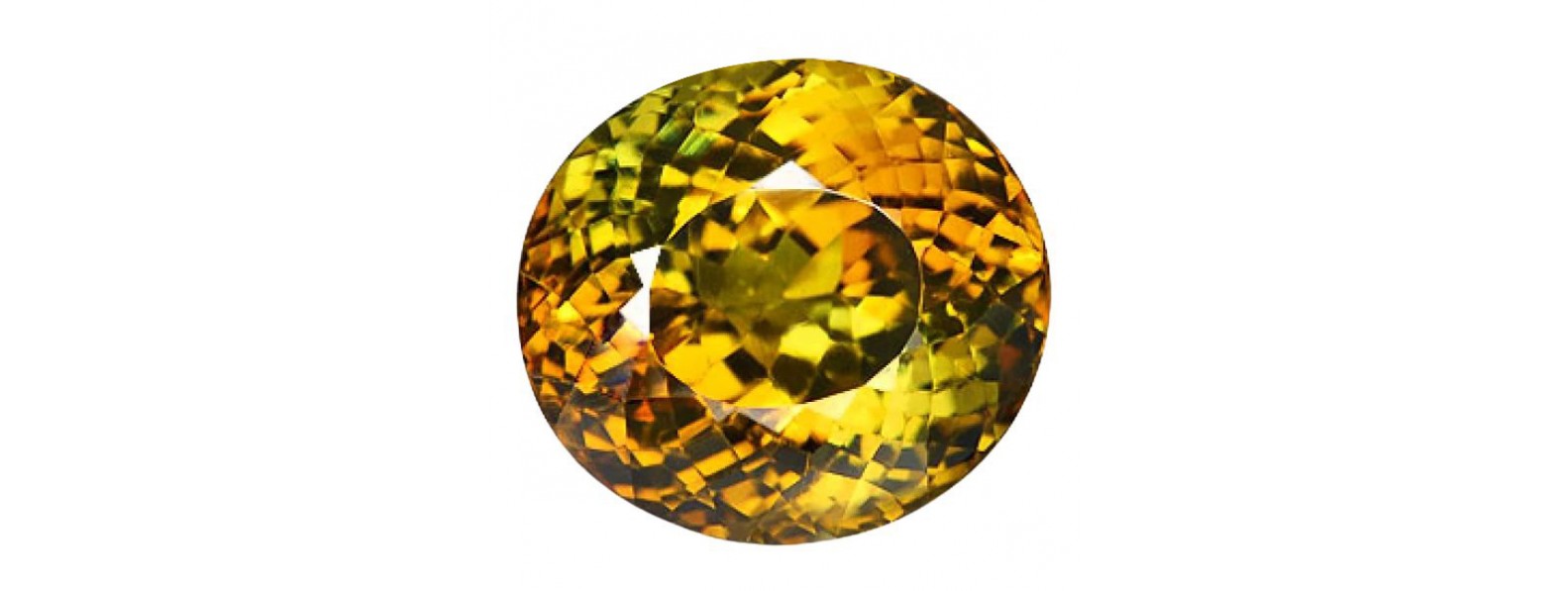
Understanding Chrysoberyl
Chrysoberyl is one of the most scientifically fascinating and commercially significant gemstones in the professional gem trade. Known for its exceptional hardness, strong luster, and multiple distinct varieties — each displaying unique optical phenomena — chrysoberyl occupies a special position among collectors, dealers, and serious gemstone buyers worldwide.
This guide covers the formation, mineral composition, optical properties, color varieties, sources, synthetic awareness, treatment considerations, and value factors of chrysoberyl in detail.
Among its varieties, chrysoberyl cat's eye (view collection) and alexandrite (view collection) are among the most collectible gemstones in the trade due to their rarity and exceptional optical characteristics.
Explore our chrysoberyl gemstone collection featuring carefully selected stones from trusted origins.
Natural Formation and Mineral Composition
Chrysoberyl is a beryllium aluminium oxide mineral with the chemical formula BeAl₂O₄. Its name derives from the Greek words "chrysos" meaning gold, and "beryllos" meaning beryl — a reference to its characteristic golden-yellow to greenish hues. Despite the similar name, chrysoberyl is a distinct mineral species from beryl. Both contain beryllium and aluminium, but beryl is a silicate while chrysoberyl is an oxide, giving them fundamentally different crystal structures and properties.
Chrysoberyl forms primarily in metamorphic environments, particularly in pegmatites and mica schists, under very specific geological conditions that require the simultaneous presence of beryllium and aluminium in the right concentrations. These conditions are rare, which explains why collector-standard chrysoberyl is scarce despite the mineral's relatively wide geographic distribution.
Chrysoberyl belongs to the orthorhombic crystal system and has a refractive index of 1.74 to 1.77 and a specific gravity of approximately 3.67 to 3.73. These physical constants remain consistent across all varieties of the mineral.
Hardness and Durability
Chrysoberyl measures 8.5 on the Mohs hardness scale, making it the third hardest mineral after diamond (10) and corundum (9). This places chrysoberyl well above most other gemstones in terms of scratch resistance and durability, making it highly suitable for all jewelry applications including rings and bracelets that are subject to regular wear and abrasion. Its indistinct cleavage further adds to its practical toughness, making it one of the most reliable gemstones for jewelry use.
The Varieties of Chrysoberyl
Chrysoberyl occurs in several distinct forms, each with unique characteristics that make it independently significant in the gem market.
The first is faceted chrysoberyl, which appears in yellowish-green, golden yellow, and green tones with good transparency, strong luster, and clean clarity in select specimens. Golden yellow and bright yellow-green are considered the most desirable colors in the faceted variety.
The second is chrysoberyl cat's eye (view collection), which displays chatoyancy — a sharp optical band of reflected light across the surface of a cabochon-cut stone. This is considered the finest natural cat's eye effect among all gemstone species. In the gem trade, "cat's eye" used without a species qualifier always refers specifically to chrysoberyl cat's eye.
The third is alexandrite (view collection), which exhibits a dramatic color change from green in daylight to red under incandescent light — one of the most prized phenomena in the entire gem trade.
The fourth is alexandrite cat's eye (view collection), which combines both color change and chatoyancy in a single stone, making it one of the rarest and most highly regarded gemstones in the world.
The fifth and rarest form is star chrysoberyl, which displays asterism — a star-like pattern of light caused by rutile inclusions oriented in multiple directions within the crystal. Star chrysoberyl is exceptionally rare and considered a significant collector's piece when encountered in good quality.
Chatoyancy — The Cat's Eye Effect
Chatoyancy is an optical reflectance effect produced by the presence of parallel fibrous inclusions or hollow channels within a gemstone. When light strikes these parallel structures, it reflects as a single bright band, creating the appearance of a cat's slit pupil moving across the surface of the stone as it is rotated.
In chrysoberyl, this effect is produced by fine needle-like rutile inclusions oriented in a single direction within the crystal. The chatoyancy in chrysoberyl cat's eye is widely regarded as the sharpest and most visually striking of any gemstone species. To best display the cat's eye effect, the stone must be cut as a cabochon with the correct dome height and the base oriented perpendicular to the fibrous inclusions. The quality of the eye depends on the density, uniformity, and parallelism of the inclusions within the rough.
Cat's Eye Color Range and Treatment Considerations
Chrysoberyl cat's eye occurs in a range of body colors including honey, yellowish-green, green, and yellow. Among all color varieties, honey cat's eye is the most popular and commands the strongest demand among collectors due to its warm, rich tone and high visual appeal.
An important consideration for buyers evaluating honey-colored cat's eye chrysoberyl is the possibility of irradiation treatment. In the market, some buff or base-colored chrysoberyl cat's eye material is subjected to irradiation to produce or enhance a honey color. This practice is specific to honey-colored material — yellowish-green and green cat's eye chrysoberyls occur naturally in their color and are generally not treated in this way.
Because irradiation treatment can be difficult to detect visually, it is strongly advisable to obtain a certificate from a reputable gemological laboratory when purchasing honey cat's eye chrysoberyl. Laboratory testing can confirm whether the color is natural or the result of treatment.
Alexandrite — Color Change Phenomenon
Alexandrite is the color-change variety of chrysoberyl and is named after Tsar Alexander II of Russia, where it was first discovered in the Ural Mountains in the 19th century. The color change effect is caused by the presence of chromium in the crystal structure, along with traces of iron and titanium, which cause the stone to selectively absorb different wavelengths of light depending on the light source.
In daylight or fluorescent light, which is rich in blue and green wavelengths, alexandrite appears green to bluish-green. Under incandescent or candlelight, which is rich in red and yellow wavelengths, the same stone appears red, raspberry red, or purplish-red. The stronger, more complete, and more distinct the color change, the more valuable the alexandrite.
The international jewelry confederation CIBJO formally defines the color-change variety of chrysoberyl as alexandrite, distinguishing it from other color-change gemstones in the trade.
Alexandrite cat's eye (view collection) combines the color change of alexandrite with the chatoyancy of cat's eye chrysoberyl, making it one of the rarest and most highly regarded gemstones available anywhere in the market.
Natural vs Synthetic Chrysoberyl
Synthetic chrysoberyl has been produced commercially in all major varieties including faceted, cat's eye, and alexandrite. Synthetic cat's eye chrysoberyl has been available commercially since the 1980s, and synthetic alexandrite is widely produced and sold in the market, sometimes without clear disclosure.
The most reliable distinguishing feature between natural and synthetic chrysoberyl cat's eye is the nature of the needle inclusions. Natural chrysoberyl cat's eye contains parallel needle inclusions, while synthetic cat's eye stones typically display undulating or irregularly oriented needle patterns. However, visual identification alone is not always conclusive, and laboratory testing using advanced spectroscopic methods is the most reliable method of confirmation.
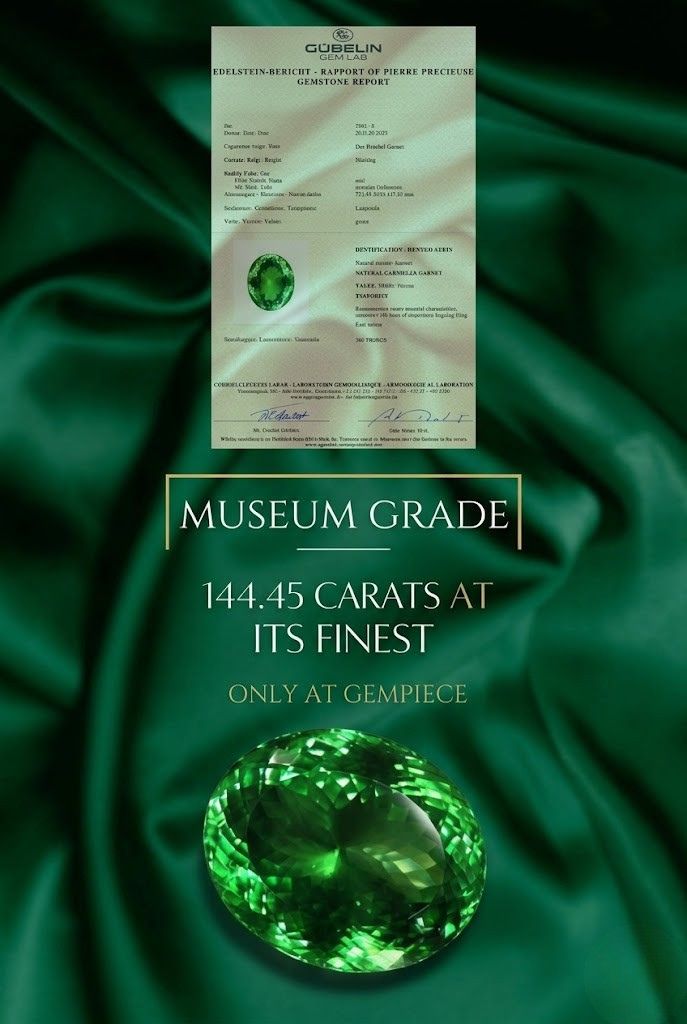
Buyers should always request laboratory certification from a recognised gemological laboratory — such as GIA, Gübelin, AIGS, GRS, or GIT — for any significant chrysoberyl purchase, particularly alexandrite and fine cat's eye material. At GemPiece, all stones are 100% natural. We do not offer synthetic material in any variety.
Sources and Global Occurrence
Russia's Ural Mountains are the most historically significant and prestigious source of chrysoberyl, particularly for alexandrite. Russian alexandrite is the reference-grade standard for color change quality globally, typically showing a strong green to vivid red transition. Russian material commands significant premiums over alexandrite from other origins.
Sri Lanka, India and Brazil are among the primary producers of faceted chrysoberyl and cat's eye material. Other known sources include Burma, and Madagascar. While these origins produce chrysoberyl and alexandrite, none consistently match the color change quality of Russian Ural material. High-grade alexandrite and sharp-eyed cat's eye from any origin remain genuinely scarce in the market.
Clarity and Yield
Faceted chrysoberyl generally exhibits good clarity, with eye-clean stones being common in standard green and yellowish-green material. Cat's eye varieties, by nature, contain parallel fibrous inclusions that produce the chatoyancy effect — these inclusions are an inherent and desirable feature of the stone rather than a clarity defect.
Alexandrite rough is often heavily included, and producing clean faceted stones in larger sizes is challenging. This contributes significantly to the rarity and value of select alexandrite, particularly in sizes above one carat.
Size and Rarity
Chrysoberyl cat's eye is available across a range of sizes, though top-quality honey cat's eye with a sharp eye and good body color becomes increasingly rare above five carats. Alexandrite is extremely rare in any size above one carat. Stones above two to three carats with strong color change are considered significant collector pieces. Alexandrite cat's eye above one carat with strong color change and a sharp eye is exceptionally rare. Star chrysoberyl of any notable size and quality is among the rarest forms encountered in the professional gem trade.
Value and Market Demand
The value of chrysoberyl varies significantly by variety. Faceted chrysoberyl is moderately priced relative to its hardness and quality, with prices ranging broadly depending on color saturation and clarity. Chrysoberyl cat's eye value is determined by the sharpness and brightness of the eye, body color, overall clarity, and size — with honey cat's eye commanding a strong premium. Alexandrite is among the most expensive colored gemstones per carat in the world, with top Russian material reaching exceptional levels. Alexandrite cat's eye, combining both phenomena, commands a premium above either variety individually.
Durability and Jewelry Use
With a hardness of 8.5 on the Mohs scale, chrysoberyl is exceptionally durable and resistant to scratching. It is suitable for all jewelry types including rings, bracelets, earrings, and pendants. Its toughness and indistinct cleavage make it a practical choice for everyday wear jewelry as well as collector pieces.
Care and Maintenance
Chrysoberyl is relatively easy to maintain. It can be cleaned safely using warm water, mild soap, and a soft brush. Ultrasonic cleaning is generally safe for untreated stones but should be avoided for stones with significant fractures or treatments. Avoid exposure to harsh chemicals and store separately to prevent contact with harder materials.