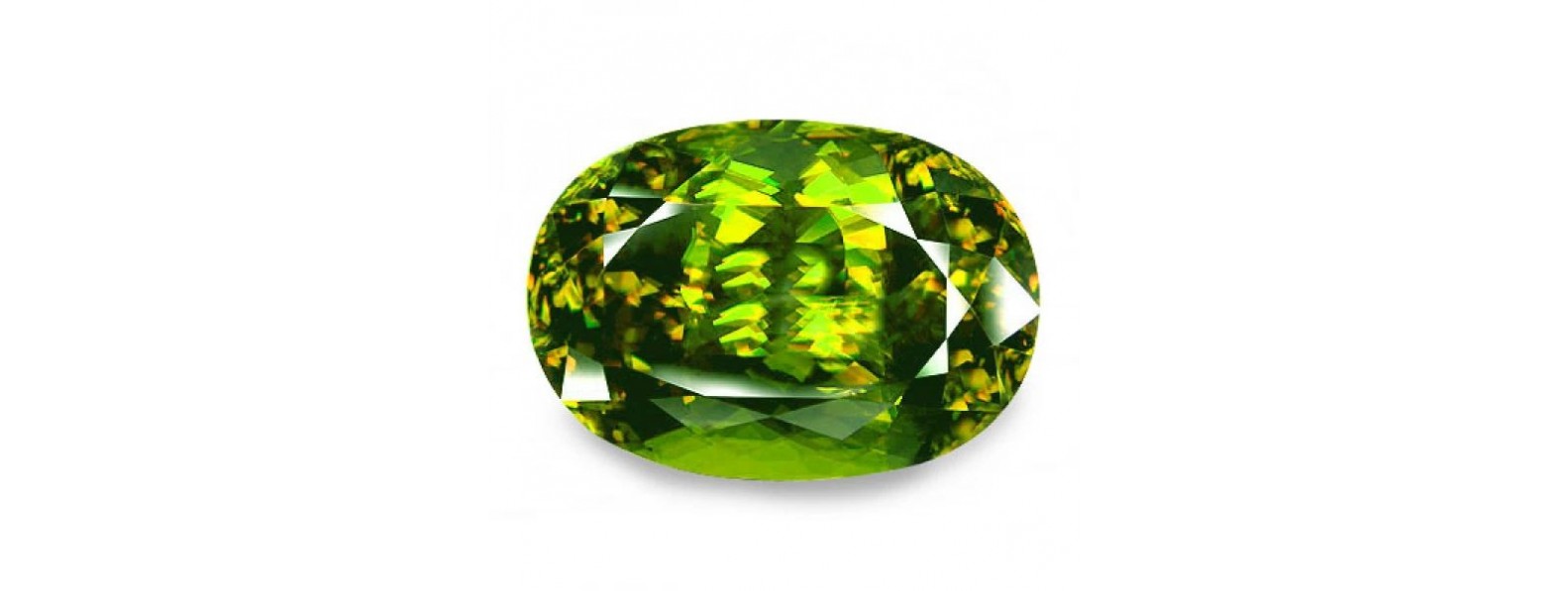
Sphene (Titanite) – Fire, Chrome Green and Collector Rarity
Sphene — the trade name for the mineral titanite — occupies a singular position in the collector gemstone world as a species that simultaneously outperforms diamond in optical fire, displays complex trichroic pleochroism, and remains genuinely unknown to the broader jewelry-buying public. For the serious collector, this combination of extraordinary optical properties, natural untreated color, and market obscurity makes sphene one of the most compelling rare gemstones available today. This guide covers sphene's mineralogy, optical characteristics, color varieties, chrome sphene origins, clarity standards, and the value factors that determine pricing in the professional market.
Explore our natural sphene gemstone collection featuring hand-selected stones with full treatment disclosure.
Mineral Composition and Physical Properties
Sphene is a calcium titanium nesosilicate with the chemical formula CaTiSiO₅. It belongs to the monoclinic crystal system and forms characteristically wedge-shaped or prismatic crystals — the name sphene derives from the Greek word sphenos, meaning wedge, an accurate description of the crystal habit. The mineralogical name titanite was formally adopted by the International Mineralogical Association in 1982 to reflect the mineral's titanium content, but sphene remains the universally recognized trade name in gemology and the commercial market.
Sphene measures 5 to 5.5 on the Mohs hardness scale, placing it in the softer range of gem-quality minerals. Its cleavage is distinct in one direction with imperfect cleavage in a second, and fracture is conchoidal to uneven. The specific gravity ranges from 3.52 to 3.54 — notably dense for a silicate mineral, a reflection of its titanium content. The refractive index is exceptionally high at 1.885–1.990 (α) to 1.915–2.050 (γ), the widest of any commonly faceted gemstone, contributing directly to its extraordinary brilliance and fire.
Optical Properties — Dispersion, Pleochroism and Birefringence
Sphene's defining optical characteristic is its dispersion — the ability to split white light into its spectral colors. With a dispersion value of 0.051, sphene surpasses diamond (0.044) and most other gemstones, producing a spectacular display of spectral fire in well-cut stones. This fire is most visible in lighter-colored material, particularly yellow and green sphene, where the body color is not dark enough to mask the spectral display.
Sphene is strongly trichroic — it displays three distinct colors when viewed along its three optical axes. In green specimens, the three trichroic colors are typically strong greenish-yellow, yellow to brown, and near-colorless. In brown specimens, the trichroic colors appear as yellow, reddish-orange, and brownish-yellow. This trichroism means a skilled lapidary must orient the cut carefully to optimize the most desirable color in the face-up position.
Sphene also exhibits very high birefringence (0.100–0.135), which causes visible doubling of facet junctions when viewed through the stone — a distinctive diagnostic characteristic that gemologists use for rapid identification. Both high dispersion and strong trichroism can rarely be seen simultaneously in a single crystal; the optical axis orientation determines which property dominates in the finished gem.
Color Varieties
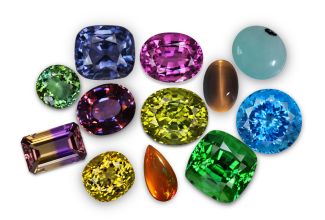
Sphene occurs in a wide natural color range. Color is determined primarily by trace element composition: iron ions produce yellow, brown, and green colors; manganese produces pink tones; chromium produces the vivid emerald-like green of chrome sphene; and sodium and cerium are associated with rare blue and purple tones.
Chrome sphene is the most commercially significant variety, valued for its vivid chromium-driven green that rivals emerald in saturation. Yellow and golden sphene shows the best fire of all varieties due to the light body color allowing maximum spectral display. Orange sphene offers warm, rich tones with strong dispersion. Brown sphene is the most abundant form but less commercially desirable. Rare color-change sphene from Afghanistan and Pakistan is known in the trade — stones that shift color between different lighting conditions represent an exceptional collector's find.
Chrome Sphene — Origins and Value
Chrome sphene is sourced primarily from Pakistan's Gilgit-Baltistan region and Baja California, Mexico — the latter producing the finest chrome material with colors described by many gemologists as equaling fine emerald. Sri Lanka produces yellow and golden sphene of consistent quality. Madagascar produces a full color spectrum in larger crystal sizes. Brazil, Russia, Switzerland, Austria, Italy, Canada, and the United States provide additional supply across color varieties.
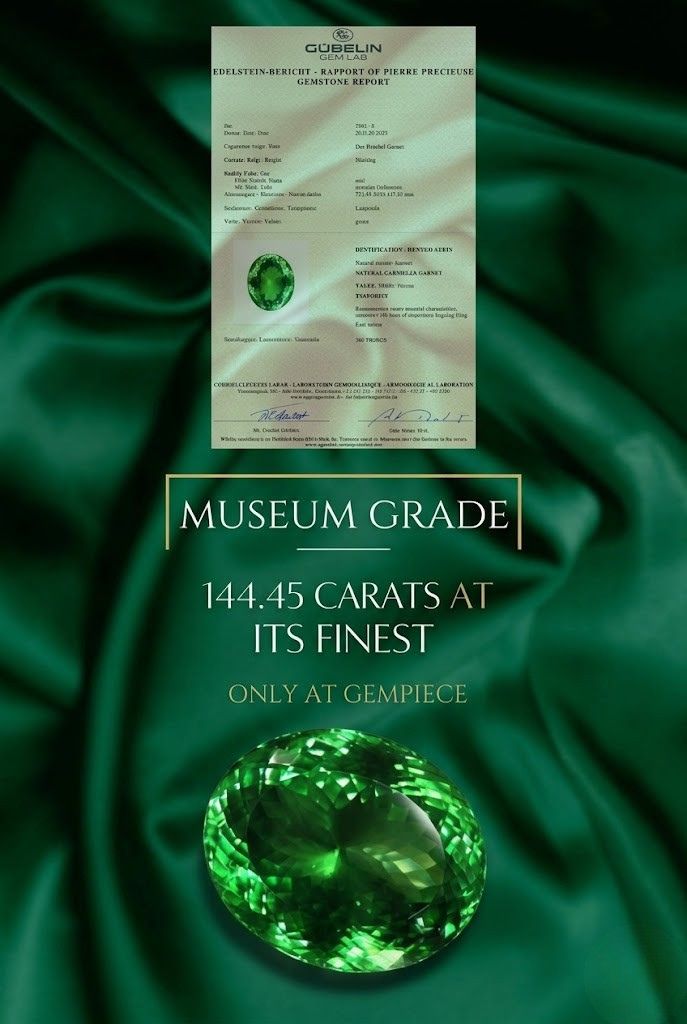
Chrome sphene above 1 carat in near-eye-clean quality is genuinely rare. The combination of vivid chrome green, acceptable clarity, and good cut represents the highest value tier of the species. Fine chrome sphene of 2 carats and above with strong color and acceptable inclusions is a collector-grade gemstone by any professional standard.
Clarity Standards
Sphene is classified as a Type III gemstone by the American Gem Trade Association — meaning it is almost always included and inclusions are expected and accepted as a natural characteristic of the species. Eye-clean sphene is rare and commands significant premiums. Common inclusion types include needle-like actinolite crystals, feathers, fingerprints, two-phase inclusions, and occasional twinning. Despite visible inclusions, the extraordinary fire and pleochroism of well-cut sphene typically draw the eye far more powerfully than any internal characteristics.
Treatment Status
Sphene is generally sold untreated. The vivid natural colors require no enhancement, and treatment of sphene is uncommon in the professional market. This makes sphene particularly attractive to collectors who prioritize natural, unenhanced gemstones. GemPiece provides complete treatment disclosure on every stone.
Durability and Jewelry Use
With a Mohs hardness of 5 to 5.5, sphene requires care in jewelry use. It is best suited for earrings, pendants, brooches, and protected ring settings where the stone is not subject to regular contact abrasion. Protective bezel or half-bezel settings are recommended for any sphene ring. Sphene should not be worn during physical activity, housework, or situations involving contact with harder surfaces. Despite its softness, the extraordinary optical performance of a well-cut sphene makes it one of the most rewarding collector gemstones to own and wear in appropriate jewelry.
Care and Maintenance
Clean sphene with warm water, mild soap, and a soft brush. Avoid ultrasonic and steam cleaning — the vibrations and heat can stress the crystal and worsen existing inclusions or cleavage. Avoid exposure to household chemicals, perfumes, and cosmetics. Store sphene separately from harder gemstones to prevent contact scratching. Protect from sudden temperature changes, which can cause thermal stress in the crystal.
Explore Related Collector Gemstones
Collectors seeking similarly rare optical gemstones may also find interest in clinohumite (view collection), diaspore (view collection), and andalusite (view collection).