
Scapolite – Yellow, Violet, Cat's Eye and Rutile Varieties
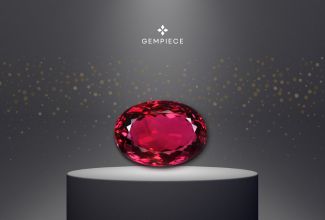
Scapolite is a gemstone species that professional gemologists frequently cite as the most undervalued transparent colored gemstone in the market — a mineral group producing naturally attractive yellow, violet, pink, and grey gemstones with a wide color range, good optical properties, and occasional remarkable optical phenomena including cat's eye and rutile-inclusion displays, yet remaining almost entirely unknown to the broader buying public. First described mineralogically from metamorphic rocks in the eighteenth century, scapolite has found limited gem market recognition despite its merits — a situation that presents real opportunity for collectors who understand what the species offers. This guide covers scapolite's mineralogy, the marialite-meionite series, color varieties, optical phenomena, sources, and value.
Explore our natural scapolite collection, scapolite rutile (view collection) or Read our scapolite cat's eye guide.
Mineral Composition and the Scapolite Series
Scapolite is not a single mineral but a series — a continuous solid solution between two end members: marialite (Na₄Al₃Si₉O₂₄Cl, sodium-rich) and meionite (Ca₄Al₆Si₆O₂₄CO₃, calcium-rich). This is analogous to the plagioclase feldspar series and means that individual scapolite specimens vary in chemical composition depending on their sodium-calcium ratio. The intermediate member of the series — the most common gem-quality form — is sometimes called wernerite, though this name is rarely used in commercial contexts. All members of the series share the tetragonal crystal system, forming prismatic crystals with a square cross-section that gives scapolite a distinctive crystal habit in rough form.
Scapolite measures 5.5 to 6 on the Mohs hardness scale. Specific gravity ranges from 2.57 to 2.74 — varying with composition along the series. The refractive index is 1.540 to 1.579, uniaxial negative, with birefringence of 0.004 to 0.037. Cleavage is distinct in two directions. The refractive index and specific gravity increase from the marialite to the meionite end of the series, providing gemologists with tools for compositional assessment.
Color Varieties and Color Origins
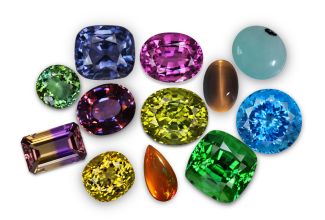
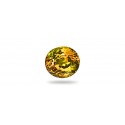
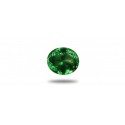
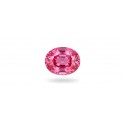
Yellow scapolite — the dominant commercial variety — derives its color from color centers involving iron, producing tones from pale lemon through vivid golden yellow to deep amber. The finest yellow scapolite from Tanzania and Myanmar rivals yellow sapphire in color intensity at a small fraction of the price. Violet and purple scapolite from Tanzania contains manganese-related color centers that produce distinctive lavender to deep purple tones. Pink scapolite is related to the violet variety at lower saturation levels. Grey and white scapolite provides the base material for chatoyant cat's eye varieties. Colorless material exists but has limited commercial interest.
Scapolite Cat's Eye
Chatoyancy in scapolite is produced by parallel fibrous inclusions or hollow growth tubes aligned along the crystallographic c-axis of the tetragonal crystal. When present in sufficient density and with good alignment, these produce a sharp reflected light band across the surface of a correctly oriented cabochon. The cat's eye effect is most commonly observed in yellow and grey scapolite from Myanmar and Tanzania. The quality of the cat's eye effect in scapolite can be excellent — producing a sharp, well-centered eye comparable to the finest chatoyant gemstones. The combination of accessible pricing with genuine cat's eye quality makes scapolite cat's eye one of the best-value optical phenomenon gemstones in the collector market.
Scapolite Rutile
Rutile needle inclusions within scapolite crystals create a distinctive internal texture that adds optical complexity and collector interest to otherwise transparent material. The fine golden to reddish-brown rutile needles are oriented along specific crystallographic directions within the scapolite host and appear as a silky internal illumination when the stone is viewed under direct light. Rutile-included scapolite occupies a unique collector niche — part transparent gemstone, part mineral specimen — that appeals to buyers who appreciate the natural inclusion landscape as an aesthetic element. When the rutile inclusions are both numerous enough for chatoyancy and well enough aligned, rutile-bearing scapolite can also produce a cat's eye effect, combining two forms of optical interest in one stone.
Sources
Tanzania — particularly the Umba Valley gem district — is the most significant commercial source of gem-quality scapolite, producing yellow, violet, pink, and cat's eye material. Myanmar (Burma) is the second most important source, producing fine yellow and cat's eye scapolite of high clarity and strong color. Madagascar, Brazil, Kenya, Canada, and Norway have documented scapolite occurrences but do not produce commercially significant gem-quality quantities.
Treatment Status
Scapolite is not treated. The natural colors are sufficiently attractive without enhancement, and no established treatment exists that meaningfully improves commercial scapolite. Natural untreated status is universal for the species. GemPiece provides full disclosure on all scapolite stones.
Value Factors
Color saturation is the primary value driver for faceted scapolite — vivid golden yellow or deep violet commands the highest premiums for their respective varieties. For cat's eye scapolite, the sharpness and definition of the eye is the primary determinant. For rutile scapolite, the density and regularity of the inclusion pattern and the overall aesthetic quality determine value. Scapolite is consistently underpriced relative to its optical merits — an ongoing opportunity for informed collectors.
Durability and Care
Clean scapolite with warm water, mild soap, and a soft brush. Avoid ultrasonic and steam cleaning. Store separately from harder gemstones. Use protective settings for ring applications. Avoid contact with harsh chemicals.
Explore Related Optical Phenomenon Gemstones
Citrine (view collection), moonstone cat's eye (view collection), and sillimanite cat's eye (view collection).