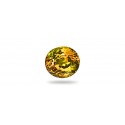
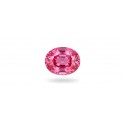

Understanding Topaz – Imperial, Blue and White Varieties
Topaz is an aluminum silicate mineral that occupies a unique position in the gemstone world — spanning the full range from abundantly available commercial material to genuinely rare collector-grade specimens that command serious market premiums. Its combination of excellent hardness, outstanding natural clarity, and remarkable color range makes it one of the most studied and commercially significant gemstone species known to the professional gem trade.
This guide covers the mineralogy, color varieties, treatment landscape, radiation safety considerations, imperial topaz origins, clarity characteristics, and value factors of topaz in professional detail.
Explore our topaz gemstone collection featuring carefully selected stones across all major varieties with full treatment disclosure.
Mineral Composition and Physical Properties
Topaz is a fluorine-bearing aluminum silicate mineral with the chemical formula Al₂SiO₄(F,OH)₂. It belongs to the orthorhombic crystal system and forms characteristically elongated prismatic crystals, which is why topaz gemstones are frequently cut into pear, oval, and emerald shapes to maximize yield from the natural rough.
Topaz measures 8 on the Mohs hardness scale, placing it above most common gemstones and making it well suited for jewelry use. However, topaz has one important structural characteristic that requires attention: perfect basal cleavage along a single plane. While topaz resists surface scratching effectively, it can split cleanly if subjected to a sharp, direct impact perpendicular to its cleavage plane. Protective settings are recommended for ring use to guard against this vulnerability.
The refractive index of topaz ranges from approximately 1.61 to 1.64, with a specific gravity of 3.49 to 3.57. These constants vary slightly depending on the specific color variety and chemical composition of the individual stone.
Color Varieties and Natural Occurrence
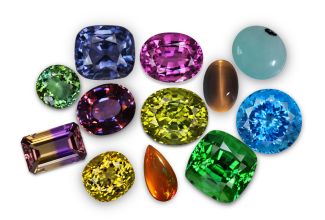
Topaz occurs naturally in a wide range of colors including colorless, yellow, golden, orange, pink, red, brown, sherry, and very pale blue. Despite its strong commercial association with blue, the natural occurrence of vivid blue topaz is extremely rare — most blue topaz in the market is the result of treatment applied to colorless rough.
Colorless topaz is the most abundant natural form and occurs in large, clean crystals across multiple sources globally. Yellow and golden topaz are naturally occurring and moderately priced. Sherry topaz displays a warm brownish-orange tone similar to sherry wine and is a naturally occurring variety. Natural pink topaz is exceptionally rare and highly valued when found in untreated form.
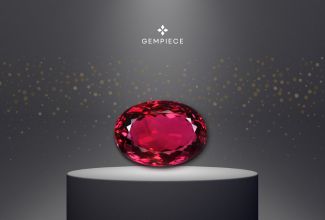
Imperial topaz — encompassing golden orange, reddish-orange, champagne, and rare red and pink tones — is the most significant collector variety and the benchmark for topaz value in the professional market.
Imperial Topaz — The Collector's Gemstone
Imperial topaz is the rarest and most commercially significant variety of topaz, distinguished by its warm golden-orange to reddish-orange color, sometimes displaying champagne, pink, or red modifiers. The finest material in the world originates almost exclusively from the Ouro Preto region of Minas Gerais, Brazil — a source that has produced collector-grade imperial topaz for well over a century and remains the defining benchmark for quality in this variety.
Imperial topaz from Ouro Preto is primarily valued for its natural, untreated color. The most desirable stones display a strong reddish or pink component alongside the orange base — a color direction that represents the absolute pinnacle of imperial topaz value. Stones with vivid natural saturation, clean clarity, and good size are considered genuine collector pieces.
Some imperial topaz does undergo heat treatment to enhance or refine color, and some champagne-toned material receives treatment to improve saturation. Untreated imperial topaz with natural vivid color commands the strongest premiums in the current market.
African sources have also produced large, beautiful topaz material in recent years, contributing meaningful supply to the market for significant-sized stones. Pakistan's Katlang region is known for producing fine natural pink topaz, which is among the rarest and most collectible forms of the mineral.
Imperial topaz value increases dramatically with size. Fine reddish-orange material above five carats is genuinely scarce. Top-quality material in larger sizes can command prices well in excess of a thousand dollars per carat, and exceptional red or pink specimens can reach several thousand dollars per carat — figures that contrast sharply with the affordable pricing of blue and white topaz.
Blue Topaz — Treatment Process and Safety
Blue topaz is the most commercially popular variety globally, prized for its attractive color, strong clarity, and accessible price point. However, virtually all vivid blue topaz in the market is the result of a two-stage treatment process — irradiation followed by heat — applied to colorless or very pale ice-blue natural topaz rough.
Natural blue topaz in any vivid tone is extremely rare. The treatment process begins with irradiation of colorless rough, which introduces color centers within the crystal structure that produce blue. A subsequent heat treatment then stabilizes and refines the color to the final desired tone. The resulting blue color is permanent and stable under normal conditions.
The three primary market grades of treated blue topaz are sky blue, Swiss blue, and London blue. Sky blue is the lightest and most pastel tone, with a soft, gentle character. Swiss blue is vivid and bright — a strong medium blue with high visual impact and the most popular market tone globally. London blue is the deepest and most saturated grade — a rich, dark blue with a slightly steely or inky depth that appeals to collectors seeking intensity.
Radiation Safety — A Critical Buyer Consideration
The irradiation used to produce blue topaz leaves a measurable residual radioactivity in the treated material immediately after the process. Before treated topaz is safe for handling and prolonged skin contact, this residual radioactivity must diminish to established safe thresholds — a process that requires a mandatory cooling period of a minimum of six months after irradiation is completed.
This six-month cooling period is the accepted professional standard in the gem trade and is required by regulatory authorities in most major markets. During this period, the treated material must be stored without being released for sale or handling by the public.
In the current commercial market, some producers and suppliers significantly shorten this cooling period — releasing material after only a few weeks or one to two months — in order to accelerate production cycles and reduce holding costs. Material released before the full cooling period has elapsed can retain residual radioactivity levels that pose a potential health risk to the wearer through prolonged skin contact.
At GemPiece, all blue topaz is sourced exclusively from verified suppliers who observe the full minimum six-month cooling period after irradiation without exception. We do not purchase or sell commercial-grade blue topaz from sources where the cooling period is shortened or unverified. This is a non-negotiable standard in our sourcing process, reflecting our commitment to buyer safety alongside product quality.
White Topaz
Colorless topaz — commonly called white topaz — is the most abundant natural form of the mineral and requires no treatment. Its excellent clarity, hardness of 8, and clean brilliance have made it a popular and affordable alternative to diamond in jewelry design. While white topaz does not match diamond in refractive index or dispersion, it offers a clean, transparent appearance at a significantly accessible price point.
Clarity Characteristics
Topaz is one of the few gemstone species that is generally expected to be eye-clean. Unlike many colored gemstone species where inclusions are accepted as natural characteristics, topaz typically occurs with excellent transparency and minimal visible inclusions across most color varieties. Visible inclusions in topaz are unusual and reduce value significantly. This inherent clarity is one of the mineral's most commercially attractive properties and contributes directly to its brilliance when well cut.
Sources and Global Occurrence
Brazil is the world's most significant source of topaz across all varieties. The Ouro Preto region of Minas Gerais is the exclusive source of collector-grade imperial topaz. Brazil also provides the majority of colorless rough used for blue topaz treatment globally. Sri Lanka, Nigeria, Russia, and various African localities produce topaz of varying quality and color. Pakistan's Katlang district is a recognized source of natural pink topaz — one of the rarest forms of the mineral.
Value and Market Demand
The value spectrum of topaz is among the widest of any gemstone species. Blue and white topaz are commercially affordable and widely available. Imperial topaz — particularly reddish-orange and natural pink material — occupies a genuinely collector-grade price tier. Natural untreated red and pink topaz are the rarest and most expensive forms, with exceptional specimens commanding significant per-carat values. For all varieties, color quality, clarity, size, and treatment status are the primary determinants of value.
Durability and Jewelry Use
Topaz is well suited for most jewelry applications including rings, pendants, earrings, and bracelets. Its hardness of 8 provides excellent scratch resistance. The primary consideration in jewelry use is protecting the stone from sharp, direct impacts that could exploit its perfect basal cleavage. Well-designed protective settings — particularly bezels or half-bezels for ring use — allow topaz to be worn comfortably and safely on a daily basis.
Care and Maintenance
Topaz is relatively easy to maintain. Clean using warm water, mild soap, and a soft brush. Ultrasonic cleaning is generally safe for colorless and untreated yellow, orange, and imperial topaz. Avoid ultrasonic cleaning for treated blue topaz as vibration may affect treated stones with internal stress. Avoid prolonged exposure to strong sunlight for treated material. Store separately to prevent contact with harder materials, and avoid sharp impacts during wear and storage.
Explore Related Lustrous Gemstones
Explore other gemstones with similar color appeal including citrine (view collection), aquamarine (view collection), and spinel (view collection).