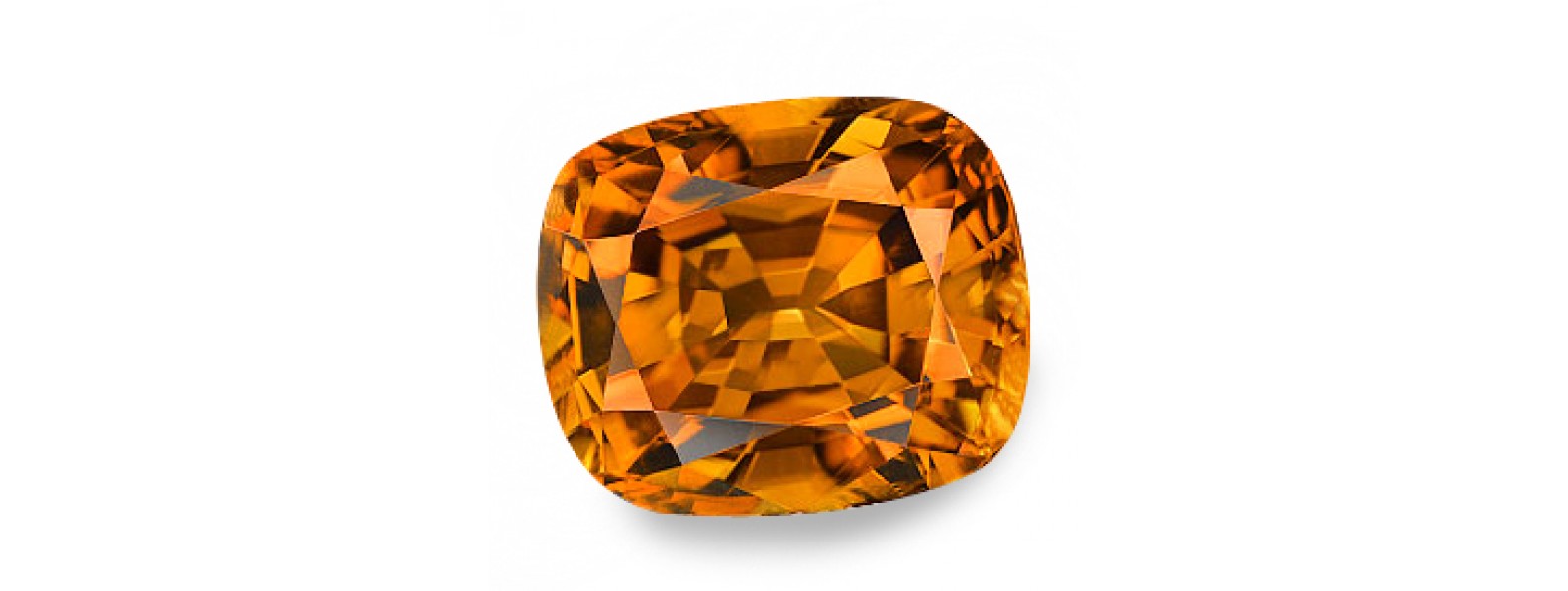
Understanding Rare Color Tourmaline, Rare Colors, Achroite and Formation
The tourmaline family contains far more variety than any commercial display case suggests. Beyond the commercially familiar pink, green, blue, chrome, and Paraiba categories lies a full spectrum of mineralogically distinct species, chemically defined varieties, and collector-significant forms that are rarer, more unusual, and in several cases more scientifically interesting than the mainstream varieties they rarely appear alongside. This guide covers the complete range: from achroite, the colorless tourmaline that is one of the rarest gem forms in the mineral kingdom, to canary yellow, siberite, dravite, schorl, liddicoatite, and the warm honey, champagne, and cognac tones that occupy the space between well-known categories.
Explore our other tourmaline collection and the complete tourmaline family: green tourmaline, pink tourmaline, blue tourmaline, Paraiba tourmaline, chrome tourmaline, bi-color tourmaline, and tourmaline cats eye. For individual guides see Green Tourmaline, Pink Tourmaline, Blue Tourmaline, and the complete Tourmaline Gemstone Guide.
Achroite: Colorless Tourmaline
Achroite is the colorless variety of elbaite tourmaline and represents a genuinely unusual geological event: the formation of lithium-sodium-aluminum-rich elbaite in a pegmatite environment where all of the trace elements responsible for color in other tourmalines are essentially absent. Manganese must not be present (it produces pink); iron must be absent (it produces green, blue, and yellow); copper must be absent (it produces Paraiba neon); chromium and vanadium must be absent (they produce chrome green). All of these conditions failing to be met simultaneously in a growing tourmaline crystal is statistically uncommon, which is why true gem-quality achroite is genuinely rare.
The name achroite comes from the Greek "achroos" meaning without color. Gemological texts have documented achroite since the 19th century, and specimens from classic localities including Elba Island (Italy), the Mursinka district of Russia's Ural Mountains, and San Diego County, California were among the first formally described colorless tourmalines. Today, Brazil's Minas Gerais is the primary source of facetable achroite, occasionally alongside colored tourmaline varieties from the same pegmatite pockets.
Faceted achroite at gem quality is characterized by complete colorlessness (or at most a faint warm tint from trace iron that does not rise to the level of visible body color), excellent transparency, and the vitreous luster characteristic of well-polished elbaite. Its refractive index (1.624 to 1.644) is lower than diamond or many other colorless gems, which means its brilliance is good but not exceptional. The value of achroite is not primarily optical but geological: it represents an extremely specific and uncommon geochemical event, and collectors who understand this pay premiums that reflect genuine scarcity rather than optical performance alone.
Achroite tourmalines are typically found in sizes from 1 to 5 carats in good faceted quality. Stones above 5 carats in true colorless, eye-clean condition are rare enough to command significant collector premiums. Even clean stones are sometimes fashioned into fancy cuts, portrait-style stones, and collector-oriented shapes that emphasize the individuality of the material beyond what standard oval or cushion cuts would achieve.
The collector markets in Japan and the United States show particularly strong demand for achroite. Japanese collectors have a long tradition of valuing colorless gemstones for their purity and geological interest, and achroite fits precisely into this aesthetic. American collectors who specialize in unusual and rarely seen gem varieties consistently include achroite among the tourmaline variants they seek.
Canary Tourmaline: Electric Yellow
Canary tourmaline is the trade name for vivid neon yellow elbaite, a variety whose color intensity is comparable in visual impact to Paraiba's neon blue-green. The name reflects both the vivid yellow color of the canary bird and the stones' visual character: bright, electric, immediately attention-grabbing in a color that most yellow gemstones cannot approach.
The color is produced by a combination of manganese and iron in specific oxidation states that creates an unusual transmission window in the bright yellow spectral region. The manganese contribution to canary tourmaline's color is distinct from the pink and red manganese colors of rubellite: in canary tourmaline, the specific manganese oxidation state and crystal field environment produce a yellow rather than pink absorption profile. The precise chemistry varies between individual stones and may involve additional elements including titanium.
Malawi in southern Africa is the primary commercial source of canary tourmaline with the strong neon yellow quality that defines the variety at its finest. Specific pegmatite deposits in Malawi have produced the most vivid and brightest yellow tourmaline available commercially. Additional sources include Brazil, where some yellow elbaite approaches canary character, and Tanzania where occasional yellow tourmaline with good saturation is found alongside other gem varieties.
Commercial availability of fine canary tourmaline is limited. Most faceted stones are found under 3 carats in truly vivid quality; stones above 5 carats in fine neon yellow are rare and command significant premiums. The combination of limited supply, high visual impact, and collector recognition creates a market where price discovery is relatively opaque compared to more commercially established varieties. For buyers seeking a yellow gemstone with genuine rarity and high visual impact, canary tourmaline compares favorably with any alternative at similar price points.
Siberite: Violet-Purple Elbaite from Russia
Siberite is the lavender to violet-purple variety of elbaite from Siberia, specifically from pegmatite deposits in the Transbaikal region including the famous Mursinka and Shaytanka localities. The color ranges from pale lavender through medium violet to rich purple-pink, produced by manganese in a specific chemical environment that shifts the pink manganese color toward cooler, more violet tones compared to the warm pink of standard rubellite.
Siberite's violet-purple tone distinguishes it clearly from pink tourmaline (which trends warmer and rosier) and from blue indicolite (which is clearly blue rather than purple). In the purple gemstone spectrum, siberite competes with amethyst, purple sapphire, and tanzanite, offering rarity that none of those more commercially familiar alternatives can match while displaying the distinctive optical character of tourmaline, including good brilliance and the characteristic tourmaline vitreous luster.
The Mursinka pegmatites of the Ural Mountains have produced gem tourmaline for centuries, and siberite from this region was historically known in European courts and mineral collections as one of the distinctive Russian gem materials alongside demantoid garnet and alexandrite. While modern production from Siberian deposits is limited, historical material circulates in the collector market and occasional new finds reach commercial availability.
Dravite: Brown Tourmaline
Dravite is a distinct tourmaline species, not merely a color variety within elbaite. Its chemical formula NaMg₃Al₆Si₆O₁₈(BO₃)₃(OH)₄ places magnesium (rather than lithium as in elbaite) in the Y-crystallographic site, producing a fundamentally different crystal chemistry that manifests as different physical properties, different formation environments, and a different color range.
Dravite forms preferentially in metamorphic rocks rich in magnesium, including schists, marbles, and contact metasomatic environments, rather than in the lithium-bearing granitic pegmatites where elbaite forms. This formation difference means dravite is often found in geological contexts associated with calcium-magnesium metamorphic assemblages rather than with the complex lithium-beryllium-boron pegmatite chemistry that produces most gem tourmaline.
In color, dravite typically produces warm brown to yellow-brown tones, with some specimens showing dark red, olive green, or nearly colorless material depending on the specific trace element content. The brown color results from iron in the crystal structure, though in a different crystallographic context than iron in elbaite, producing different specific absorption characteristics.
Gem-quality faceted dravite in transparent to translucent warm brown tones is available primarily from Austria (the original type locality on the Drava River), Australia (particularly Western Australia), and various metamorphic terranes in Africa and Asia. The IGS gemological encyclopedia notes that dravite is rarer than the common elbaite varieties, adding to its collector interest despite a color range that is less immediately spectacular than pink or blue tourmaline.
Some chrome tourmaline from East Africa is based on chromium-bearing dravite rather than chromium-bearing elbaite, reflecting the magnesium-rich metamorphic environment of the East African gem belt. This chrome-dravite is commercially sold as chrome tourmaline regardless of species classification.
Schorl: Black Tourmaline
Schorl is the sodium iron tourmaline species with the formula NaFe₃Al₆Si₆O₁₈(BO₃)₃(OH)₄, where ferrous iron (Fe²⁺) in the Y-site produces the opaque black color through complete absorption of visible light. It is the most abundant tourmaline species in nature, estimated to make up approximately 95% of all tourmaline on earth, found in granites, granite pegmatites, and metamorphic rocks globally.
The name schorl has a remarkable history. The village of Zschorlau in Saxony, Germany was named "Schorl" (with minor spelling variants) before 1400, and the nearby tin mine produced black tourmaline alongside cassiterite. The mineral was named after the village, making "schorl" one of the oldest mineral names still in use in modern mineralogy, predating systematic chemical mineralogy by centuries.
In gem use, schorl is most commonly encountered as opaque black mineral in matrix specimens, decorative carving, and cabochons where the jet-black color and strong luster provide an attractive alternative to jet or onyx. In Victorian mourning jewelry, black tourmaline (schorl) was one of the acceptable materials alongside jet and black glass for memorial and mourning pieces. Semi-transparent faceted schorl showing visible crystal structure and some light transmission exists as a specialized collector variety at $25 to $60 per carat.
Liddicoatite: The Triangular Zoned Calcium Tourmaline
Liddicoatite is formally a distinct tourmaline species, not a color variety of elbaite. Its chemical formula Ca(Li₂Al)Al₆Si₆O₁₈(BO₃)₃(OH)₃F places calcium (rather than sodium as in elbaite) in the X-crystallographic site, producing a mineral with different unit cell dimensions and a markedly different color zoning behavior.
The species is named after Richard T. Liddicoat (1918-2002), who served as president and chief executive of the Gemological Institute of America for decades and is widely credited with modernizing and standardizing gemological education and laboratory practice. The name honors his contributions to the field that gave tourmaline varieties their scientific rigor.
Liddicoatite is found primarily in Madagascar, where specific pegmatite localities produce crystals with the remarkable triangular sector color zoning that has made this species famous among collectors. In cross-section, a liddicoatite crystal reveals color arranged in triangular sectors corresponding to the threefold symmetry of the trigonal crystal system. Different sectors show different colors in a geometric arrangement: pink, green, brown, black, and colorless may all appear in adjacent triangular wedges of the same crystal. The pattern is determined by which crystallographic growth surfaces were active during each stage of crystal development and what trace elements were present at each stage.
Polished slices of zoned liddicoatite from Madagascar, displayed to show the full cross-sectional color pattern, are among the most remarkable naturally occurring geometric art forms in the mineral world. The precision and complexity of the color arrangement in the finest specimens is genuinely extraordinary and represents a natural phenomenon that no human process could replicate.
Honey, Champagne, and Cognac Tourmalines
Warm-toned tourmalines in honey, champagne, and cognac shades represent the transition zone between the well-known yellow-orange fire opal territory and the brown dravite category, occupying a color space that is attractive, commercially underserved, and genuinely interesting from a collector perspective.
These colors are produced primarily by trivalent iron (Fe³⁺) in elbaite, where the iron absorbs in the blue-violet spectral region and transmits yellow, golden, and brownish-orange wavelengths. The specific tone depends on iron concentration and the presence of additional chromophores. Pale champagne and golden-yellow result from low Fe³⁺ concentrations. Richer honey-orange comes from moderate Fe³⁺. Deeper cognac and brownish tones result from higher iron content combined with some additional absorbers that reduce the clean yellow transmission.
These stones are sourced from Africa and Brazil in the mixed parcels of tourmaline rough that GemPiece processes. The tourmaline market's focus on pink, green, blue, and Paraiba means that warm-toned tourmalines are often undervalued relative to their visual quality. A well-cut honey tourmaline in vivid golden-orange can be exceptionally attractive in yellow gold settings and commands a fraction of the price of equivalent-quality citrine from quartz, despite having significantly better optical properties.
At GemPiece, even clean stones in these warm colors are sometimes cut into fancy shapes, both to maximize the visual character of the material and to recognize that the individuality of each piece deserves creative expression beyond standard commercial cutting formats.
Value Summary
Achroite (colorless): $50 to $500 per carat for fine faceted material; significant premiums for large clean collector pieces. Canary tourmaline (neon yellow): $100 to $400 per carat for vivid Malawi material in good quality. Siberite (lavender-violet): $50 to $300 per carat for well-colored clean material. Honey and champagne tourmaline: $30 to $150 per carat for attractive faceted stones. Cognac tourmaline: $30 to $100 per carat. Dravite (brown): $50 to $100 per carat for gem quality. Schorl faceted: $25 to $60 per carat. Liddicoatite polished slices: individually priced by visual quality of zoning pattern.
Buying Other Tourmalines
When evaluating stones in this category, apply the same color quality criteria used for any tourmaline: assess the face-up color under natural light, look for open and bright color performance rather than darkness or muddy appearance, and evaluate clarity at the standard appropriate to the specific variety.
For achroite, verify true colorlessness under a variety of lighting conditions. A very faint warm tint is acceptable in collector-grade material but should be disclosed and reflected in pricing. For canary tourmaline, the neon quality of the yellow should be immediately apparent without magnification. For siberite, the violet-purple should be clearly distinguishable from standard pink and from blue. For warm-toned honey and cognac varieties, assess the balance between yellow, orange, and brown and choose based on your preferred warmth level.
Browse our other tourmaline collection or explore related guides: Green Tourmaline Guide, Pink Tourmaline Guide, Bi-color Tourmaline Guide, and the complete Tourmaline Gemstone Guide.